Die Meeresorgel
Die Uferpromenade Zadars spielt eine Symphonie, doch die Musiker sind unsichtbar.
Die ganze Geschichte wird in der Tour freigeschaltet
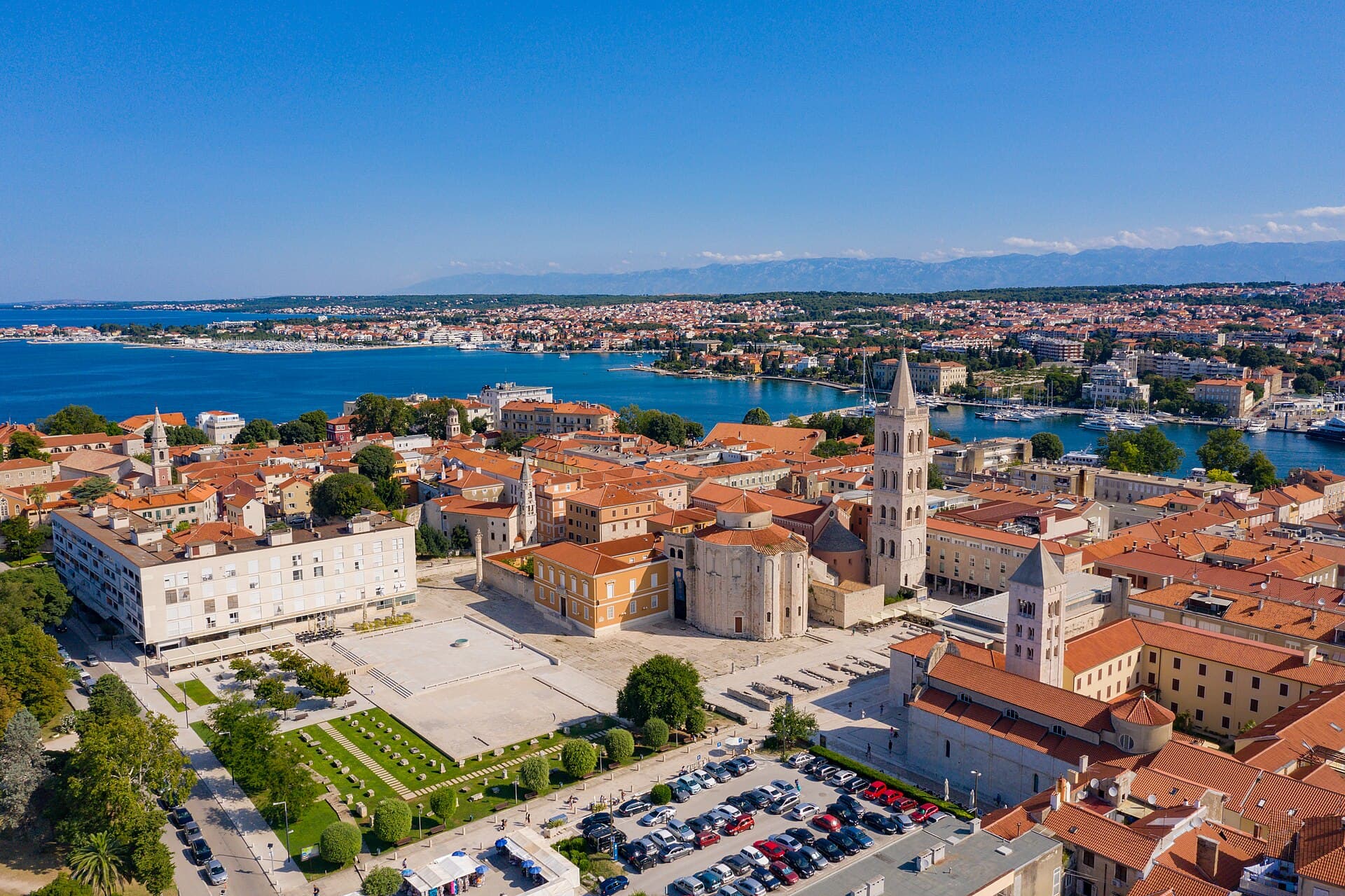 dronepicr / CC BY 2.0, via Wikimedia Commons
Selbstgeführte Audio-Walking-Tour durch Zadar — GPS-Route, Offline-Wiedergabe, erzählerische Narration in 32 Sprachen.
“Wo alte Steine mit dem Lied des Meeres summen.”
Nicht die Postkarten. Die Geschichten, die selbst Einheimische nicht kennen – dir ins Ohr geflüstert, genau dort, wo sie geschahen.
Die Uferpromenade Zadars spielt eine Symphonie, doch die Musiker sind unsichtbar.
Unter deinen Füßen spielen Kinder Fußball auf einer 2.000 Jahre alten Bühne.
Betrachte den prächtigen Stadteingang genau, und du wirst einen geflügelten Wächter entdecken.
Entdecke jedes Geheimnis von Zadar
Jede Adresse, jede Enthüllung vollständig – in deinem Ohr, genau dort, wo es geschah.
Du wählst deine Stationen. Du gehst. Die Stimme enthüllt, was andere übersehen.

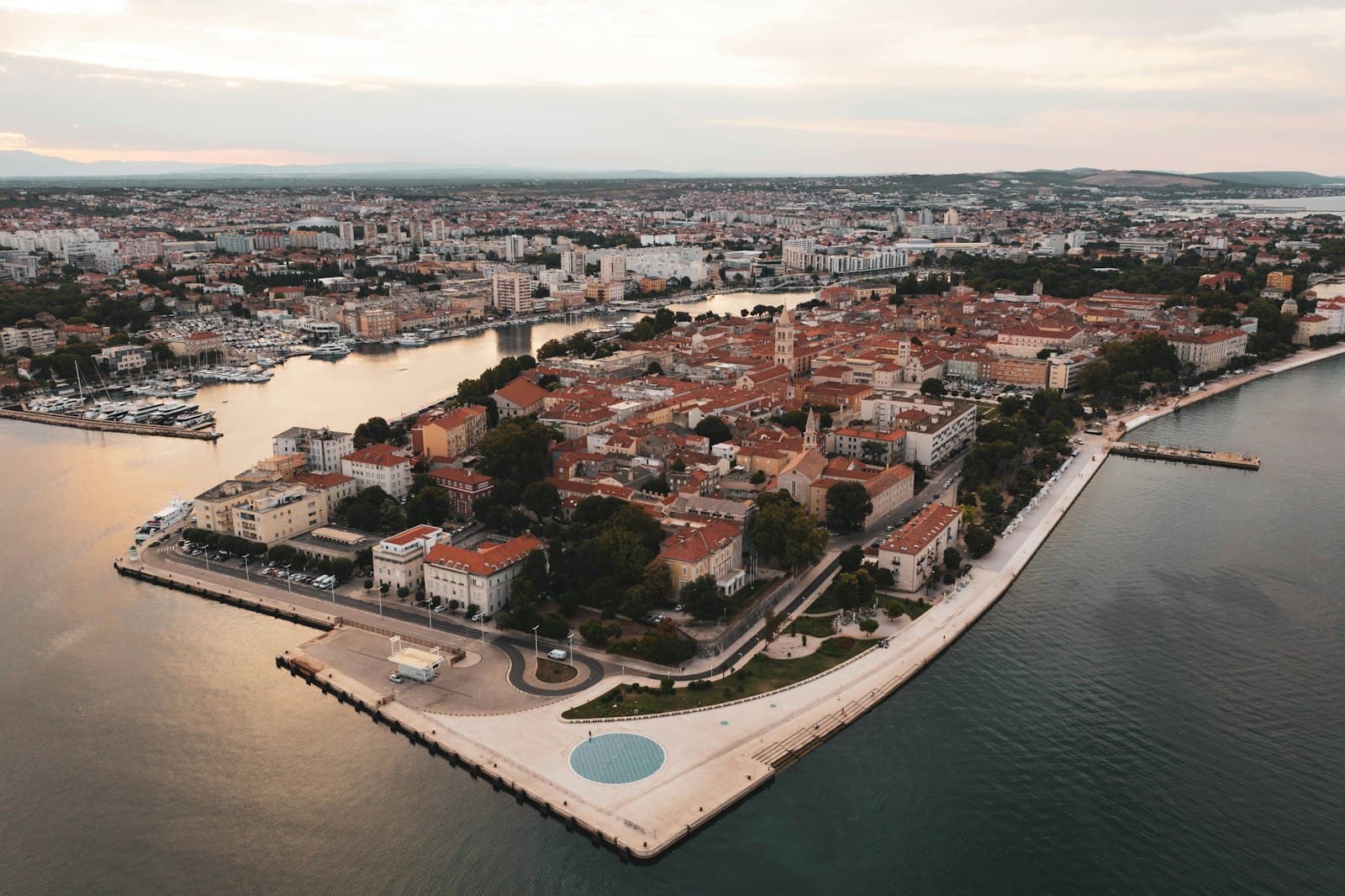
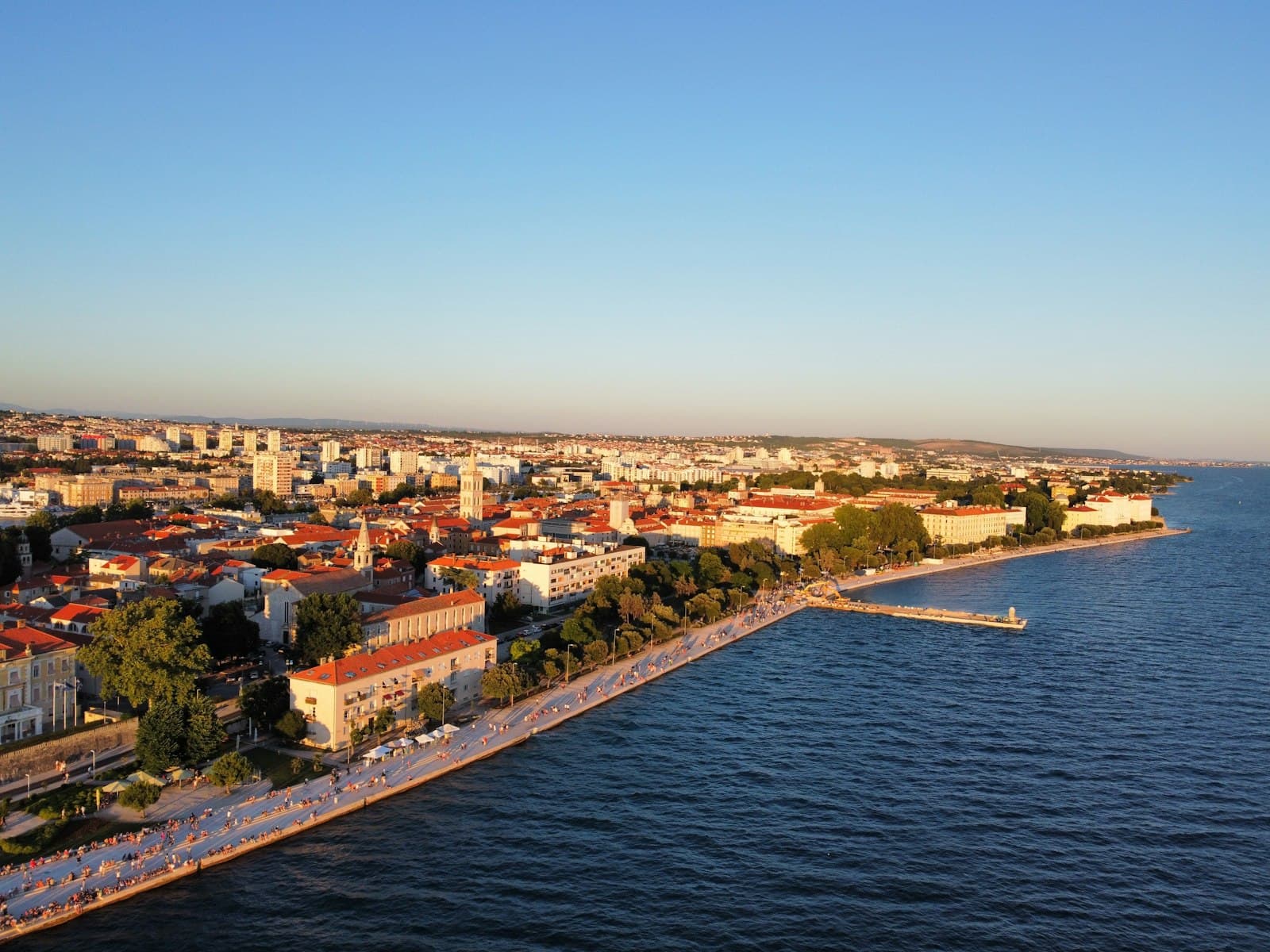
Deine selbstgeführte Audio-Tour durch Zadar ist bereit – wähle deine Sehenswürdigkeiten, deine Sprache und starte, sobald du ankommst.
KaufenLume enthält einen integrierten Augmented-Reality-Guide. Halten Sie Ihr Handy hoch: Die Kamera zeigt die Straße vor Ihnen, mit einem leuchtenden Pfeil über dem echten Bild, der immer auf Ihren nächsten Stopp zeigt — keine Karte zum Rätseln, keine falschen Abzweigungen. Wie alles bei Lume funktioniert es komplett offline.
Zadar, eine Küstenstadt an der nördlichen dalmatinischen Küste Kroatiens, bietet eine Mischung aus antiker Geschichte und zeitgenössischer Kreativität. Oft als ruhigere Alternative zu belebteren kroatischen Reisezielen wie Dubrovnik und Split angesehen, bietet Zadar ein authentisches Kulturerlebnis mit weniger Menschenmassen. Die kompakte Altstadt auf einer Halbinsel ist leicht zu Fuß zu erkunden, wobei die meisten Sehenswürdigkeiten nur wenige Minuten voneinander entfernt sind.
Diese Stadt mit einer fast 3.000-jährigen Geschichte ist eine der ältesten kontinuierlich bewohnten Städte Kroatiens. Von römischen Ruinen bis zu modernen Kunstinstallationen präsentiert Zadar eine einzigartige Fusion, bei der steinerne Straßen von jahrhundertelangen Erzählungen widerhallen, während die Uferpromenade innovative, vom Meer inspirierte Kunst bietet. Zadar ist auch ein ausgezeichneter Ausgangspunkt für die Erkundung der umliegenden Region mit einfachem Zugang zu nahegelegenen Inseln und Nationalparks.
Ob Sie von seiner tiefen Vergangenheit, seiner lebhaften Atmosphäre oder seinen bemerkenswerten Sonnenuntergängen angezogen werden, Zadar lädt zu einer genaueren Betrachtung ein. Es ist ein Ort, an dem die Adriabrise den Duft von Kiefern und gegrillten Sardinen trägt und jeder Besuch frisch und einzigartig kroatisch ist.
## Von der illyrischen Siedlung zur römischen Kolonie Zadars Ursprünge reichen bis ins 9. Jahrhundert v. Chr. als Siedlung der Liburner, eines illyrischen Stammes, zurück, die es Iader nannten. Dieser seefahrende Stamm machte Zadar zu einem wichtigen Handelszentrum mit Griechen und Römern. Im 2. Jahrhundert v. Chr. begannen die Römer allmählich, in die Region einzudringen, und bis 59 v. Chr. wurde das liburnische Iadera ein römisches Municipium. Es wurde in Iadera umbenannt und wurde 48 v. Chr. eine römische Kolonie. Unter römischer Herrschaft entwickelte sich Zadar zu einem blühenden Zentrum mit einem regelmäßigen Straßenraster, einem öffentlichen Platz (Forum) und einem Kapitol mit einem Tempel. Ein ausgeklügeltes Aquäduktsystem brachte Wasser aus dem Vrana-See, ein Beweis römischer Ingenieurskunst.
## Byzantinische Herrschaft und venezianische Kämpfe Nach dem Fall des Weströmischen Reiches im Jahr 476 n. Chr. wurde Zadar die Hauptstadt des byzantinischen Themas Dalmatien. Die Stadt erlebte von Ende des 9. bis Mitte des 10. Jahrhunderts Perioden des Friedens und bedeutender Entwicklung. Ihre strategische Lage machte sie jedoch auch zu einem Ziel. Im Jahr 998 n. Chr. schwor die Stadt dem Dogen Pietro II. Orseolo die Treue und wurde Vasall der Republik Venedig. Dies markierte den Beginn einer langen und oft turbulenten Beziehung zu Venedig. Im Jahr 1202, während des Vierten Kreuzzugs, eroberten die Venezianer mit Hilfe der Kreuzfahrer Zadar zurück und plünderten es. Trotz dieser Konflikte wurde Zadar zu einer Seemacht, die zeitweise mit Venedig rivalisierte, und erlebte vom 11. bis 14. Jahrhundert eine kulturelle Renaissance, die architektonische Wunderwerke wie die Kathedrale der Heiligen Anastasia hinterließ.
## Österreichische Verwaltung und Neuzeit Die venezianische Herrschaft dauerte Jahrhunderte, geprägt von architektonischer Pracht und politischer Unruhe. 1797, nach dem Fall der Republik Venedig, kam Zadar unter österreichische Herrschaft, mit einer kurzen Periode französischer Kontrolle von 1806 bis 1813. Das 19. Jahrhundert unter österreichischer Verwaltung brachte Fortschritt mit Museen, verbesserter Infrastruktur und der Einrichtung des dalmatinischen Parlaments. Zadars Anschluss an das Stromnetz im Jahr 1898 unterstrich seine Modernisierung. Das 20. Jahrhundert brachte dramatische Veränderungen mit sich, darunter die italienische Herrschaft nach dem Ersten Weltkrieg, die deutsche Besatzung während des Zweiten Weltkriegs und schließlich die Eingliederung in Titos Jugoslawien. Trotz umfangreicher Bombenangriffe im Jahr 1944 begann die Stadt in den 1950er Jahren mit einem robusten Wiederaufbau. 1991 wurde Zadar Teil der unabhängigen Republik Kroatien, überwand kriegsbedingte Schwierigkeiten und begann seine moderne Entwicklung.
Beginnen Sie Ihre Erkundung in Zadars Altstadt, einer kompakten Halbinsel, die leicht zu Fuß erkundet werden kann. Das Forum Romanum aus dem 1. Jahrhundert v. Chr. bildet eine zentrale archäologische Stätte mit sichtbaren Überresten von Säulen und Bodensteinen. Angrenzend an das Forum befindet sich die Kathedrale der Heiligen Anastasia, ein romanisches Meisterwerk aus dem 12. und 13. Jahrhundert, das von seinem Glockenturm aus einen Panoramablick auf die Stadt bietet. Die Kirche des Heiligen Donatus, eine markante kreisförmige byzantinische Kirche aus dem 9. Jahrhundert auf römischen Fundamenten, ist ein weiteres bedeutendes Wahrzeichen.
Erleben Sie entlang der Uferpromenade Zadars moderne Kunstinstallationen. Die Meeresorgel, entworfen von Nikola Bašić, erzeugt Musik durch die Meereswellen, die Luft durch 35 Unterwasserrohre drücken. In der Nähe setzt die Sonne Gruß, eine große solarbetriebene Lichtinstallation, nach Sonnenuntergang eine schillernde Show in Szene und ergänzt Zadars berühmt schöne Sonnenuntergänge. Verpassen Sie nicht das Landtor, erbaut 1543, ein Zeugnis der venezianischen Herrschaft und gilt als eines der schönsten Denkmäler Dalmatiens aus dieser Zeit. Für einen tieferen Einblick in die Vergangenheit der Region besuchen Sie das Archäologische Museum neben dem Forum Romanum. Wenn Sie sich für einzigartiges Handwerk interessieren, bietet das Museum für antikes Glas Live-Vorführungen und eine besondere Sammlung.
Die beste Reisezeit für Zadar sind die Frühlingsmonate (April bis Juni) und die Herbstmonate (September bis Oktober). Diese Perioden bieten warme Temperaturen, durchschnittlich 15°C bis 27°C, weniger Menschenmassen und vernünftige Preise. Das Meer ist im Mai und September noch warm genug zum Schwimmen. Der Sommer (Juli und August) bringt heißes, sonniges Wetter, ideal für Strände und Festivals, aber auch größere Menschenmassen und höhere Preise. Der Winter (Dezember bis Februar) ist milder, aber regnerischer, mit kälteren Temperaturen, was ihn für preisbewusste Reisende geeignet macht, die Ruhe suchen.
Die offizielle Währung in Zadar und in ganz Kroatien ist der Euro (€). Während Kartenzahlungen in größeren Betrieben weit verbreitet sind, ist es ratsam, für kleinere Händler etwas Bargeld mitzunehmen. Geldautomaten sind leicht verfügbar.
Der Flughafen Zadar (ZAD) liegt etwa 8-11 km vom Stadtzentrum entfernt. Die günstigste Option, um in die Stadt zu gelangen, ist der Liburnija-Flughafenshuttlebus, der etwa 5 € pro Strecke kostet und Gepäck einschließt. Die Fahrt dauert etwa 20-25 Minuten mit Stopps am Hauptbusbahnhof und in der Altstadt. Taxis sind ebenfalls verfügbar und kosten etwa 25-35 € bis zur Altstadt. Ride-Sharing-Apps wie Uber und Bolt sind ebenfalls in Zadar tätig.
Innerhalb Zadars ist das Hauptverkehrsmittel der Bus mit 11 Linien, die alle Teile der Stadt abdecken. Tickets können beim Fahrer oder über die mobile Anwendung Zadar City gekauft werden, wobei ein entwertetes Ticket 50 Minuten gültig ist. Die Altstadt selbst ist größtenteils Fußgängerzone und leicht zu Fuß zu erkunden. Kroatisch ist die Amtssprache, aber die meisten Einheimischen, insbesondere in Touristengebieten, sprechen ausgezeichnetes Englisch.
Zadar gilt allgemein als sichere Stadt mit niedriger Kriminalitätsrate. Wie in jedem Touristenziel kann es jedoch in überfüllten Gegenden während der Hauptsaison zu Taschendiebstählen kommen. Alleinreisende Frauen finden Zadar im Allgemeinen sehr sicher.
Zadar — Koreanisch, Chinesisch, Hebräisch und 29 weitere Sprachen, jede Station von einer muttersprachlichen Stimme erzählt. Die größte Sprachauswahl aller selbstgeführten Audiotouren.
Verfügbar auf: