Calle Tkalčićeva
Debajo de los animados cafés y bulliciosos patios de la calle Tkalčićeva se esconde una arteria secreta e invisible de Zagreb.
La historia completa se desbloquea en el tour
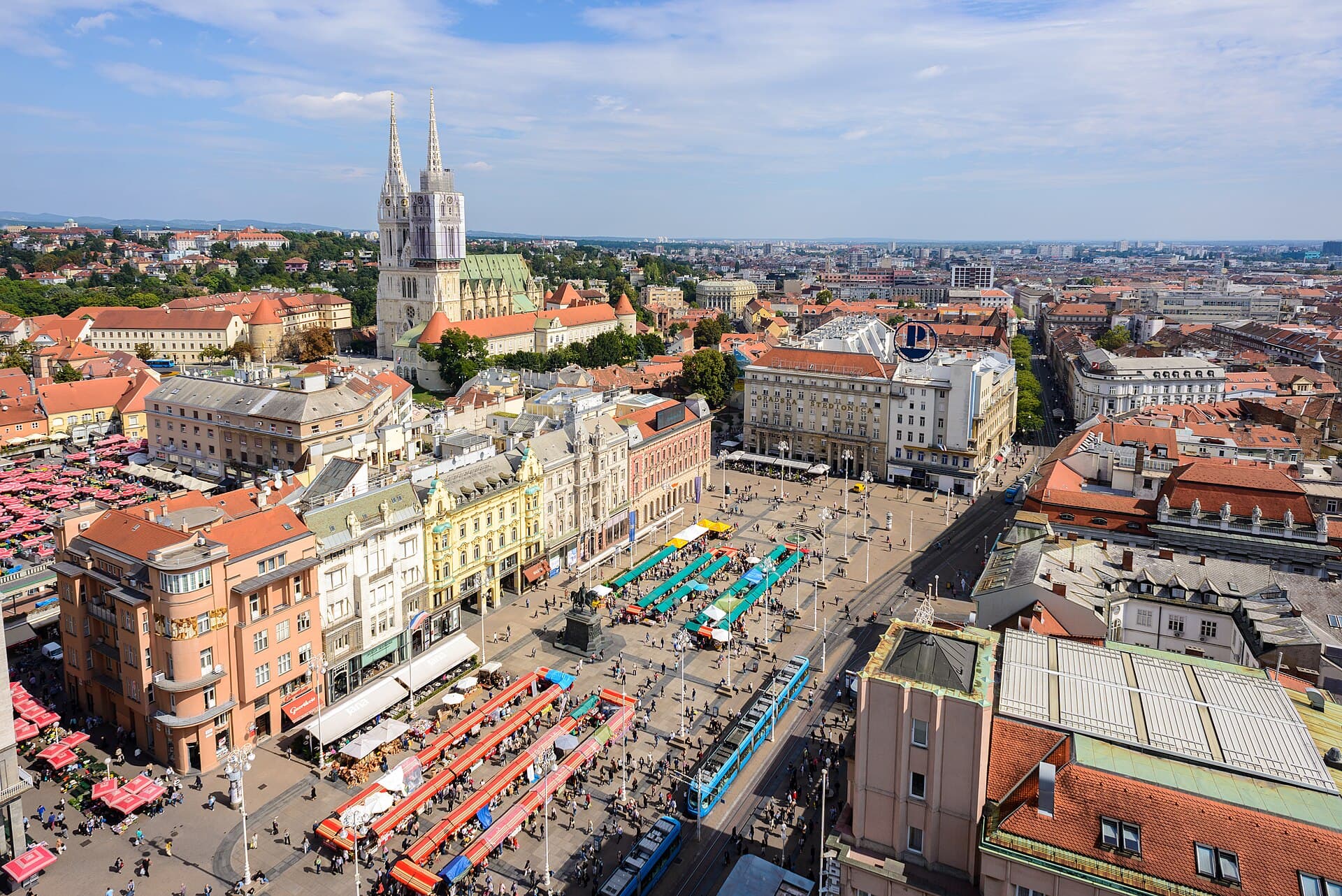 Nick Savchenko from Kiev, Ukraine / CC BY-SA 2.0, via Wikimedia Commons
Tour de audio autoguiado de Zagreb — ruta GPS a pie, reproducción offline, narración en 32 idiomas.
“Donde la elegancia centroeuropea se encuentra con un espíritu cautivador y peculiar.”
No las postales. Las historias que ni los locales conocen — al oído, justo donde ocurrieron.
Debajo de los animados cafés y bulliciosos patios de la calle Tkalčićeva se esconde una arteria secreta e invisible de Zagreb.
Todos los días al mediodía, un fuerte estruendo resuena en Zagreb desde una torre medieval, una tradición que tiene una historia sorprendente, casi mítica.
Zagreb tiene su propio sistema solar, pero no lo encontrarás en un observatorio.
Descubre todos los secretos de Zagreb
Cada dirección, cada revelación al completo — a tu oído, justo donde ocurrió.
Eliges tus paradas. Caminas. La voz te revela lo que los demás ignoran.


Tu tour de audioguía por Zagreb te espera — elige tus lugares, tu idioma y empieza al llegar.
ComprarLume incluye una guía de realidad aumentada. Levanta el móvil y su cámara muestra la calle que tienes delante, con una flecha luminosa sobre la imagen real que siempre apunta a tu próxima parada — sin mapas que descifrar, sin giros equivocados. Como todo en Lume, funciona completamente sin conexión.
Zagreb, la capital de Croacia, ofrece una experiencia centroeuropea distintiva, un refrescante contraste con la reconocida costa del país. Es una ciudad que se despliega gradualmente, revelando su carácter a través de una mezcla de arquitectura austrohúngara, animadas escenas callejeras y un ritmo relajado. A menudo pasada por alto por aquellos que se apresuran al Adriático, Zagreb recompensa a los visitantes con una profunda experiencia cultural y una auténtica visión de la vida urbana croata.
Dividida en la histórica Ciudad Alta (Gornji Grad) y la bulliciosa Ciudad Baja (Donji Grad), Zagreb ofrece una exploración a pie de su pasado y presente. Desde fortificaciones medievales hasta grandes plazas del siglo XIX, la ciudad invita a paseos tranquilos y prolongados descansos para tomar café, un testimonio de su fuerte cultura cafetera. Es un lugar donde la historia es palpable, pero donde prospera una energía moderna y artística, lo que la convierte en un destino atractivo por derecho propio.
La historia de Zagreb se remonta a la Edad Media, con el asentamiento más antiguo conocido cerca de la ciudad actual siendo la ciudad romana de Andautonia, existente entre los siglos I y V d.C. El nombre "Zagreb" apareció por primera vez en 1094, refiriéndose al establecimiento de una diócesis en Kaptol. En este momento, la ciudad constaba de dos centros distintos: Kaptol, habitado principalmente por el clero y hogar de la Catedral de Zagreb, y Gradec, un asentamiento fortificado en una colina vecina, poblado por artesanos y comerciantes.
Gradec se convirtió en una ciudad real libre en 1242, recibiendo una carta del rey húngaro Béla IV, que otorgaba a sus ciudadanos derechos que incluían el autogobierno y la elección de su juez municipal. Se construyeron murallas y torres defensivas alrededor de Gradec entre 1242 y 1261, muchas de las cuales aún son visibles hoy en día. Zagreb fue designada capital de Croacia en 1557 y se convirtió en la sede del Ban de Croacia en 1621. El siglo XVII vio la llegada de los jesuitas, quienes fundaron la primera escuela de gramática, la Iglesia de Santa Catalina y una academia que fue precursora de la actual Universidad de Zagreb.
Durante los siglos XVII y XVIII, Zagreb sufrió una devastación significativa por incendios y la peste. El siglo XIX marcó un período de crecimiento significativo y desarrollo cultural, con Zagreb convirtiéndose en el centro del Renacimiento Nacional Croata. En 1850, Gradec y Kaptol se unieron oficialmente bajo el primer alcalde de Zagreb, Janko Kamauf. La ciudad vio la introducción de su primera línea de ferrocarril en 1862, una planta de gas en 1863 y una planta de agua en 1878. Después del terremoto de Zagreb de 1880, el desarrollo de la ciudad floreció, lo que llevó a su diseño característico que se ve hoy en día.
En el siglo XX, Zagreb experimentó un aumento sustancial de la población, particularmente en la década de 1920. Sirvió como capital del Estado Independiente de Croacia durante la Segunda Guerra Mundial y más tarde se convirtió en un importante centro económico dentro de Yugoslavia. Después de que Croacia declaró su independencia en 1991, Zagreb fue proclamada capital de la República de Croacia. Si bien la ciudad enfrentó algunos combates periódicos y ataques con cohetes durante la Guerra de Independencia de Croacia (1991-1995), no sufrió una destrucción importante. Hoy, Zagreb es la ciudad más grande de Croacia y continúa evolucionando como una capital europea moderna.
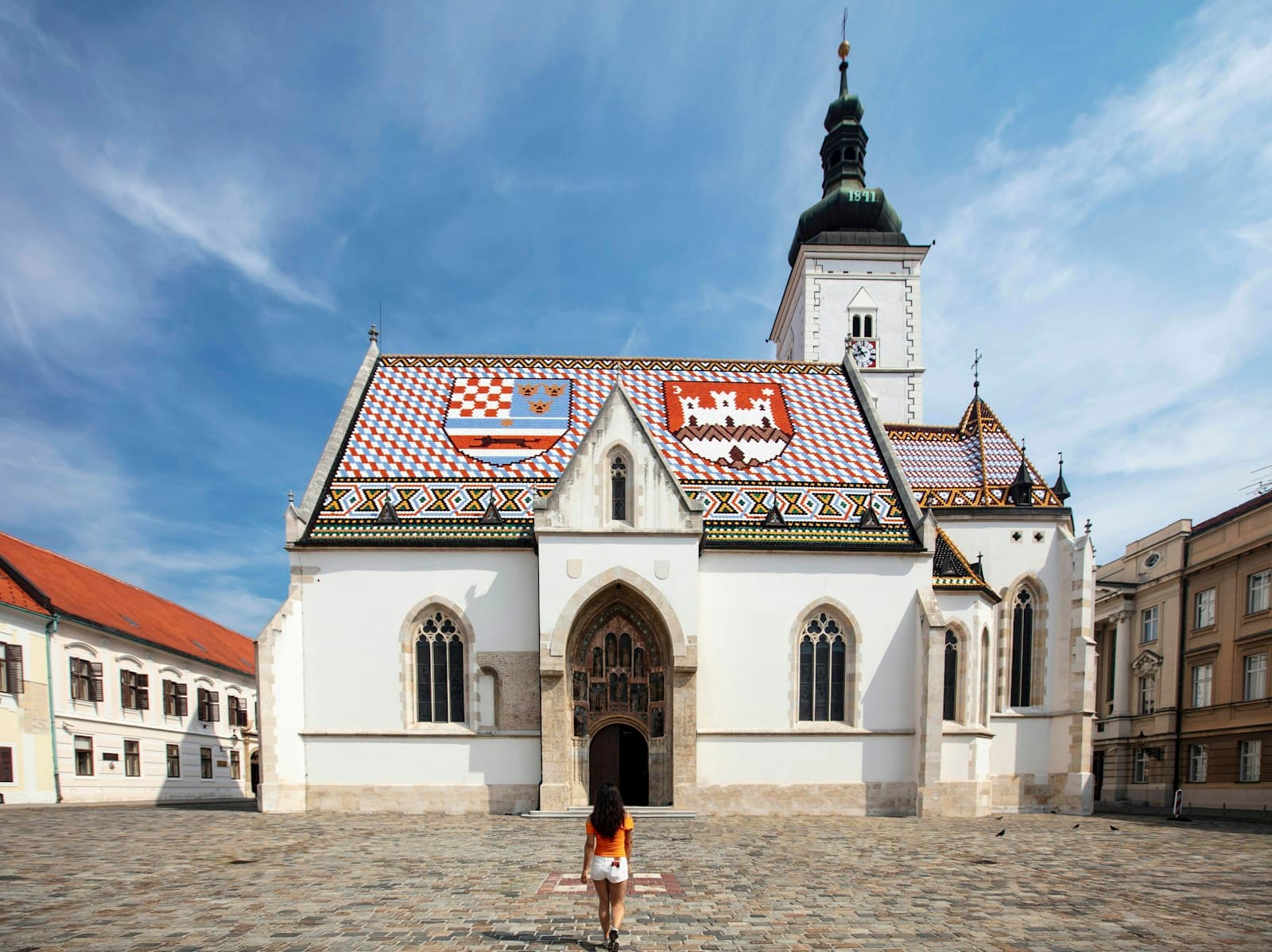
Comience su exploración en la Ciudad Alta (Gornji Grad) de Zagreb, una red de calles sinuosas y monumentos históricos. Aquí encontrará la icónica Iglesia de San Marcos con su distintivo techo de tejas, un verdadero símbolo de la ciudad. Cerca, la Puerta de Piedra (Kamenita Vrata) alberga un venerado santuario a la Virgen María. No se pierda la Torre Lotrščak, donde el Cañón Grič dispara diariamente al mediodía, una tradición que añade un toque dramático a su visita.
Descienda a la Ciudad Baja (Donji Grad), caracterizada por su grandiosa arquitectura del siglo XIX y una serie de parques interconectados conocidos como la Herradura de Lenuci o Herradura Verde, que incluye la Plaza del Rey Tomislav y el Parque Zrinjevac. El bullicioso Mercado Dolac es una parada gratificante, un mercado de agricultores al aire libre que funciona diariamente desde 1930, ofreciendo productos frescos y locales. Para una experiencia cultural única, el Museo de las Relaciones Rotas en la Ciudad Alta presenta una conmovedora y a menudo humorística colección de objetos de relaciones fallidas de todo el mundo. Para un viaje rápido y encantador entre la Ciudad Alta y la Ciudad Baja, tome el Funicular de Zagreb, uno de los funiculares de transporte público más cortos del mundo.
La mejor época para visitar Zagreb es durante la primavera (abril a junio) y el otoño (septiembre a octubre). Estas temporadas intermedias ofrecen temperaturas agradablemente cálidas, que oscilan entre los 15 y 25 grados Celsius, ideales para hacer turismo y actividades al aire libre, con menos multitudes que los meses pico de verano. La primavera trae parques en flor y festivales culturales, mientras que el otoño ofrece un clima confortable y alojamiento más asequible. Si bien los veranos (julio-agosto) son cálidos, pueden estar concurridos y algunos lugareños pueden estar de vacaciones. El invierno (noviembre-marzo) ofrece un ambiente festivo, especialmente durante el Adviento, con acogedores mercados navideños, aunque las temperaturas pueden bajar por debajo del punto de congelación.
Zagreb es una ciudad muy transitable a pie, especialmente sus zonas céntricas, lo que facilita la exploración. Para distancias más largas, un eficiente sistema de tranvías cubre la ciudad, con billetes disponibles para viajes individuales, diarios o de varios días. Los taxis, incluidos servicios como Bolt y Uber, también están disponibles y ofrecen transporte económico, especialmente desde y hacia el aeropuerto. Croacia adoptó el euro (€) en enero de 2023, por lo que esta es la moneda oficial. Si bien las tarjetas de crédito son ampliamente aceptadas, es aconsejable llevar algo de efectivo para compras más pequeñas o propinas. Una propina de alrededor del 10% es estándar para un buen servicio. Zagreb es generalmente una ciudad muy segura, pero como en cualquier área urbana, es aconsejable estar atento a sus pertenencias en lugares concurridos. El agua del grifo es potable. El Wi-Fi público está ampliamente disponible.
Zagreb en coreano, en chino o en hebreo — y 29 idiomas más, cada parada narrada por una voz nativa. La mayor variedad de idiomas de cualquier audioguía autoguiada.
Disponible en: