Palais de l'Aljafería
Ce palais islamique du XIe siècle cache un secret moderne surprenant.
L'histoire complète se débloque dans le tour
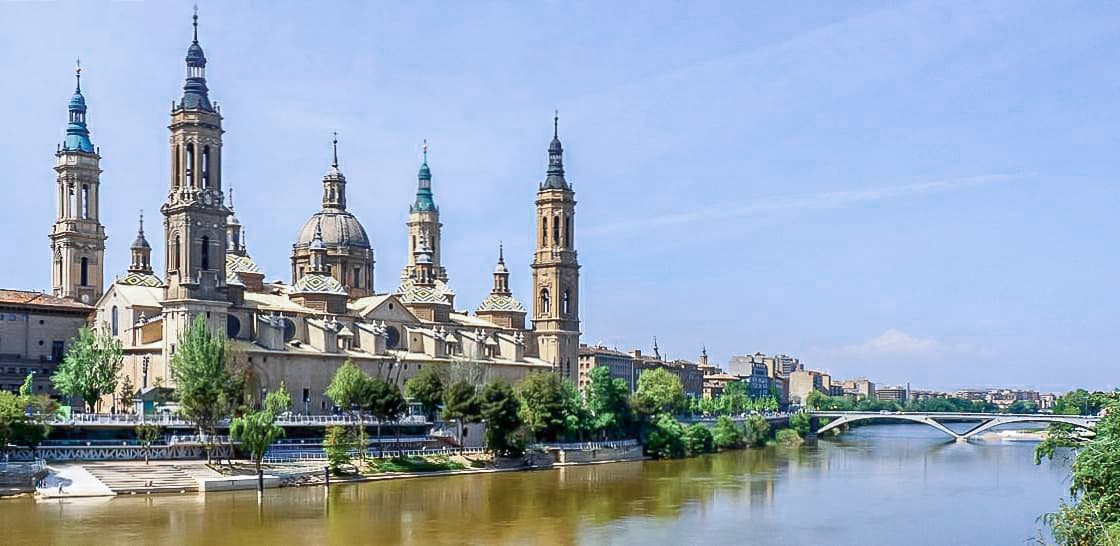 Turol Jones, un artista de cojones from Villanueva del Cascajal, República Independiente de Mi Casa / CC BY 2.0, via Wikimedia Commons
Visite audio autoguidée de Saragosse — parcours GPS à pied, lecture hors ligne, narration en 32 langues.
“Là où les fondations romaines rencontrent l'art mauresque et l'esprit aragonais.”
Pas les cartes postales. Les histoires que même les habitants ignorent — soufflées à l'oreille, là où elles se sont passées.
Ce palais islamique du XIe siècle cache un secret moderne surprenant.
Trois bombes non explosées racontent une histoire de protection miraculeuse.
Sous le fleuve Èbre, un secret romain attend d'être découvert.
Découvrez tous les secrets de Saragosse
Chaque adresse, chaque révélation en entier — dans ton oreille, là où elle s'est passée.
Tu choisis tes lieux. Tu marches. La voix te révèle ce que les autres ignorent.


Votre visite audioguidée de Saragosse vous attend — choisissez vos lieux, votre langue, et lancez-vous dès votre arrivée.
AcheterLume intègre un guide en réalité augmentée. Levez votre téléphone : sa caméra montre la rue devant vous, avec une flèche lumineuse posée sur l'image réelle qui pointe toujours vers votre prochain arrêt — aucune carte à déchiffrer, aucun mauvais virage. Comme tout dans Lume, ça fonctionne entièrement hors-ligne.
Saragosse, souvent négligée au profit des grandes villes espagnoles, est un carrefour captivant d'histoire, de culture et de vie aragonaise animée. Située sur le fleuve Èbre, à mi-chemin entre Madrid et Barcelone, cette ville de plus de 700 000 habitants porte un passé profond, évident dans ses héritages romain, mauresque, juif et chrétien.
Capitale de la communauté autonome d'Aragon, Saragosse offre un mélange singulier de patrimoine monumental et d'énergie contemporaine. Les voyageurs peuvent explorer d'anciennes ruines romaines, s'émerveiller devant l'architecture mudéjare complexe et découvrir l'atmosphère animée de ses places et de ses bars à tapas. Le caractère accueillant de la ville et son authenticité en font une destination enrichissante pour ceux qui recherchent une immersion plus profonde dans la culture espagnole.
L'histoire de Saragosse commence il y a plus de deux millénaires avec un ancien établissement ibérique appelé Salduie. Vers 24 av. J.-C., l'empereur romain Auguste a établi une colonie pour les vétérans des guerres cantabriques sur ce site, la nommant Caesaraugusta. Cet emplacement stratégique dans la vallée de l'Èbre s'est rapidement transformé en un important centre administratif et commercial de la province romaine, doté d'un forum, d'un théâtre, de thermes publics et d'un port fluvial.
Au début du VIIIe siècle, la ville fut conquise par les Maures, devenant connue sous le nom de Medina Saraqusta. Pendant cette période, Saragosse prospéra en tant qu'important avant-poste du Califat de Cordoue, puis en tant que capitale d'un émirat indépendant, ou Taifa. Le magnifique Palais de l'Aljafería, symbole durable de l'architecture hispano-islamique, fut construit à cette époque.
La Reconquista chrétienne vit Saragosse reprise par le roi Alphonse Ier d'Aragon en 1118, après quoi elle devint la capitale du puissant Royaume d'Aragon. Cela marqua une période de prospérité qui dura trois siècles et demi. La principale mosquée de la ville fut transformée en Cathédrale de La Seo, qui, avec d'autres bâtiments, met en valeur le style mudéjar unique – une fusion des traditions architecturales islamiques et chrétiennes.
Saragosse a également joué un rôle important dans l'histoire espagnole ultérieure, notamment pendant la guerre d'indépendance espagnole (1808-1809), lorsque ses citoyens opposèrent une résistance héroïque aux forces de Napoléon lors d'un long siège. Le lien de la ville avec le célèbre peintre Francisco de Goya, né à proximité et ayant laissé sa marque sur divers sites locaux, enrichit encore son tissu culturel.
Saragosse offre une multitude de sites reflétant son passé stratifié. L'emblématique Plaza del Pilar sert de cœur à la ville, une grande place piétonne encadrée de bâtiments historiques et de cafés. Dominant la place, la Basilique Notre-Dame du Pilier, une colossale cathédrale baroque et un important site de pèlerinage, abrite des fresques de Francisco de Goya et une sculpture vénérée de la Vierge du Pilier. Montez à l'une de ses tours pour des vues imprenables sur la ville.
À côté de la Basilique se trouve la Cathédrale de La Seo (Cathédrale du Sauveur), un site classé au patrimoine mondial de l'UNESCO et un excellent exemple d'architecture mudéjare aragonaise, présentant des briques et des carreaux de céramique complexes. Explorez son Musée des Tapisseries, qui abrite l'une des collections les plus importantes au monde.
Le Palais de l'Aljafería, un palais islamique fortifié du XIe siècle, est un autre site classé au patrimoine mondial de l'UNESCO, célébré pour ses délicats stucs et ses arcs en fer à cheval. Plongez dans les origines romaines de Saragosse au Théâtre Romain de Caesaraugusta, une ruine remarquablement préservée redécouverte en 1972, et visitez les musées des Murs Romains, du Forum et des Thermes Publics.
Au-delà des principaux monuments, flânez dans la Calle Alfonso I, considérée comme l'une des plus belles rues de Saragosse, et explorez le quartier animé d'El Tubo pour des tapas traditionnelles et la vie nocturne. Pour une évasion verte, visitez le vaste Parque Grande José Antonio Labordeta.
Saragosse connaît un climat semi-aride avec des étés chauds et secs et des hivers frais et partiellement nuageux. Les périodes idéales pour les activités de plein air sont de mi-mai à fin juillet et de mi-août à mi-octobre, lorsque les températures sont agréables. Le printemps (mars à mai) offre des températures douces et moins de foules, avec des processions de Pâques et la célébration de San Jorge (Saint Georges), saint patron de l'Aragon, en avril. L'automne, en particulier octobre, est une période spéciale pendant les Fiestas del Pilar, une célébration d'une semaine en l'honneur de la Vierge Marie, bien que cette période attire également plus de monde et des prix d'hôtel plus élevés.
Saragosse est une ville sûre, avec un faible taux de criminalité, ce qui la rend agréable pour se promener seul pendant la journée et généralement sûre la nuit, bien que des vols mineurs puissent survenir dans les zones touristiques. La ville est facilement navigable à pied, surtout dans le centre historique, avec de nombreuses attractions majeures à quelques pas les unes des autres.
Les transports en commun sont efficaces, comprenant des bus et une ligne de tramway moderne qui traverse la ville du nord au sud. Une carte de transport, disponible dans les bureaux de tabac, permet des tarifs réduits et des correspondances dans l'heure. Les taxis sont facilement disponibles, et les services de covoiturage comme Uber opèrent également dans la ville. Pour ceux qui aiment le vélo, Saragosse propose un service de vélos publics avec de nombreuses stations.
La gare de Saragosse-Delicias offre des liaisons ferroviaires à grande vitesse vers les grandes villes espagnoles comme Madrid et Barcelone, avec des temps de trajet d'environ 1 heure et 30 minutes. La ville possède également un aéroport international.
Saragosse en coréen, en chinois ou en hébreu — et dans 29 autres langues, chaque étape narrée par une voix native. La plus large gamme de langues de tous les audioguides autoguidés.
Disponible en :