Dadiani Palace Museum
Among the Dadiani family's extensive collection, a relic of a French emperor resides, far from its European origins.
Full story unlocks in the tour
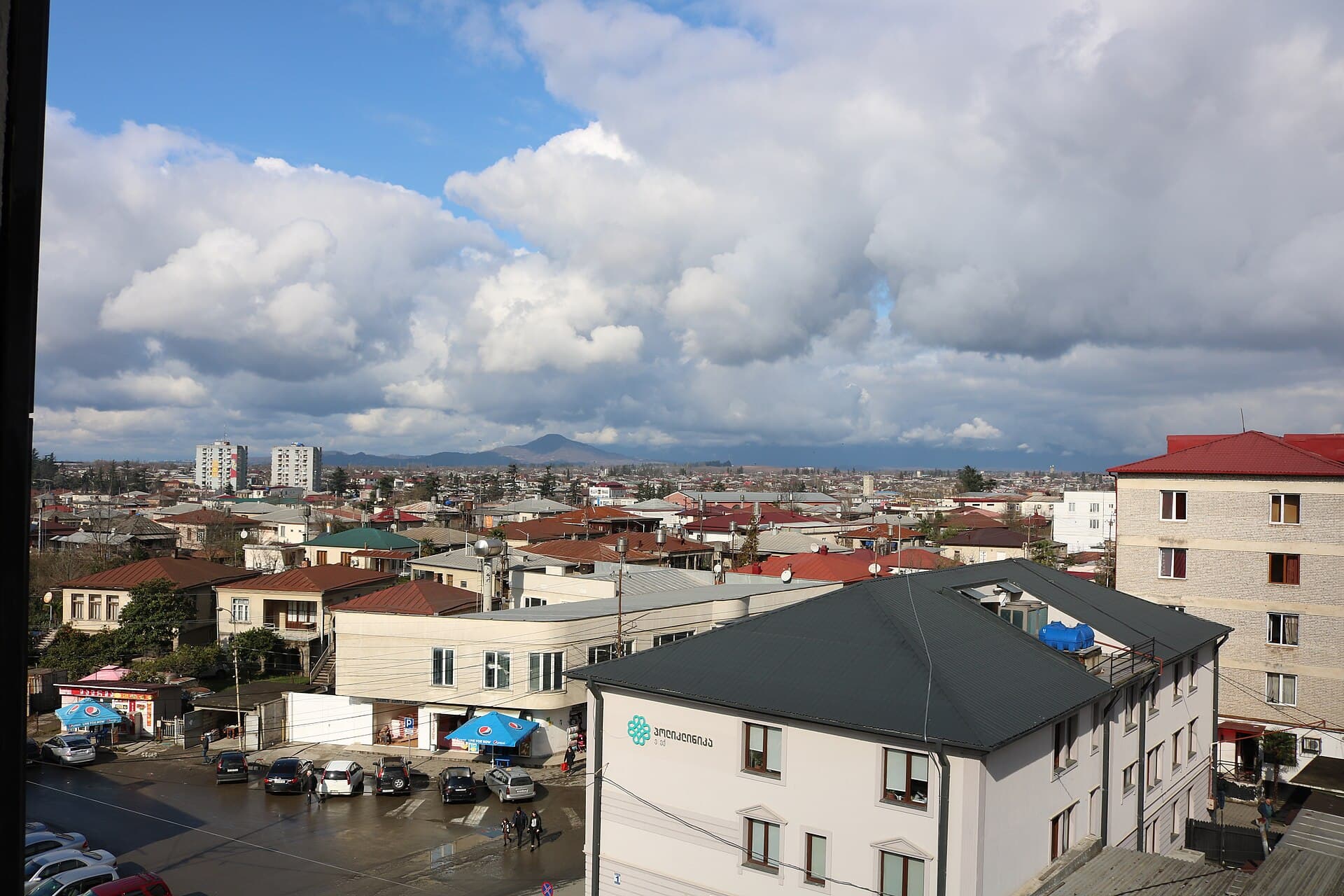 Abkhazian1 / CC BY-SA 4.0, via Wikimedia Commons
Self-guided audio walking tour of Zugdidi — GPS route, offline playback, story-driven narration in 32 languages.
“Where ancient history converges with Napoleonic intrigue in Georgia's verdant west.”
Not the postcards. The stories even locals don't know — whispered in your ear, right where they happened.
Among the Dadiani family's extensive collection, a relic of a French emperor resides, far from its European origins.
Beyond imperial death masks, this museum protects a Byzantine relic of profound religious significance, displayed only once a year.
The Dadiani family's personal library holds an unexpected connection to one of history's most renowned military leaders.
Discover every secret of Zugdidi
Every address, every reveal in full — in your ear, right where it happened.
You pick your stops. You walk. The voice reveals what the others miss.


Your self-guided audio tour of Zugdidi is ready — pick your landmarks, choose your language, and start the moment you arrive.
BuyLume has a built-in augmented-reality guide. Hold your phone up and its camera shows the street ahead of you, with a glowing arrow laid over the real view that always points to your next stop — no map to puzzle over, no wrong turns. Like everything in Lume, it works fully offline.
Zugdidi, the administrative capital of Georgia's Samegrelo-Zemo Svaneti region, is a city where history and local culture intertwine. Situated in western Georgia, near the border with Abkhazia, it serves as a crucial crossroads for travelers journeying to the dramatic Svaneti mountains or the Black Sea coast. While often considered a transit point, Zugdidi generously rewards those who linger with its unique Megrelian heritage, a distinct ethnic subgroup of Georgians possessing their own dialect, traditions, and a famously piquant cuisine.
The city's walkable thoroughfares, lined with a blend of Soviet-era architecture and charming two-story houses, offer a relaxed atmosphere. At its core stands the grand Dadiani Palace complex, a testament to the influential Dadiani dynasty that once governed the Principality of Mingrelia. Beyond the palace, Zugdidi offers an authentic window into Georgian life, complete with bustling local markets and a lively community spirit.
The territory of modern-day Zugdidi has been inhabited for millennia, with settlements dating back to the Early Bronze Age (3rd millennium BC) and the Hellenistic period (6th-4th centuries BC), when it functioned as a significant trade route. The name "Zugdidi" itself, meaning "big hill" in Mingrelian, first appeared in the 17th century, referencing a prominent elevation in the city's eastern part where ancient fortress remains are still visible.
Zugdidi's most profound historical impact emerged with the Dadiani family, an illustrious Georgian noble house that governed the Principality of Mingrelia (Odishi) from the 16th century until its annexation by the Russian Empire in 1867. During this era, particularly under Levan II Dadiani, the Odishi principality grew into the strongest in western Georgia, and Zugdidi flourished as its cultural and political nucleus. The Dadianis were progressive reformers, recognized for their close contacts with European countries and figures like Charles Darwin and Édouard Manet. They even held blood ties to the French Emperor Napoleon, through the marriage of Davit Dadiani's daughter, Salome, to Achille Murat, Napoleon's grand-nephew.
The Dadianis' European connections shaped Zugdidi's city planning, which was designed to reflect 19th-century European aesthetics, cultivating an environment of creative and industrial productivity. The impressive Neo-Gothic Dadiani Palace, largely reconstructed in the 19th century under English architect Edwin Race, stands as a lasting monument to their influence. After the Russian Empire abolished the principality, Zugdidi served as an administrative center, later becoming part of the Democratic Republic of Georgia and then the Georgian Soviet Socialist Republic. It was only under Soviet rule that Western Georgia was fully integrated into the Georgian Soviet republic, though Mingrelians continue to identify as a distinct ethnic group. The city experienced significant development and population growth in the 1950s-1970s, further bolstered by the displacement of refugees, particularly ethnic Megrelians, during the Russian-Georgian War in Abkhazia.
The undisputed focal point of Zugdidi is the Dadiani Palace Museum complex, a former royal residence that offers a deep exploration into the region's aristocratic past. Wander through beautifully restored rooms, admire a wide collection of artifacts, including personal items of Napoleon Bonaparte and one of his death masks, and uncover a Byzantine relic believed to be the Veil of the Virgin Mary. The museum's collection, spanning from the 1st century BC to the 19th century, includes unique manuscripts, artworks, and archaeological findings from ancient Colchis.
Adjacent to the palace, the expansive Dadiani Botanical Garden offers a peaceful retreat. Designed in a French style, its 67 hectares shelter a diverse array of unique plants, including six species of Magnolia, various oaks, and cedars, making it ideal for a leisurely stroll.
Beyond the palace grounds, explore Zugdidi's active local market for an authentic taste of Megrelian life, offering fresh produce and local crafts. For a glimpse into Soviet-era history, the Old Railway Station and surrounding Soviet buildings present an interesting architectural narrative. Day trips from Zugdidi can include the striking Martvili Canyon for boat rides through emerald waters, the Enguri Dam, one of the world's highest arch dams, or the Black Sea coast at Anaklia.
The optimal time to visit Zugdidi is during spring (April to June) and autumn (September to November), when temperatures are mild and pleasant, ranging from 22-28°C (72-82°F). This period avoids the damp chill of winter and the heavy rains of early spring. Summers can be warm, but July and August offer the clearest skies and are suitable for warm-weather activities, especially if you plan to venture into the nearby Caucasus mountains for hiking. Winters can dip below freezing, making outdoor exploration less inviting.
Zugdidi is a highly walkable city, particularly its compact center where the main attractions like the Dadiani Palace and botanical gardens are situated. For longer distances or day trips, local buses, taxis, and marshrutkas (minibuses) are readily available. If you intend to explore the wider Samegrelo region or journey into Svaneti, renting a car is highly recommended for greater flexibility. Accommodation options range from budget hostels to mid-range hotels and guesthouses, offering a comfortable and local experience. The local currency is the Georgian Lari (GEL); credit cards are accepted in most hotels and restaurants, but it's wise to carry some cash for smaller establishments. Tipping is not mandatory but appreciated, with rounding up or 5-10% in restaurants being customary. Georgian is the primary language, but many people in tourism speak some English.
Zugdidi in Korean, in Chinese or in Hebrew — and 29 more languages, every stop narrated by a native voice. The widest language range of any self-guided audio tour.
Available in: