The Bridge of Arta
Greece's most famous bridge carries a haunting secret within its very foundations.
Full story unlocks in the tour
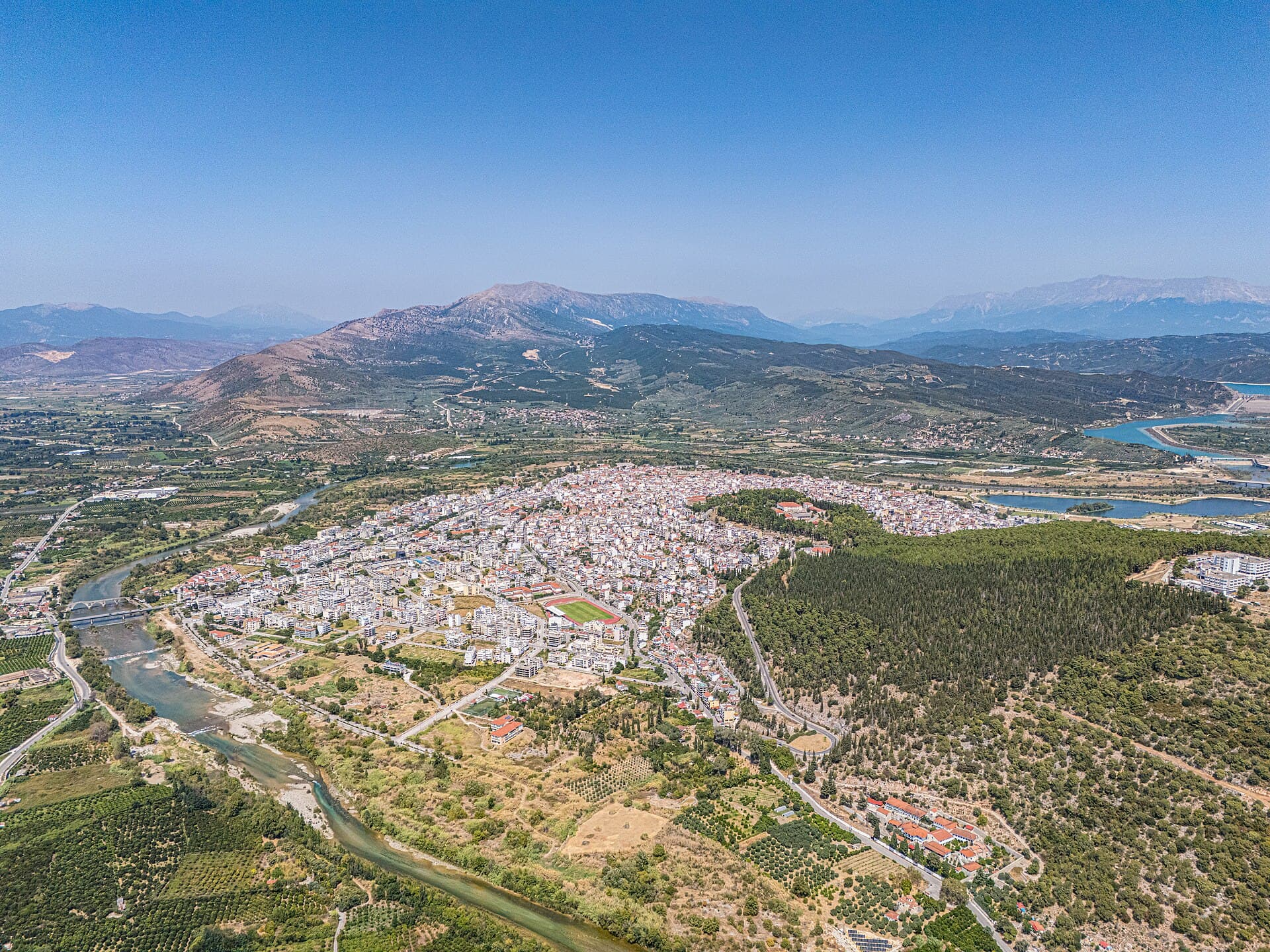 Apaleutos25 / CC BY-SA 4.0, via Wikimedia Commons
Self-guided audio walking tour of Arta — GPS route, offline playback, story-driven narration in 32 languages.
“Where ancient echoes meet a storied river.”
Not the postcards. The stories even locals don't know — whispered in your ear, right where they happened.
Greece's most famous bridge carries a haunting secret within its very foundations.
Beside the legendary bridge stands a colossal plane tree, its branches holding a darker history than its shade suggests.
Beneath the active streets of modern Arta lies a sophisticated ancient city, its secrets revealed in unexpected places.
Discover every secret of Arta
Every address, every reveal in full — in your ear, right where it happened.
You pick your stops. You walk. The voice reveals what the others miss.


Your self-guided audio tour of Arta is ready — pick your landmarks, choose your language, and start the moment you arrive.
BuyLume has a built-in augmented-reality guide. Hold your phone up and its camera shows the street ahead of you, with a glowing arrow laid over the real view that always points to your next stop — no map to puzzle over, no wrong turns. Like everything in Lume, it works fully offline.
Arta, a city in northwestern Greece, offers a compelling blend of ancient history and Byzantine grandeur, all set against the backdrop of the Arachthos River. Once the capital of ancient Epirus and later the Despotate of Epirus, Arta's past is etched into its very foundations. Wander through its streets and you will encounter a captivating mix of archaeological sites, medieval churches, and a well-preserved castle, each telling a piece of the city's long story.
Beyond its historical significance, Arta is a city that embraces its natural surroundings. The Arachthos River, spanned by the iconic Bridge of Arta, is a central feature, and the wider Arta region is characterized by fertile agricultural lands, particularly groves of orange, lemon, and citron trees. The Ambracian Gulf, a short distance to the south, is a significant wetland and a sanctuary for diverse bird species, offering a tranquil contrast to the city's historical depth. Arta provides a genuine Greek experience, often described as an 'insider tip' for those seeking authentic encounters away from more crowded tourist destinations.
Arta's story stretches back to the Neolithic period, with the first settlement in the area dating to the 9th century BC. It was founded as Ambracia, a Corinthian colony, in the 7th century BC, quickly becoming a powerful naval and commercial hub. Ambracia played a significant role in the Peloponnesian War, aligning with Corinth and Sparta.
A pivotal moment arrived in 294 BC when Pyrrhus, King of Epirus, made Ambracia his capital, adorning it with palaces, temples, and theaters. His military campaigns, though costly, brought prosperity to the region. However, in 189 BC, the city was captured and plundered by the Romans, leading to its decline. The foundation of Nicopolis by Octavian (later Augustus) nearby further diminished Ambracia's importance, with many inhabitants relocated there.
Arta re-emerged in the 11th century, gaining prominence as a Byzantine bishopric. In the 13th century, it became the capital of the Despotate of Epirus, a Byzantine principality that served as a center of resistance against the Crusader occupation of Constantinople. This period saw the construction of many of the Byzantine churches still standing today. Over the centuries, Arta changed hands numerous times, experiencing Norman seizures, passing to the Orsini family, and being captured by the Turks in 1449. It also saw brief periods of Venetian and French rule before coming under Ottoman control again. In the 16th and 17th centuries, Arta was noted for its academic institutions. The city was finally ceded to Greece by Turkey in 1881, following the War of Greek Independence.
Begin your exploration at the Bridge of Arta, a 17th-century Ottoman construction built on older foundations, famous for its four asymmetrical arches and the folk legend surrounding its creation. Adjacent to the bridge, seek out the venerable Plane Tree of Ali Pasha, a natural monument with its own intriguing history.
Within the city, discover the remnants of ancient Ambracia, including sections of the ancient walls, ruins of an Apollo temple, and a small theater. The Castle of Arta, a 13th-century Byzantine fortress, offers sweeping views of the city and houses an open-air municipal theater.
Arta is particularly rich in Byzantine churches. The most prominent is the Panagia Paregoretissa (Mother of God the Consoling), a grand 13th-century church known for its impressive domes, columns, and frescoes. Other notable Byzantine churches include the Church of Saint Theodora, the Church of Kato Panagia, and the Monastery of Saint Theodora, which holds the tomb of the city's protector. For a deeper dive into the region's past, visit the Archaeological Museum of Arta.
The best time to visit Arta is during late spring and early autumn, specifically from May to September. During these months, the weather is warm, sunny, and pleasant, ideal for exploring historical sites and enjoying outdoor activities. May and September offer a comfortable balance of good weather and fewer crowds. While July and August are hot, they are also popular for festivals. Winters (December to February) are cooler and rainy, with some snowfall in mountainous areas, making it less ideal for outdoor exploration.
Arta is well-connected by regular bus lines to larger Greek cities. Once in Arta, the city's main sights are easily explored on foot. For those wishing to venture further afield, the region offers opportunities for activities like rafting on the Arachthos River and exploring the Tzoumerka mountains. The city provides modern comforts and facilities, with a range of shops, cafes, and restaurants. Local cuisine includes dishes like 'fouskakia' (local pasta) and 'gardoumpa' (a hearty stew). The Ambracian Gulf is also accessible for boat rides and dolphin watching. For practical information, the Arta Municipality can be reached at 26813 62100.
Arta in Korean, in Chinese or in Hebrew — and 29 more languages, every stop narrated by a native voice. The widest language range of any self-guided audio tour.
Available in: