The name "Lamia"
The city's name carries a dark, mythical past, far removed from its present-day charm.
Full story unlocks in the tour
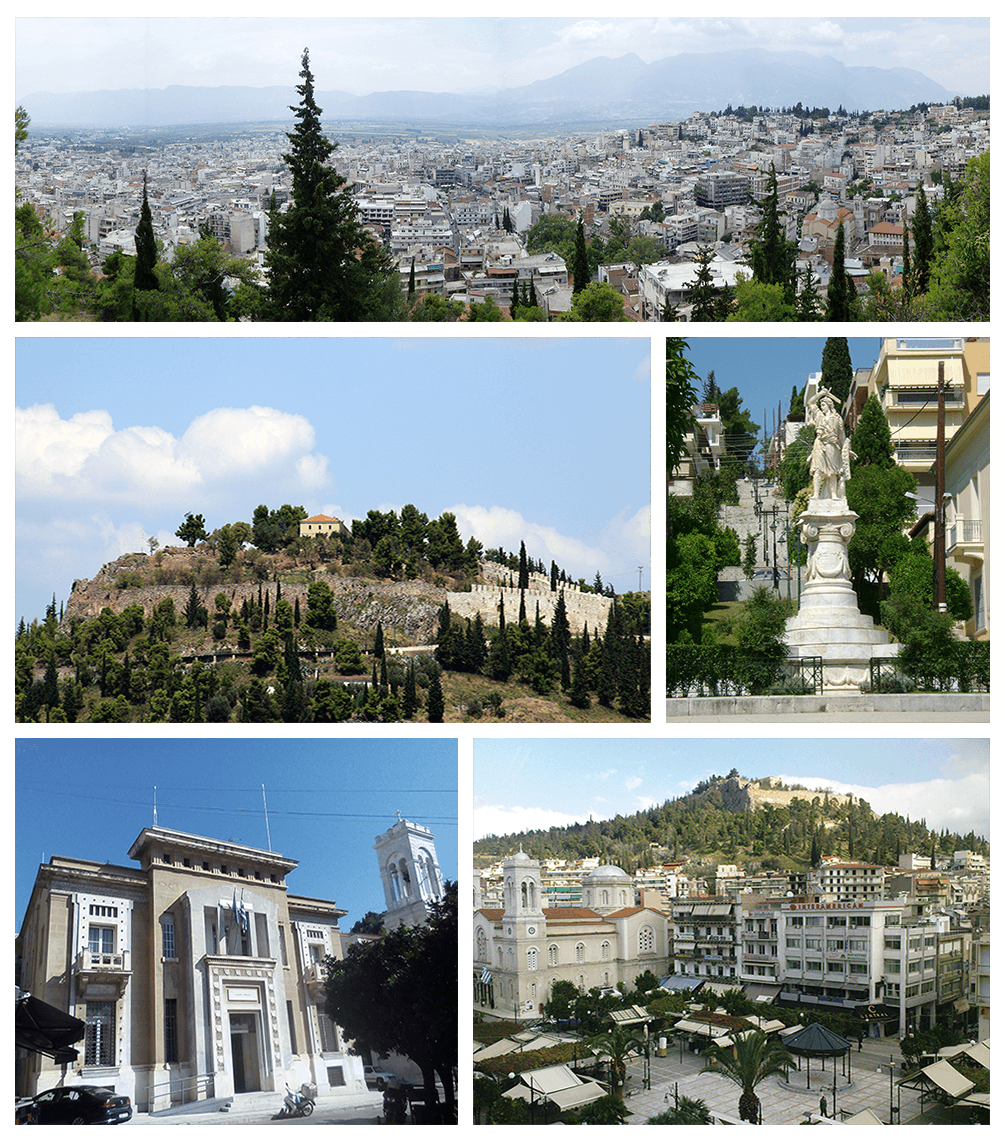 SilentResident (compilation, sources to attribute see above; if any of the sources used in the Montage are removed from Wikimedia Commons, or better ones are found, please inform its creator so that they can update it. You can contact the creator by leaving a message here: [1]) / CC BY-SA 3.0, via Wikimedia Commons
Self-guided audio walking tour of Lamia — GPS route, offline playback, story-driven narration in 32 languages.
“Where ancient echoes meet modern life in the heart of Greece.”
Not the postcards. The stories even locals don't know — whispered in your ear, right where they happened.
The city's name carries a dark, mythical past, far removed from its present-day charm.
This ancient fortress holds a secret within its walls, revealing a surprising repurposing from a more recent era.
The prominent statue in this square commemorates a hero whose final moments were marked by an act of brutal defiance.
Discover every secret of Lamia
Every address, every reveal in full — in your ear, right where it happened.
You pick your stops. You walk. The voice reveals what the others miss.


Your self-guided audio tour of Lamia is ready — pick your landmarks, choose your language, and start the moment you arrive.
BuyLume has a built-in augmented-reality guide. Hold your phone up and its camera shows the street ahead of you, with a glowing arrow laid over the real view that always points to your next stop — no map to puzzle over, no wrong turns. Like everything in Lume, it works fully offline.
Lamia, the capital of the Phthiotis regional unit in Central Greece, offers a blend of ancient history and contemporary Greek life. Situated at the foothills of Mount Othrys and near the fertile Spercheios River valley, the city serves as a significant agricultural center. Its strategic location has made it a crossroads throughout history, connecting southern Greece with Thessaly and the Balkans.
While perhaps not as widely known as other Greek destinations, Lamia provides an authentic experience, allowing visitors to immerse themselves in local culture and explore a wealth of historical sites. The city's landscape is characterized by rolling hills and plains, with the dramatic backdrop of mountains like Oiti and Parnassus.
## From Ancient Settlement to Byzantine Stronghold Archaeological evidence suggests that Lamia was settled as early as the 3rd millennium BC. Its strategic position, linking various regions of Greece, made it a crucial defensive location throughout antiquity. The city gained prominence after 400 BC, particularly following the decline of the Spartan colony at Heraclea. During this period, Lamia's mint began issuing coins featuring Philoctetes, a hero from Greek tragedy associated with the region, highlighting its cultural significance.
Lamia is famously connected to the Lamian War of 323/2 BC, a conflict where Greek states, under the Athenian commander Leosthenes, attempted to resist Macedonian control after the death of Alexander the Great. Leosthenes himself was killed outside the city walls while besieging Macedonian forces defending Lamia. The city eventually fell to Roman forces in 191 BC under Manius Acilius Glabrio, who severely plundered it. In late imperial times, Lamia was an episcopal see known as Zitouni, a name it retained for centuries during the Middle Ages.
## Medieval Transitions and Ottoman Rule During the 6th century, under Justinian I, the walls of Lamia Castle are thought to have been rebuilt, marking its continued importance as a fortified site. In the 13th and 14th centuries, the city changed hands multiple times, falling under the control of various foreign conquerors, including the Slavs, the Knights Templar, the Franks, and the Catalans, who referred to it as 'the Castle'. The Ottomans finally captured Lamia in 1446 and maintained control until the city's liberation in 1833. The enduring presence of its medieval castle, built on earlier foundations, stands as a testament to Lamia's long and complex history.
Begin your exploration at the Byzantine Castle of Lamia, which crowns a rocky hill overlooking the city. Dating back to the 5th century BC, this ancient fortress offers expansive views of the Spercheios Valley and the Maliakos Gulf. Inside the castle walls, you'll find the Archaeological Museum of Lamia, housed in a former barracks, displaying artifacts from the Neolithic period to late antiquity, providing insight into the region's past.
Descend to the city's lively heart, Platia Eleftherias (Freedom Square), a bustling hub surrounded by cafes and shops, ideal for observing local life. Nearby, Platia Diakou (Diakos Square) features the statue of Athanasios Diakos, a hero of the Greek War of Independence. For a glimpse into local commerce and flavors, explore Lamia's central markets, where you can find fresh produce, regional cheeses, and handmade goods.
A short drive from Lamia, the historic Battlefield of Thermopylae and its accompanying museum offer a powerful connection to ancient Greek history. You can also visit the nearby Loutra Thermopylon, natural thermal springs with warm, therapeutic waters.
Lamia experiences a hot-summer Mediterranean climate with four distinct seasons. For the most pleasant weather, consider visiting in spring (April to June) or early autumn (September to October). During these months, average temperatures range from 19°C to 29°C (66°F to 84°F), making it ideal for sightseeing and outdoor activities. Summers (late April through October) are warm to hot, with July being the warmest month, averaging highs around 31°C (88°F) and lows of 19°C (66°F). Winters (late November through mid-March) are mild, with average highs of 10°C (50°F) in January.
Lamia is a walkable city, especially its historic center and the area around the castle. For longer distances or exploring further neighborhoods, an efficient local blue bus network is available, with routes connecting to areas like the university campus. Taxis are also readily found at designated stands in the main squares.
For intercity travel, Lamia's central bus station connects the city to major Greek destinations such as Athens and Thessaloniki. Renting a car is recommended for those wishing to explore the surrounding national parks, coast, or other regional attractions. Accommodation options in Lamia range from hotels like Hotel Samaras and Hotel Athina to various apartments and vacation rentals, catering to different preferences and budgets.
Lamia in Korean, in Chinese or in Hebrew — and 29 more languages, every stop narrated by a native voice. The widest language range of any self-guided audio tour.
Available in: