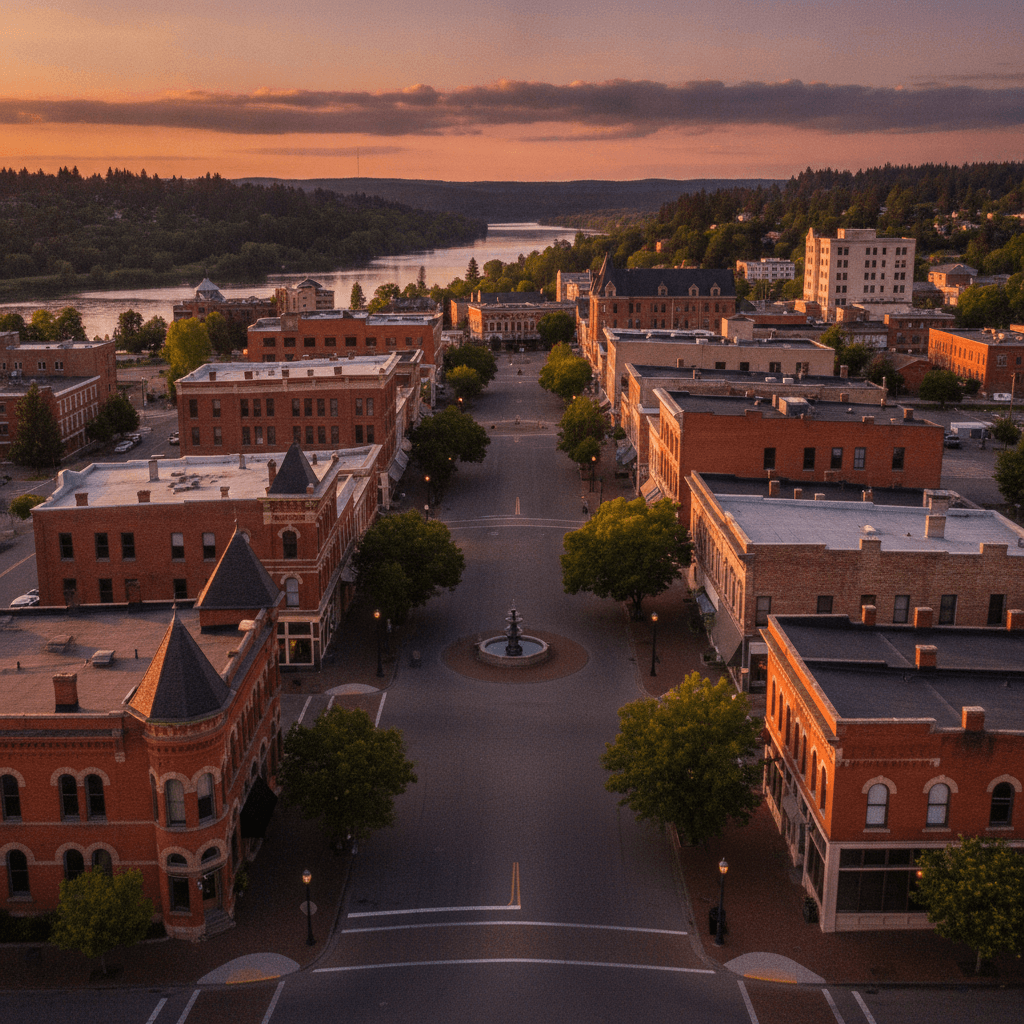
Ah, my friends, to truly know a place, one must walk its streets, observe its façades, and allow its history to whisper in your ear. Baker City, Oregon – a name that may not immediately evoke images of architectural splendor, yet it possesses a narrative as rich and complex as any European canvas. Here, in the heart of Eastern Oregon, the dreams and daring of the American West are etched in stone, brick, and glass, awaiting your discerning eye.
The Grand Overture: Main Street's Resplendent Stage
Begin your exploration, perhaps, on Main Street, where the city’s opulent past first announces itself. Your self-guided audio tour Baker City can lead you to the magnificent Geiser Grand Hotel, an architectural marvel from 1889. Observe its Romanesque Revival grandeur, accented with Queen Anne elements—the soaring turrets, the intricate terracotta details, the deep-set arched windows that invite curiosity. Inside, the stained-glass dome and polished wood speak of a bygone era, when gold miners and timber barons mingled under its lofty ceilings. It is a testament to aspiration, to bringing a piece of European elegance to the frontier.
As you continue along Main Street and turn onto Court Avenue, notice the harmonious, yet diverse, styles that stand shoulder-to-shoulder. Each commercial block, each shopfront, offers a unique study in proportion and ornamentation. From robust Victorian brickwork to more restrained early 20th-century designs, the street itself becomes a gallery, a testament to the city's evolving prosperity. It’s here that the Baker City walking tour app truly transforms a simple stroll into an immersive lesson, allowing you to pause, reflect, and absorb the nuances of each structure without rush.
Echoes of Prosperity: From Gold Dust to Art Deco Glamour
Just a few blocks away, on Washington Street, a different kind of ambition rises: the Baker Tower, originally the Baker Loan & Trust Building. This striking Art Deco edifice, with its clean lines, geometric patterns, and subtle setbacks, offers a beautiful contrast to the Geiser Grand. Its verticality and modern sensibility speak to the city's continued growth and embrace of new styles in the 1920s. Think of it as a sculptural statement, a shift in the aesthetic palette from the ornate to the streamlined.
Nearby, consider the robust dignity of the U.S. Post Office, a fine example of Classical Revival architecture. Its imposing columns and symmetrical design project an image of civic strength and permanence—a federal presence establishing order in a once-wild land. And don't miss the former Orpheum Theatre, even if its purpose has changed, its original Art Deco spirit can still be discerned in its façade, hinting at evenings of entertainment and community gathering. These buildings are not merely structures; they are chapters in Baker City’s compelling saga, best appreciated as you explore Baker City on foot.
Hidden Narratives and Powder River Views
Venturing slightly off the main thoroughfares, perhaps towards the Baker Heritage Museum (housed in the stunning former Natatorium), you encounter yet another architectural surprise. This building, with its unique design, speaks to the community’s varied needs and aspirations beyond commerce and governance. Imagine the joyful echoes of swimmers in what is now a repository of local history—a fascinating transformation that adds another layer to the city’s narrative.
For a glimpse into domestic life of the era, a walk to the Leo Adler House Museum provides a charming detour. This well-preserved Victorian home, with its inviting porch and intricate details, offers a personal perspective on the lives of Baker City's early residents. Then, allow your stroll to lead you towards the Powder River, which meanders gracefully through the town. Here, the built environment gives way to the natural, offering moments of quiet contemplation and a fresh perspective on the city from its watery edge.
My friends, Baker City is not simply a collection of buildings; it is an open-air museum, a living testament to the human spirit and its enduring desire to create beauty and order. With a Baker City offline audio guide, you are free to dictate your own pace, to linger where a particular cornice catches your eye, or to pause and absorb the stories that each brick wall seems to hold. It is an experience of personal discovery, allowing you to craft your own unique narrative of this extraordinary place.