Geiser Grand Hotel
Ce grand hôtel victorien, autrefois considéré comme le plus raffiné entre Salt Lake City et Portland, recèle un secret cinématographique entre ses murs opulents.
L'histoire complète se débloque dans le tour
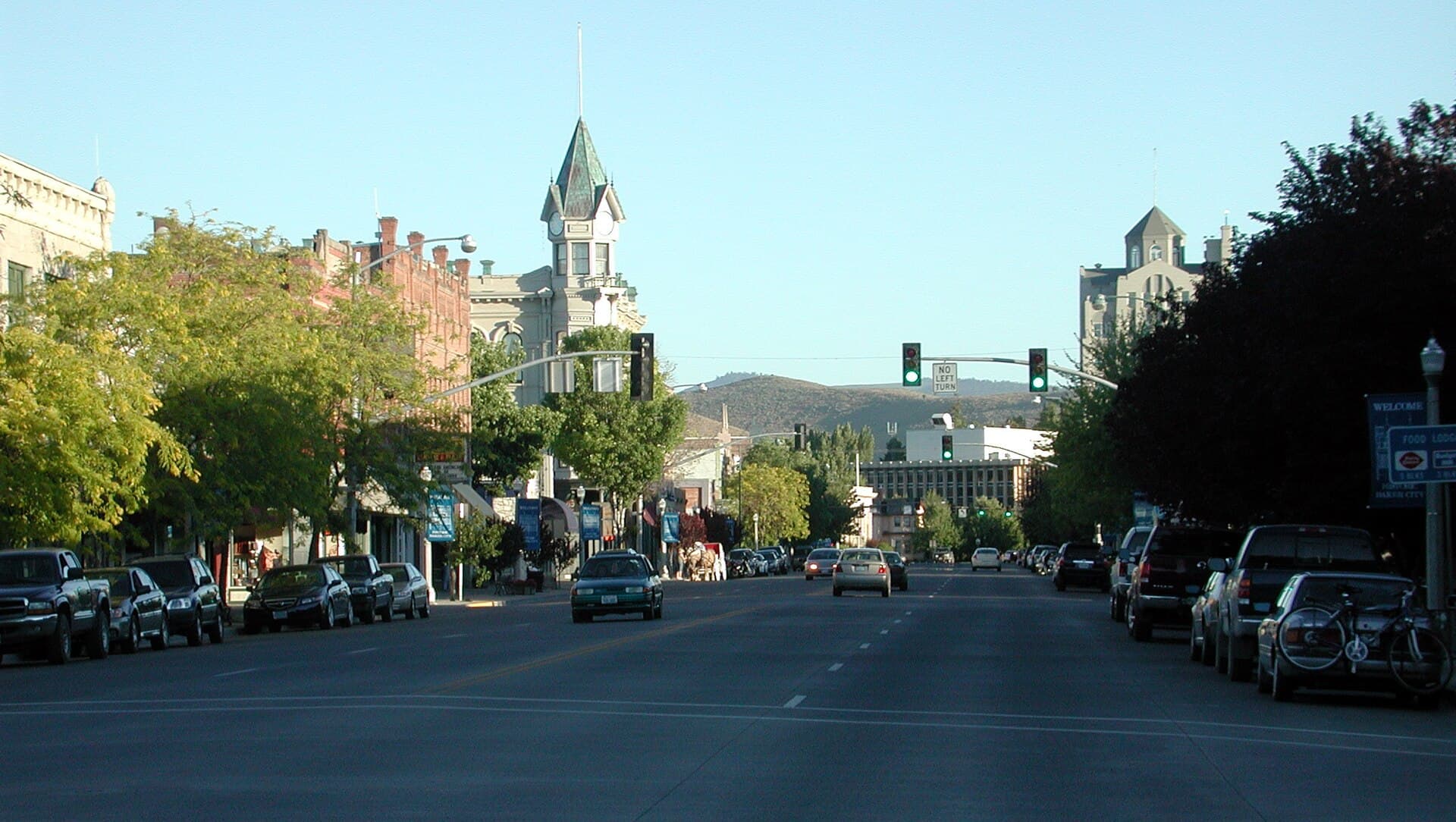 Finetooth / CC BY-SA 3.0, via Wikimedia Commons
Visite audio autoguidée de Baker City — parcours GPS à pied, lecture hors ligne, narration en 32 langues.
“Là où le Vieil Ouest perdure, au-delà des sentiers battus.”
Pas les cartes postales. Les histoires que même les habitants ignorent — soufflées à l'oreille, là où elles se sont passées.
Ce grand hôtel victorien, autrefois considéré comme le plus raffiné entre Salt Lake City et Portland, recèle un secret cinématographique entre ses murs opulents.
Parmi les artefacts du passé de la ruée vers l'or de Baker City, un lien surprenant avec un symbole chéri des road trips américains attend d'être découvert.
L'Oregon a connu sa propre ruée vers l'or significative, avec Baker City en son cœur. Le musée détient une preuve tangible de cette ère dorée, plus grande qu'on ne pourrait l'imaginer.
Découvrez tous les secrets de Baker City
Chaque adresse, chaque révélation en entier — dans ton oreille, là où elle s'est passée.
Tu choisis tes lieux. Tu marches. La voix te révèle ce que les autres ignorent.

Votre visite audioguidée de Baker City vous attend — choisissez vos lieux, votre langue, et lancez-vous dès votre arrivée.
AcheterBaker City, la « Reine de l'Empire intérieur », repose dans une vallée verdoyante le long de la Powder River, encadrée par les montagnes Elkhorn et Wallowa au nord-est de l'Oregon. Cette ville historique, avec une population d'un peu plus de 10 000 habitants, offre un mélange unique de splendeur naturelle, d'un passé préservé et d'une culture locale animée. C'est un endroit où la grandeur de l'Ouest américain est palpable, de son centre-ville méticuleusement restauré aux paysages accidentés qui l'embrassent.
Plus qu'un simple arrêt sur l'autoroute, Baker City agit comme un portail vers de vastes aventures en plein air, y compris la forêt nationale de Wallowa-Whitman et la spectaculaire zone de loisirs nationale de Hells Canyon. Pourtant, la ville elle-même est une destination, invitant les voyageurs à traverser le temps via son architecture historique, ses musées variés et un sens palpable de la communauté qui a perduré depuis ses débuts de la ruée vers l'or.
Le récit de Baker City commence non pas avec les colons, mais avec les tribus autochtones Nez Percé et Bannock qui ont prospéré dans cette vallée riche en ressources pendant des siècles. Leur profonde connexion à la terre précède les transformations dramatiques qui allaient arriver au milieu du XIXe siècle. En octobre 1861, quatre mineurs — Henry Griffin, David Littlefield, William Stafford et G.W. Schriver — ont découvert de l'or dans Griffin Gulch, à quelques kilomètres au sud de la ville actuelle. Cette découverte a déclenché la ruée vers l'or de l'Oregon de 1861-62, attirant une vague de prospecteurs et conduisant à la création du comté de Baker en septembre 1862.
Le siège initial du comté était Auburn, une ville-tente animée qui a rapidement atteint plus de quatre mille mineurs. Cependant, à mesure que les filons d'or diminuaient en 1865, la population d'Auburn a chuté. La même année, l'avocat Royal A. Pierce a arpenté le terrain qui allait devenir Baker City, à quelques kilomètres au nord. Un bureau de poste a été établi en 1866, et en 1868, Baker City avait supplanté Auburn comme siège du comté. La ville a été officiellement incorporée en 1874, nommée en l'honneur du sénateur américain Edward D. Baker, le seul sénateur en exercice à périr au combat militaire pendant la guerre de Sécession américaine.
L'arrivée du chemin de fer Oregon Short Line en 1884 a marqué un moment crucial, reliant Baker City aux marchés de Portland et de la côte ouest, ainsi qu'à Omaha et aux points à l'est. Cela a stimulé une expansion significative, et en 1900, Baker City était devenue la plus grande agglomération entre Salt Lake City et Portland, ce qui lui a valu la désignation de « Reine de l'Empire intérieur ». Sa prospérité était évidente dans les élégants bâtiments en brique et en pierre qui ont remplacé les structures en bois antérieures, beaucoup construites par des hommes d'affaires juifs locaux. La scène culturelle de la ville a également prospéré, accueillant des compagnies de théâtre et d'opéra itinérantes.
Tout au long du XXe siècle, Baker City a continué à se développer, avec des industries comme le bois et les produits laitiers contribuant à son économie. L'Oregon Lumber Company, établie en 1889, exploitait une grande scierie et a construit le chemin de fer Sumpter Valley pour transporter les billes. En 1910, les résidents ont voté pour abréger le nom de la ville en « Baker », un changement qui a persisté jusqu'à un vote en 1989 qui l'a rétabli à « Baker City ». Aujourd'hui, Baker City embrasse son vaste passé, avec plus de cent bâtiments dans son quartier historique du centre-ville inscrits au Registre national des lieux historiques, ce qui en fait l'un des quartiers commerciaux historiques les plus intacts de l'Ouest.
Commencez votre exploration dans le Quartier historique de Baker, reconnu comme l'un des centres-villes du XXe siècle les plus intacts du Nord-Ouest, avec plus de 100 bâtiments historiques inscrits au Registre national des lieux historiques. Promenez-vous dans ses avenues pour admirer l'architecture victorienne et découvrir des boutiques indépendantes, des galeries d'art et des restaurants.
Un pilier du centre-ville est le Geiser Grand Hotel, une merveille architecturale de 1889 méticuleusement restaurée et célébrée pour son grand plafond en vitrail. Pour une immersion plus profonde dans le passé de la région, visitez le Baker Heritage Museum, qui abrite de vastes collections sur la géologie, l'exploitation minière et l'Oregon Trail, et présente même une exposition sur Wally Byam, l'inventeur de la caravane Airstream. Ne manquez pas la pépite Armstrong ici, la plus grande pépite d'or intacte de l'Oregon.
Juste au-delà de la ville, le National Historic Oregon Trail Interpretive Center sur Flagstaff Hill offre une expérience profonde, avec des kilomètres de traces préservées de l'Oregon Trail et des expositions immersives qui donnent vie à l'histoire des pionniers. Parcourez la Elkhorn Scenic Byway pour des vues imprenables sur les montagnes. Pour les amateurs de plein air, la Anthony Lakes Mountain Resort offre des possibilités de ski en hiver et de randonnée en été. Le Sumpter Valley Railroad propose des promenades pittoresques en train à vapeur à travers l'historique pays de l'or certains week-ends.
Baker City connaît un climat continental semi-aride avec des saisons distinctes. La période la plus favorable pour les activités par temps chaud est de la fin du printemps au milieu de l'été, plus précisément de mai à septembre, lorsque les journées sont chaudes et les nuits fraîches. Juillet est généralement le mois le plus chaud, avec des températures moyennes maximales d'environ 29-31°C (85-88°F) et des minimales d'environ 9°C (49°F). Les précipitations sont rares pendant les mois d'été, ce qui est idéal pour l'exploration en plein air. Pour ceux qui recherchent moins de foule et des températures douces, septembre est souvent considéré comme le meilleur mois. Les hivers sont froids et neigeux, décembre étant le mois le plus froid, avec une moyenne d'environ -1,9°C (28,6°F).
Baker City est idéalement située le long de l'Interstate 84, ce qui la rend facilement accessible par la route depuis Portland (environ 480 km au sud-est) et Boise, Idaho (environ 206 km au nord-ouest). Bien que les transports en commun au sein de la ville soient limités, Baker County Transit propose quelques lignes de bus. Cependant, une voiture privée est le moyen le plus pratique pour explorer Baker City et ses attractions naturelles environnantes. Les voitures de location ne sont pas largement disponibles à Baker City même, alors planifiez en conséquence si vous atterrissez dans un aéroport plus grand comme Boise (BOI), qui offre plus d'options de vol.
Lorsque vous vous aventurez sur les routes panoramiques et les chemins de traverse du comté de Baker, soyez prêt à des conditions de conduite variées, en particulier en hiver, lorsque certaines routes peuvent être fermées ou nécessiter une garde au sol plus élevée. Le GPS et le service cellulaire peuvent être intermittents dans les zones reculées, il est donc fortement recommandé d'emporter une carte routière physique de l'État de l'Oregon. Le centre d'information touristique du comté de Baker, situé au 490 Campbell Street à Baker City, peut fournir des cartes et des informations locales.
Baker City en coréen, en chinois ou en hébreu — et dans 29 autres langues, chaque étape narrée par une voix native. La plus large gamme de langues de tous les audioguides autoguidés.
Disponible en :