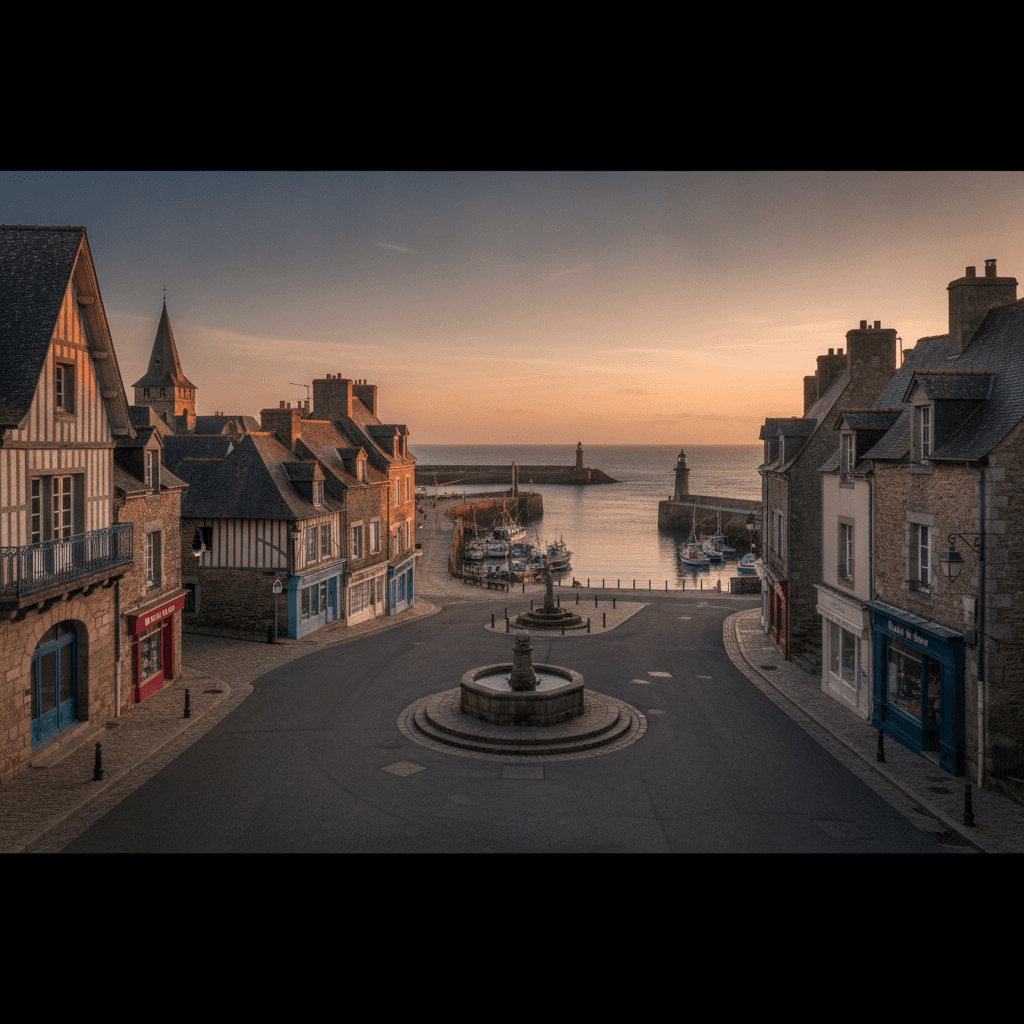
For an urbanist, the true measure of a city's success lies not in its grand boulevards or towering skylines, but in the subtle choreography of its pedestrian spaces. How does a town invite you to linger, to explore, to simply be on foot? This question led me to Barfleur, a captivating commune nestled on the northeastern tip of the Cotentin Peninsula in Normandy. What I found was a masterclass in human-scaled urbanism, a place that feels as if it were designed from the ground up to be walked, discovered, and understood at a slow, appreciative pace.
My approach to Barfleur was not one of hurried sightseeing, but of deep immersion. For this, a self-guided walking tour Barfleur offers an unparalleled opportunity, allowing one to absorb the town's unique rhythm without external pressure. It’s an intimate exploration, almost a dialogue with the very fabric of the village.
The Tactile Embrace of Granite Streets
Stepping into Barfleur's old centre is like entering a precisely crafted miniature world. The dominant material, local granite, lends an incredible visual and tactile consistency. The streets – or rues and ruelles as they are charmingly called – are often narrow, curving gently, intentionally limiting the dominion of the automobile. This immediate pedestrian preference is, for me, a sign of urban intelligence.
- Rue Saint-Thomas: This main artery of the old town beautifully exemplifies Barfleur’s walkability. Lined with sturdy granite houses, often featuring slate roofs and colourful hydrangeas, it guides you naturally towards the sea. The paving underfoot is authentic, uneven in places, demanding your attention and connecting you physically to centuries of footsteps that have worn these very stones.
- Architectural Cohesion: There are no jarring modern intrusions here. The buildings, mostly two or three stories, maintain a consistent height, creating an intimate, sheltered feel. This unbroken urban fabric encourages the eye to follow the streetscape, rather than jump from disparate elements.
As you navigate these delightful lanes, a good Barfleur audio guide becomes more than just a narrator; it's a silent companion, pointing out architectural nuances or historical markers that might otherwise go unnoticed. It’s about understanding why these streets are shaped as they are, and the stories they hold.
The Port: A Living Urban Anchor
Barfleur's identity is inextricably linked to the sea, and its active fishing port is not merely an industrial zone but a vibrant, integrated part of the urban experience. The Quai Henri Chardon, the main waterfront promenade, serves as the town's social heart.
- Seamless Transition: The transition from the narrow, enclosed streets to the open expanse of the harbour is expertly handled. There's no sudden break, but rather a gradual unfolding, allowing the gaze to extend from the immediate streetscape to the working boats, the calm waters, and the horizon beyond.
- Maritime Life: The port is not a museum piece. Fishermen mend their nets, fresh seafood is unloaded, and the rhythmic clanging of masts against rigging provides an authentic soundscape. This living, breathing functionality grounds Barfleur, preventing it from feeling like a mere historical tableau. Observing the ebb and flow of tides, the movement of fishing boats, and the daily life unfolding along the quay offers a direct connection to the town’s enduring spirit. A Barfleur GPS tour ensures you don't miss any of the key viewpoints or historical markers along this dynamic waterfront.
Echoes of Grandeur: Saint-Nicolas and the Customs House
Even in its compact size, Barfleur holds structures of significant historical weight that punctuate the pedestrian journey.
- Église Saint-Nicolas: Perched robustly near the port, this granite church, with its distinctive bell tower, stands as a testament to Barfleur’s past. Its position offers not just spiritual solace but also strategic views over the harbour. The sheer solidity of its construction speaks volumes about the community that built it, enduring the harsh coastal elements for centuries.
- Maison des Douaniers: The old customs house, another fine example of granite architecture, stands proudly by the water. Its sturdy presence reflects its historical role in controlling maritime trade and protecting the town's interests. Such buildings are not merely decorative; they are functional monuments, telling tales of commerce, authority, and everyday life.
An audio walking tour Barfleur is particularly adept at bringing these structures to life, providing context about their construction, their historical significance, and their place within the broader narrative of Normandy.
Barfleur, for me, is more than just a beautiful village; it's a living lesson in how urban spaces can be designed to honour the pedestrian experience. Its cohesive architecture, its active port, and its deliberate lack of reliance on vehicular traffic create an environment that actively encourages exploration on foot. To truly appreciate this urban tapestry, a dedicated approach is invaluable. With Lume, a self-guided journey allows you to absorb Barfleur's rhythms at your own pace, with rich narrative guidance as your companion.