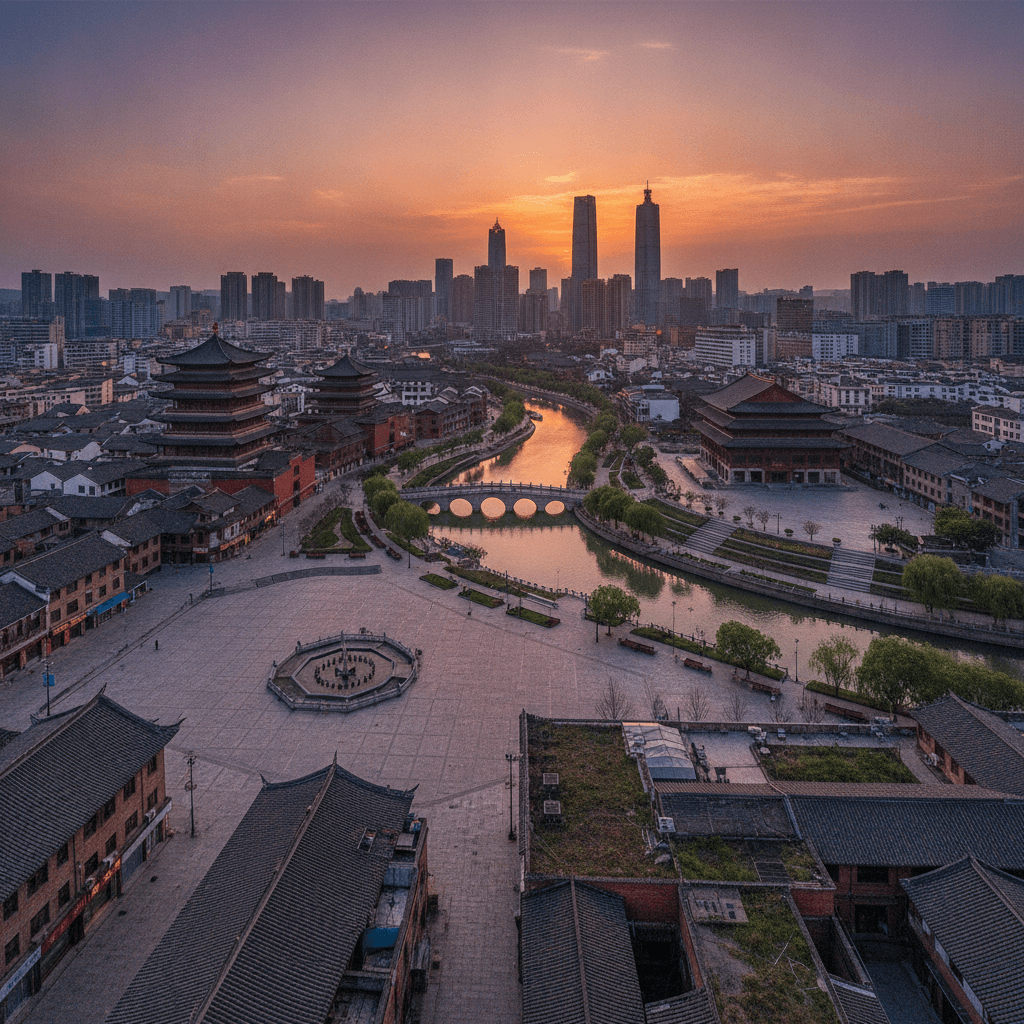
As a German urbanist, my professional curiosity often draws me to how cities breathe, how they invite connection, and crucially, how they are built for the pedestrian. My recent focus led me to Shaoguan, a city in northern Guangdong province that, at first glance, might seem like many others in rapidly developing China. Yet, its old centre offered a profound and delightful revelation in walkability, a testament to thoughtful urban evolution. To truly appreciate its intricate layers, I opted for a self-guided walking tour Shaoguan offers, letting Lume be my companion, transforming the city into a rich narrative unfolding by ear.
The Confluence and the Cradle of Shaoguan
The very heart of Shaoguan beats where the Wu and Zhen rivers merge to form the majestic Bei River. This confluence wasn't merely a geographical quirk; it was the historical reason for the city’s existence, a bustling nexus of trade and culture for centuries. As the Shaoguan audio guide began, it drew me immediately to this watery embrace. Standing on the riverfront, perhaps near the Zhenjiang Pavilion, I observed the ceaseless flow of both water and local life. Elderly residents practiced tai chi with fluid grace, children chased pigeons, and small boats occasionally glided past. The wide, tree-lined promenades along Zhenjiang Road are a testament to forward-thinking urban design, allowing space not just for efficient passage, but for lingering, for community interaction, for families enjoying the cool evening breeze. It’s a prime example of how a city can integrate its natural assets directly into its pedestrian experience, fostering a genuine sense of public space.
Through Ancient Alleys: Fengcai Tower and Beyond
Leaving the grand expanse of the riverfront, the Shaoguan gps tour led me deeper into the labyrinthine alleys that fan out from the confluence. Here, the urban fabric shifts dramatically. The streets narrow, often shaded by awnings and overhanging balconies, and the sounds become more intimate – the rhythmic clatter of woks from small eateries, the lively chatter of vendors, the gentle rustle of daily commerce. A highlight was undoubtedly the Fengcai Tower. This impressive Ming Dynasty structure, dedicated to the revered Song Dynasty scholar Yu Jing, stands as a stoic sentinel amidst the bustling modern shops and traditional shophouses. Its elegant architecture is a beautiful counterpoint to the surrounding urbanity, a striking reminder of Shaoguan's enduring legacy. The audio narration brought its history to life, allowing me to appreciate its significance beyond just its visual grandeur, painting a vivid picture of its past as a beacon of learning and resilience.
The Pulse of Daily Life: Markets and Temples
No exploration of walkability is complete without immersing oneself in the daily rhythms of a city. The audio walking tour Shaoguan provided took me through vibrant market streets – perhaps the bustling stretch near Laoshijie (Old Street) – where the air hummed with activity and the colours of fresh produce, spices, and artisanal crafts exploded. These are the true arteries of urban life, where pedestrian flow dictates the pace, and serendipitous encounters are the norm. The aroma of local snacks like 'Shao Mai' or 'Zhuzai Fen' (bamboo tube rice noodles) often wafted from stalls, inviting a stop. Further along, the serene grounds of the Da Jian Temple offered a peaceful, almost monastic contrast. Nestled amidst the city's friendly clamour, this ancient Buddhist temple, with its tranquil courtyards, aged banyan trees, and intricate carvings, provides an invaluable oasis for contemplation. It reminded me how vital these spiritual and communal spaces are for the mental well-being of city dwellers, easily accessible and appreciated on foot.
Designed for the Foot: An Urbanist's Takeaway
What struck me most profoundly about Shaoguan's old centre, particularly as experienced through a self-guided walking tour Shaoguan, was its inherent, almost intuitive design for the human foot. It wasn't just a collection of historical sites; it was a living, breathing testament to urban planning that prioritizes people over vehicles in its most historic core. From the broad riverside promenades that invite leisurely strolls and community gatherings, to the intimate, shaded alleys that encourage discovery around every corner, to the seamlessly integrated heritage sites like Fengcai Tower and Da Jian Temple – every element contributes to a genuinely rewarding pedestrian experience. The city embraces its layered past while thoughtfully accommodating the present, creating a diverse urban tapestry that is truly best unravelled at a walking pace, allowing you to absorb its nuances and character.
To truly understand a city, one must walk its streets. The layers of history, the vibrant nuances of daily life, the subtle design choices that shape our urban experience – these are best absorbed slowly, deliberately. This Shaoguan experience, guided only by the narratives whispered into my ear, deepened my appreciation not just for the city itself, but for the profound insights a thoughtful Shaoguan audio guide can offer, transforming mere navigation into an immersive, personal journey of discovery.