The Bohorok Orangutan Rehabilitation Centre
Bukit Lawang's renown began with a Swiss initiative, but the original purpose of the orangutan rehabilitation center eventually led to its closure.
Full story unlocks in the tour
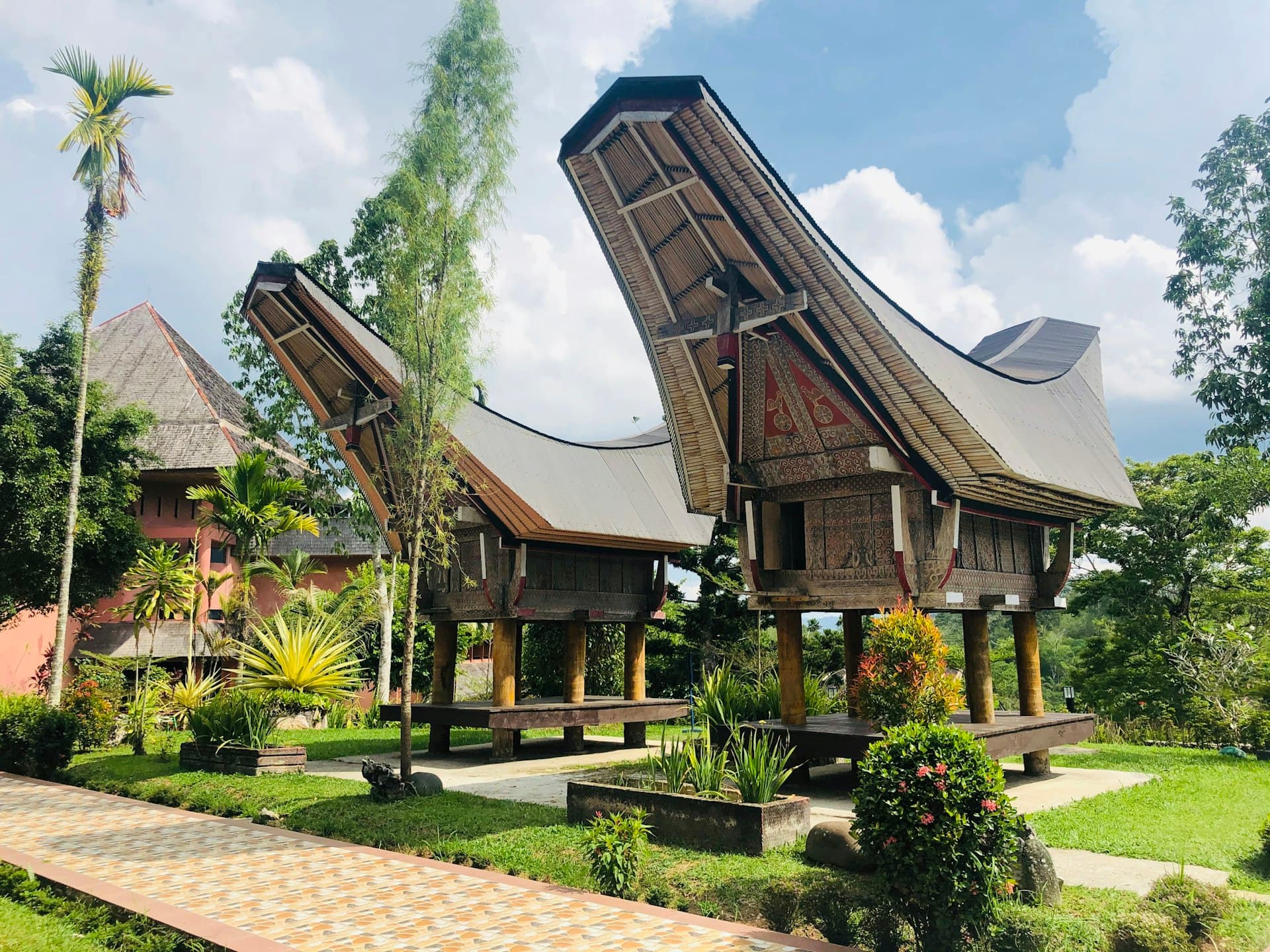 Photo of Tana Toraja, via Wikimedia Commons
Self-guided audio walking tour of Bukit Lawang — GPS route, offline playback, story-driven narration in 32 languages.
“Where the jungle meets the river, and wild stories begin.”
Not the postcards. The stories even locals don't know — whispered in your ear, right where they happened.
Bukit Lawang's renown began with a Swiss initiative, but the original purpose of the orangutan rehabilitation center eventually led to its closure.
The river winding through Bukit Lawang holds a memory of a devastating event that reshaped the village.
While orangutans are the main draw, the forest speaks of other, far more elusive residents.
Discover every secret of Bukit Lawang
Every address, every reveal in full — in your ear, right where it happened.
You pick your stops. You walk. The voice reveals what the others miss.
Your self-guided audio tour of Bukit Lawang is ready — pick your landmarks, choose your language, and start the moment you arrive.
BuyLume has a built-in augmented-reality guide. Hold your phone up and its camera shows the street ahead of you, with a glowing arrow laid over the real view that always points to your next stop — no map to puzzle over, no wrong turns. Like everything in Lume, it works fully offline.
Bukit Lawang, a small village on the edge of Indonesia's Gunung Leuser National Park in North Sumatra, is a place where the dense rainforest meets the gentle flow of the Bohorok River. Known globally as a sanctuary for the critically endangered Sumatran orangutan, it draws nature enthusiasts and adventurers seeking an authentic encounter with wildlife. The village itself exudes a relaxed, almost bohemian atmosphere, with guesthouses and cafes lining the riverside, offering a tranquil base for jungle explorations.
More than just a gateway to orangutan trekking, Bukit Lawang is a lively hub of ecotourism, deeply committed to conservation and community empowerment. Visitors are invited to immerse themselves in the biodiversity of one of the world's most vital ecosystems, where the calls of exotic birds and the rustling of leaves are the constant soundtrack. It is a destination that encourages slow travel, fostering a connection with both the natural world and the warm-hearted local communities.
## From Rehabilitation to Ecotourism Bukit Lawang's story is inextricably linked to the conservation of the Sumatran orangutan. In 1973, a Swiss organization established the Bohorok Orangutan Rehabilitation Centre, aiming to reintroduce orangutans rescued from captivity back into their natural habitat. Rangers played a crucial role, teaching these semi-wild primates the survival skills needed for jungle life, with supplementary feeding provided at platforms until they became self-reliant.
This pioneering effort quickly put Bukit Lawang on the map, attracting international visitors eager to witness these remarkable creatures. However, the increasing influx of tourists and uncontrolled interactions with the orangutans eventually led to concerns about their welfare, with animals becoming overly dependent on humans and susceptible to disease. Consequently, the rehabilitation center officially closed in 2002, though feeding platforms continued to operate for several more years before being phased out in 2015 due to ongoing controversies and their impact on the orangutans' wild behavior.
## A Community's Resilience In November 2003, Bukit Lawang faced a devastating flash flood, a direct consequence of illegal logging upstream. The catastrophic event destroyed a significant portion of the village, including hundreds of homes, businesses, and bridges, and tragically claimed 239 lives. The disaster highlighted the urgent need for sustainable practices and galvanized the community to rebuild with a stronger focus on environmental protection.
Since its reopening in July 2004, Bukit Lawang has transformed into a leading ecotourism destination. The local community, predominantly of the Batak ethnic group, has embraced conservation, with many residents working as guides, guesthouse owners, and restaurant staff. This shift ensures that tourism directly contributes to wildlife protection and empowers local livelihoods, fostering a model where visitors can experience the jungle's wonders while supporting its preservation.
The primary draw of Bukit Lawang is undoubtedly jungle trekking in Gunung Leuser National Park, offering the chance to encounter Sumatran orangutans in their natural habitat. Treks range from half-day excursions to multi-day adventures with overnight camping, catering to various fitness levels. Beyond orangutans, the biodiverse rainforest is home to Thomas leaf monkeys, macaques, gibbons, monitor lizards, and a wide array of birdlife, including hornbills.
For those seeking activities beyond trekking, the Bohorok River provides opportunities for refreshing swims and exhilarating river tubing. A visit to the Bat Cave (Gua Kelelawar) reveals a fascinating subterranean world teeming with thousands of bats and unique rock formations. Explore the surrounding countryside with a village tour, where you can witness traditional practices like brown sugar and tofu making, bamboo weaving, and rubber farming, offering a glimpse into local life. The weekly Friday Market in the nearby town of Gotong Royong is a lively spectacle of exotic fruits, vegetables, and traditional snacks. For a more immersive cultural experience, consider a cooking class to learn authentic Indonesian cuisine.
Bukit Lawang is a year-round destination, with temperatures consistently between 21°C and 33°C. The dry season, from May to October, is generally considered the best time for jungle trekking, as trails are less slippery and river levels are ideal for tubing. However, this period can also see more tourists, especially in July and August. The wet season, from November to April, brings brief afternoon rain showers, making the rainforest exceptionally lush and offering a quieter trekking experience with fewer crowds. May, June, or September offer a good balance of favorable weather and fewer visitors.
Bukit Lawang is approximately a 3 to 4-hour drive from Medan, the capital of North Sumatra. Most travelers fly into Kuala Namu International Airport (KNO) in Medan and arrange a private or shared car transfer to the village. The village itself is pedestrianized, so you will walk to your accommodation upon arrival.
It is crucial to bring enough cash to Bukit Lawang, as there are no ATMs in the village, and most local businesses only accept cash. The nearest ATM is about 30 minutes away. Pack lightweight, breathable clothing, comfortable walking shoes, and water shoes for river crossings. Insect repellent, sunscreen, organic toiletries, and a reusable water bottle are essential. Power cuts are common, so a power bank and extra camera batteries are highly recommended. Be mindful of uneven paths and uncovered drains, especially at night, and always use a flashlight.
Bukit Lawang in Korean, in Chinese or in Hebrew — and 29 more languages, every stop narrated by a native voice. The widest language range of any self-guided audio tour.
Available in: