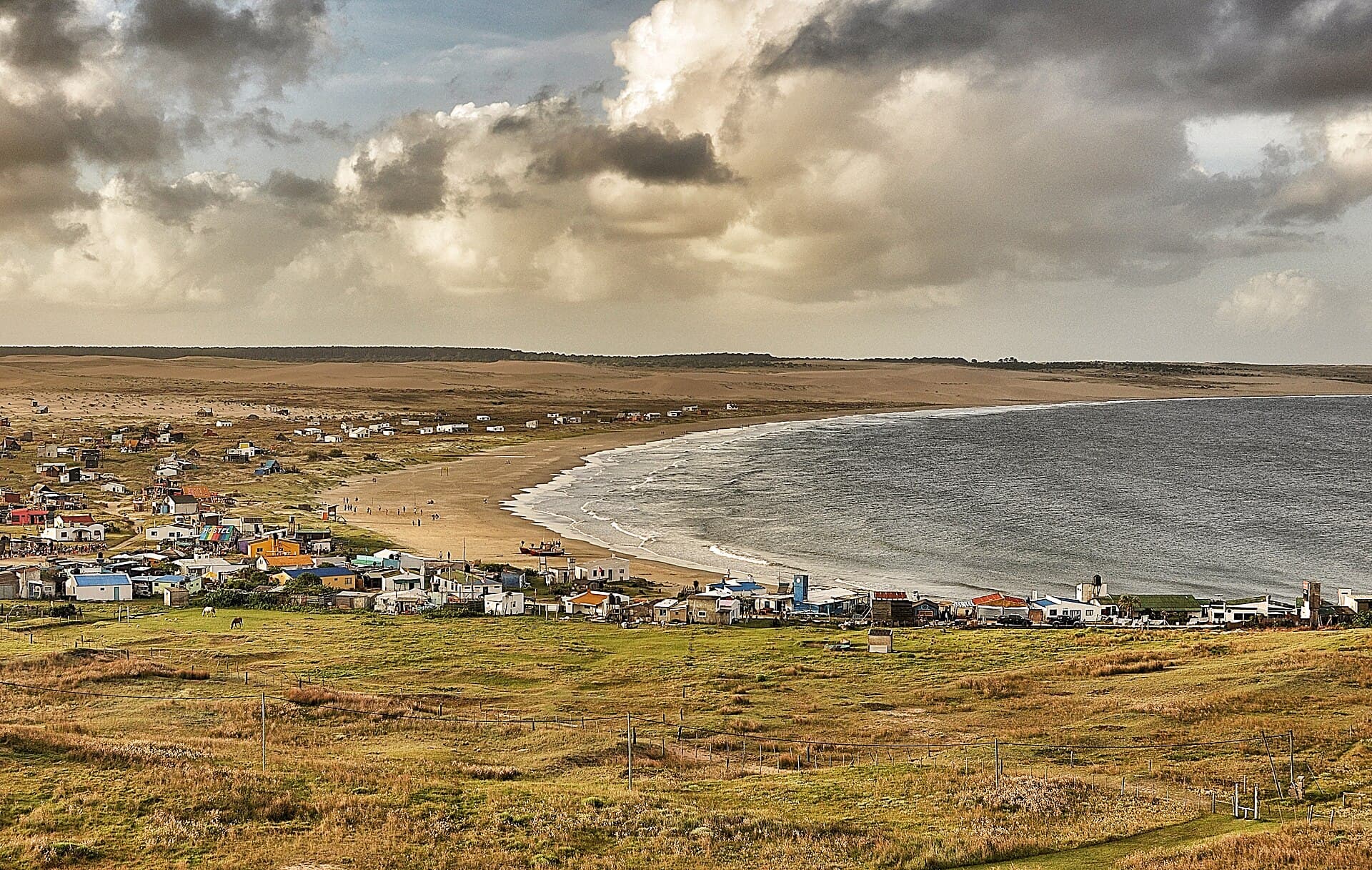
Cabo Polonio, UruguayPablofor / CC BY-SA 3.0, via Wikimedia Commons
UY

Cabo Polonio

Self-guided audio walking tour of Cabo Polonio — GPS route, offline playback, story-driven narration in 32 languages.

Where the wild Atlantic meets a different way of life.

The secrets of Cabo Polonio

Cabo Polonio, as no one tells it.

Not the postcards. The stories even locals don't know — whispered in your ear, right where they happened.

3 secrets below. Many more wait inside the tour.
The Lighthouse

The Cabo Polonio Lighthouse, a beacon since 1881, originally ran on an unusual fuel source.

Full story unlocks in the tour
The Shifting Dunes

The vast sand dunes surrounding Cabo Polonio aren't just scenery; they're a dynamic, living landscape that constantly reshapes itself.

Full story unlocks in the tour
The "Off-Grid" Paradox

Cabo Polonio is famous for being off-grid, with no traditional electricity or running water, yet many visitors find their experience surprisingly comfortable.

Full story unlocks in the tour
The full tour

Discover every secret of Cabo Polonio

Every address, every reveal in full — in your ear, right where it happened.

Get the key to Cabo Polonio

You pick your stops. You walk. The voice reveals what the others miss.

Cabo Polonio — brown and white lighthouse during daytime
Photo: Patrícia Cassol Pereira / Unsplash
Cabo Polonio — white and brown lighthouse under blue sky during daytime
Photo: Romy Pawlak / Unsplash
Cabo Polonio — person walking near seashore during daytime
Photo: Paz Arando / Unsplash
Choose your time

How long do you have in Cabo Polonio?

Your self-guided audio tour of Cabo Polonio is ready — pick your landmarks, choose your language, and start the moment you arrive.

Buy
About Cabo Polonio

The story of Cabo Polonio

Cabo Polonio, a remote coastal hamlet in Uruguay's Rocha Department, offers an escape from the modern world. With no paved roads leading to it and a distinct lack of conventional infrastructure, this village exists in harmony with its wild surroundings. It is a place where the rhythm of life is dictated by the sun and the sea, rather than by schedules or screens.

Surrounded by vast, shifting sand dunes, pristine beaches, and a thriving sea lion colony, Cabo Polonio is a national park dedicated to preserving its unique ecosystems. Visitors are transported across the dunes in specialized 4x4 vehicles, setting the tone for an experience that prioritizes nature and simplicity.

History

From Ancient Shores to a Secluded Settlement

The history of human habitation in the Cabo Polonio area stretches back approximately 11,000 years, with prehistoric societies occupying the land until the arrival of Europeans. Indigenous Uruguayans utilized the cape for thousands of years, primarily for fishing and hunting sea lions, a practice that continued through Spanish colonial rule and beyond.

The name "Cabo Polonio" itself is tied to maritime history, believed to be named after a Spanish galleon, the "Polonio," which shipwrecked off its coast in 1735. Due to its treacherous, rocky coastline, the area became a notorious spot for shipwrecks, attracting pirates and French traffickers who found refuge in its isolation.

The modern settlement began to form in the 19th century, initially centered around the exploitation of sea lions. Artisanal fishermen would seasonally gather for the loberías zafrales (seasonal seal hunts), which were eventually suspended in 1991. The construction of the Cabo Polonio Lighthouse in 1881 was a pivotal moment, built to prevent the frequent shipwrecks and guiding vessels through the dangerous waters. This lighthouse sparked further interest in the area, leading to the gradual growth of the village.

Over time, Cabo Polonio evolved into a unique, off-grid community. In 2009, the area was designated as Cabo Polonio National Park, a move to protect and preserve its distinctive ecosystem and prevent further construction, thereby maintaining its remote allure. Today, while its permanent population remains small (around 128 inhabitants as of 2023), it swells significantly during the summer months with temporary residents and tourists drawn to its unconventional lifestyle.

What to see

The most prominent landmark in Cabo Polonio is its historic Lighthouse, built in 1881. Visitors can climb its 132 steps for expansive views of the village, the Atlantic Ocean, and the nearby Islas de Torres.

These three rocky islands, collectively known as Islas de Torres, are home to one of South America's largest sea lion colonies, comprising almost half of Uruguay's total sea lion and fur seal populations. Observing these marine mammals lounging on the rocks or swimming in the ocean is a highlight for many.

Beyond the cape, the Cabo Polonio dune system is a unique and extensive remnant of a sandy strip that once stretched along the coast. These mobile dunes, some exceeding 20 meters in height, offer opportunities for walking and exploration.

The village itself, with its rustic, colorful homes and sandy paths, invites leisurely strolls. The two main beaches, South Beach and North Beach (also known as Playa de la Calavera due to past shipwrecks), provide expansive stretches of sand for relaxation.

At night, the absence of streetlights in most of the village creates exceptional conditions for stargazing, offering clear views of the night sky.

When to visit

The best time to experience Cabo Polonio depends on your preference. For warm weather, a lively atmosphere, and all services open, visit during the summer months (December to March). January and February are considered peak season.

If you prefer a quieter experience with fewer crowds and mild temperatures, the shoulder months of November and April are ideal. During the Southern Hemisphere winter (June to September), many businesses close, and the village becomes very quiet, with only a few year-round residents remaining.

Practical

Access to Cabo Polonio is a unique part of the experience, as no paved roads lead directly into the village. Visitors must leave their private vehicles at the "Terminal Puerta del Polonio" on Route 10 and transfer to specialized 4x4 trucks that traverse the 7 kilometers of sand dunes and beach. Walking or horseback riding from the terminal or from Barra de Valizas are also options for the adventurous.

Cabo Polonio operates largely off-grid, meaning most houses lack direct connections to electricity and running water. While some establishments use solar panels or generators, it is wise to be prepared for a rustic experience. Water is typically sourced from wells or collected rainwater. There are no ATMs in the village, and most places only accept cash (Uruguayan Pesos or US dollars), so bring sufficient funds. Cell phone and internet service exist, but can be patchy.

Good to know
How do I get to Cabo Polonio?
You cannot drive directly into Cabo Polonio. You must take a specialized 4x4 truck from the Terminal Puerta del Polonio, located on Route 10. Walking or horseback riding across the dunes are also options.
Is there electricity and running water in Cabo Polonio?
Most houses in Cabo Polonio do not have electricity or running water. While some businesses and accommodations use solar panels or generators, be prepared for an off-grid experience. Water is from wells or collected rain.
Are there ATMs or places to use credit cards?
No, there are no ATMs in Cabo Polonio, and most establishments only accept cash (Uruguayan Pesos or US dollars). It is essential to bring enough cash for your stay.
What wildlife can I see in Cabo Polonio?
Cabo Polonio is home to one of South America's largest sea lion colonies, visible near the lighthouse. You might also spot various bird species, and occasionally dolphins or whales during migration seasons.
When is the best time to visit for good weather?
The summer months, from December to March, offer the warmest weather for beach activities. For fewer crowds and mild temperatures, consider visiting in November or April.
Can I visit Cabo Polonio as a day trip?
While possible, a day trip to Cabo Polonio can be rushed due to the 4x4 transfer schedule. Many recommend staying at least two days to fully experience the unique atmosphere.
On the map
Cabo Polonio
€9.90
No booking · activate anytime · 12h to walk it
Get the key to Cabo Polonio