Salto Grande Dam
The colossal Salto Grande Dam, a shared marvel between Uruguay and Argentina, powers more than just cities.
Full story unlocks in the tour
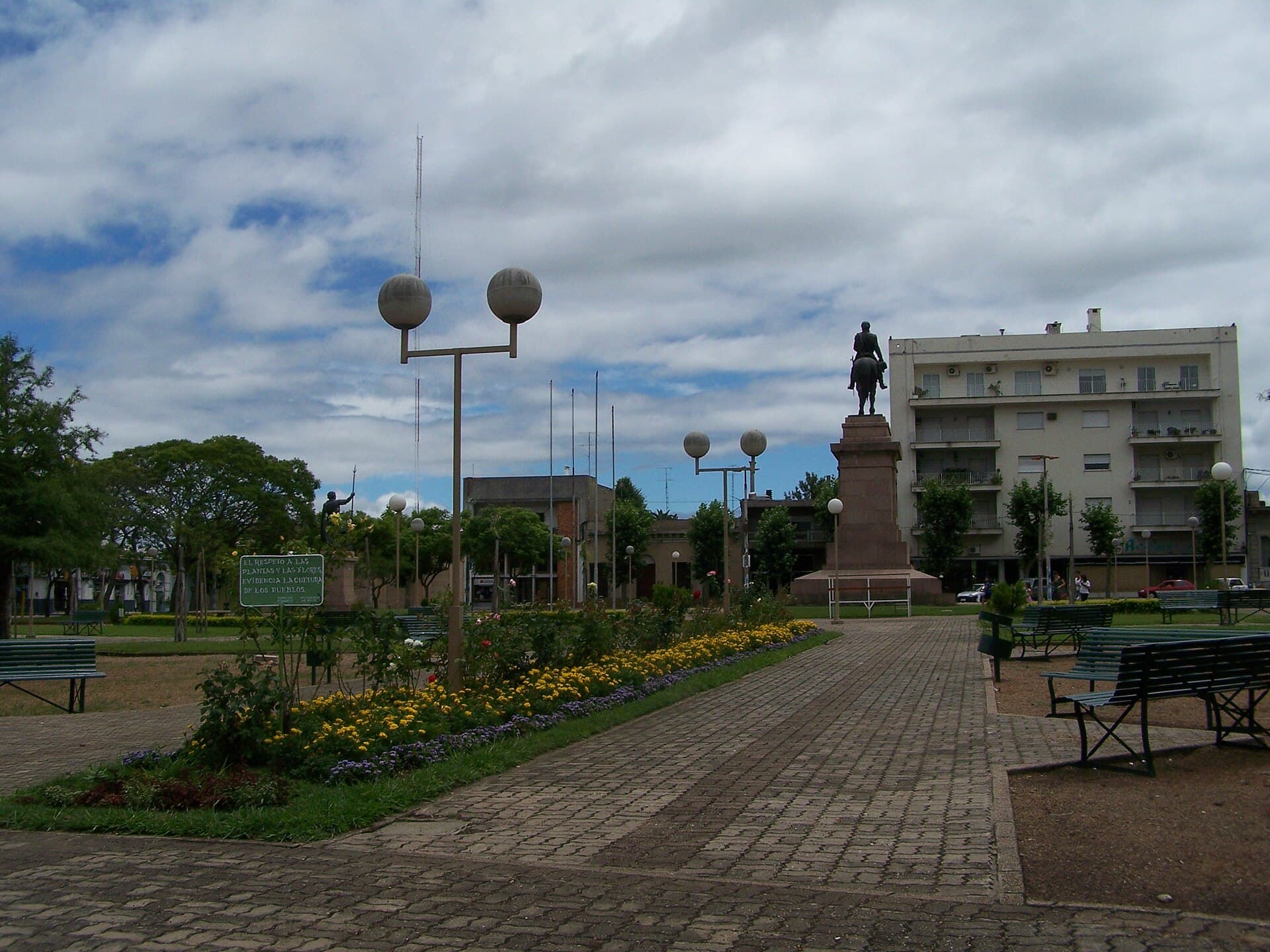 Cornelius / CC BY-SA 2.0, via Wikimedia Commons
Self-guided audio walking tour of Salto — GPS route, offline playback, story-driven narration in 32 languages.
“Where the Uruguay River slows, life finds its rhythm and warmth.”
Not the postcards. The stories even locals don't know — whispered in your ear, right where they happened.
The colossal Salto Grande Dam, a shared marvel between Uruguay and Argentina, powers more than just cities.
Uruguay's first thermal spa, Arapey, owes its existence to a surprising discovery.
Salto is synonymous with citrus, yet these iconic fruits traveled a considerable distance to reach Uruguayan soil.
Discover every secret of Salto
Every address, every reveal in full — in your ear, right where it happened.
You pick your stops. You walk. The voice reveals what the others miss.


Your self-guided audio tour of Salto is ready — pick your landmarks, choose your language, and start the moment you arrive.
BuyLume has a built-in augmented-reality guide. Hold your phone up and its camera shows the street ahead of you, with a glowing arrow laid over the real view that always points to your next stop — no map to puzzle over, no wrong turns. Like everything in Lume, it works fully offline.
Salto, Uruguay's second-most populous city, rests on the eastern bank of the Uruguay River, forming a natural border with Argentina. This strategic location has shaped its identity as a vital transport hub and a sought-after destination. The city offers a blend of relaxed resort ambiance and the energetic pace of a modern center, known for its thermal springs, riverine landscapes, and historical sites.
Often called the "Uruguayan Ibiza" due to its lively nightlife, Salto also captivates with its cultural heritage. Nineteenth and early twentieth-century architecture, inviting parks, and a picturesque waterfront create a harmonious atmosphere. Whether you seek lively evening entertainment, peaceful thermal soaks, or cultural immersion, Salto offers a memorable experience.
Salto is also an agricultural powerhouse, particularly renowned for its citrus production, contributing significantly to Uruguay's national output of oranges and tangerines. The region's fertile lands and access to the Uruguay River support a thriving agricultural sector, including livestock ranching and viticulture.
The history of Salto began not with grand ceremonies, but out of practical necessity. On November 8, 1756, Governor José Joaquín de Viana of Montevideo ordered the construction of temporary barracks for his troops, establishing what was initially a modest military post named San Antonio del Salto Chico. The city's name, meaning "jump" or "waterfall" in Spanish, refers to the rapids of the Uruguay River, known as Salto Grande, which historically impeded upstream navigation. This geographical feature made Salto a natural transshipment point, where goods were moved between ships and land, fostering its early development as a commercial center.
By the 19th century, Salto was evolving into an important commercial hub. River trade and shipbuilding flourished, servicing the fleet that navigated the Uruguay River. The surrounding fertile lands supported a growing livestock industry, which later expanded into citrus plantations and vineyards, establishing Salto as a major exporter of oranges and tangerines. European immigrants, particularly from Italy and Spain, were drawn to the city's port, contributing to a rich architectural and cultural environment.
Significant milestones marked Salto's growth. In 1811, the area served as a camp for thousands participating in the "Exodus of the Oriental People," a pivotal event in Uruguay's struggle for independence. Salto became the administrative center of its own department in 1837 and officially received city status in 1863 due to its rapid economic and demographic expansion. The Larrañaga Theatre, an architectural landmark, opened in 1882, and a railway line connecting Salto to Montevideo was completed in 1890, further boosting trade.
A transformative discovery occurred in 1957 when hot underground waters were accidentally found during oil exploration in the Arapey and Daymán areas. This event gave rise to the wellness tourism industry, establishing Salto as a popular international thermal resort. The construction of the Salto Grande hydroelectric plant, a binational project with Argentina, began in 1974 and was completed in 1979, radically altering the region's economy and landscape by generating substantial electricity. An international bridge over the dam, opened in 1982, further solidified economic ties with Argentina.
Begin your exploration of Salto at Plaza Artigas, the city's central square, featuring a monument to national hero José Gervasio Artigas. From here, stroll along the Costanera Norte, a scenic riverfront promenade offering views of the Uruguay River, especially captivating at sunset.
For relaxation, the Termas del Daymán are a rewarding visit, with mineral-rich thermal waters and various pools. A short drive away, Termas de Arapey offers a more tranquil thermal experience and is one of Uruguay's oldest thermal resorts.
Discover Salto's industrial and natural marvels at the Salto Grande Dam, a binational hydroelectric complex on the Uruguay River. The dam's park provides scenic viewpoints and trails. Delve into local history and culture at the Museo del Hombre y la Tecnología, showcasing regional science, industry, and daily life. The Cathedral San Juan Bautista is a prominent religious landmark with a serene interior. For family fun, the Acuamanía Water Park offers year-round entertainment with its mineral water pools.
The best times to visit Salto for pleasant weather and outdoor activities are during spring (September to November) and autumn (March to May). During these months, temperatures are mild and agreeable, ideal for exploring the city and its thermal springs. Summers (December to March) are hot and humid, with average daily highs reaching 32°C (90°F) in January, though temperatures can exceed 38-40°C (100-104°F) during heat waves. Winters (June to August) are mild, with July being the coldest month, averaging 13°C (55°F). Rainfall is abundant throughout the year, with April being the wettest month.
Salto is generally considered a safe city for tourists, though it's always advisable to take basic precautions like being aware of your belongings and avoiding displaying valuables. Public transportation is efficient, with buses covering the city and its surroundings. Taxis and remises are also available. The local currency is the Uruguayan Peso (UYU). While Spanish is the official language, many in the tourism sector may have some English proficiency.
Accommodation options in Salto range from luxury thermal resorts to budget-friendly hostels and campsites, with many choices near the hot springs. For those seeking a quieter experience, rural accommodations are also available. It is recommended to have comprehensive travel insurance, as medical care can be expensive, and upfront payment may be required. Dengue and Zika viruses are a risk, so take precautions against insect bites.
Salto in Korean, in Chinese or in Hebrew — and 29 more languages, every stop narrated by a native voice. The widest language range of any self-guided audio tour.
Available in: