Campo Santo (Yungay)
Un champ de roses paisible et une carcasse de bus racontent une histoire de perte inimaginable, à quelques kilomètres de Caraz.
L'histoire complète se débloque dans le tour
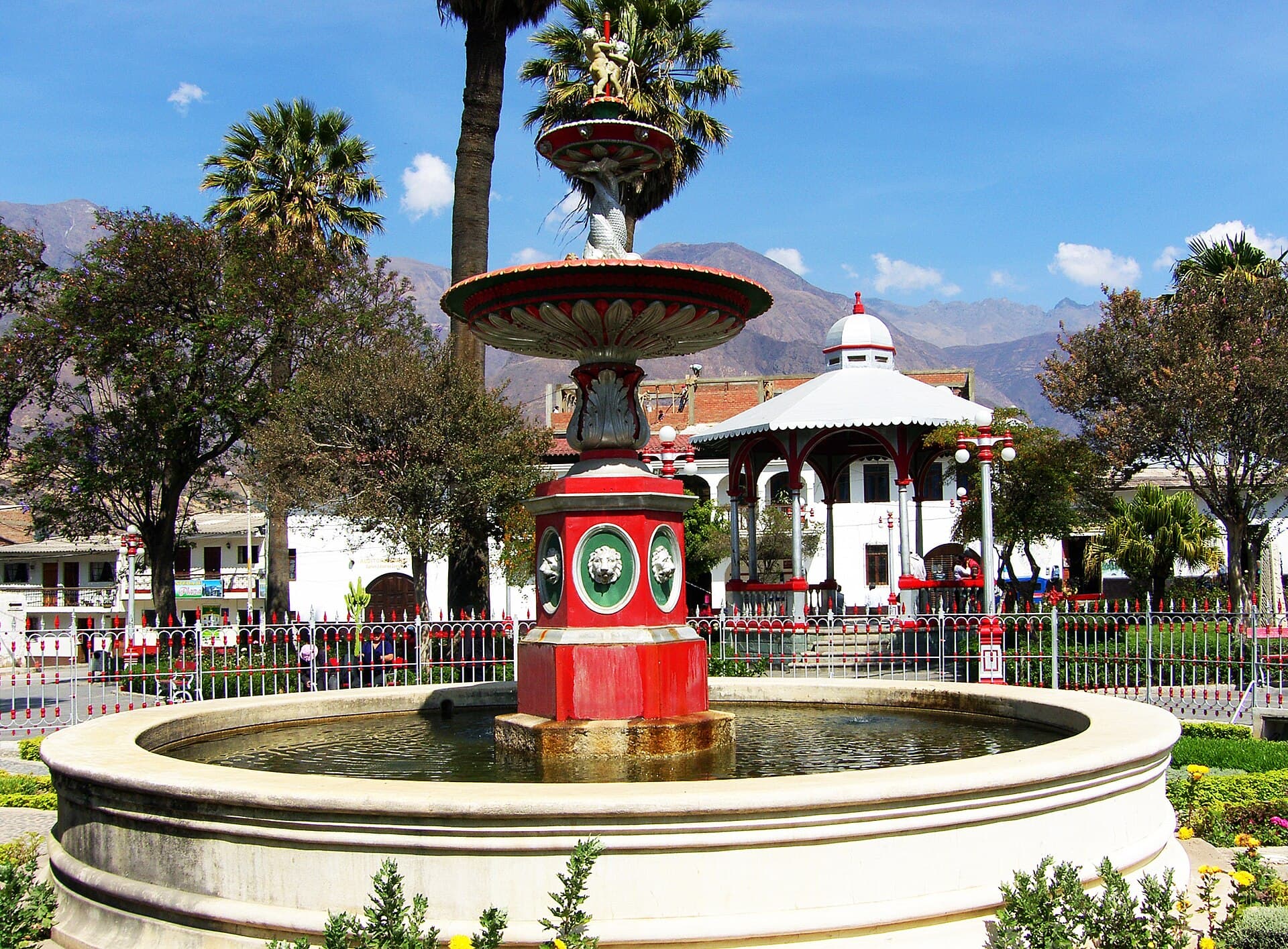 Alberto Cafferata / CC BY-SA 4.0, via Wikimedia Commons
Visite audio autoguidée de Caraz — parcours GPS à pied, lecture hors ligne, narration en 32 langues.
“Là où les Andes touchent le ciel et la tradition adoucit l'air.”
Pas les cartes postales. Les histoires que même les habitants ignorent — soufflées à l'oreille, là où elles se sont passées.
Un champ de roses paisible et une carcasse de bus racontent une histoire de perte inimaginable, à quelques kilomètres de Caraz.
Regardez attentivement la fontaine et le pavillon de la place principale ; ils recèlent un secret sur la résilience de Caraz.
Le marché aux fleurs hebdomadaire animé n'est pas seulement destiné aux foyers locaux ; ses fleurs voyagent loin.
Découvrez tous les secrets de Caraz
Chaque adresse, chaque révélation en entier — dans ton oreille, là où elle s'est passée.
Tu choisis tes lieux. Tu marches. La voix te révèle ce que les autres ignorent.

Votre visite audioguidée de Caraz vous attend — choisissez vos lieux, votre langue, et lancez-vous dès votre arrivée.
AcheterLume intègre un guide en réalité augmentée. Levez votre téléphone : sa caméra montre la rue devant vous, avec une flèche lumineuse posée sur l'image réelle qui pointe toujours vers votre prochain arrêt — aucune carte à déchiffrer, aucun mauvais virage. Comme tout dans Lume, ça fonctionne entièrement hors-ligne.
Caraz, une ville tranquille de la région d'Ancash au Pérou, offre un rythme plus lent et un charme andin authentique par rapport à sa voisine animée, Huaraz. Située à une altitude de 2 256 mètres (7 402 pieds) dans le pittoresque Callejón de Huaylas, Caraz sert de porte d'entrée idéale à la majestueuse Cordillère Blanche et au Parc National de Huascarán. La ville elle-même conserve une atmosphère coloniale, avec une architecture traditionnelle, des rues pavées et une culture locale animée.
Souvent appelée 'Caraz Dulce' en raison de ses délicieuses sucreries traditionnelles, la ville constitue une base confortable pour explorer certaines des merveilles naturelles les plus spectaculaires des Andes péruviennes. Des lacs de haute altitude aux eaux d'un bleu impossible aux treks difficiles de plusieurs jours, Caraz offre un mélange d'aventure et de détente. C'est un endroit où vous pouvez vous immerger dans la vie locale, savourer les saveurs régionales et vous préparer à des expériences montagnardes inoubliables.
L'emplacement stratégique de Caraz signifie qu'elle est plus proche de nombreuses destinations de plein air de la région, ce qui en fait un point de départ pratique pour les aventuriers. Son climat doux et son atmosphère conviviale créent un environnement accueillant pour les voyageurs désireux de découvrir le cœur des hauts plateaux péruviens.
L'histoire de Caraz est profondément liée à la région plus vaste d'Ancash, une terre façonnée à la fois par d'anciennes civilisations et des événements géologiques dramatiques. Des preuves d'une ancienne occupation humaine dans la région remontent à des milliers d'années, avec des sites archéologiques pré-incas comme Tumshukayko, à seulement un kilomètre au nord de la place principale, présentant de belles maçonneries datant d'environ 2000-1800 av. J.-C. Ces ruines suggèrent un riche patrimoine culturel qui précède l'Empire inca, plus largement connu.
La création politique de la ville est attribuée au général San Martín le 12 février 1821, lorsqu'il a établi quatre départements, dont Huaylas, avec Caraz comme capitale initiale. Plus tard, en 1857, la région a été réorganisée, conduisant à la création de la province de Huaraz, et Caraz est devenue la capitale de la province de Huaylas le 25 juillet 1857.
L'un des moments les plus marquants de l'histoire récente de Caraz, ou plutôt de son heureuse échappée, fut le tremblement de terre dévastateur d'Ancash en 1970. Alors que la ville voisine de Yungay fut tragiquement anéantie par un glissement de terrain massif déclenché par le séisme, Caraz resta largement intacte. Cette résilience est un aspect clé de son identité, lui permettant de préserver une grande partie de son architecture coloniale, caractérisée par des balcons, des toits de tuiles rouges et des rues étroites, qui offrent un aperçu d'une époque révolue. La place principale, avec sa fontaine en laiton de 1891 et son pavillon musical de 1927, témoigne de ce passé durable.
Au fil des ans, Caraz a conservé son atmosphère de petite ville et son mode de vie andin traditionnel, résistant à la modernisation rapide observée dans les grandes villes. Elle est devenue reconnue pour ses produits agricoles, en particulier ses sucreries traditionnelles comme le manjar blanco, ce qui lui a valu le surnom affectueux de 'Caraz Dulce'. Aujourd'hui, Caraz continue d'être une destination paisible et authentique, offrant une fenêtre sur la longue histoire et la culture vivante des hauts plateaux péruviens tout en servant de base essentielle pour explorer les merveilles naturelles environnantes.
Caraz offre un mélange d'immersion culturelle et d'accès à des paysages naturels spectaculaires. Commencez votre exploration sur la Plaza de Armas, le cœur social de la ville, qui abrite une charmante fontaine en laiton de 1891 et un pavillon musical de 1927. Les rues environnantes mettent en valeur l'architecture coloniale préservée de la ville.
Pour un aperçu de la vie locale, visitez le marché aux fleurs hebdomadaire qui se tient tous les mercredis matin à quelques pâtés de maisons de la place principale. C'est un spectacle coloré où les agriculteurs locaux vendent une abondance de fleurs fraîchement coupées.
À une courte distance en voiture, le mémorial de Campo Santo à Yungay offre une expérience puissante et sombre. Ce site marque la ville d'origine ensevelie par un glissement de terrain déclenché par un tremblement de terre en 1970, avec un clocher d'église et une carcasse de bus émergeant des débris.
L'attraction naturelle la plus importante accessible depuis Caraz est la Laguna Parón, le plus grand lac de la Cordillère Blanche. Ses eaux turquoise saisissantes sont encadrées par d'imposants sommets enneigés, offrant des vues grandioses et des opportunités de randonnée ou simplement de profiter de la beauté sereine.
Caraz est également un excellent point de départ pour des treks dans le Parc National de Huascarán, un site classé au patrimoine mondial de l'UNESCO. Les options populaires incluent des randonnées d'une journée à la Laguna 69 et le Santa Cruz Trek de plusieurs jours, tous deux réputés pour leurs magnifiques lacs glaciaires et leurs vues sur les montagnes.
Pour une route panoramique unique, considérez le Cañon del Pato, une route spectaculaire creusée là où la Cordillère Blanche et la Cordillère Noire convergent. Vous pouvez également visiter le site archéologique pré-inca de Tumshukayko, situé à seulement 1 km au nord de la place principale, pour vous plonger dans le passé ancien de la région.
La meilleure période pour visiter Caraz est pendant la saison sèche, qui s'étend de mai à septembre. Pendant ces mois, vous pouvez vous attendre à un ciel clair et à des températures agréables, idéales pour les activités de plein air comme la randonnée et l'exploration de la beauté naturelle de la région. Juillet est souvent le mois le plus sec, avec un minimum de précipitations. Bien que les températures restent relativement constantes toute l'année, la saison des pluies de décembre à mars apporte des averses l'après-midi et des paysages verdoyants, et de septembre à novembre offre une météo de transition avec moins de foules et une flore en fleurs.
Caraz est facilement accessible en bus depuis Lima, le trajet durant environ 8 à 10 heures. Alternativement, vous pouvez prendre un vol pour l'aéroport d'Anta (ATA), à environ 45 km au sud de Caraz, avec des vols quotidiens depuis Lima. Une fois à Caraz, les déplacements en ville se font principalement à pied, car c'est une petite ville. Pour les longues distances ou les excursions vers les attractions voisines, les vans partagés locaux appelés colectivos sont fréquents, et des taxis ou des mototaxis sont également disponibles.
En raison de l'altitude de Caraz (2 256 mètres / 7 402 pieds), une acclimatation appropriée est essentielle, surtout si vous prévoyez d'entreprendre des treks en haute altitude. Buvez beaucoup d'eau et allez-y doucement les premiers jours. Pour vos bagages, apportez plusieurs couches de vêtements car les températures peuvent fluctuer, ainsi que des chaussures de randonnée, une veste imperméable, de la crème solaire et un chapeau. Pour les courses, le marché local propose des produits frais, et plusieurs magasins autour de la place répondent aux besoins quotidiens.
Caraz en coréen, en chinois ou en hébreu — et dans 29 autres langues, chaque étape narrée par une voix native. La plus large gamme de langues de tous les audioguides autoguidés.
Disponible en :