Castillo de Lamas
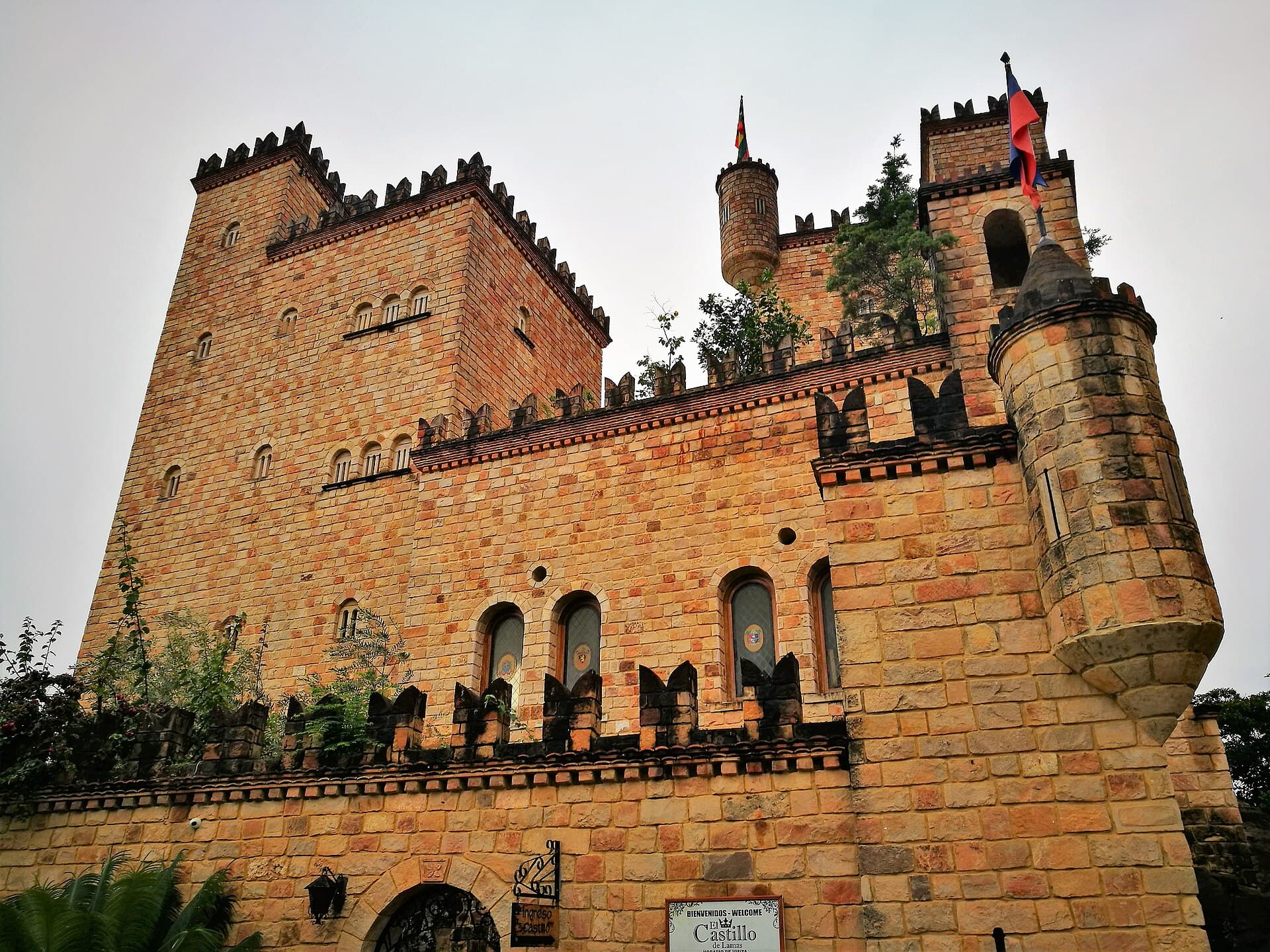
Picture a castle, complete with towers and stained-glass, emerging from the Peruvian Amazon jungle.
Full story unlocks in the tour
 Pitxiquin / CC BY-SA 4.0, via Wikimedia Commons
Self-guided audio walking tour of Lamas — GPS route, offline playback, story-driven narration in 32 languages.
“Where the Amazonian canopy meets Andean foothills, and ancient traditions encounter a medieval reverie.”
Not the postcards. The stories even locals don't know — whispered in your ear, right where they happened.
Picture a castle, complete with towers and stained-glass, emerging from the Peruvian Amazon jungle.
Some residences in the Wayku neighborhood are constructed without windows, a custom arising from a distinctive belief system.
Lamas is often called the 'City of Three Floors,' yet this refers not to building levels, but something else entirely.
Discover every secret of Lamas
Every address, every reveal in full — in your ear, right where it happened.
You pick your stops. You walk. The voice reveals what the others miss.


Your self-guided audio tour of Lamas is ready — pick your landmarks, choose your language, and start the moment you arrive.
BuyLume has a built-in augmented-reality guide. Hold your phone up and its camera shows the street ahead of you, with a glowing arrow laid over the real view that always points to your next stop — no map to puzzle over, no wrong turns. Like everything in Lume, it works fully offline.
Lamas, often recognized as the 'Folkloric Capital of the Peruvian Amazon,' presents a compelling fusion of indigenous culture, colonial echoes, and surprising architectural forms. Situated on a terraced hill, this city offers a distinct view of life where the Andean foothills meet the Amazonian lowlands. It is a place where ancient customs are visibly maintained, particularly within the Kichwa-Lamista community, inviting visitors to step into a living narrative.
Just 20 kilometers from Tarapoto, Lamas distinguishes itself with a clear identity, marked by its expressive local crafts, traditional dwellings, and an unexpected medieval-style castle that affords expansive views of the surrounding Amazon rainforest. The town's elevation provides a milder climate than the lower jungle, making it a comfortable destination for exploration.
Beyond its architectural curiosities, Lamas stands as a testament to cultural endurance. It is a location to engage with local artisans, observe traditional practices, and immerse oneself in a community that proudly upholds its heritage amidst the lush Amazonian setting.
## From Ancient Migrations to Colonial Foundations Lamas's past is deeply woven with ancient migrations and colonial encounters. The indigenous Kichwa-Lamista people, the city's original inhabitants, possess a powerful origin story. Many believe they descend from the Chankas, an Andean group who, following a significant defeat by the Inca Empire around 1438 in the battle of Yahuarpampa, departed their ancestral lands in Ayacucho and journeyed into the Amazon. They discovered a suitable new home on the hill where Lamas now stands, a place already inhabited by other indigenous groups. Ankoallo, a leader of the Pocras, is often credited with founding the settlement.
## Spanish Influence and the "City of Three Floors" The Spanish arrived in the region in the late 1530s. In 1656, the town was formally re-established as the 'Ciudad del Triunfo de la Santa Cruz de los Motilones y Lamas.' During the colonial era, the indigenous population was compelled to settle in three villages surrounding the new Spanish settlement, which was reserved for Spaniards and Criollos. This historical separation is mirrored in Lamas's distinctive layout, frequently called the 'City of Three Floors.' The lowest level continues to house the indigenous community, the middle level is home to mestizos, and the uppermost point, once a fort, now provides a sweeping overlook.
## Cultural Resilience and the Folkloric Capital Across the centuries, the Kichwa-Lamista people have sustained their unique culture, language (Lamas Quechua), and traditions, despite influences from Amazonian, Andean, and European sources. The colonial period witnessed uprisings and a considerable population decline due to epidemics and violence, yet the Lamistas continued to play a role, sometimes as soldiers in Spanish expeditions. Their enduring cultural practices, artisanal works, and the preservation of their heritage earned Lamas the designation of 'Folkloric Capital of the Peruvian Amazon' in 2003.
## A Modern Medieval Dream Adding another intriguing layer to Lamas's past is the Castillo de Lamas, a medieval-style castle erected in 2005 by Italian businessman Nicola Felice. Intrigued by the town's mountainous situation, he constructed this singular edifice using local stones, forging a striking contrast with the Amazonian environment. Initially a private residence, it now welcomes visitors, blending European architectural fantasy with Peruvian artistry and offering expansive views of the jungle.
Begin your exploration at the Plaza de Armas, the central gathering place of Lamas, where you can observe daily life and the town's colonial architecture. From here, you will notice the distinct 'three floors' of the city.
Ascend to the Castillo de Lamas, a truly unexpected sight in the Amazon. This medieval-style castle, crafted from hand-carved stone, offers wide-ranging views of the surrounding jungle and the Mayo River valley. Explore its unique interior, adorned with murals that merge Italian Renaissance art with Peruvian symbolism.
Next, immerse yourself in the Wayku Indigenous Community, located on the first 'floor' of Lamas. This neighborhood is the heart of Kichwa-Lamista culture, where you can observe traditional housing (some without windows), expressive handmade crafts, and experience the community's enduring traditions. The Chanka Museum (Museo Chanka y de la Diversidad Lamista), often found within or near the castle, provides further understanding into the origins and customs of the Quechua-Amazonian culture.
For a natural escape, consider visiting some of the waterfalls in the surrounding area. While specific names are not always highlighted, the verdant jungle offers opportunities for guided walks to discover secluded cascades.
Finally, take time to simply stroll the streets of Lamas. The town is known for its beautiful flowering trees that line the thoroughfares, adding a burst of color to your walk.
The ideal time to visit Lamas is during the dry season, which extends from May to October. During these months, you can anticipate pleasant weather with fewer chances of rain, making it suitable for outdoor activities and exploring the region. While temperatures remain consistently warm throughout the year, the dry season offers clearer skies and more stable conditions. July and August are particularly favorable, with optimal weather peaking around the second week of July. If you prefer to avoid larger crowds, consider visiting in May or October, which provide a good balance of agreeable weather and fewer visitors.
Lamas is easily reached from Tarapoto, which hosts the nearest major airport (Cadete FAP Guillermo Del Castillo Paredes Airport - TPP). From Tarapoto, Lamas is approximately a 20 to 30-minute drive, and you can take a taxi or a shared taxi (colectivo) to reach the town. The local currency is the Peruvian Sol (PEN).
When preparing for your trip, pack lightweight clothing suitable for warm weather, comfortable walking shoes for navigating the hilly terrain, insect repellent, sunscreen, and a hat. A reusable water bottle is also recommended. If traveling during the rainy season (October to May), a waterproof jacket or poncho is advisable.
Respect local customs and traditions, particularly when visiting indigenous communities like Wayku. It is always good practice to request permission before taking photographs. While Lamas is generally considered safe for solo travelers, it is wise to remain aware of your surroundings, especially at night. Peru operates on right-hand traffic.
Lamas in Korean, in Chinese or in Hebrew — and 29 more languages, every stop narrated by a native voice. The widest language range of any self-guided audio tour.
Available in: