Porte Badal Mahal
Cette imposante porte se dresse fièrement, pourtant le grand palais qu'elle était censée accueillir est introuvable.
L'histoire complète se débloque dans le tour
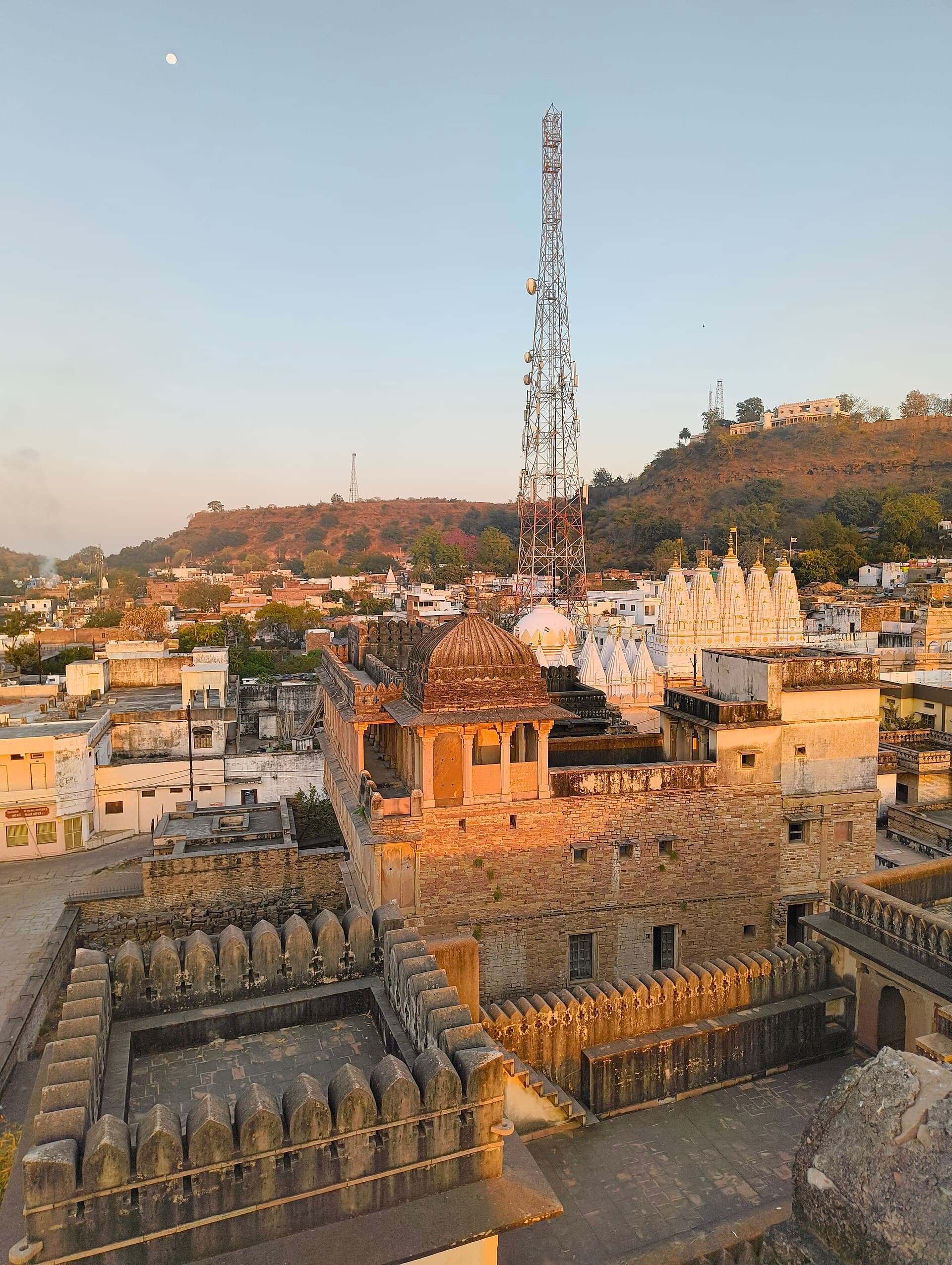 GymPediaWarrior / CC BY 4.0, via Wikimedia Commons
Visite audio autoguidée de Chanderi — parcours GPS à pied, lecture hors ligne, narration en 32 langues.
“Là où les métiers anciens chantent les empires et les fils délicats se déploient.”
Pas les cartes postales. Les histoires que même les habitants ignorent — soufflées à l'oreille, là où elles se sont passées.
Cette imposante porte se dresse fièrement, pourtant le grand palais qu'elle était censée accueillir est introuvable.
L'une des trois portes du fort de Chanderi porte un nom glaçant : la 'Porte Sanglante'.
Près du fort de Chanderi, un mémorial sombre marque un acte tragique de défi par des centaines de femmes.
Découvrez tous les secrets de Chanderi
Chaque adresse, chaque révélation en entier — dans ton oreille, là où elle s'est passée.
Tu choisis tes lieux. Tu marches. La voix te révèle ce que les autres ignorent.


Votre visite audioguidée de Chanderi vous attend — choisissez vos lieux, votre langue, et lancez-vous dès votre arrivée.
AcheterLume intègre un guide en réalité augmentée. Levez votre téléphone : sa caméra montre la rue devant vous, avec une flèche lumineuse posée sur l'image réelle qui pointe toujours vers votre prochain arrêt — aucune carte à déchiffrer, aucun mauvais virage. Comme tout dans Lume, ça fonctionne entièrement hors-ligne.
Chanderi, une petite ville du district d'Ashoknagar au Madhya Pradesh, est un lieu où l'histoire respire à travers les pierres anciennes et les fils délicats. Stratégiquement située aux confins du Malwa et du Bundelkhand, elle a été une route commerciale importante et un carrefour culturel pendant des siècles. Aujourd'hui, Chanderi est mondialement reconnue pour ses exquises saris tissés à la main, un artisanat transmis de génération en génération d'artisans qualifiés.
Au-delà de ses textiles célèbres, Chanderi est un trésor de merveilles architecturales, avec un paysage parsemé de forts formidables, de palais complexes, d'anciennes mosquées et de temples jaïns sereins. Chaque monument raconte une histoire des diverses dynasties qui ont régné ici, des Pratiharas et des Sultans de Malwa aux Rajputs Bundela et aux Moghols. Une visite à Chanderi est une immersion dans un paysage culturel profond, offrant un aperçu des traditions artistiques durables de l'Inde.
## Origines Anciennes et Premières Dynasties L'histoire de Chanderi remonte à l'Antiquité, avec des mentions dans des textes anciens comme le Mahabharata, où il est dit que Shishupal était le roi de Chanderi. La culture du tissage, pour laquelle la ville est maintenant célèbre, a émergé entre le 2e et le 7e siècle. L'emplacement stratégique de la ville, au bord du plateau de Malwa, entre les régions culturelles du Bundelkhand et du Malwa, en a fait un point crucial sur les routes commerciales de l'Inde centrale, augmentant son importance au 11e siècle. La croyance populaire attribue au roi Pratihara Kirti Pal la fortification et l'établissement de la ville au 11e siècle, établissant le formidable Fort de Chanderi, également connu sous le nom de Kirti Durg.
## Floraison Médiévale et Influence Moghole À partir du 13e siècle, la tradition du sari de Chanderi a commencé avec les tisserands Koli, et aux 15e et 16e siècles, la ville a gagné en importance sous les sultans de Malwa. À l'époque moghole, les tissus de Chanderi sont devenus très recherchés par les familles royales, l'industrie atteignant son apogée. Les Moghols ont même établi une usine dédiée à cet artisanat à Chanderi. Cette période a vu une fusion des motifs persans et indiens, avec l'introduction de fines broderies zari (fil d'or et d'argent) et de motifs floraux complexes. La ville a connu un développement architectural significatif, y compris la construction de la porte Badal Mahal par le sultan Mahmud Shah Khilji en 1450 et le Koshak Mahal.
## Résistance Rajput et Périodes Ultérieures Chanderi a également joué un rôle dans l'histoire Rajput. En 1520, le roi de Mewar, Rana Sanga de Chittor, s'empara de Chanderi, et sept ans plus tard, Babur captura la ville après une féroce bataille contre Medini Rai, un événement vivement décrit dans le journal de Babur. Le fort de Chanderi témoigne de ce passé turbulent, y compris un Jauhar Smarak commémorant le sacrifice de soi des femmes Rajput. Plus tard, les Rajputs Bundela et les Scindias régnèrent sur la région, la famille royale Scindia patronnant et faisant revivre activement l'art du tissage de Chanderi au début du 20e siècle, assurant ainsi sa pérennité. Le riche mélange de cultures hindoue, jaïn et islamique de la ville a prospéré tout au long de ces périodes, laissant derrière lui un héritage de monuments divers.
Le paysage de Chanderi est un musée à ciel ouvert, avec ses sites historiques souvent regroupés dans la vieille ville, ce qui les rend facilement explorables à pied. Commencez votre voyage au Fort de Chanderi, situé sur une colline de 200 mètres de haut, offrant des vues imprenables sur la campagne environnante. Explorez ses trois portes, y compris l'intrigante 'Khooni Darwaza', et découvrez la mosquée Khilji à l'intérieur de ses murs. Ne manquez pas le Jauhar Smarak à proximité.
Descendez en ville pour admirer la Porte Badal Mahal, une majestueuse arche du XVe siècle qui servait autrefois de grande entrée. Bien que le palais auquel elle menait ait disparu, ses sculptures complexes et son ampleur sont impressionnantes. À proximité se dresse le Koshak Mahal, un palais unique mais inachevé du XVe siècle, présentant des styles architecturaux distincts. La Jama Masjid est un autre point fort architectural, remarquable par sa grande taille et ses détails complexes malgré l'absence de minarets.
Pour un aperçu de l'ancienne gestion de l'eau de Chanderi, visitez le Battisi Baodi, un puits à 32 marches. La ville est également un important centre de pèlerinage jaïn, avec de nombreux temples, dont le Shri Choubisi Digambar Jain Bara Mandir, connu pour ses idoles de Tirthankara aux couleurs uniques, et le Temple jaïn de Khandargiri, présentant une idole sculptée de Rishabhnatha de 45 pieds. Pour témoigner du patrimoine vivant de Chanderi, une visite aux Quartiers Bunkaar ou au Village d'artisanat de Pranpur voisin est essentielle pour voir les célèbres saris Chanderi en cours de tissage.
La période idéale pour explorer Chanderi est pendant les mois les plus frais, d'octobre à février. Le temps est agréable, avec des températures variant entre 10°C et 25°C, ce qui rend la visite et les activités de plein air comme l'escalade du fort confortables. Bien que la saison de la mousson (juillet à septembre) apporte une végétation luxuriante, elle peut rendre l'exploration extérieure intermittente en raison des précipitations. Les étés (mars à juin) sont à éviter en raison de la chaleur intense, avec des températures grimpant entre 30°C et 45°C.
Chanderi est bien desservie par la route, avec des services de bus réguliers depuis les villes voisines comme Indore, Bhopal et Ujjain. Vous pouvez également louer un taxi. Les gares les plus proches sont Lalitpur (à environ 40 km) et Ashok Nagar (à environ 50 km), toutes deux offrant de bonnes liaisons ferroviaires avec les grandes villes indiennes. Pour les voyages en avion, l'aéroport le plus proche est l'aéroport de Gwalior, situé à environ 214 km de Chanderi.
Les options d'hébergement à Chanderi comprennent des hôtels économiques et de milieu de gamme, ainsi que des maisons d'hôtes et des séjours chez l'habitant qui offrent une expérience locale. Le Kila Kothi, situé près du fort de Chanderi, offre d'excellentes vues sur la ville. Lors de votre exploration, envisagez d'engager un guide local pour enrichir votre compréhension des monuments et de leurs histoires. Lorsque vous achetez des saris Chanderi, acheter directement auprès des tisserands dans les quartiers de Bunkaar ou le village de Pranpur garantit l'authenticité et soutient les artisans locaux.
Chanderi en coréen, en chinois ou en hébreu — et dans 29 autres langues, chaque étape narrée par une voix native. La plus large gamme de langues de tous les audioguides autoguidés.
Disponible en :