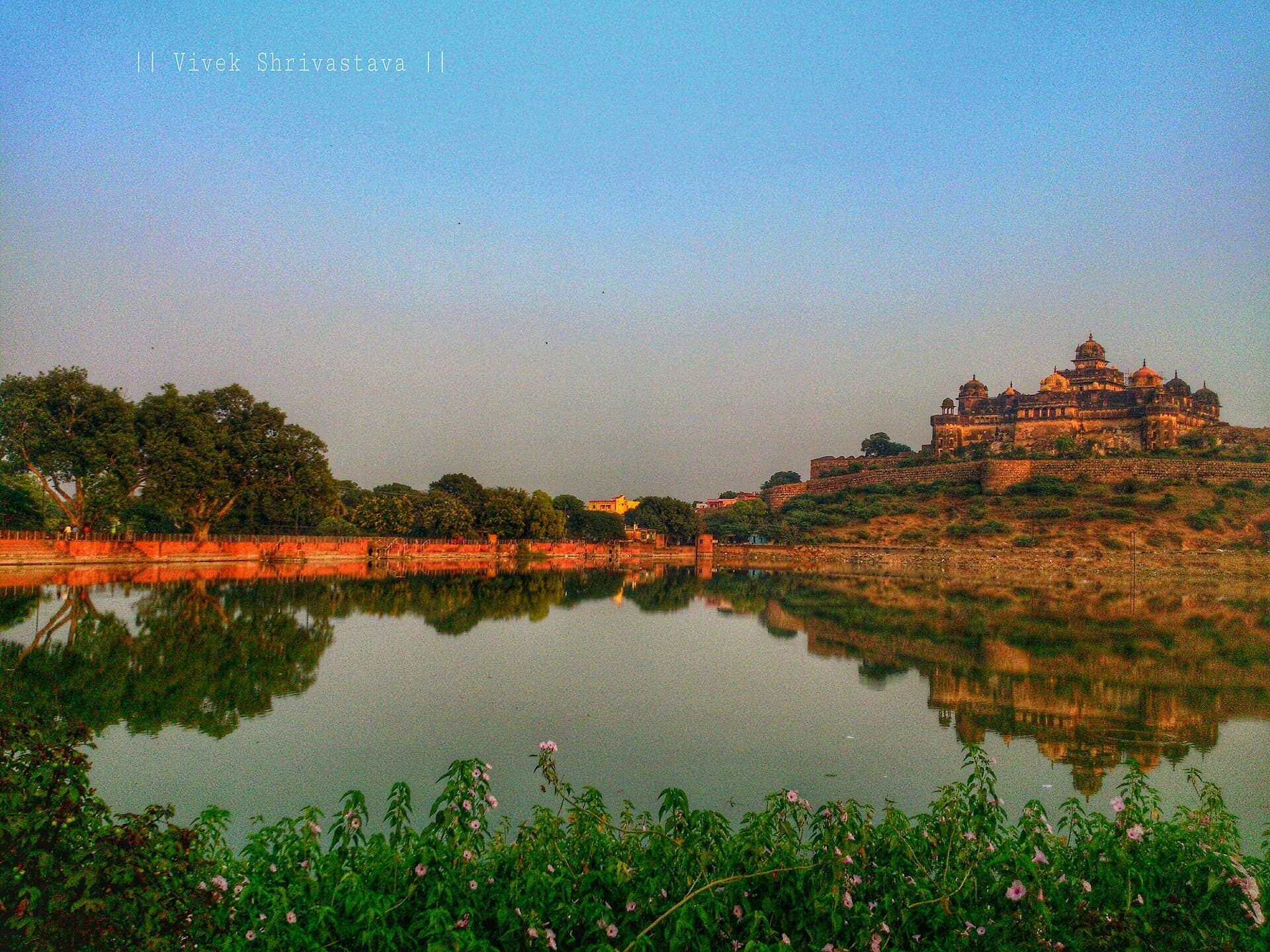
Datia, IndiaVivek Shrivastava / CC BY-SA 4.0, via Wikimedia Commons
IN

Datia

Self-guided audio walking tour of Datia — GPS route, offline playback, story-driven narration in 32 languages.

Where forgotten grandeur and ancient devotion intertwine.

The secrets of Datia

Datia, as no one tells it.

Not the postcards. The stories even locals don't know — whispered in your ear, right where they happened.

3 secrets below. Many more wait inside the tour.
Datia Palace

This magnificent seven-story palace, a blend of Rajput and Mughal architecture, stands as a testament to a grand vision. A surprising historical detail about its inhabitants awaits discovery.

Full story unlocks in the tour
Pitambara Peeth

Within this revered temple complex, a shrine is dedicated to a goddess whose worship is exceptionally rare across India.

Full story unlocks in the tour
Datia Palace

The construction of this colossal palace defies expectations, especially considering the building materials available in the 17th century.

Full story unlocks in the tour
The full tour

Discover every secret of Datia

Every address, every reveal in full — in your ear, right where it happened.

Get the key to Datia

You pick your stops. You walk. The voice reveals what the others miss.

Choose your time

How long do you have in Datia?

Your self-guided audio tour of Datia is ready — pick your landmarks, choose your language, and start the moment you arrive.

Buy
About Datia

The story of Datia

Datia, a city in northern Madhya Pradesh, offers a captivating journey through time, where architectural grandeur meets profound spirituality. Often referred to as "Laghu Vrindavan" or "Small Vrindavan" due to its many temples, Datia provides a serene escape from more bustling tourist destinations. It's a place where history resonates in every stone, and ancient legends continue to shape the local ethos.

Situated in the heart of the Bundelkhand region, Datia is perhaps best known for its extraordinary Datia Palace, an architectural marvel that stands proudly on a hilltop. Beyond its royal heritage, the city is a significant pilgrimage site, drawing devotees to the revered Pitambara Peeth and the tranquil Jain temples of Sonagiri. Datia invites visitors to explore its unique blend of cultural heritage, spiritual depth, and intriguing historical narratives.

History

## From Ancient Roots to Princely State Datia's origins stretch back to antiquity, with its name, originally "Dantia," linked to the mythical King Dantavakra from the epic Mahabharata. While references to these ancient times exist in local legends, the city's emergence as a significant political center occurred in the 17th century.

## The Bundela Dynasty and the Datia Palace The principality of Datia was officially founded in 1626 when Bhagwan Rao, the son of Orchha's powerful ruler, Bir Singh Deo, received the territory as a grant and became its first independent Raja. However, the most iconic structure, the Datia Palace (also known as Govind Mandir or Bir Singh Dev Palace), was commissioned earlier, in 1614, by Raja Bir Singh Deo himself. This seven-story masterpiece, built to honor the Mughal Emperor Jahangir, is a striking example of Indo-Islamic architecture, blending Rajput and Mughal styles. Curiously, despite its grandeur, the palace was never actually inhabited by the royal family.

## Under British Influence and Modern Integration After the Second Anglo-Maratha War, Datia, along with other Bundelkhand territories, came under British control through the Treaty of Bassein in 1802. The state remained a princely state in subsidiary alliance with British India until 1947, when its Maharaja acceded to the Dominion of India. In 1950, Datia became part of the new state of Vindhya Pradesh, which was later merged into Madhya Pradesh in 1956. Today, Datia stands as a district headquarters, preserving its deep historical and spiritual legacy.

What to see

The main attraction in Datia is undoubtedly the Datia Palace, also known as the Bir Singh Dev Palace or Govind Mahal. This seven-story stone and brick marvel showcases a unique blend of Rajput and Mughal architectural styles, featuring intricate carvings, murals, and a central pavilion. Allow several hours to explore its many rooms, courtyards, and underground levels.

For a spiritual experience, visit Pitambara Peeth, a renowned Shakti pilgrimage site. It houses the revered Baglamukhi Devi Temple and the exceptionally rare Dhumavati Mai Temple. The complex also includes the ancient Vankhandeshwar Shiva Temple, believed to date back to the Mahabharata period.

Just 13 kilometers from Datia lies Sonagiri, a sacred Jain hill dotted with many white Jain temples, offering a peaceful retreat and picturesque views. Other notable sites include the Unao Balaji Sun Temple, known for its sacred waters, and the Ratangarh Mata Temple, situated in a dense forest and believed to be miraculous. Datia also has a local museum, often housed within the palace complex, offering further insights into the region's past.

When to visit

The ideal time to visit Datia is during the cooler months, from October to March. During this period, the weather is pleasant, with cool, clear days perfect for exploring the Datia Palace and other outdoor attractions. This window also coincides with major festival dates at the Pitambara Peeth, making it a lively time for spiritual seekers. Summers (March end to June end) can be very hot, with temperatures often exceeding 40°C, making sightseeing challenging. The monsoon season (July to September) brings rainfall, which, while greening the landscape, can sometimes interrupt travel plans.

Practical

Datia is well-connected and accessible. The nearest airport is Gwalior Airport (GWL), approximately 70-75 km away, offering domestic flights. From Gwalior, you can easily reach Datia by taxi or bus. Datia also has its own railway station (DAA), with regular connections to major cities like Gwalior and Jhansi. Regular bus services also connect Datia with nearby towns.

Within Datia, local rickshaws and taxis provide convenient transportation, though walking is recommended to soak in the local atmosphere. While generally safe for tourists, standard precautions are advisable. There is a nominal entrance fee for Datia Palace. Photography is generally allowed inside the palace, but it's always good to confirm. When visiting Pitambara Peeth, be aware that leather items are not allowed inside the temple premises.

Good to know
What is Datia famous for?
Datia is known for its historical monuments, especially the Datia Palace, a unique example of Indo-Islamic architecture, and the revered Pitambara Peeth, a significant Shakti pilgrimage site.
What is the best time to visit Datia?
The best time to visit Datia is during the winter months, from October to March, when the weather is pleasant and ideal for sightseeing.
How can I reach Datia?
Datia can be reached by air via Gwalior Airport (70-75 km away), by train to Datia Railway Station, or by bus and taxi from nearby cities like Gwalior and Jhansi.
Is Datia Palace open to visitors?
Yes, Datia Palace is open to visitors, though it's advisable to carry a torch if visiting in the evening as lighting can be limited. Visitors are generally allowed up to the fourth floor.
Are there any unique local dishes to try in Datia?
Yes, local cuisine in Datia includes specialties like 'dal bafla' and 'mawa baati,' which highlight the region's unique flavors.
What is the significance of Pitambara Peeth?
Pitambara Peeth is a highly revered Shakti pilgrimage site dedicated to Goddess Baglamukhi and Goddess Dhumavati, the latter being a particularly rare form of worship in India. It also houses the ancient Vankhandeshwar Shiva Temple.
On the map
Datia
€9.90
No booking · activate anytime · 12h to walk it
Load on Wi-Fi, then walk offline — no roaming abroad
Get the key to Datia