French Creek
Avant que Custer ne devienne une ville, une découverte le long de ce ruisseau a enflammé une frénésie qui a remodelé toute la région.
L'histoire complète se débloque dans le tour
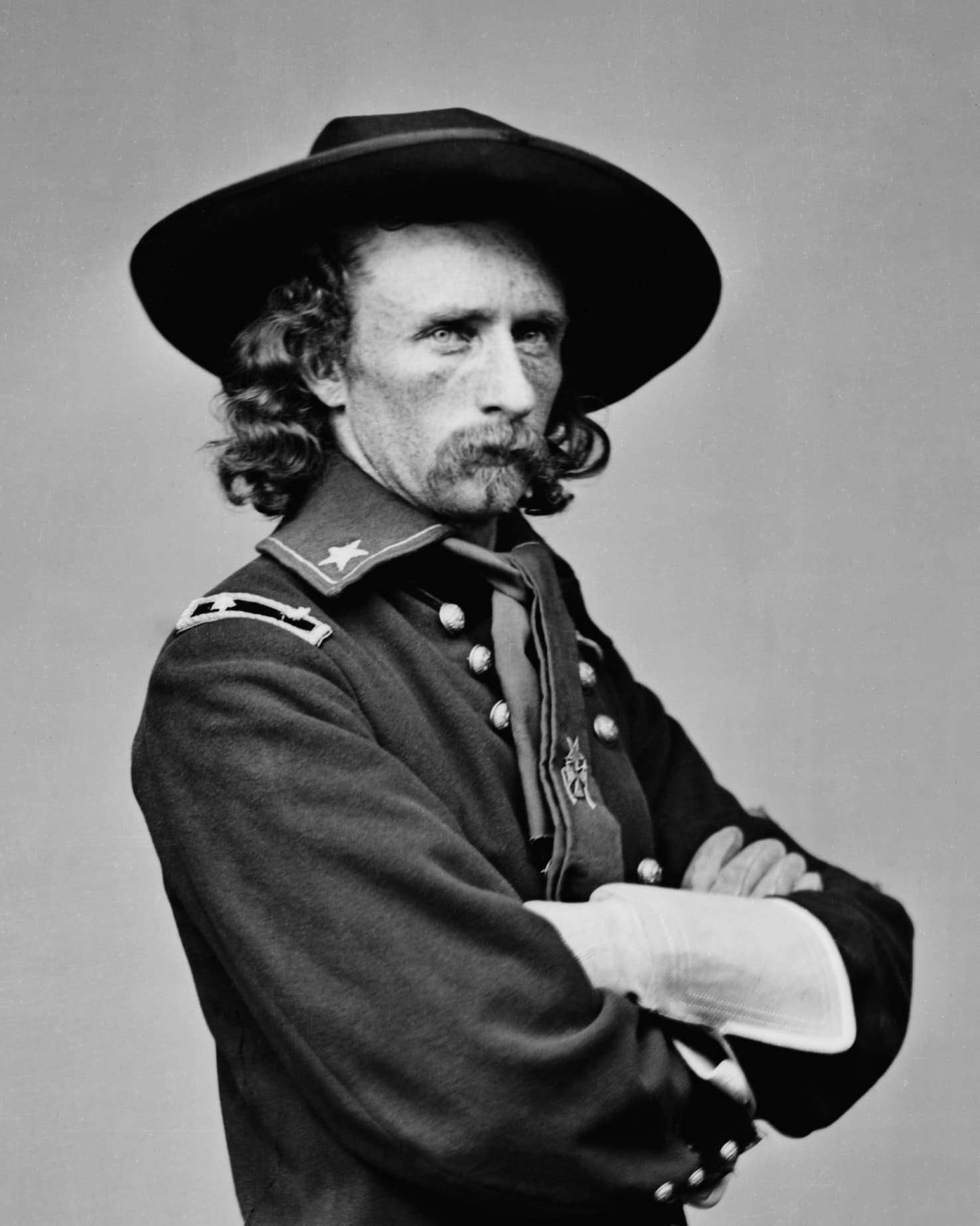 Photographer is Mathew Brady (died 1896) and his field staff / public domain, via Wikimedia Commons
Visite audio autoguidée de Custer — parcours GPS à pied, lecture hors ligne, narration en 32 langues.
“Là où les échos de la ruée vers l'or rencontrent la majesté intemporelle des Black Hills.”
Pas les cartes postales. Les histoires que même les habitants ignorent — soufflées à l'oreille, là où elles se sont passées.
Avant que Custer ne devienne une ville, une découverte le long de ce ruisseau a enflammé une frénésie qui a remodelé toute la région.
Un fort en rondins non autorisé se tenait autrefois ici, construit par des chercheurs d'or déterminés qui ont ignoré un traité.
Custer a connu une fluctuation démographique spectaculaire à ses débuts, passant d'une colonie animée à un lieu presque désert en quelques semaines.
Découvrez tous les secrets de Custer
Chaque adresse, chaque révélation en entier — dans ton oreille, là où elle s'est passée.
Tu choisis tes lieux. Tu marches. La voix te révèle ce que les autres ignorent.


Votre visite audioguidée de Custer vous attend — choisissez vos lieux, votre langue, et lancez-vous dès votre arrivée.
AcheterCuster, Dakota du Sud, est plus qu'un simple point sur une carte ; c'est un centre animé des Black Hills, où les échos d'un passé de ruée vers l'or se mêlent à la grandeur durable de paysages anciens. Cette petite ville, avec une population d'un peu moins de 2 000 habitants, est un excellent point de départ pour explorer certains des monuments et merveilles naturelles les plus reconnaissables d'Amérique. De l'immense Crazy Horse Memorial, toujours en évolution, aux troupeaux de bisons en liberté du Custer State Park, l'aventure ici se mesure en moments, pas en kilomètres.
Promenez-vous dans les rues de Custer et vous sentirez l'esprit pionnier qui a façonné cette région. C'est la plus ancienne ville établie par des Euro-Américains dans les Black Hills, fondée sur la promesse de l'or. Aujourd'hui, cet esprit pionnier se traduit par une communauté accueillante qui embrasse les amateurs de plein air, les passionnés d'histoire et ceux qui recherchent simplement la beauté sereine des Black Hills. Que vous soyez attiré par les routes panoramiques, les randonnées difficiles ou la découverte du riche tissu culturel du peuple Lakota, Custer offre un mélange unique d'expériences qui résonnent longtemps après votre visite.
L'histoire de Custer commence en juillet 1874, lorsque le lieutenant-colonel George Armstrong Custer a mené une expédition dans les Black Hills, une région alors protégée en tant que partie de la Grande Réserve Sioux par le Traité de Fort Laramie de 1868. Malgré le traité, le prospecteur Horatio N. Ross, accompagnant le 7e de cavalerie de Custer, a découvert de l'or de placers dans French Creek. Cette découverte, largement médiatisée par le général Custer, a déclenché la ruée vers l'or des Black Hills, attirant des milliers de chercheurs de fortune avides.
En décembre 1874, un groupe de Sioux City, Iowa, connu sous le nom de Gordon Party, a ignoré les efforts fédéraux pour empêcher les colons blancs d'entrer dans le pays appartenant aux Indiens. Ils ont établi un fort en rondins non autorisé, le Gordon Stockade, sur French Creek. En 1875, Custer City a été arpentée, et en quelques semaines, plusieurs milliers de personnes sont arrivées, transformant la région en une ville-champignon animée, bien qu'illicite. En mars 1876, la population de Custer était estimée entre 6 000 et 10 000 habitants.
Le boom fut bref. Au printemps 1876, une découverte d'or plus abondante fut faite dans Deadwood Gulch. En une semaine, Custer City fut presque entièrement désertée, avec seulement environ quatorze personnes restantes. Le départ massif laissa Custer une ville quasi fantôme. Cependant, la ville commença lentement à se rétablir à mesure que des gens « s'infiltraient » des expéditions de Deadwood, et en 1877, Custer comptait environ 500 à 600 habitants. Le gouvernement américain, incapable de contrôler l'afflux de colons, força les Sioux à céder une grande partie des Black Hills en 1877. Custer, en tant que chef-lieu du comté de Custer, mûrit progressivement pour devenir une ville établie, bien qu'elle restât plus petite que ses homologues plus célèbres de la ruée vers l'or comme Deadwood.
Les origines du Custer State Park remontent à 1897, avec sa désignation officielle en tant que parc d'État le 1er juillet 1919. Cette transformation fut largement due à la vision et aux efforts du gouverneur Peter Norbeck, souvent appelé le « Père du Custer State Park ». Norbeck envisageait de préserver la beauté naturelle et la faune de la région pour les générations futures. Le troupeau de bisons du parc, maintenant l'un des plus grands au monde, a commencé avec l'acquisition de 36 bisons en 1914. Le Civilian Conservation Corps a joué un rôle important dans le développement du parc dans les années 1930, construisant des routes, des terrains de camping et des barrages qui ont façonné ses offres récréatives.
Custer est entouré d'une abondance d'attractions, ce qui en fait une base idéale pour l'exploration. À quelques minutes se trouve le Custer State Park, une zone sauvage de 28 732 hectares où vous pouvez emprunter la Wildlife Loop Road pour des rencontres rapprochées avec des bisons, des wapitis, des antilopes et même des ânes sauvages. Le parc abrite également le lac Sylvan, souvent appelé la « Couronne », parfait pour le kayak, le paddleboard, la pêche ou la randonnée sur les sentiers qui entourent ses formations rocheuses distinctives.
Aucune visite de la région n'est complète sans l'expérience du Crazy Horse Memorial, l'immense sculpture de montagne dédiée au chef Lakota, toujours en cours de sculpture. Vous pouvez explorer le Musée indien d'Amérique du Nord et observer le processus de sculpture en cours. À une courte distance en voiture au nord se trouve le Mount Rushmore National Memorial, un hommage emblématique à quatre présidents américains. Pour ceux qui recherchent des aventures souterraines, le Landmark Cave National Monument et le Wind Cave National Park offrent des visites de grottes fascinantes, révélant des formations géologiques uniques.
De retour à Custer, promenez-vous sur le Custer Skywalk pour des vues imprenables sur la ville et les Cathedral Spires. Explorez le 1881 Courthouse Museum pour un aperçu de l'histoire locale, ou flânez dans Four Mile Old West Town, une ville fantôme frontalière recréée. Ne manquez pas l'occasion d'observer les sculptures de buffles peints grandeur nature exposées dans tout le centre-ville dans le cadre du projet Custer Stampede Buffalo Art.
La période la plus favorable pour visiter Custer et les Black Hills environnantes pour les activités par temps chaud est de fin juin à fin août, lorsque les températures sont agréables et l'humidité est faible. De mai à mi-juin et de septembre à octobre offrent un équilibre agréable entre un temps confortable et moins de foules. Le printemps apporte la naissance des veaux de bison et d'autres animaux sauvages, tandis que l'automne présente un feuillage éclatant et le rassemblement annuel de bisons fin septembre. Les hivers sont froids et enneigés, mais offrent une expérience tranquille et isolée avec des opportunités de raquettes et de pêche sur glace.
Custer est facilement accessible, situé à l'ouest de l'autoroute Interstate 90 et au sud-ouest de Rapid City. L'aéroport principal le plus proche est l'aéroport international de Denver (DEN), à environ 6 heures de route. À Custer, vous découvrirez une variété d'options d'hébergement, de boutiques distinctives et de restaurants locaux. Le service cellulaire peut être intermittent dans le Custer State Park, alors planifiez en conséquence. Un permis d'entrée est requis pour le Custer State Park, avec des choix de laissez-passer temporaires ou annuels. De nombreuses attractions, y compris le Custer State Park, le Crazy Horse Memorial et le Mont Rushmore, se trouvent à 5 à 30 minutes en voiture du centre-ville de Custer. Les options de restauration vont des gastropubs décontractés aux expériences culinaires inspirées par des chefs ; certains, comme le Skogen Kitchen, nécessitent des réservations.
Custer en coréen, en chinois ou en hébreu — et dans 29 autres langues, chaque étape narrée par une voix native. La plus large gamme de langues de tous les audioguides autoguidés.
Disponible en :