Aéroport de Daocheng Yading
L'aéroport civil le plus haut du monde n'est pas seulement un record; son nom recèle une aspiration discrète.
L'histoire complète se débloque dans le tour
 Frankmnl / CC BY-SA 4.0, via Wikimedia Commons
Visite audio autoguidée de Daocheng — parcours GPS à pied, lecture hors ligne, narration en 32 langues.
“Là où les sommets sacrés rencontrent le ciel, et les prières ancestrales résonnent sur les eaux alpines.”
Pas les cartes postales. Les histoires que même les habitants ignorent — soufflées à l'oreille, là où elles se sont passées.
L'aéroport civil le plus haut du monde n'est pas seulement un record; son nom recèle une aspiration discrète.
Ce lac alpin scintillant est plus qu'une simple belle vue; les Tibétains locaux croient qu'il détient un profond secret sur le temps lui-même.
À l'entrée de Daocheng, un stupa blanc imposant s'élève, entouré de plus petits, chacun avec une connexion silencieuse et symbolique à la communauté environnante.
Découvrez tous les secrets de Daocheng
Chaque adresse, chaque révélation en entier — dans ton oreille, là où elle s'est passée.
Tu choisis tes lieux. Tu marches. La voix te révèle ce que les autres ignorent.
Votre visite audioguidée de Daocheng vous attend — choisissez vos lieux, votre langue, et lancez-vous dès votre arrivée.
AcheterLume intègre un guide en réalité augmentée. Levez votre téléphone : sa caméra montre la rue devant vous, avec une flèche lumineuse posée sur l'image réelle qui pointe toujours vers votre prochain arrêt — aucune carte à déchiffrer, aucun mauvais virage. Comme tout dans Lume, ça fonctionne entièrement hors-ligne.
Daocheng, un comté de la province du Sichuan en Chine, est souvent appelé le « dernier Shangri-La » pour son environnement naturel préservé et son lien profond avec la culture tibétaine. Situé dans la préfecture autonome tibétaine de Garzê, sur le bord sud-est du plateau Qinghai-Tibet, Daocheng présente un paysage de pics enneigés, de lacs clairs et de vastes prairies. L'altitude élevée et le terrain accidenté de la région ont préservé un mode de vie authentique, où les coutumes anciennes et le bouddhisme tibétain s'épanouissent au milieu de paysages spectaculaires.
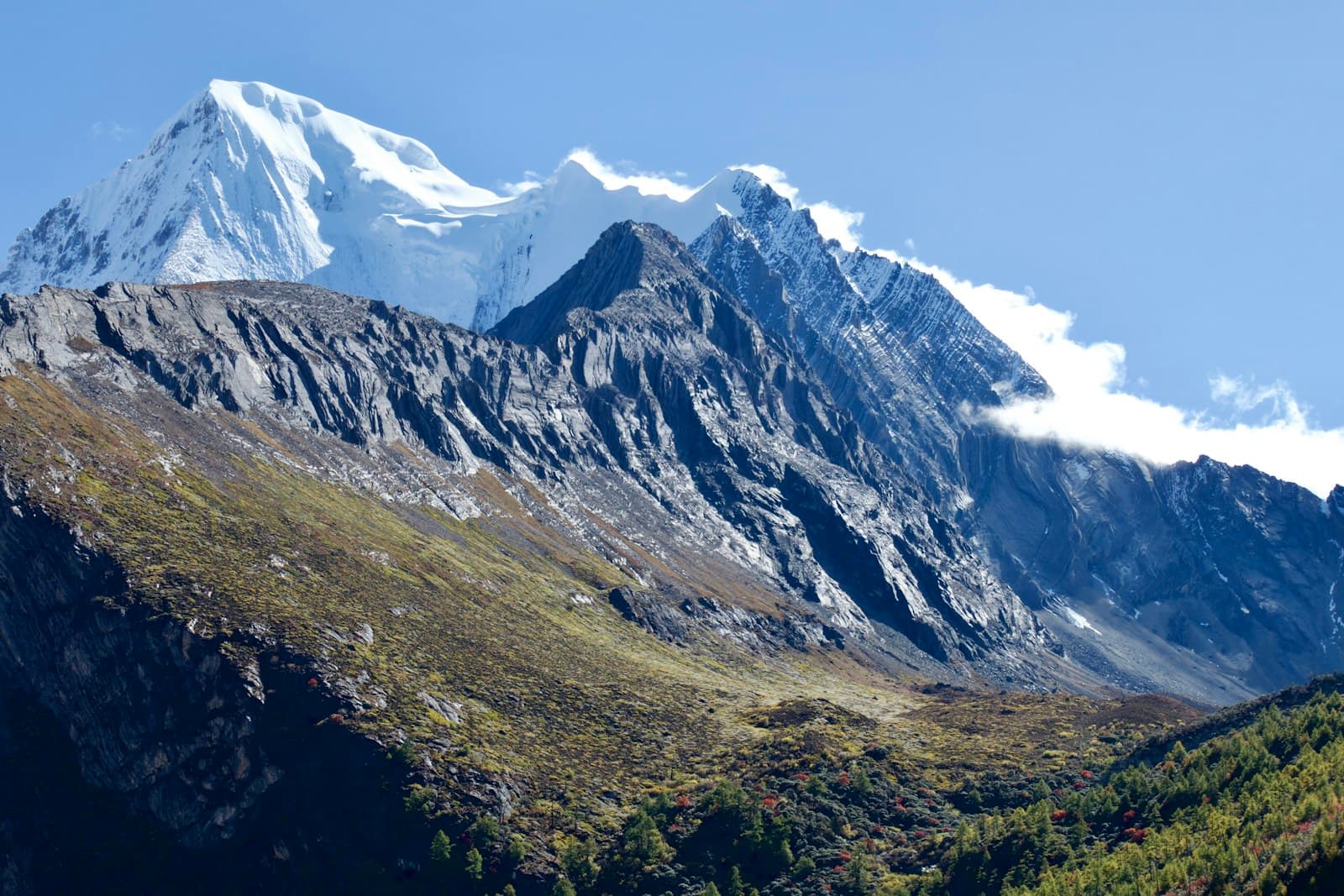
L'attraction principale pour de nombreux voyageurs est la réserve naturelle de Daocheng Yading, un sanctuaire montagneux et un important site de pèlerinage tibétain. Ici, trois pics vénérés — Chenrezig, Jambeyang et Chanadorje — sont honorés comme des émanations de bodhisattvas et forment une toile de fond grandiose pour les prairies alpines, les forêts et les lacs colorés. La région est un refuge pour ceux qui recherchent à la fois la beauté naturelle et la tranquillité spirituelle, offrant des opportunités de randonnée, de photographie et d'immersion dans un royaume culturel singulier.
L'histoire de la région de Daocheng, autrefois connue sous son nom tibétain 'Dabba' (signifiant 'La terre ouverte à l'entrée de la vallée'), est profondément liée au récit plus large du plateau tibétain. Pendant la dynastie Han (202 av. J.-C. - 220 ap. J.-C.), la région était habitée par le peuple Qiang, et sous la dynastie Tang (618 ap. J.-C. - 907 ap. J.-C.), elle tomba sous l'influence du royaume Tubo, ce qui facilita la propagation du bouddhisme et la formation de la culture locale.
Sous la dynastie Ming (1368-1644), la région était gouvernée par un système de chefs héréditaires locaux, ou Tusi, reconnus par l'autorité centrale. Ce n'est qu'au crépuscule de la dynastie Qing, en 1907, que le 'Comté de Dapba' fut officiellement établi. En 1939, lors de la formation de la province de Xikang, le 'Comté de Dapba' fut renommé 'Comté de Daocheng'. Le nom 'Daocheng' (稻城) lui-même, signifiant 'Ville du Riz' ou 'Ville des Rizières', fut choisi dans l'espoir de la prospérité agricole, reflétant le désir de succès des essais de plantation de riz dans la région.
La région a acquis une reconnaissance internationale en 1928 lorsque le botaniste et explorateur américain Joseph Rock l'a visitée et a documenté ses paysages remarquables. Ses photographies et ses écrits dans le magazine National Geographic ont introduit pour la première fois la beauté de Daocheng et de la réserve naturelle de Yading au monde occidental. Des années 1930 aux années 1950, Daocheng fut contrôlée par des chefs locaux. En 1950, elle fut placée sous l'administration de la Région autonome tibétaine de la province de Xikang, puis, en 1955, elle fut annexée à la province du Sichuan.
Aujourd'hui, Daocheng reste un centre important du bouddhisme tibétain, avec des monastères anciens comme Chonggu et Gongga Langjiling servant de centres vitaux d'éducation, d'art et de vie sociale. Le paysage architectural, caractérisé par des structures traditionnelles, reflète des siècles d'adaptation à l'environnement des hautes terres et l'influence durable de la culture tibétaine.
L'attraction principale de Daocheng est la réserve naturelle de Yading, un sanctuaire sacré du bouddhisme tibétain, abritant trois montagnes enneigées vénérées : Chenrezig (Xiannairi), Jambeyang (Yangmaiyong) et Chanadorje (Xianuoduoji). Ces sommets sont adorés comme des symboles de compassion, de puissance et de sagesse. La réserve offre une variété de paysages, notamment des lacs alpins colorés, des prairies verdoyantes et des forêts anciennes.
Au sein de Yading, les sites populaires incluent le monastère de Chonggu, un site religieux important et le point de départ de nombreux itinéraires de trekking. À proximité, le lac de la Perle (Zhuoma Lacuo) offre un reflet clair du mont Chenrezig. Le pâturage de Luorong est une prairie sereine où les yaks et les chevaux paissent sous les montagnes sacrées. Plus loin dans la réserve, le lac du Lait (Luorongcuo), un ancien lac glaciaire avec un bord blanc laiteux distinctif et un centre turquoise, et le lac aux Cinq Couleurs (Wuse Hai), connu pour ses teintes chatoyantes, sont d'importants sites de pèlerinage.
En dehors de la réserve, la pagode Blanche de Daocheng (Pagode de la Victoire), un complexe majestueux comprenant un grand stupa central entouré de 107 plus petits, est un monument bouddhiste tibétain proéminent. Le mont Haizi, également connu sous le nom de « vieille calotte glaciaire de Daocheng », est un haut plateau parsemé de plus d'un millier de lacs de montagne et de formations géologiques uniques.
La meilleure période pour visiter Daocheng et la réserve naturelle de Yading s'étend généralement de fin avril à début novembre. Au printemps (avril à mai), les rhododendrons fleurissent et les montagnes enneigées sont particulièrement frappantes avec moins de précipitations. L'été (juin à août) apporte des prairies verdoyantes luxuriantes et des fleurs sauvages, bien que ce soit aussi la saison des pluies avec des averses et du brouillard l'après-midi. L'automne (septembre à mi-octobre) est souvent considéré comme le plus pittoresque, avec un feuillage doré et un ciel clair, ce qui le rend idéal pour la photographie. Les températures sont fraîches toute l'année, il est donc toujours recommandé d'emporter des vêtements chauds.
L'aéroport de Daocheng Yading (DCY) est l'aéroport civil le plus haut du monde, situé à 50 kilomètres au nord de la zone urbaine de Daocheng, à une altitude de 4 411 mètres. Les vols depuis Chengdu durent environ 1 à 1,5 heure, mais soyez conscient du changement d'altitude soudain. Les routes terrestres depuis Chengdu ou Shangri-La offrent des trajets panoramiques, prenant 1 à 3 jours et permettant une acclimatation progressive à l'altitude. Les transports en commun dans le comté de Daocheng sont limités, il est donc recommandé de louer une voiture avec chauffeur ou de participer à des visites organisées pour le tourisme.
Le mal de l'altitude est une préoccupation majeure en raison de l'altitude élevée (la ville de Daocheng est à 3 740 m, Yading varie de 2 800 m à 4 700 m). Prenez des médicaments préventifs comme la Rhodiola plusieurs jours à l'avance, restez hydraté, évitez les activités intenses et reposez-vous suffisamment. Une oxygénothérapie et une assistance médicale sont disponibles à l'aéroport et dans la zone panoramique. Emportez des couches chaudes, même en été, car les températures peuvent varier considérablement.
Daocheng en coréen, en chinois ou en hébreu — et dans 29 autres langues, chaque étape narrée par une voix native. La plus large gamme de langues de tous les audioguides autoguidés.
Disponible en :