Place du marché de Sideng
La place centrale de Shaxi, Sideng, accueillait autrefois un marché nocturne animé où l'on échangeait bien plus que des marchandises.
L'histoire complète se débloque dans le tour
 eviltomthai / CC BY 2.0, via Wikimedia Commons
Visite audio autoguidée de Shaxi — parcours GPS à pied, lecture hors ligne, narration en 32 langues.
“Là où l'écho des clochettes des chevaux résonne encore sur les anciennes routes commerciales.”
Pas les cartes postales. Les histoires que même les habitants ignorent — soufflées à l'oreille, là où elles se sont passées.
La place centrale de Shaxi, Sideng, accueillait autrefois un marché nocturne animé où l'on échangeait bien plus que des marchandises.
Avant 2009, atteindre Shaxi était une toute autre aventure, témoignant de son isolement.
Au sein de l'historique temple de Xingjiao, un détail subtil de son architecture originale en dit long sur la société passée de Shaxi.
Découvrez tous les secrets de Shaxi
Chaque adresse, chaque révélation en entier — dans ton oreille, là où elle s'est passée.
Tu choisis tes lieux. Tu marches. La voix te révèle ce que les autres ignorent.


Votre visite audioguidée de Shaxi vous attend — choisissez vos lieux, votre langue, et lancez-vous dès votre arrivée.
AcheterLume intègre un guide en réalité augmentée. Levez votre téléphone : sa caméra montre la rue devant vous, avec une flèche lumineuse posée sur l'image réelle qui pointe toujours vers votre prochain arrêt — aucune carte à déchiffrer, aucun mauvais virage. Comme tout dans Lume, ça fonctionne entièrement hors-ligne.
Shaxi, une ville-marché historique de la province du Yunnan, en Chine, offre un lien tangible avec l'ancienne Route du Thé et des Chevaux. Située à mi-chemin entre les villes plus animées de Dali et Lijiang, Shaxi se distingue comme la seule ville-marché entièrement préservée le long de cette route commerciale légendaire. Son rythme tranquille et son atmosphère authentique offrent un contraste saisissant avec les destinations touristiques plus développées, invitant les visiteurs à ralentir et à s'immerger dans un rythme de vie qui est resté largement inchangé pendant des siècles.
Désignée comme l'un des 100 sites les plus menacés par le World Monuments Fund en 2001, Shaxi a fait l'objet d'efforts de restauration minutieux, garantissant la pérennité de son patrimoine unique. Cet engagement en faveur de la préservation signifie que la ville conserve son tracé original et une ambiance locale authentique, ce qui en fait une destination fascinante pour ceux qui recherchent un lien plus profond avec le passé de la Chine.
## L'ancienne Route du Thé et des Chevaux et les origines de Shaxi L'histoire de Shaxi remonte à l'Antiquité, avec des preuves de fonderie de bronze dès 400 av. J.-C., pendant les périodes du Printemps et de l'Automne et des Royaumes combattants en Chine. La région fut un centre commercial précoce, avec la Route de la Soie du Sud, également connue sous le nom d'Ancien Chemin de la Caravane du Thé et des Chevaux, précédant sa plus célèbre homologue du nord d'au moins 300 ans. Les registres écrits de la route datent de la dynastie Tang (618-907 ap. J.-C.), lorsqu'elle était connue localement sous le nom de période du Royaume de Nanzhao, bien que le commerce ait été actif bien avant.
Shaxi est apparue comme un point de commerce crucial sur la Route du Thé et des Chevaux vers 700 ap. J.-C., facilitant l'échange de thé du Yunnan contre des chevaux tibétains, et d'autres marchandises comme le sel, les peaux et les herbes médicinales. La prospérité de la ville a culminé pendant les dynasties Ming et Qing (1368-1912), attirant divers groupes ethniques, y compris des commerçants Han, Bai, Yi et Tibétains. Ces échanges animés ont façonné les rues, les temples et la vie quotidienne de Shaxi, laissant une marque indélébile sur son tissu culturel.
## Déclin et restauration Le milieu du XXe siècle a mis fin brusquement au commerce florissant. La réquisition des animaux de bât par l'Armée populaire de libération en 1950, associée à l'interdiction des marchés privés, a stoppé le commerce séculaire entre le Yunnan et le Tibet. Shaxi, autrefois un centre économique animé, est devenu un village calme et isolé, largement oublié des développements extérieurs. Cette période d'isolement a cependant involontairement protégé son caractère ancien de la modernisation rapide observée ailleurs en Chine.
En 2001, le World Monuments Fund a reconnu l'importance de Shaxi en ajoutant sa place de marché à sa liste de surveillance des 100 sites les plus menacés, la désignant comme le seul exemple subsistant de ville-marché sur les anciennes routes caravanières de Chine. Cette désignation a stimulé le Projet de Réhabilitation de Shaxi (SRP), un effort de collaboration entre l'Institut Fédéral Suisse de Technologie de Zurich (ETH) et le gouvernement du comté de Jianchuan, lancé en 2002. Le projet s'est concentré sur la restauration des structures menacées et la revitalisation du patrimoine culturel et naturel du village de Sideng et de la vallée de Shaxi, en utilisant autant que possible des matériaux et des structures d'origine. Cette approche minutieuse a valu des prix pour la préservation du patrimoine culturel et a transformé Shaxi en un modèle de protection du patrimoine menée par la communauté.
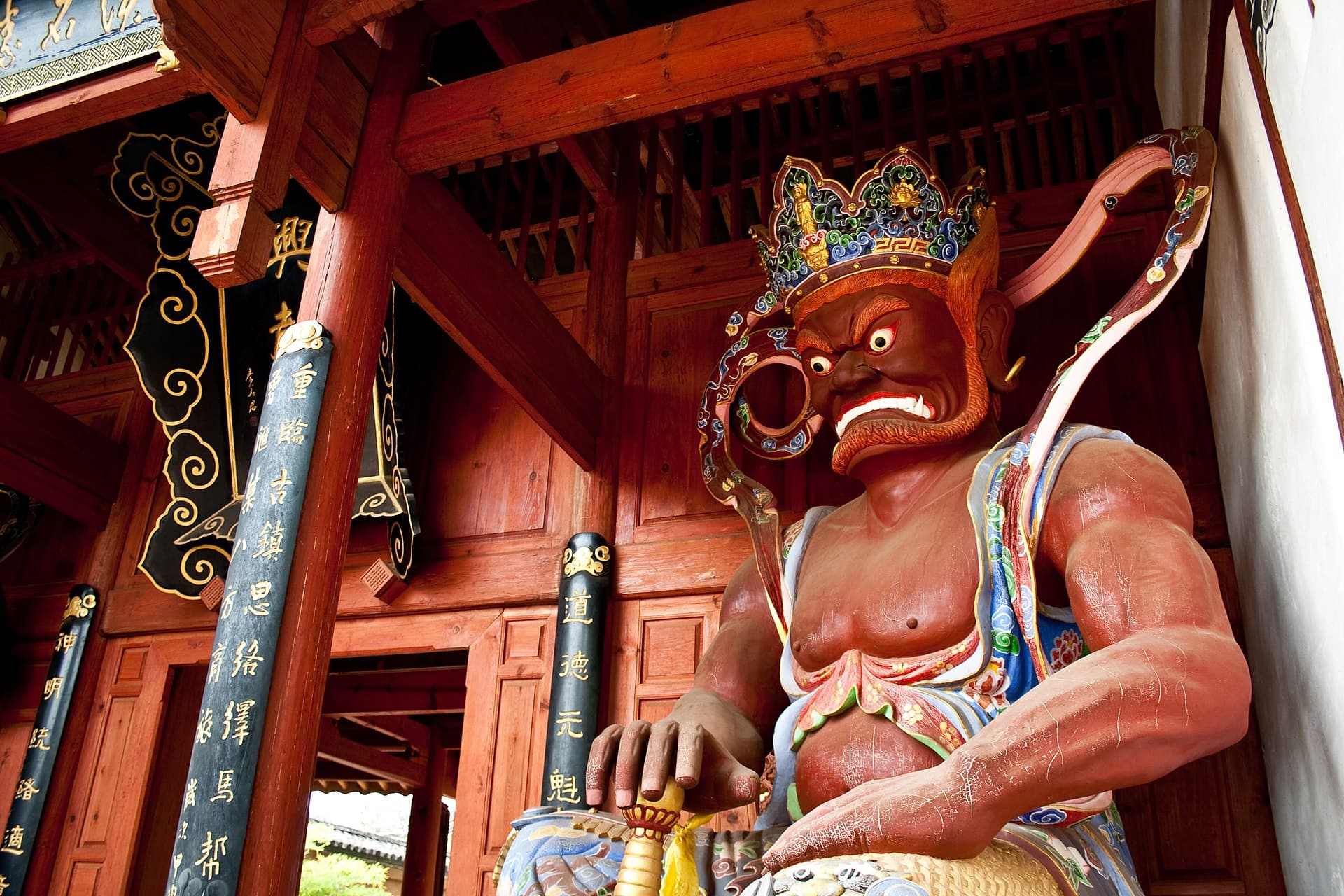
La petite taille de Shaxi la rend idéale pour l'exploration à pied, la plupart des sites clés étant accessibles en 30 à 60 minutes de marche tranquille. Le cœur de la ville est la place de Sideng, une place de marché historique ancrée par le temple de Xingjiao et une ancienne scène de théâtre. Le temple de Xingjiao, un temple bouddhiste de style Bai de la dynastie Ming, fonctionne maintenant comme un musée et abrite d'impressionnantes divinités et illustrations botaniques. Juste en face, l'ancienne scène de théâtre présente une exquise fresque au plafond représentant un dragon et un phénix, ainsi qu'un sanctuaire dédié à Kuixing, le dieu de la culture.
Une expérience à ne pas manquer est le marché du vendredi, qui se tient chaque vendredi de 8h00 à 17h00, avec l'activité la plus animée entre 8h00 et 12h00. Ce marché, qui s'étend autour de la place de Sideng, est l'endroit où les habitants Bai et Yi, souvent en tenue traditionnelle, se rassemblent pour échanger des produits, des épices, du fromage et de l'artisanat, offrant un aperçu coloré de la vie villageoise authentique. À quelques pas de la place, la gracieuse arche de pierre du pont de Yujin enjambe la rivière Heihui, particulièrement photogénique au lever et au coucher du soleil.
Pour ceux qui ont plus de temps, une excursion d'une journée à Shibaoshan (Montagne du Trésor de Pierre) est fortement recommandée. Cette montagne sacrée, site provisoire du patrimoine mondial de l'UNESCO, présente d'anciennes grottes bouddhistes avec plus de 130 sculptures rupestres datant des royaumes Nanzhao et Dali du IXe siècle, ainsi que des forêts et des formations de grès rouge. Le temple de Shizhong, avec ses 139 statues de Bouddha sculptées dans 16 grottes, et le temple de Baoxiang, un temple suspendu situé de manière précaire, sont des sites remarquables.
Shaxi est une destination ouverte toute l'année, chaque saison offrant un attrait différent. Le printemps (mars à mai) est particulièrement agréable, avec un temps confortable pour la marche et le vélo, et des champs fleuris. Novembre est également magnifique, avec des arbres dorés et des terres agricoles colorées, et les matins tôt au pont de Yujin apportent souvent une douce brume. L'automne (septembre-octobre) offre des températures diurnes allant de 15 à 20 degrés, et le Festival de la Torche, une célébration locale animée, a souvent lieu à cette période. Bien que décembre et janvier soient calmes et atmosphériques, il peut faire froid, il est donc essentiel de prévoir des vêtements chauds.
Shaxi est située à peu près à mi-chemin entre Dali et Lijiang. Il n'y a pas de trains directs pour Shaxi ; la façon habituelle de s'y rendre est de prendre un bus jusqu'à Jianchuan, puis de prendre un minibus ou un bus local pour le trajet final de 45 à 50 minutes. Le temps de trajet total depuis Dali ou Lijiang est généralement de 3 à 4 heures. Des transferts partagés ou des voitures privées sont également disponibles et offrent une option plus confortable et plus rapide.
Séjourner une à deux nuits est généralement suffisant pour découvrir les vieilles rues, la vie locale et l'atmosphère historique. Les options d'hébergement incluent des maisons d'hôtes près du pont de Yujin ou le long de la rue Sideng pour un accès facile aux sites, ou dans les villages voisins pour un séjour plus calme et plus pittoresque. Shaxi est principalement une ville piétonne, sans voitures ni vélos électriques autorisés sur ses anciens chemins, ce qui rend la marche agréable et sûre.
Shaxi en coréen, en chinois ou en hébreu — et dans 29 autres langues, chaque étape narrée par une voix native. La plus large gamme de langues de tous les audioguides autoguidés.
Disponible en :