Église Sainte-Marie-la-Vierge
À l'intérieur de l'église paroissiale de Dedham, au milieu de siècles de culte, est accroché un tableau de John Constable qui a failli ne jamais atteindre sa demeure prévue.
L'histoire complète se débloque dans le tour
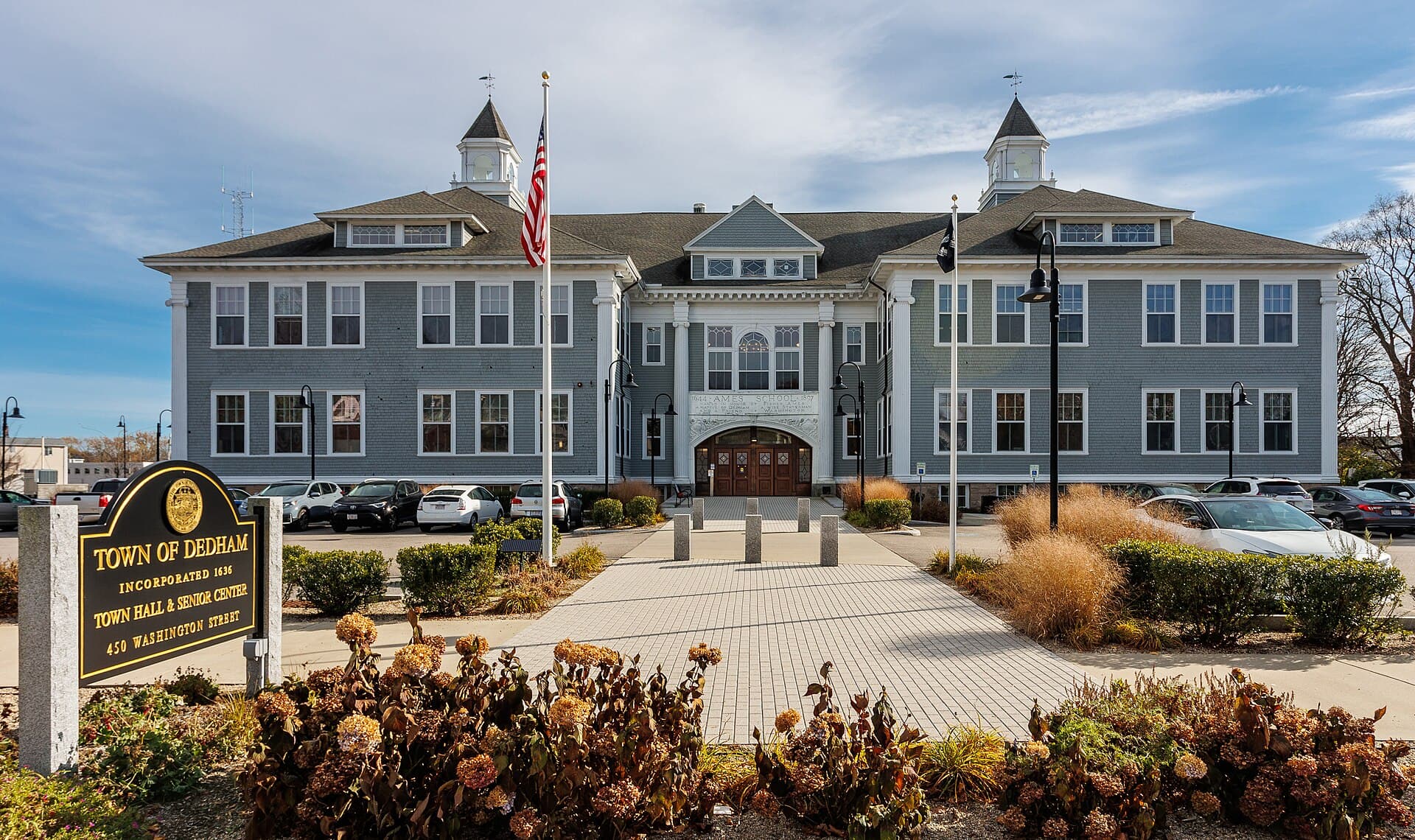 Kenneth C. Zirkel / CC BY 4.0, via Wikimedia Commons
Visite audio autoguidée de Dedham — parcours GPS à pied, lecture hors ligne, narration en 32 langues.
“Là où la toile de Constable rencontre les méandres de la Stour, Dedham vous invite à entrer dans un chef-d'œuvre vivant.”
Pas les cartes postales. Les histoires que même les habitants ignorent — soufflées à l'oreille, là où elles se sont passées.
À l'intérieur de l'église paroissiale de Dedham, au milieu de siècles de culte, est accroché un tableau de John Constable qui a failli ne jamais atteindre sa demeure prévue.
Le nom « Dedham » s'étend bien au-delà de la frontière Essex-Suffolk, atteignant de l'autre côté de l'Atlantique une ville qui a failli porter un nom totalement différent.
Regardez attentivement l'enseigne d'un certain pub de Dedham, et vous y trouverez un lien avec une figure connue à la fois pour son talent artistique et sa notoriété.
Découvrez tous les secrets de Dedham
Chaque adresse, chaque révélation en entier — dans ton oreille, là où elle s'est passée.
Tu choisis tes lieux. Tu marches. La voix te révèle ce que les autres ignorent.

Votre visite audioguidée de Dedham vous attend — choisissez vos lieux, votre langue, et lancez-vous dès votre arrivée.
AcheterLume intègre un guide en réalité augmentée. Levez votre téléphone : sa caméra montre la rue devant vous, avec une flèche lumineuse posée sur l'image réelle qui pointe toujours vers votre prochain arrêt — aucune carte à déchiffrer, aucun mauvais virage. Comme tout dans Lume, ça fonctionne entièrement hors-ligne.
Dedham, un village à la frontière de l'Essex et du Suffolk, est célébré pour ses paysages de basses terres préservés, en particulier les prairies humides de la rivière Stour. Cette région, connue sous le nom de « Constable Country », a inspiré de nombreuses œuvres du célèbre peintre romantique anglais John Constable, né à proximité et ayant fréquenté l'école à Dedham. Le village lui-même est caractérisé par ses maisons géorgiennes et à colombages bien conservées, offrant une fenêtre sur une époque révolue.
La Dedham Vale, désignée Paysage National (anciennement Zone de Beauté Naturelle Exceptionnelle), s'étend sur plus de 8 900 hectares, englobant une campagne diversifiée, des villages et des sites historiques. C'est un lieu où l'environnement naturel et le patrimoine culturel sont profondément liés, avec des modes de vie traditionnels toujours évidents dans son rythme. Que ce soit à pied, à vélo ou sur l'eau, Dedham offre une évasion tranquille dans un paysage qui a captivé artistes et visiteurs pendant des siècles.
Les origines de Dedham remontent à sa mention dans le Domesday Book. Pendant une grande partie de la période médiévale tardive, elle a prospéré en tant que centre important pour le commerce de la laine et du tissu. La richesse générée par cette industrie a contribué à la construction de l'église Sainte-Marie-la-Vierge, qui a débuté en 1492 et est l'une des dernières « églises de la laine » médiévales à être achevée.
Après le déclin du commerce de la laine après 1500, Dedham s'est réinventée en tant que centre d'excellence académique. La reine Élisabeth Ire a accordé une licence pour la Dedham Grammar School en 1575, attirant des familles prospères dans le village. John Constable, l'un des artistes les plus aimés d'Angleterre, a été un élève notable de cette école de grammaire. Il marchait quotidiennement jusqu'à l'école depuis la maison de sa famille à East Bergholt, et le paysage le long de la rivière Stour a fait une impression indélébile, façonnant sa vision artistique. Constable a écrit plus tard que « toutes ces choses qui se trouvent sur les rives de la Stour, elles ont fait de moi un peintre ».
Le XVIIe siècle a connu une période de dissidence religieuse, avec la Dedham Classis, un groupe presbytérien, tenant des réunions clandestines dans la région entre 1582 et 1587. Cette époque a également vu un lien se forger à travers l'Atlantique, alors qu'un groupe de premiers dissidents de Dedham a émigré en Amérique en 1635, établissant une nouvelle ville dans la colonie de la baie du Massachusetts, également nommée Dedham.
Des siècles plus tard, Dedham a continué d'attirer les talents artistiques. Sir Alfred Munnings, peintre équestre renommé et président de la Royal Academy, a vécu et travaillé à Castle House, aujourd'hui le Munnings Art Museum. Le patrimoine architectural du village, avec ses bâtiments géorgiens et à colombages, y compris Southfields, une structure à colombages datant de 1125, et les Assembly Rooms, construites vers 1744, ajoute encore à son attrait historique.
Dedham offre une variété d'attractions qui célèbrent son patrimoine artistique et sa beauté naturelle. Commencez par l'église paroissiale de Dedham Sainte-Marie-la-Vierge, une impressionnante « église de la laine » médiévale avec une tour de 36 mètres offrant des vues imprenables sur la vallée de la Stour. À l'intérieur, vous pouvez admirer le tableau de John Constable, « L'Ascension ».
Explorer le Constable Country est une partie essentielle de toute visite à Dedham. Un chemin populaire mène à travers champs jusqu'à Flatford, un hameau en grande partie géré par le National Trust, où vous pouvez voir Flatford Mill et Willy Lott's House, tous deux immortalisés dans les tableaux les plus célèbres de Constable, y compris « La Charrette de foin ». Vous pouvez même louer une barque en bois traditionnelle auprès de The Boatyard Dedham et découvrir la rivière Stour comme Constable l'aurait fait.
Pour une autre perspective artistique, visitez le Sir Alfred Munnings Art Museum à Castle House, l'ancienne maison et atelier du célèbre peintre équestre. Le Dedham Art and Craft Centre, installé dans une église reconvertie, présente un large éventail d'œuvres d'artisans locaux sur trois étages. La High Street du village elle-même est un régal visuel, bordée de charmants bâtiments géorgiens et à colombages, de boutiques indépendantes et de salons de thé accueillants comme l'Essex Rose.
Dedham est plus agréable en juillet et août, offrant des étés plaisants avec des maximales diurnes autour de 22°C (72°F) et environ 7 heures d'ensoleillement par jour. Ces mois sont idéaux pour les promenades, les balades en bateau sur la rivière Stour et pour profiter du paysage extérieur. La fin de l'été, s'étendant jusqu'au début de l'automne, offre également de bonnes conditions pour la marche. Bien que les hivers soient froids, avec des minimales en janvier autour de 3°C (37°F) et un ensoleillement limité, le village conserve un caractère paisible pendant les mois plus calmes.
Dedham est située sur la rivière Stour, formant la frontière entre l'Essex et le Suffolk, avec la petite ville de marché de Manningtree à proximité. Si vous venez d'Ipswich en voiture, prenez l'A12 sud et tournez à gauche sur Dedham Road, qui mène au village. Un parking est disponible au Mill Lane Dedham Car Park ou au Dedham Riverside Car Park. Pour les transports en commun, prenez un train jusqu'à Manningtree, puis un trajet de 15 minutes en bus sur la ligne 81A Seasiders jusqu'à Dedham. Le village est facilement navigable à pied, avec de nombreux itinéraires de promenade disponibles à travers le Dedham Vale National Landscape. Les commodités locales comprennent un bureau de poste, une boucherie, un Co-op, une épicerie et une épicerie fine. Le village compte également plusieurs pubs et salons de thé pour se rafraîchir.
Dedham en coréen, en chinois ou en hébreu — et dans 29 autres langues, chaque étape narrée par une voix native. La plus large gamme de langues de tous les audioguides autoguidés.
Disponible en :