The George and Dragon Pub
Don't be surprised if an unseen presence brushes past your legs while you enjoy a pint.
Full story unlocks in the tour
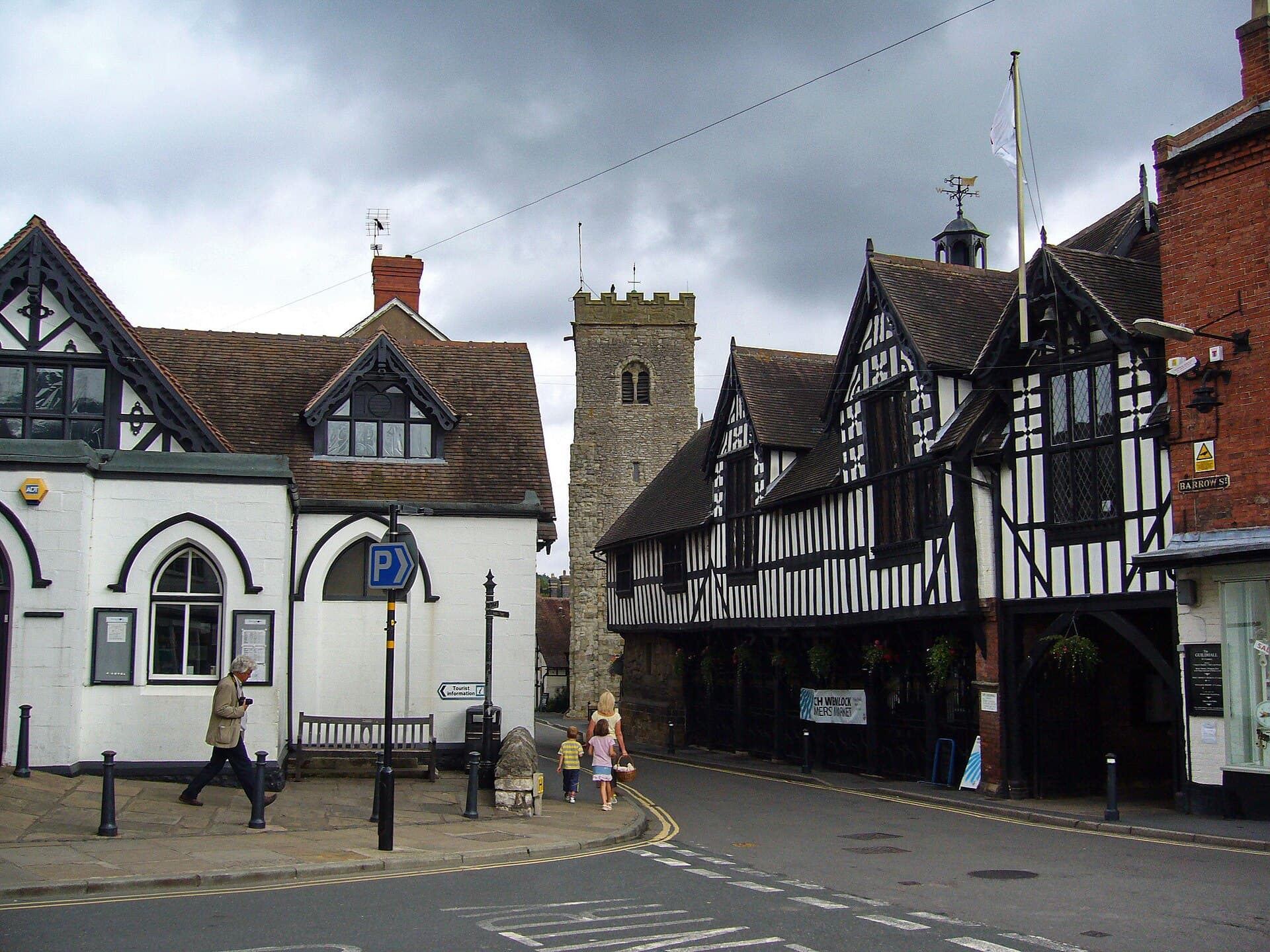
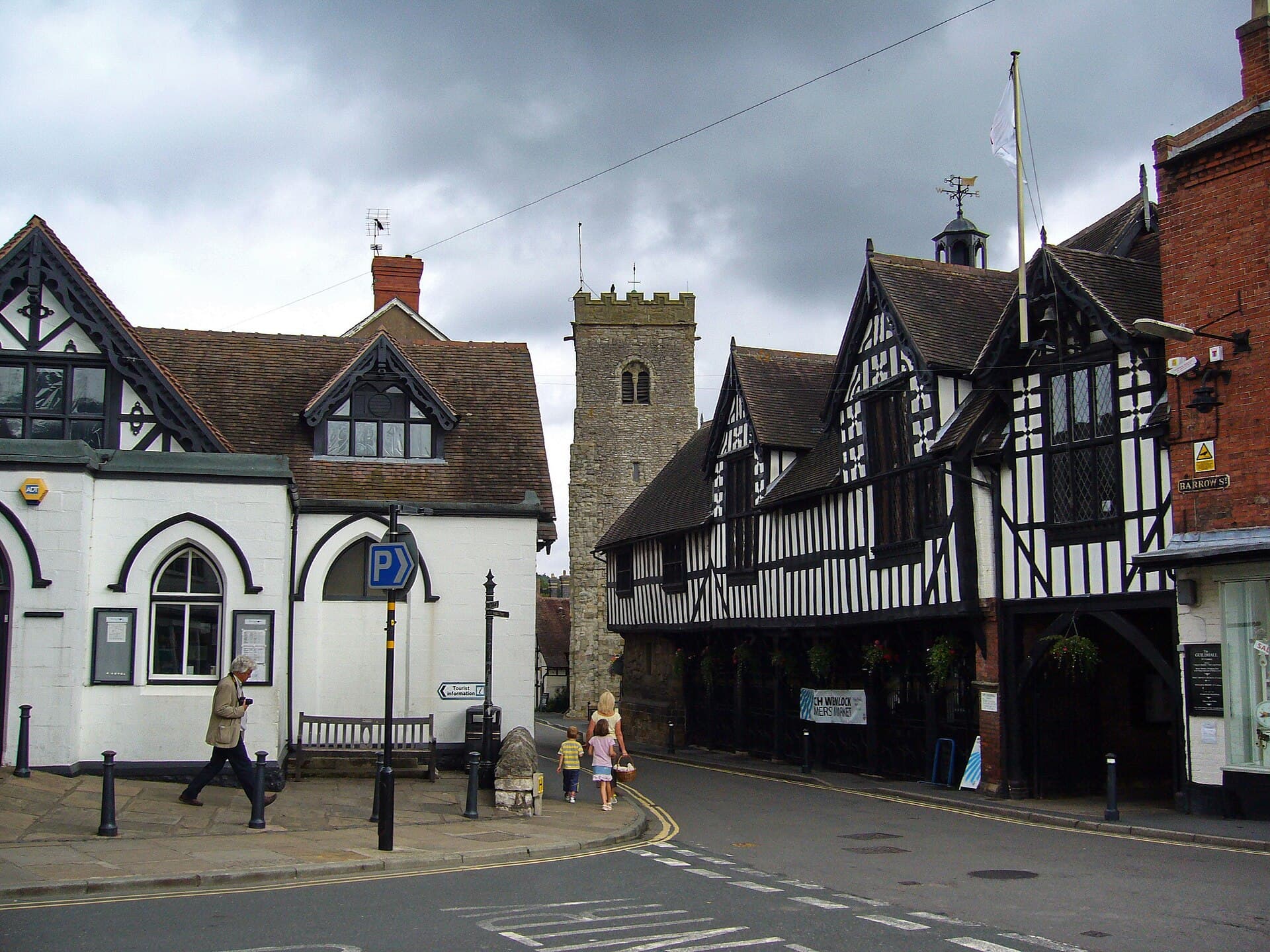 Tanya Dedyukhina / CC BY 3.0, via Wikimedia Commons
Self-guided audio walking tour of Much Wenlock — GPS route, offline playback, story-driven narration in 32 languages.
“Where ancient history and Olympic dreams converge, a quiet town with a global legacy.”
Not the postcards. The stories even locals don't know — whispered in your ear, right where they happened.
Don't be surprised if an unseen presence brushes past your legs while you enjoy a pint.
Examine the pulpit closely, and you'll find an unexpected carving that speaks to ancient folklore.
The town's history stretches back further than you might imagine, to a time when Shropshire was submerged under a coral sea.
Discover every secret of Much Wenlock
Every address, every reveal in full — in your ear, right where it happened.
You pick your stops. You walk. The voice reveals what the others miss.
Your self-guided audio tour of Much Wenlock is ready — pick your landmarks, choose your language, and start the moment you arrive.
BuyLume has a built-in augmented-reality guide. Hold your phone up and its camera shows the street ahead of you, with a glowing arrow laid over the real view that always points to your next stop — no map to puzzle over, no wrong turns. Like everything in Lume, it works fully offline.
Much Wenlock, a market town in Shropshire, England, offers a journey through centuries of history, from its Anglo-Saxon origins to its unique role in the birth of the modern Olympic Games. With a population of around 3,000, it maintains the feel of a village, inviting visitors to wander its streets and absorb its character. The town presents a blend of medieval, Georgian, and Victorian architecture, featuring half-timbered buildings and limestone cottages.
Beyond its historical appeal, Much Wenlock is set within the Shropshire Hills Area of Outstanding Natural Beauty, providing a scenic backdrop for exploration. It's a place where independent shops flourish, offering a refreshing contrast to contemporary high streets. Whether you are drawn to ancient ruins, sporting heritage, or simply a tranquil English town, Much Wenlock promises a memorable experience.
The story of Much Wenlock begins in the 7th century, around 680 AD, with the founding of an abbey by Merewalh, son of King Penda of Mercia. His daughter, Princess Milburga, became its abbess in 687 AD. This religious center flourished, and the discovery of St. Milburga's bones in the 11th century transformed Wenlock Priory into a significant pilgrimage site. The town itself grew up around the priory, gaining a market charter and developing into a place of considerable wealth during the medieval period, evident in its surviving Elizabethan and late medieval buildings.
The priory, initially a Benedictine nunnery, was re-established as a Cluniac monastery in the 12th century. However, its grandeur was brought to an end with Henry VIII's dissolution of the monasteries in 1539. Following this, the town's burgesses constructed the Guildhall in 1540 to serve as a courthouse, adding a council chamber in 1577—a function it still performs today.
Much Wenlock's most distinctive contribution to global history emerged in the 19th century through the vision of Dr. William Penny Brookes. A local physician and passionate advocate for physical education, Brookes established the Wenlock Olympian Games in 1850. These games, initially featuring a mix of traditional British country fair events and modern athletic disciplines like cricket, football, and various races, were designed to promote the moral, physical, and intellectual improvement of the local community. Brookes' pioneering work caught the attention of Baron Pierre de Coubertin, who visited Much Wenlock in 1890 and was inspired by the Wenlock Olympian Games to found the modern Olympic movement, with the first international games held in Athens in 1896. The town's legacy is so profound that one of the London 2012 Summer Olympics mascots was named Wenlock in its honor.
Beyond its Olympic fame, Much Wenlock has also touched the literary world. Novelist Mary Webb, known for her works set in the Shropshire countryside, spent her formative years at The Grange just outside the town from 1882 to 1896. She famously described Much Wenlock as a "Rip van Winkle of a place" that had "fallen asleep somewhere in the Middle Ages." Her book Gone to Earth was even filmed in Much Wenlock in 1950, with many locals appearing as extras. The town and the nearby Wenlock Edge also feature in the poetry of A.E. Housman, notably in his collection A Shropshire Lad.
Begin your exploration at the Much Wenlock Museum and Visitor Centre, which offers an excellent introduction to the town's history and its Olympic connections, showcasing memorabilia from the Wenlock Olympian Games. From there, follow the Olympian Trail, marked by bronze plaques, to discover key sites related to Dr. William Penny Brookes and the origins of the modern Olympics.
A short walk from the town center are the evocative ruins of Wenlock Priory, a 12th-century Cluniac monastery built on the site of St. Milburga's 7th-century abbey. Explore its majestic arches, columns, and the tranquil cloister gardens. The Guildhall, a half-timbered building dating back to 1540, served as the town's center of governance for centuries and still hosts council meetings. Inside, you can admire carved oak panels from a local manor house.
Holy Trinity Church, a beautiful example of Norman architecture with later additions, features a 12th-century nave, stained glass windows, and a memorial to Dr. William Penny Brookes. Discover the independent shops along Much Wenlock's High Street, offering antiques, local crafts, and unique gifts. For outdoor enthusiasts, the Wenlock Edge escarpment offers extensive walking and cycling trails with sweeping views across the Shropshire Hills.
Much Wenlock is a pleasant destination year-round, but the most comfortable weather for exploring is typically found in July and August, when daytime highs reach around 21°C (70°F). Spring and summer bring blooming countryside, while autumn offers a colorful backdrop of changing leaves. Winter provides a quieter experience with festive decorations. The annual Wenlock Olympian Games are held in July, and the Much Wenlock Christmas Fayre takes place in early December.
Much Wenlock is accessible by road, located just off the A458, approximately 12 miles south of Shrewsbury and 8 miles north of Bridgnorth. While there is no train station in Much Wenlock, the nearest station is in Telford, about 10 miles away, with bus and taxi connections to the town. Several car parks are available, including Back Lane Car Park and St Mary's Lane Car Park, both centrally located. Parking charges apply during the day, but spaces are generally available. The Much Wenlock Museum and Visitor Centre, located on High Street (TF13 6AA), serves as the town's visitor information center. Their summer opening hours are Tuesday, Thursday, Friday, and Saturday from 10 am to 4:30 pm (closed for lunch from 1 pm to 1:30 pm).
Much Wenlock in Korean, in Chinese or in Hebrew — and 29 more languages, every stop narrated by a native voice. The widest language range of any self-guided audio tour.
Available in: