Love Island (Meilės sala)
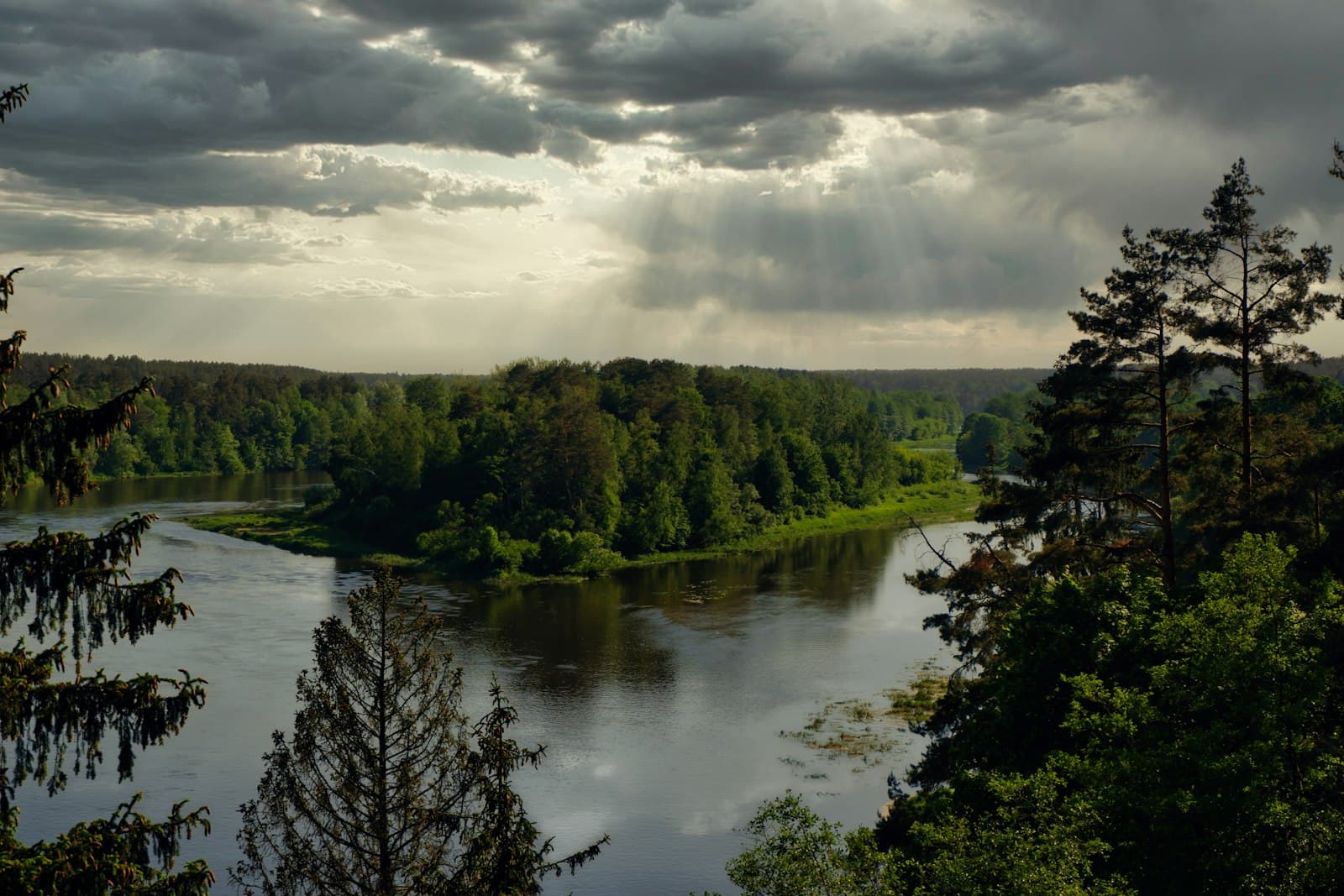
On an island in the Nemunas River, young romantics once practiced a unique ritual to predict their romantic futures.
Full story unlocks in the tour
 Quintin Soloviev / CC BY 4.0, via Wikimedia Commons
Self-guided audio walking tour of Druskininkai — GPS route, offline playback, story-driven narration in 32 languages.
“Where pine-scented air and ancient salt springs revive the soul.”
Not the postcards. The stories even locals don't know — whispered in your ear, right where they happened.
On an island in the Nemunas River, young romantics once practiced a unique ritual to predict their romantic futures.
A spring in Druskininkai yields waters too salty to drink, yet locals use it for a surprising beauty and healing ritual.
Beyond its historical gravestones, this cemetery near Lake Druskonis holds a curious detail about its earliest recorded burial.
Discover every secret of Druskininkai
Every address, every reveal in full — in your ear, right where it happened.
You pick your stops. You walk. The voice reveals what the others miss.
Your self-guided audio tour of Druskininkai is ready — pick your landmarks, choose your language, and start the moment you arrive.
BuyLume has a built-in augmented-reality guide. Hold your phone up and its camera shows the street ahead of you, with a glowing arrow laid over the real view that always points to your next stop — no map to puzzle over, no wrong turns. Like everything in Lume, it works fully offline.
Druskininkai, Lithuania's southernmost town, is a celebrated spa resort embraced by pine forests and the meandering Nemunas River. Known for its therapeutic mineral waters and healing mud, this serene destination offers a unique blend of relaxation and active leisure year-round. With a population of around 12,000, Druskininkai maintains a calm, reflective atmosphere, distinct from the bustling energy of larger Lithuanian cities.
Visitors are drawn to Druskininkai for its wellness culture, which dates back centuries, but the town also surprises with modern attractions. From the exhilarating slides of one of the largest water parks in the Baltics to the unique experience of year-round indoor skiing, Druskininkai provides diverse entertainment options. The town's commitment to integrating natural healing factors with contemporary leisure makes it a compelling stop for those seeking rejuvenation and a touch of adventure.
## From Stone Age Settlements to Royal Recognition Druskininkai's history stretches back to the Stone Age, though its official mention in written sources dates to 1636. The town's name, derived from the Lithuanian word 'druska' (salt), hints at the mineral-rich waters that would define its future. In the 13th century, a defensive castle was constructed in the area, later destroyed by the Teutonic Knights.
## The Birth of a Spa Town The healing properties of Druskininkai's mineral waters gained recognition in the 18th century. In 1794, Stanisław II August Poniatowski, the Grand Duke of Lithuania and King of Poland, officially declared Druskininkai a therapeutic area. This royal decree marked the official beginning of Druskininkai as a spa resort. The resort's development accelerated in 1838 when Russian Emperor Nicholas I granted permission for its expansion, allocating a significant loan for infrastructure. Marshes were drained, health centers were built, and by the late 19th and early 20th centuries, Druskininkai had become a fashionable summer retreat, rivaling resorts in Crimea and the Caucasus in popularity.
## Shifting Fortunes and Modern Revival After World War I, Druskininkai became part of Poland, its popularity further boosted by the patronage of Józef Piłsudski. However, the onset of World War II brought occupation and hardship, with the town experiencing Soviet and Nazi control. During the Soviet era, it was transformed into a health resort with large sanatoriums, attracting around 400,000 visitors annually. Following the fall of the USSR, modern Lithuania embarked on a mission to restore Druskininkai's former glory. This revival has seen significant investment in infrastructure, the privatization and renovation of hotels and sanatoriums, and the opening of major attractions like the Aqua Park in 2006 and the Snow Arena in 2011. Today, Druskininkai is recognized as one of Europe's best balneology resorts, blending its deep healing traditions with contemporary leisure and wellness offerings.
Druskininkai offers a diverse range of attractions, blending natural beauty with unique recreational facilities. The Druskininkai Aqua Park is a major draw, featuring numerous water slides, thermal pools, and 19 different saunas, offering year-round tropical warmth and entertainment. For a truly unique experience, visit the Snow Arena, an indoor ski slope open all year, offering skiing, snowboarding, and tubing regardless of the season.
For a dose of history and reflection, Grūtas Park is an outdoor museum showcasing Soviet-era sculptures and artifacts, set in a forest a short bus ride from town. The Antanas Česnulis Sculpture Park features unique wooden carvings based on Lithuanian history and folklore, with some sculptures even moving and playing music. Take a stroll through the Dineika Wellness Park, a serene space for relaxation, featuring river cascades and an acupressure pool. Do not miss the Musical Fountain in the city park, where water dances to music. The City Museum of Druskininkai, located on the shores of Lake Druskonis, offers insights into the town's past.
Druskininkai is a year-round destination, with each season offering distinct experiences. Late spring (May-June) and early autumn (September-October) are often considered ideal, with crisp air, fewer crowds, and comfortable temperatures for outdoor activities like hiking and cycling. Summers (July-August) are warm, with temperatures around 18-22°C (64-72°F), perfect for outdoor spas, festivals, and enjoying long daylight hours. However, summer can also be the peak season with more tourists and occasional humidity and rain. Winters are cold and snowy, transforming the town into a quiet retreat, ideal for indoor spa treatments and the Snow Arena.
Druskininkai is easily accessible, with Vilnius and Kaunas just 120 km away. Regular bus services connect Druskininkai to these major cities, with journeys taking approximately two hours. The town itself is compact and very walkable, making it easy to explore most attractions on foot. For longer distances or trips to attractions outside the center, local buses are available, costing around €0.50 to €1 per ride. Taxis are also an option, with short trips within town typically costing €3-€5. Renting a bike is another popular way to get around, with rentals costing €5 to €8 per day. While there is no airport in Druskininkai, the nearest international airport is in Vilnius.
Druskininkai in Korean, in Chinese or in Hebrew — and 29 more languages, every stop narrated by a native voice. The widest language range of any self-guided audio tour.
Available in: