Commercial Hotel and Casino
Before Las Vegas became the entertainment capital, a small casino in Elko was drawing some of the biggest names in show business.
Full story unlocks in the tour
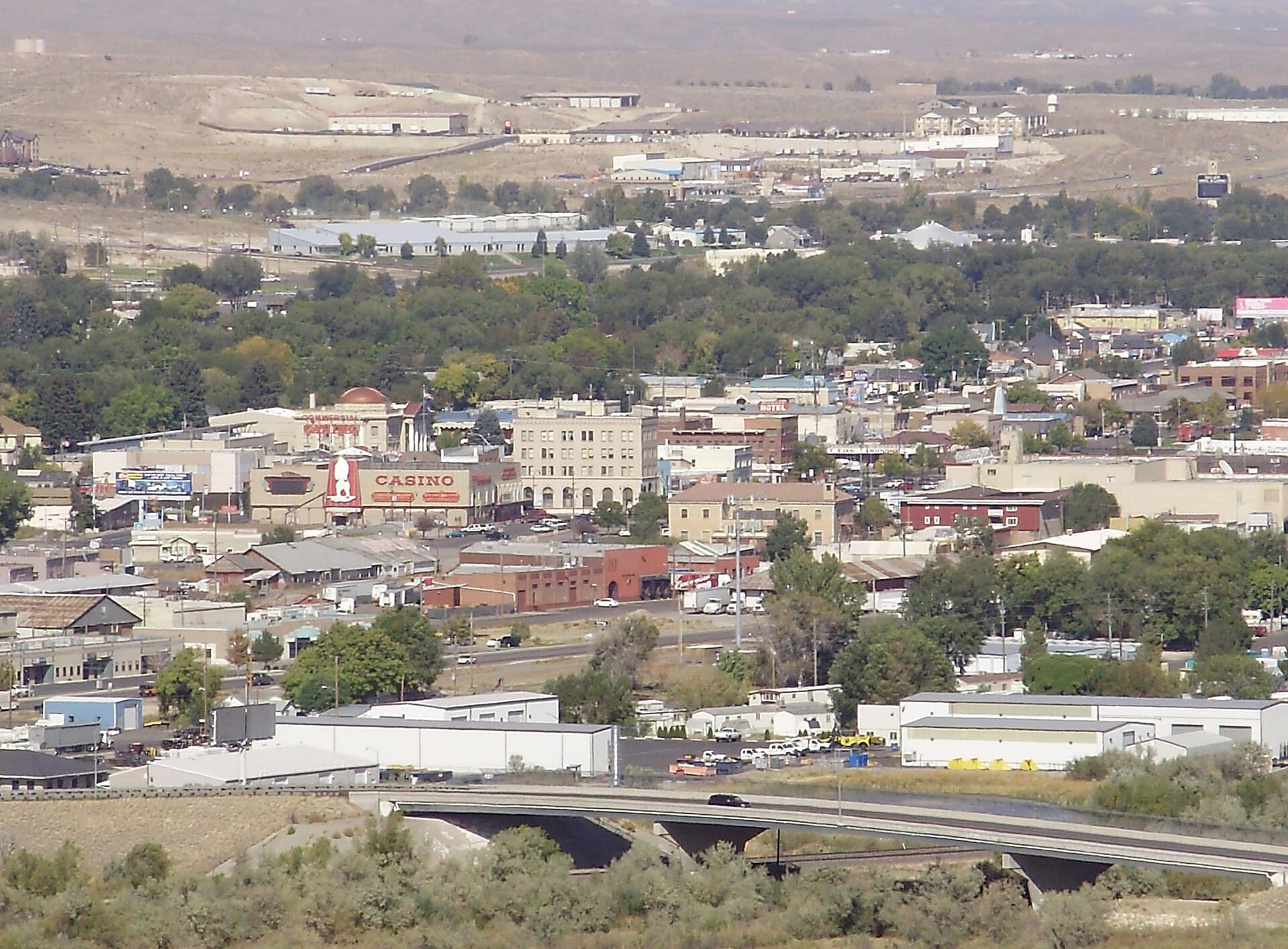 Famartin / CC BY-SA 3.0, via Wikimedia Commons
Self-guided audio walking tour of Elko — GPS route, offline playback, story-driven narration in 32 languages.
“Where the high desert meets the Ruby Mountains, and cowboy poetry echoes alongside Basque traditions.”
Not the postcards. The stories even locals don't know — whispered in your ear, right where they happened.
Before Las Vegas became the entertainment capital, a small casino in Elko was drawing some of the biggest names in show business.
The name 'Elko' isn't as straightforward as it seems; it's a tale tied to a railroad superintendent's fondness for animal names.
A remote canyon near Elko holds the grim distinction of being the site of the last stagecoach robbery and murder in the world.
Discover every secret of Elko
Every address, every reveal in full — in your ear, right where it happened.
You pick your stops. You walk. The voice reveals what the others miss.


Your self-guided audio tour of Elko is ready — pick your landmarks, choose your language, and start the moment you arrive.
BuyElko, the 'Heart of Northeast Nevada,' sits in the high desert, a place where the vast, open landscape meets the dramatic peaks of the Ruby Mountains. With a population of just over 20,000, it's the largest city for more than 130 miles in any direction, serving as a hub for ranching, mining, and a unique blend of cultures. This seemingly remote city offers a surprising depth of experiences, from its deep-rooted cowboy heritage to a discernible Basque influence, all set against a backdrop of striking natural beauty.
Here, the spirit of the Old West is not just preserved in museums but actively lived, particularly evident during the annual National Cowboy Poetry Gathering, an event that has garnered international attention. Elko is also a place of unexpected diversity, shaped by the enduring presence of its Basque community, whose traditions are woven into the city's culinary and cultural fabric. Whether you're drawn by the lure of gold, the solitude of the wilderness, or the stories of those who carved a life out of this rugged terrain, Elko invites you to explore its distinctive character.
## Railroad Town to Gold Rush Boom Elko's origins are firmly tied to the iron horse. The city was established in 1868 by settlers at the eastern end of the Central Pacific Railroad's tracks, part of the monumental First Transcontinental Railroad project. Once the railroad crews moved eastward to complete the line in Utah, Elko remained, quickly becoming a vital center for ranching, mining, and a key rail freight and supply point.
In 1869, Elko County was officially created from a portion of Lander County, and Elko was designated as its county seat. The first county courthouse was built the following year. The late 19th and early 20th centuries saw significant developments, including the establishment of the University of Nevada in Elko in 1874 (though it moved to Reno in 1886) and the opening of Elko High School in 1895, the first county high school in Nevada.
## The Enduring Allure of Gold and Culture While Elko was founded during a period of general gold excitement, its population truly surged in the late 1960s with the discovery of microscopic gold along the Carlin Unconformity. This led to an influx of mining companies and residents, transforming the city. Today, mining remains a significant economic driver, with major operations like Newmont Mining Company nearby.
Beyond its mineral wealth, Elko's cultural landscape has been shaped by its diverse inhabitants. The Basque community, many of whom arrived in the mid-1800s, established large ranching operations and continue to celebrate their heritage through events like the annual National Basque Festival, which began in 1963. In 1985, Elko gained international recognition with the launch of the National Cowboy Poetry Gathering, an event that celebrates the art, songs, and stories of the rural West and draws visitors from around the globe each January.
Begin your exploration at the California Trail Interpretive Center, where you can step back in time to understand the arduous journeys of pioneers seeking new lives and gold. The center features historic displays, including a preserved wagon encampment and a Shoshone village.
Delve into Elko's Western heritage at the Northeastern Nevada Museum, which houses exhibits on Native American culture, Old West history, and even rare mastodon fossils found locally. For a deeper dive into cowboy culture, the Cowboy Arts and Gear Museum showcases artifacts like antique saddles, bridles, and spurs crafted by local legend G.S. Garcia.
Experience the Basque influence at the Star Hotel, a local institution known for its 'Basque-style' meals. For a quirky sight, visit the Commercial Casino to see the 'White King,' a towering stuffed polar bear. Take a stroll through downtown Elko, where murals and public art reflect the city's artistic spirit.
Beyond the city, the Ruby Mountains, often called 'Nevada's Alps,' offer unparalleled opportunities for hiking, fishing, and scenic drives, particularly through Lamoille Canyon. The Jarbidge Wilderness to the north is also one of the least visited and most pristine wilderness areas in the United States.
Elko experiences a semi-arid climate with four distinct seasons. Summers are hot and dry, with July being the warmest month, averaging highs around 89°F. Winters are cold and snowy, with January being the coldest, averaging lows around 16°F. Spring and fall offer milder temperatures. The National Cowboy Poetry Gathering takes place each January, drawing crowds. The National Basque Festival is held annually in July. For outdoor activities in the Ruby Mountains, late spring through early fall is ideal.
Elko is located in northeastern Nevada, approximately 289 miles from Reno and 230 miles from Salt Lake City, making it accessible by car, train (Amtrak), or air via Elko Regional Airport. The city operates under a City Council/Manager form of government, with the Mayor and four council members elected for four-year terms. The median age in Elko is 33.2 years, and the population is growing steadily. While generally safe, visitors should always be aware of their surroundings. For local information on outdoor recreation, the Nevada Department of Wildlife offices can provide current details.
Elko in Korean, in Chinese or in Hebrew — and 29 more languages, every stop narrated by a native voice. The widest language range of any self-guided audio tour.
Available in: