Musée d'Estavayer-le-Lac et ses grenouilles (Frog Museum)
Imagine a museum where the exhibits aren't just old artifacts, but rather, a whimsical, slightly unsettling display of 19th-century life.
Full story unlocks in the tour
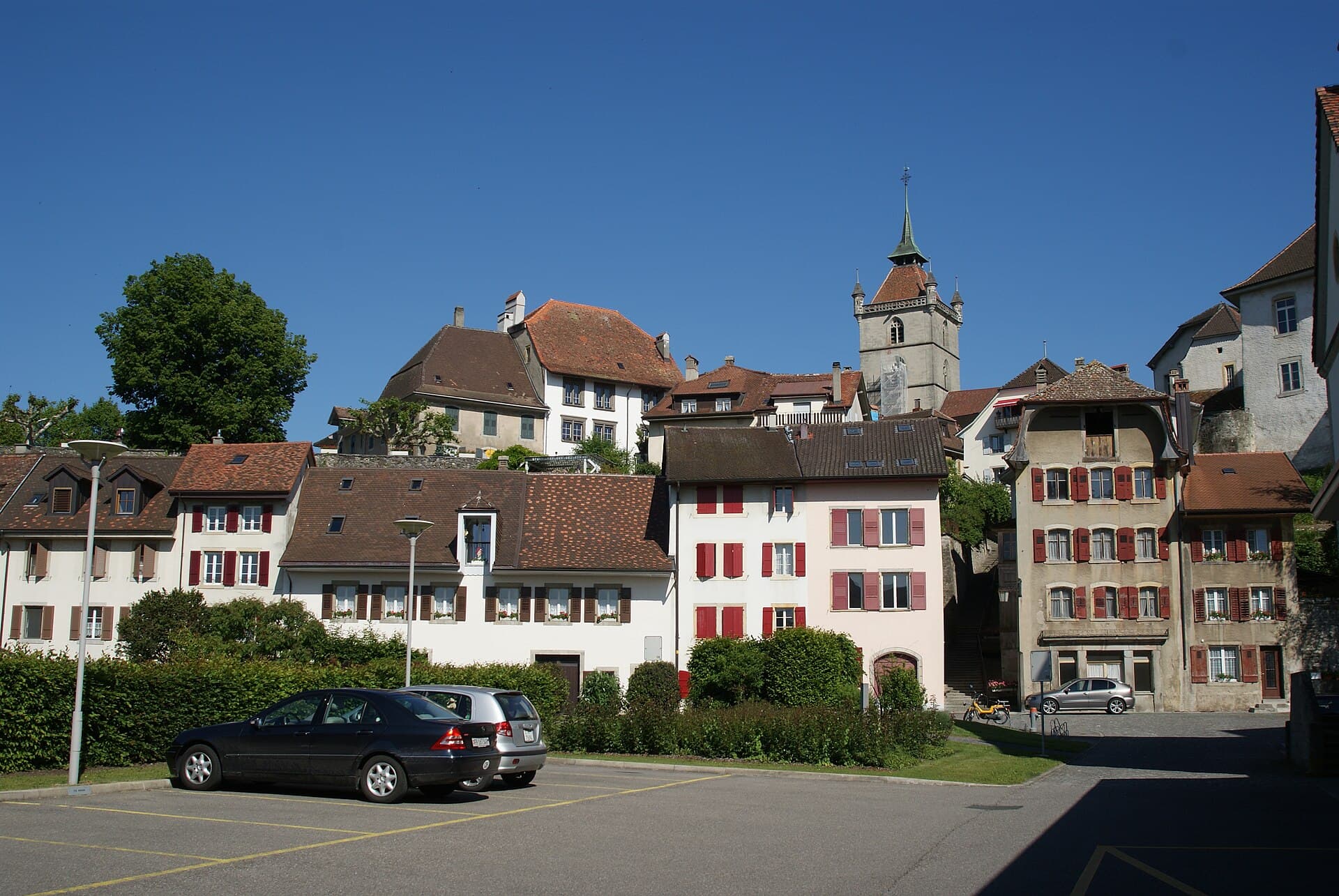 Raphaël Thiémard / CC BY 2.0, via Wikimedia Commons
Self-guided audio walking tour of Estavayer-le-Lac — GPS route, offline playback, story-driven narration in 32 languages.
“Where medieval stone meets the expanse of a lake.”
Not the postcards. The stories even locals don't know — whispered in your ear, right where they happened.
Imagine a museum where the exhibits aren't just old artifacts, but rather, a whimsical, slightly unsettling display of 19th-century life.
This imposing castle, a dominant feature of the town's skyline, holds a secret about its original construction that goes beyond typical defensive architecture.
While known for its water sports, this lakefront also conceals a natural wonder that's far more expansive and ecologically significant than most visitors realize.
Discover every secret of Estavayer-le-Lac
Every address, every reveal in full — in your ear, right where it happened.
You pick your stops. You walk. The voice reveals what the others miss.


Your self-guided audio tour of Estavayer-le-Lac is ready — pick your landmarks, choose your language, and start the moment you arrive.
BuyLume has a built-in augmented-reality guide. Hold your phone up and its camera shows the street ahead of you, with a glowing arrow laid over the real view that always points to your next stop — no map to puzzle over, no wrong turns. Like everything in Lume, it works fully offline.
Estavayer-le-Lac, a medieval town on the southern shore of Lake Neuchâtel in the canton of Fribourg, offers a captivating blend of historical character and natural splendor. Its well-preserved old town features narrow lanes, historic buildings, and the imposing Château de Chenaux, all contributing to a sense of stepping back in time. The town's location provides sweeping views of the lake and the Jura mountains, making it a picturesque destination for those seeking both cultural exploration and outdoor activities.
Beyond its architectural appeal, Estavayer-le-Lac is recognized as Switzerland's best-equipped watersports center. The lake offers opportunities for swimming, boat tours, and a variety of water sports, including wakeboarding, wakesurfing, and water skiing, highlighted by Switzerland's longest water-ski lift. The surrounding Grande Cariçaie nature reserve further enhances the region's appeal, providing a tranquil setting for birdwatching, hiking, and cycling.
The area around Estavayer-le-Lac has been inhabited since Mesolithic times (8000-5500 BC), with evidence of a dug-out canoe found beneath the Château de Chenaux. By the late Bronze Age (1000-900 BC), a large village flourished along the lakeshore, and the 1879 correction of the Jura waters revealed remnants of hundreds of pile dwellings from this earlier settlement. Human occupation continued through the Iron Age and Roman era, with vestiges unearthed along the Motte-Châtel esplanade.
While the origins of the medieval city before 1000 AD remain somewhat mysterious, the dedication of the town's church to Saint Lawrence suggests a place of Christian worship since the end of the Roman era. The earliest historical reference to an autonomous seigneury dates to the 12th century, with Renaud, Lord of Estavayer, and his son, Conon, being mentioned. The Estavayer dynasty strategically built their fortress on the unassailable rocky outcrop of “Motte-Châtel” near the church. By the end of the 13th century, Estavayer had three castles: Motte-Châtel, the Savoy-style Château de Chenaux, and the Château de Savoie.
The Château de Chenaux, built in 1284, was later acquired by Humbert the Bastard, lord of Estavayer and half-brother of Amédée VIII, Count of Savoy, in 1432. Humbert transformed it into a formidable fortress, though he died before completing its interior. After his death, the castle eventually came under the control of Fribourg in 1475, following the capture of Estavayer by the Confederates, and has since served administrative functions. While Estavayer-le-Lac was once a thriving port, its economic prosperity declined with the Reformation in 1536, which affected trade with Catholic Estavayer, and later with the advent of railways and motorized transport. Despite these shifts, the town has remarkably preserved its medieval heritage, with its narrow lanes, historic houses, and the enduring presence of the Château de Chenaux.
Begin your exploration in Estavayer-le-Lac's medieval old town, where narrow lanes lead to historic buildings and charming squares. The Château de Chenaux, a 13th-century Savoyard castle, stands over the town and offers views over Lake Neuchâtel. While the interior is generally not open to the public, the gardens and exterior grounds are accessible year-round, and the keep can be visited from early May to late October. The Collegiate Church of Saint Lawrence is another prominent landmark, showcasing Gothic and Renaissance architectural elements.
A truly unique experience awaits at the Musée d'Estavayer-le-Lac et ses grenouilles, popularly known as the Frog Museum. Housed in a 15th-century mansion, it features 108 taxidermied frogs arranged in satirical dioramas depicting 19th-century human life. Beyond the frogs, the museum also displays local history artifacts, including weapons, archaeological finds, and domestic items.
For outdoor enthusiasts, the Nouvelle Plage (New Beach) on Lake Neuchâtel is a hub for water activities. Here you'll find Switzerland's longest water-ski lift, along with opportunities for wakeboarding, windsurfing, paddle boating, and catamaran rentals. Adjacent to the lake, the Grande Cariçaie nature reserve offers a peaceful escape with its marshlands, ideal for birdwatching, hiking, and cycling. You can also discover contemporary art along the ArtiChoke urban art trail, which integrates modern works into the public space.
The ideal time to visit Estavayer-le-Lac for warm-weather activities is from late June to early September, when temperatures are mild and there are ample opportunities for outdoor pursuits. July is typically the warmest month, with average highs around 76°F (24°C) and the clearest skies. Spring and autumn also offer pleasant conditions, with spring bringing colorful blooms and autumn displaying radiant fall foliage reflected on the lake. Winter provides a quieter experience, with opportunities for peaceful walks along the lake and cultural discoveries in museums and historical sites, away from the crowds. The town also hosts various events throughout the year, including the Estivale Open Air music festival in late July and early August, and the Bénichon Festival in late August.
Estavayer-le-Lac is easily explored on foot, especially the compact medieval old town. For longer excursions, bicycles can be rented, or you can utilize the efficient public transport system. The town is well-served by public transportation, including the Swiss Federal Railways (CFF) and local Fribourg Public Transport (TPF) buses, connecting it to cities like Fribourg and Yverdon-les-Bains. An urban bus also circulates within Estavayer-le-Lac, extending to the beach during the warmer months.
For those arriving by car, Estavayer-le-Lac is accessible via the A1 motorway. Parking options, including blue zone spaces, are available. Accommodation ranges from charming guesthouses to lakeside hotels, and booking in advance is advisable, especially during peak season. Local cuisine includes Swiss classics like cheese fondue and rösti, available in lakeside cafés.
Estavayer-le-Lac in Korean, in Chinese or in Hebrew — and 29 more languages, every stop narrated by a native voice. The widest language range of any self-guided audio tour.
Available in: