Romont Castle's well
The castle well offers a curious insight into the town's local moniker.
Full story unlocks in the tour
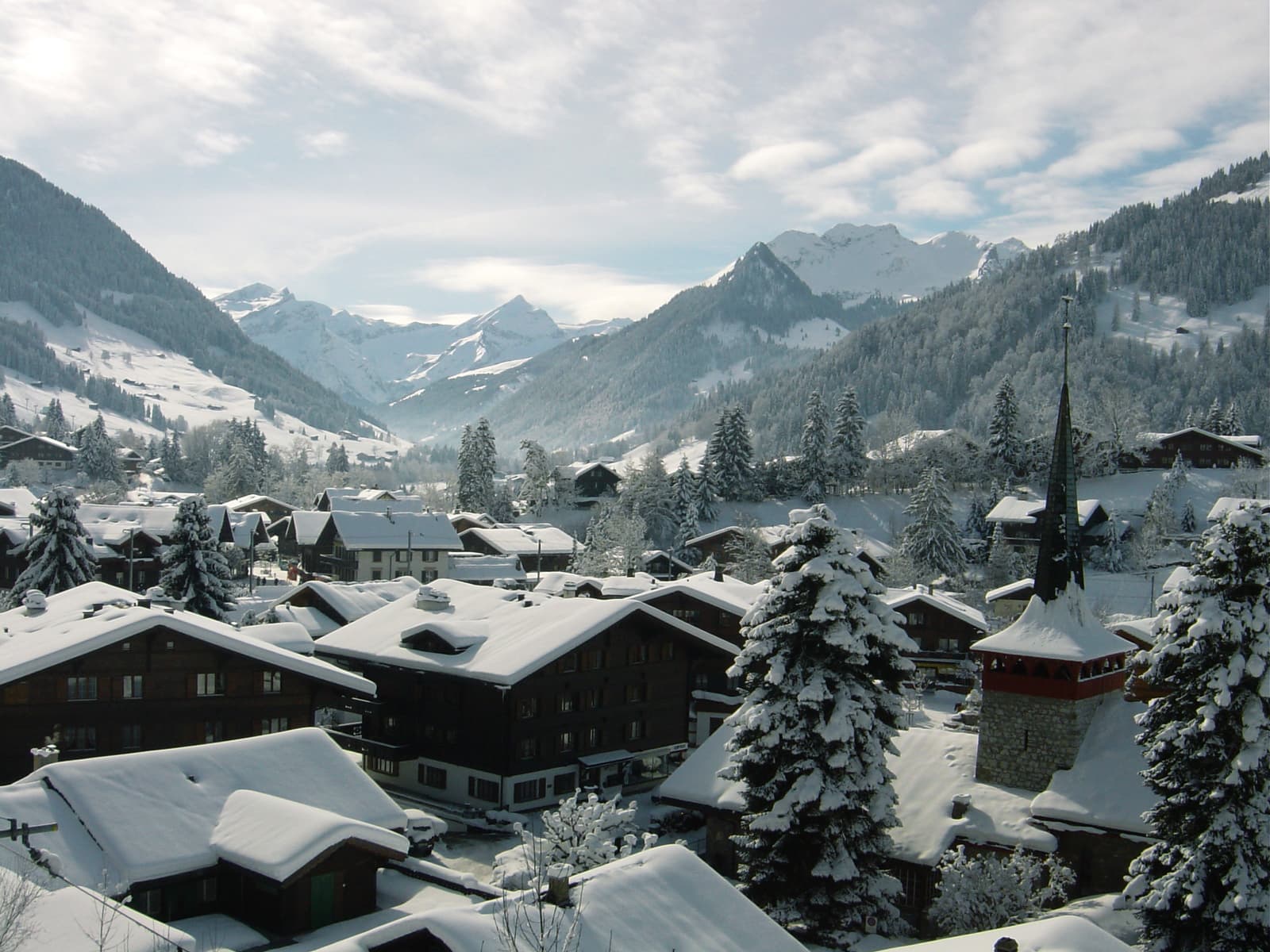 Photo of Gstaad, via Wikimedia Commons
Self-guided audio walking tour of Romont — GPS route, offline playback, story-driven narration in 32 languages.
“Where medieval walls embrace modern glass artistry.”
Not the postcards. The stories even locals don't know — whispered in your ear, right where they happened.
The castle well offers a curious insight into the town's local moniker.
Just beyond the town's ancient defenses, a 13th-century abbey reveals a surprising contemporary artistic installation.
Examine the ancient fortifications closely, and you may discern an unexpected artistic flourish.
Discover every secret of Romont
Every address, every reveal in full — in your ear, right where it happened.
You pick your stops. You walk. The voice reveals what the others miss.
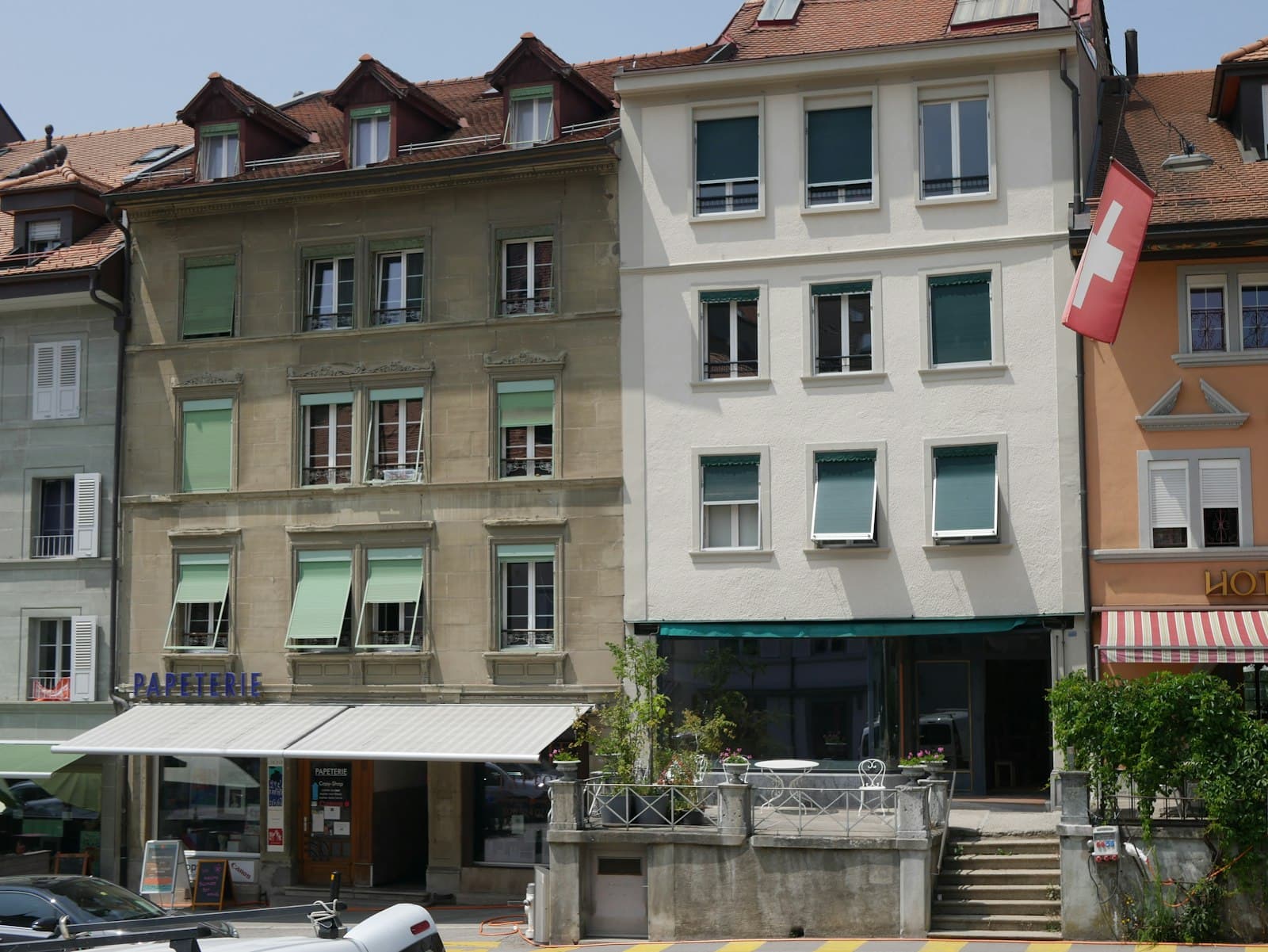
Your self-guided audio tour of Romont is ready — pick your landmarks, choose your language, and start the moment you arrive.
BuyLume has a built-in augmented-reality guide. Hold your phone up and its camera shows the street ahead of you, with a glowing arrow laid over the real view that always points to your next stop — no map to puzzle over, no wrong turns. Like everything in Lume, it works fully offline.
Romont, a small town within the canton of Fribourg, Switzerland, rises gracefully from a rounded hill, its name derived from the Latin Rotundus Mons, signifying 'round mount'. This medieval settlement, established in 1240 by Peter II of Savoy, retains much of its original character, with defensive walls and watchtowers encircling the old town.
Beyond its well-preserved architecture, Romont is celebrated as the Swiss capital of stained glass. The town serves as a lively center for glass art, prominently displayed in its museums, churches, and woven into the urban fabric. Romont provides sweeping vistas of the surrounding Fribourg countryside, the Alps, and the commanding Moléson mountain.
The earliest evidence of human habitation in the Romont area dates to the Hallstatt era, with five tumuli uncovered in the village of Bossens, and the foundations of a Roman-era structure found at Bochanat. The name 'Romont,' meaning 'round hill,' first appears in historical records around 1177.
In 1239, Anselme (or Nantelme) conveyed the rights to the Romont hill to Peter II of Savoy. The following year, in 1240, Peter II commenced the construction of a castle and the establishment of a village, positioning Romont as a vital strategic location. The primary castle, known as the Grand Donjon, with its characteristic Savoyard square floor plan, was finished before 1260. Another circular tower, the Boyer-tower (formerly Petit Donjon), was also erected by Peter II around 1250-1260.
Romont swiftly developed into a significant hub, connecting Fribourg with the Savoyard territories near Lake Geneva. Its broad thoroughfares facilitated markets and grand fairs, drawing pilgrims, travelers, and merchants. The town was granted rights patterned after Moudon, likely between 1285 and 1328.
Romont's past included periods of strife. During the Burgundian Wars (beginning in 1474), the city experienced looting and two conflagrations at the hands of Bern and Fribourg. In 1536, during the Bernese conquest of Vaud, Romont maintained its allegiance to its Catholic Savoyard rulers and allied with Catholic Fribourg, thereby preserving its traditional faith. It then became the administrative center of the bailiwick of Romont until 1798.
While portions of the town walls were unfortunately dismantled between 1842 and 1854, and several fires between 1843 and 1865 led to the replacement of Gothic buildings with more contemporary structures, Romont's cultural and architectural heritage remains remarkably intact. The castle, a Swiss heritage site of national importance, now houses the Vitromusée Romont, the Swiss Museum of Stained Glass and Glass Art, established in 1981.
Romont's compact old town invites leisurely exploration on foot. Begin at the Château de Romont, a 13th-century Savoyard castle that now hosts the Vitromusée Romont, the Swiss Museum of Stained Glass and Glass Art. The museum's collection spans from the Middle Ages to contemporary works, encompassing stained glass, reverse painting on glass, and other glass art forms. The castle courtyard itself merits attention, featuring an 18th-century wooden draw-wheel for a well reaching 40 meters deep.
Stroll along the medieval ramparts and towers that still encircle the old town, offering expansive views of the surrounding countryside and the Alps. The Gothic Collegiate Church, with its stained glass windows dating from the 15th to the 20th century, wooden stalls, and sculptures, stands as another significant historical site. Just beyond the town walls, the Cistercian Abbey of Fille-Dieu, also from the 13th century, showcases modern stained glass by Brian Clarke. For those interested in glass art beyond the museum, the Vitroparcours, or glass trail, highlights glass art integrated into the town's architecture.
The ideal period to visit Romont for general outdoor activities extends from late June to late August, when the weather is clear and temperatures are agreeable, typically ranging between 65°F and 80°F. Early autumn, particularly September, also provides pleasant weather, fewer crowds, and the beauty of changing foliage. While Romont is accessible throughout the year, some mountain services may operate with reduced hours in November and May.
Romont is readily accessible by train, situated on the main railway line connecting Lausanne with Bern, with frequent services making it about a half-hour journey from either city. The old town and castle are approximately a fifteen-minute uphill walk from the train station. For those traveling by car, ample free parking is available in town. The Romont Tourist Information Office, located at Rue du Château 112, can provide walking tour guides and details on local attractions.
The Vitromusée Romont is generally open Tuesday to Sunday, with hours varying by season. Admission typically costs CHF 12 for adults, with children under 16 admitted free when accompanied by an adult. The museum offers guided tours, and the castle courtyard and some rampart walks are freely accessible. Guided tours of the medieval town, the church, and even combined tours with a craft brewery tasting are available through the tourist office.
Romont in Korean, in Chinese or in Hebrew — and 29 more languages, every stop narrated by a native voice. The widest language range of any self-guided audio tour.
Available in: