The Great Pyramid's 'Air Shafts'
These narrow passages, extending from the King's and Queen's Chambers, weren't just for ventilation.
Full story unlocks in the tour
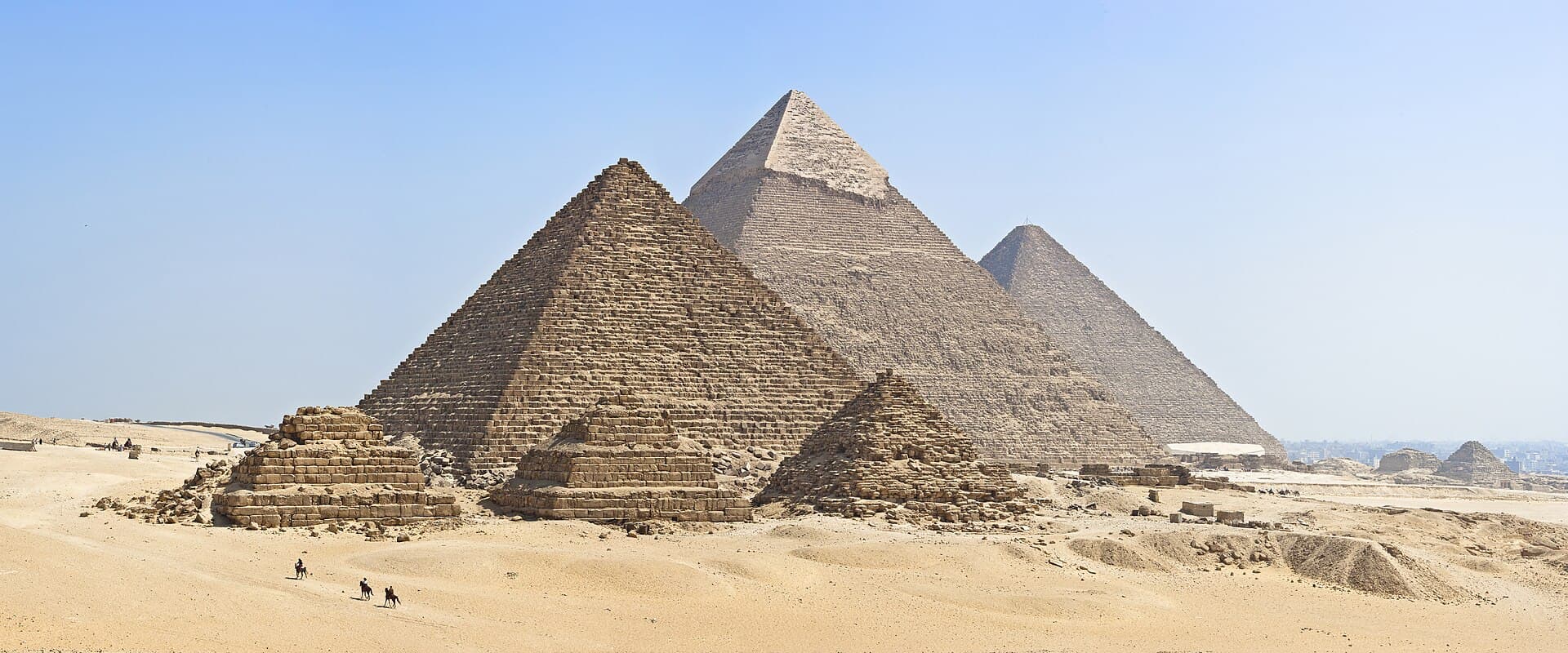 KennyOMG / CC BY-SA 4.0, via Wikimedia Commons
Self-guided audio walking tour of Giza Pyramids — GPS route, offline playback, story-driven narration in 32 languages.
“Where colossal ambition meets the eternal desert, and ancient secrets still stir beneath the sand.”
Not the postcards. The stories even locals don't know — whispered in your ear, right where they happened.
These narrow passages, extending from the King's and Queen's Chambers, weren't just for ventilation.
Beside the Great Pyramid, two sealed pits held an extraordinary discovery, not meant for the Nile.
Beyond the pyramids' visible grandeur, a complex network of tunnels lies beneath your feet.
Discover every secret of Giza Pyramids
Every address, every reveal in full — in your ear, right where it happened.
You pick your stops. You walk. The voice reveals what the others miss.


Lume has a built-in augmented-reality guide. Hold your phone up and its camera shows the street ahead of you, with a glowing arrow laid over the real view that always points to your next stop — no map to puzzle over, no wrong turns. Like everything in Lume, it works fully offline.
The Pyramids of Giza, colossal monuments rising from the desert landscape, stand as enduring testaments to the ingenuity and spiritual beliefs of ancient Egypt. Located on the Giza Plateau, a suburb of Cairo, these structures are more than just tombs; they are a profound connection to a civilization that flourished millennia ago. As the last remaining of the Seven Wonders of the Ancient World, the Great Pyramid of Khufu, alongside the Pyramids of Khafre and Menkaure, continues to captivate visitors with its sheer scale and the mysteries surrounding its construction.
Stepping onto the Giza Plateau is to walk through history, where the modern city of Cairo provides a striking backdrop to these ancient marvels. The complex encompasses not only the three main pyramids but also the enigmatic Great Sphinx, smaller satellite pyramids, and various tombs and temples. This UNESCO World Heritage site offers a unique opportunity to ponder the lives of pharaohs, the dedication of their builders, and the astronomical precision embedded within these monumental structures.
The tradition of pyramid building in Egypt evolved from earlier mastaba tombs, which were flat-roofed, rectangular structures. This architectural progression led to the step pyramids, such as the one at Saqqara, before culminating in the smooth-sided pyramids seen at Giza during the 4th Dynasty (circa 2575–2465 BCE). These monumental structures were not merely architectural feats; they were deeply intertwined with ancient Egyptian religious beliefs concerning kingship and the afterlife, serving as royal tombs to house the pharaoh's body and safeguard their journey to the next world.
The Giza pyramid complex was primarily constructed during the Fourth Dynasty of the Old Kingdom. Pharaoh Khufu initiated the first pyramid project in Giza around 2550 BCE, resulting in the Great Pyramid, the largest of the three. Originally standing at 146.6 meters (481 feet), it held the record as the world's tallest human-made structure for over 3,700 years. Built from an estimated 2.3 million stone blocks, each weighing an average of 2.5 to 15 tons, its construction remains a subject of intense study. Khufu's son, Khafre, built the second pyramid, which includes the iconic Great Sphinx. The third and smallest pyramid belongs to Menkaure, Khufu's grandson.
The construction of the Giza Pyramids was a monumental undertaking, requiring meticulous planning, logistics, and the coordinated effort of thousands of skilled workers, not enslaved people as often believed. Limestone was largely quarried on-site, with granite transported from Aswan. Workers likely moved these massive blocks using sledges over wet sand or ramps. The pyramids' precise alignment with the cardinal directions showcases the ancient Egyptians' advanced knowledge of astronomy, geometry, and engineering. While much is known about their purpose as tombs for the pharaohs, the exact methods of their construction continue to be debated, with theories suggesting various ramp systems or even internal ramps. Over centuries, most of the smooth white limestone casing that once covered the pyramids, making them sparkle in the sunlight, was removed due to erosion, earthquakes, or reuse in other buildings. Despite these changes, the pyramids remain a powerful and enduring symbol of ancient Egyptian civilization.
The Giza Pyramid complex offers a wealth of sights beyond the iconic pyramids themselves. Your visit will undoubtedly center around the three main pyramids: the Great Pyramid of Khufu, the Pyramid of Khafre, and the Pyramid of Menkaure. While the exteriors are awe-inspiring, you can also purchase separate tickets to venture inside the Great Pyramid of Khufu or the Pyramid of Khafre, though be prepared for steep, narrow passages.
No visit is complete without seeing the Great Sphinx, a colossal limestone statue with the body of a lion and the head of a pharaoh, guarding the plateau. For panoramic views of all three pyramids, head to one of the designated viewpoints, often accessible by camel or ATV rides, especially popular at sunset. The Solar Boat Museum, located near the Great Pyramid, houses the meticulously reassembled funerary boat of Pharaoh Khufu, a remarkable example of ancient shipbuilding. Consider attending the evening Sound and Light Show for a different perspective of the pyramids after dark. Additionally, the complex includes smaller pyramids, tombs, and the Valley Temple, offering further insights into ancient Egyptian burial practices and culture.
The best time to visit the Giza Pyramids is during the cooler months, from October to April, when temperatures are more comfortable for outdoor exploration. Within this period, the shoulder seasons of October-November and March-April offer a good balance of mild weather and fewer crowds compared to the peak winter months of December and January. To avoid the largest crowds and the midday heat, aim to arrive right at opening time, typically 8:00 AM. Weekdays are generally less busy than weekends.
The Giza Pyramids complex is open daily, generally from 8:00 AM to 5:00 PM from October to March, and from 7:00 AM to 7:00 PM from April to September, with last entry usually 30 minutes before closing. Entry to the general area costs EGP 700 for foreign adults, with separate tickets required to enter the pyramids themselves. For example, entering the Great Pyramid costs an additional EGP 1,000. Children under 6 enter free. It's advisable to purchase tickets online in advance to bypass queues, especially during peak season. The site is about 15 kilometers southwest of central Cairo and is easily reached by taxi, Uber, or a guided tour.
Expect to spend 2 to 4 hours exploring the complex, though a more comprehensive visit, including pyramid interiors or camel rides, could take 4 to 6 hours or even a full day. Be prepared for vendors and guides who may approach you; a polite but firm 'no thank you' is often sufficient. Wear comfortable walking shoes, a hat, and sunscreen, as there is limited shade on the plateau. If you plan to go inside a pyramid, be aware that passageways are narrow and steep, which may not be suitable for those with mobility issues or claustrophobia.
Giza Pyramids in Korean, in Chinese or in Hebrew — and 29 more languages, every stop narrated by a native voice. The widest language range of any self-guided audio tour.
Available in: