Origen del Nombre de Ilam
El mismo nombre 'Ilam' sugiere el viaje que le espera, pero sus orígenes son sorprendentemente intrincados.
La historia completa se desbloquea en el tour
 Saroj Pandey / CC BY-SA 4.0, via Wikimedia Commons
Tour de audio autoguiado de Ilam — ruta GPS a pie, reproducción offline, narración en 32 idiomas.
“Donde las colinas esmeralda se encuentran con mañanas brumosas, y cada taza cuenta una historia.”
No las postales. Las historias que ni los locales conocen — al oído, justo donde ocurrieron.
El mismo nombre 'Ilam' sugiere el viaje que le espera, pero sus orígenes son sorprendentemente intrincados.
Ilam es sinónimo de té, pero el origen de sus célebres plantaciones implica una ofrenda real y cierta influencia internacional.
Más allá del té, Ilam es conocido por una particular abundancia agrícola, todo comenzando con la misma letra en nepalí.
Descubre todos los secretos de Ilam
Cada dirección, cada revelación al completo — a tu oído, justo donde ocurrió.
Eliges tus paradas. Caminas. La voz te revela lo que los demás ignoran.


Tu tour de audioguía por Ilam te espera — elige tus lugares, tu idioma y empieza al llegar.
ComprarLume incluye una guía de realidad aumentada. Levanta el móvil y su cámara muestra la calle que tienes delante, con una flecha luminosa sobre la imagen real que siempre apunta a tu próxima parada — sin mapas que descifrar, sin giros equivocados. Como todo en Lume, funciona completamente sin conexión.
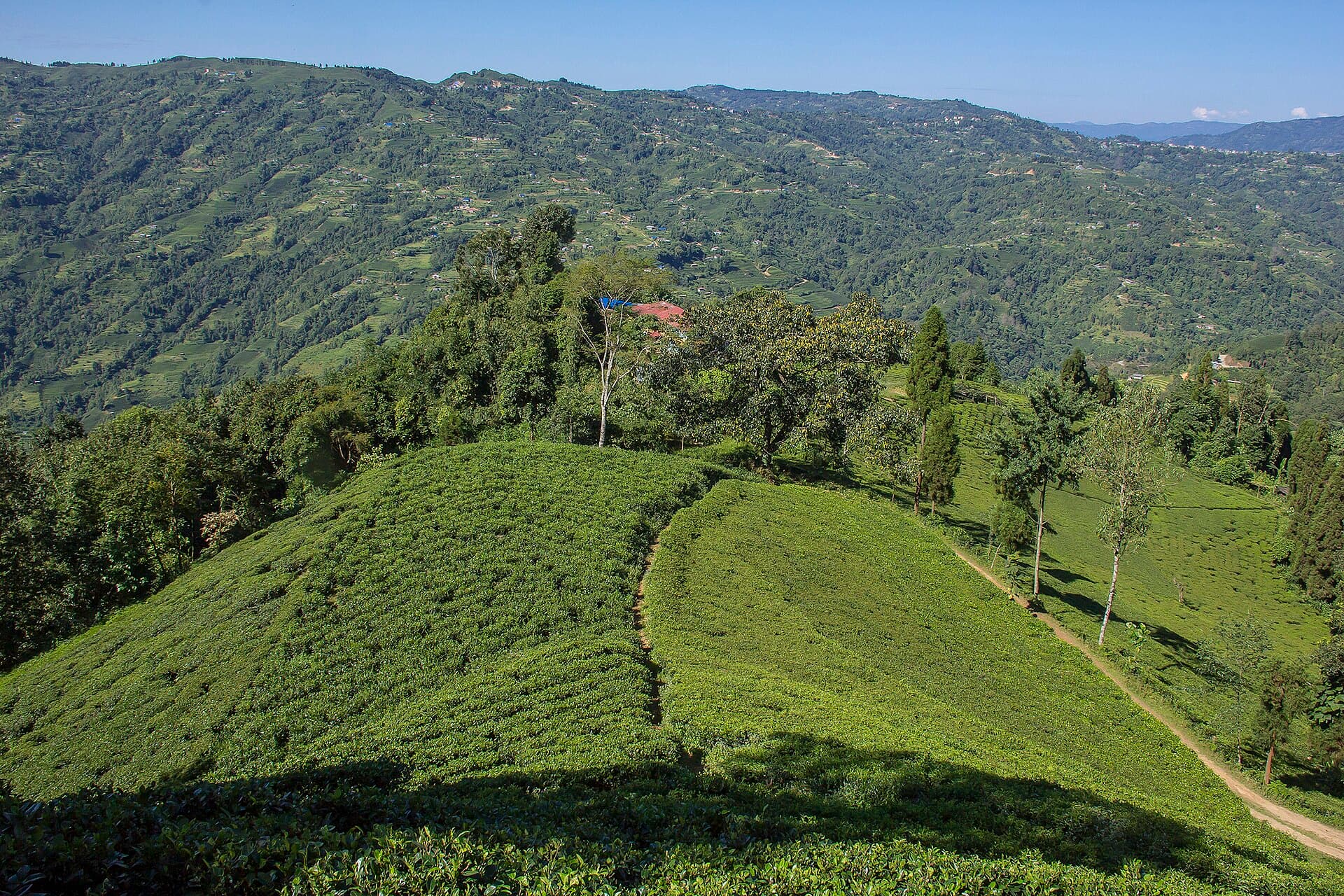
Ilam, frecuentemente llamada la "Capital del Té de Nepal", es un pintoresco distrito montañoso en el este de Nepal, célebre por sus extensos jardines de té esmeralda y una atmósfera tranquila. Situada en la cordillera de Mahabharata de la provincia de Koshi, Ilam ofrece una escapada refrescante con su clima fresco y brumoso y su belleza natural intacta. Es un lugar donde las colinas ondulantes están meticulosamente esculpidas en plantaciones de té, los arroyos de montaña atraviesan densos bosques y prospera un tejido cultural distinto.
Más allá de su célebre té, Ilam es un distrito rico en biodiversidad, patrimonio cultural y una variada economía agrícola. Los visitantes vienen a explorar sus serenos paisajes, participar en suaves caminatas y sumergirse en la auténtica vida rural del este de Nepal. La elevación del distrito oscila entre 140 metros y 3.636 metros sobre el nivel del mar, creando diversas zonas climáticas que sustentan una amplia gama de flora y fauna. Es un destino que atrae a entusiastas de la naturaleza, exploradores culturales y aquellos que simplemente buscan un refugio tranquilo de la vida urbana.
La historia de Ilam es tan sinuosa como los caminos que atraviesan sus colinas, y su propio nombre insinúa esta característica. Una teoría sugiere que 'Ilam' deriva de las palabras limbu 'I' (curvo) y 'Lam' (camino), reflejando la topografía de la región. Otra lo atribuye a la comunidad lepcha, donde 'I' se refiere a una abeja y 'Lam' a un lugar asentado, reconociendo su experiencia histórica en apicultura.
Antes de la unificación de Nepal, Ilam era uno de los diez estados autónomos de Limbuwan. Su integración en el Reino de Gorkha durante el siglo XIX no fue una simple conquista, sino un proceso único. La Guerra Limbuwan-Gorkha, que se extendió de 1771 a 1774, concluyó con el "acuerdo de Sal y Agua", una tregua que reconoció la coexistencia y la igualdad de derechos entre los reyes de Limbuwan y el gobernante Gorkha. Ilam fue la última de estas diez principales ciudades en ser unificada en Nepal.
Ilam Bazar se convirtió en la sede del distrito en 1818, y su estatus administrativo se elevó a Gauda (centro administrativo) en el mismo año. La región también desempeñó un papel en la resistencia a la expansión imperial británica durante la Guerra Anglo-Nepalesa (1814-1816).
Sin embargo, el punto de inflexión más significativo en la historia de Ilam llegó a mediados del siglo XIX con la introducción del cultivo del té. Inspirado por la floreciente industria del té en la vecina Darjeeling, se regalaron alevines de té chinos al entonces primer ministro Jung Bahadur Rana. En 1863, el coronel Gajaraj Singh Thapa, gobernador general del este de Nepal, estableció la primera plantación de té en Ilam, sentando las bases de lo que se convertiría en la renombrada industria del té de Nepal. La primera fábrica de té en Ilam se construyó en 1868.
Durante décadas, la industria del té en Nepal, incluyendo Ilam, enfrentó desafíos debido a la agitación política y la falta de inversión. Sin embargo, con la liberalización económica a finales del siglo XX, las empresas privadas comenzaron a invertir, modernizando la producción y centrándose en tés especiales como el té ortodoxo, verde y blanco. Hoy, Ilam es un testimonio de esta larga historia, donde las prácticas tradicionales y los esfuerzos modernos de sostenibilidad se entrelazan, convirtiéndola en una región fundamental para la producción de té de alta calidad y el patrimonio agrícola de Nepal.
Ilam ofrece una mezcla de belleza natural y experiencias culturales. Los extensos jardines de té de Kanyam y Fikkal son un punto culminante, invitando a los visitantes a paseos tranquilos, paseos a caballo y picnics en medio de las colinas esmeralda. Para disfrutar de memorables vistas del amanecer y el atardecer sobre el Himalaya, incluyendo el Monte Everest y Kanchenjunga en un día claro, diríjase a Antu Danda (2.328 m) o Siddhi Thumka (1.800 m).
Mai Pokhari, un humedal sagrado de nueve esquinas a 2.100 metros, es un lugar tranquilo para paseos por la naturaleza, meditación y fotografía, mostrando diversas especies de peces y los densos bosques circundantes. También es un sitio Ramsar, reconocido por su importancia ecológica. Para aquellos que buscan una caminata más aventurera, Sandakpur, a 3.636 metros en la frontera entre Nepal e India, ofrece amplias vistas del Everest, Makalu y Kanchenjunga, y es un hábitat para la vida silvestre rara como el panda rojo. Otros sitios notables incluyen Mai Beni, la confluencia de dos ríos sagrados, y el Templo Pathibhara Devi (Pequeña Pathibhara), un importante lugar de peregrinación.
El clima subtropical a templado fresco de Ilam lo convierte en un destino agradable durante gran parte del año. Las mejores épocas para visitar son generalmente de octubre a diciembre y de febrero a abril. Durante estos meses, los cielos están más despejados, ofreciendo vistas óptimas del Himalaya y temperaturas agradables para actividades al aire libre como senderismo y paseos por los jardines de té. Abril es particularmente atractivo para la temporada de recolección de té, cuando los jardines están más verdes. Si bien la temporada de monzones (junio a septiembre) trae una exuberante vegetación, las fuertes lluvias pueden provocar carreteras resbaladizas y cierres ocasionales.
Llegar a Ilam requiere un poco de compromiso, pero recompensa a los viajeros con experiencias auténticas. La forma más rápida es volar de Katmandú al aeropuerto de Bhadrapur (Chandragadhi), seguido de un viaje en taxi o autobús de 3 a 4 horas hasta las colinas. El viaje por tierra desde Katmandú es más largo, y suele durar de 12 a 18 horas en autobús. Hay autobuses disponibles desde la estación de autobuses de Gongabu, Koteshwor o Kalanki en Katmandú, que a menudo requieren un transbordo en Birtamode, en Jhapa.
Una vez en Ilam, los jeeps y autobuses locales conectan Ilam Bazaar con las principales atracciones como Kanyam y Mai Pokhari. Las opciones de alojamiento van desde hoteles en la ciudad de Ilam hasta resorts ubicados dentro de los jardines de té. Es aconsejable llevar una chaqueta ligera, ya que el clima de la colina puede ser fresco y brumoso durante todo el año. Para aquellos que planean cruzar la frontera a Darjeeling, India, asegúrese de tener identificaciones gubernamentales.
Ilam en coreano, en chino o en hebreo — y 29 idiomas más, cada parada narrada por una voz nativa. La mayor variedad de idiomas de cualquier audioguía autoguiada.
Disponible en: