Kon Tum Wooden Church
This century-old church, a symbol of Kon Tum, holds a secret in its construction that defies modern building practices.
Full story unlocks in the tour
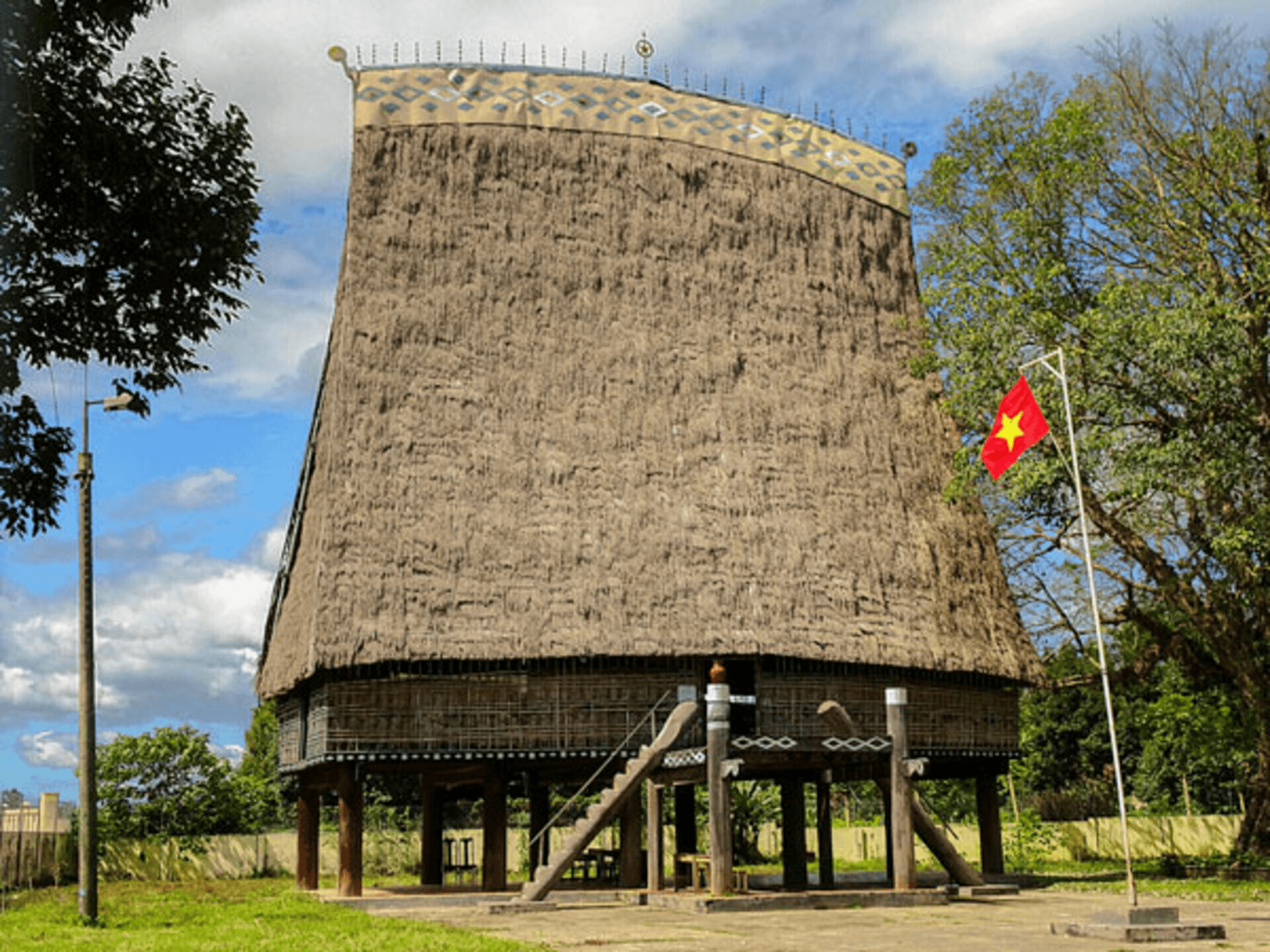 Taynguyenjk / CC BY-SA 4.0, via Wikimedia Commons
Self-guided audio walking tour of Kon Tum — GPS route, offline playback, story-driven narration in 32 languages.
“Where the Central Highlands murmur ancient stories and coffee beans awaken the spirit.”
Not the postcards. The stories even locals don't know — whispered in your ear, right where they happened.
This century-old church, a symbol of Kon Tum, holds a secret in its construction that defies modern building practices.
Behind the Wooden Church, a network of orphanages cares for hundreds of children, many from ethnic minority groups, with a surprising origin story.
The towering communal houses of the Bahnar people, a prominent feature of Kon Tum's landscape, reveal a practical design secret for their impressive height.
Discover every secret of Kon Tum
Every address, every reveal in full — in your ear, right where it happened.
You pick your stops. You walk. The voice reveals what the others miss.


Your self-guided audio tour of Kon Tum is ready — pick your landmarks, choose your language, and start the moment you arrive.
BuyLume has a built-in augmented-reality guide. Hold your phone up and its camera shows the street ahead of you, with a glowing arrow laid over the real view that always points to your next stop — no map to puzzle over, no wrong turns. Like everything in Lume, it works fully offline.
Kon Tum, a city in Vietnam's Central Highlands, rests near the borders of Laos and Cambodia, sometimes referred to as the "Indochina crossroads." The name "Kon Tum" itself signifies "village by the lake" in the Bahnar language, reflecting its origins with the indigenous Bahnar people. This region is characterized by flat, fertile land nourished by the Dak Bla River and a convergence of various ethnic groups, including the Bahnar, Xo Dang, Gia Rai, and others.
The city offers a singular fusion of indigenous cultures and a history shaped by French colonial influence and wartime events. It is a place where traditional stilt houses and communal Rong houses stand beside French-constructed churches and seminaries, creating a distinctive cultural fabric. Kon Tum is also recognized as a significant coffee-growing region, particularly for robusta beans, contributing substantially to Vietnam's standing as a global coffee exporter.
Beyond its cultural and historical allure, Kon Tum serves as a destination for those seeking natural beauty, with its surrounding mountains, rivers, forests, and coffee plantations. Its tranquil atmosphere and fewer crowds, compared to other Central Highlands cities, make it an inviting stop for travelers interested in exploring authentic ethnic minority cultures and scenic landscapes.
The story of Kon Tum is deeply interwoven with its indigenous inhabitants and, later, the French colonial presence. The area was historically home to the Ba Na people, who established the original village of Kon Tum, signifying "Village by the Lake." Other tribes were drawn to the fertile soil and favorable climate, establishing their own settlements in the area.
French missionaries arrived in Kon Tum as early as 1851, seeking to introduce Catholicism to the tribal people. Their endeavors were reportedly quite successful, leading to a substantial Catholic population among the ethnic groups. The French colonial authorities officially established the Kon Tum administrative agency in 1893, with Father Vialleton at its head, solidifying the name Kon Tum for the region. The city still retains several echoes of this colonial period, including the Wooden Church and a grand French-built seminary.
During the Vietnam War, Kon Tum played a strategic role, particularly during the Easter Offensive of 1972. The city was the site of the Battle of Kon Tum, a significant engagement that saw intense combat. In March 1975, Kon Tum was overtaken during the Ho Chi Minh Campaign, leading to a large exodus of refugees.
Today, Kon Tum City has evolved from a sparsely populated area into a center for settlement, commerce, and governance. The province is home to over 30 ethnic groups, each with distinct customs, traditions, and languages, contributing to a profound cultural heritage that authorities are actively working to preserve and promote.
Kon Tum presents a blend of cultural landmarks and natural attractions. The Kon Tum Wooden Church, officially known as Kon Tum Cathedral, stands as a prominent sight. Built between 1913 and 1918 by French missionaries, it is an architectural marvel combining Roman style with the traditional stilt house architecture of the Bahnar people. Constructed primarily from 'ca chit' wood without nails, it features intricate carvings and luminous stained-glass windows. Behind the church, one can find an orphanage operated by the Sisters of Mary of the Miraculous Medal.
The Kon Klor Communal House (Nha Rong) is another significant cultural site, displaying the traditional architecture of the Bahnar people. These grand, elongated houses are built on stilts with distinctive thatched, axe-blade-shaped roofs and intricately carved wooden pillars, serving as a central gathering place for the community. Nearby, the Kon Klor Suspension Bridge spans the Dak Bla River, offering views of the surrounding villages and agricultural fields.
For those interested in the region's diverse ethnic heritage and wartime history, the Kon Tum Museum houses a collection of artifacts, photographs, and traditional costumes of indigenous groups. Visitors can also explore Bahnar villages like Kon Ko Tu to experience their traditional crafts, clothing, and way of life.
Nature enthusiasts can explore the Mang Den Ecotourism Area, known for its pine forests and cool climate, often called the "Second Da Lat." Chu Mom Ray National Park, bordering Laos and Cambodia, is a biodiversity haven with diverse wildlife and trekking trails.
The ideal time to visit Kon Tum for comfortable weather and outdoor activities is during the dry season, from late November to mid-March. During these months, temperatures are pleasant, ranging from approximately 17-28°C (63-82°F), with minimal rain. This period is perfect for exploring villages and cultural sites, and the clear, dry roads facilitate travel. The coffee harvest, from October to January, also fills the air with the scent of processing beans. While December is part of the dry season, it is also a time when wild sunflowers bloom and many traditional festivals occur.
The rainy season typically extends from April to November. While it does not rain every day, rainfall can be heavy and brief, often occurring in the afternoons.
Kon Tum does not possess its own airport. The nearest airport is Pleiku (Gia Lai), approximately 45 km away, a drive of about one hour. From Pleiku Airport, travelers can take a bus or taxi to Kon Tum. Sleeper buses are available from major cities like Ho Chi Minh City, with a travel time of 10 to 12 hours.
Accommodation in Kon Tum primarily consists of smaller hotels and homestays. In Kon Tum City, options include Hoang Van Hotel, Tay Nguyen Hotel, Konklor Hotel, and Window Hotel. For a more immersive cultural experience, homestays in local ethnic villages are recommended. Kon Tum is recognized for its coffee culture, so be sure to visit a local café to experience Vietnamese coffee.
When visiting ethnic minority villages, it is advisable to have a guide to facilitate cultural understanding and interaction. Many of the traditional crafts of the local ethnic groups, such as brocade weaving and musical instrument making, are actively being preserved, offering unique cultural insights.
Kon Tum in Korean, in Chinese or in Hebrew — and 29 more languages, every stop narrated by a native voice. The widest language range of any self-guided audio tour.
Available in: