Lago T'Nung (Bien Ho)
A menudo llamado los "Ojos de Pleiku", este tranquilo lago guarda un sorprendente secreto sobre su formación.
La historia completa se desbloquea en el tour
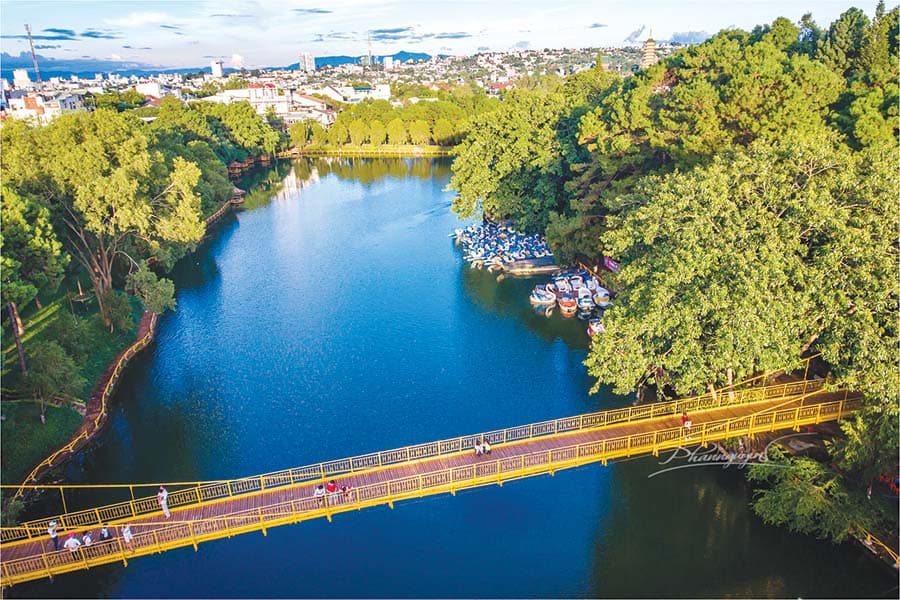 Cubuiminhquang / CC BY-SA 4.0, via Wikimedia Commons
Tour de audio autoguiado de Pleiku — ruta GPS a pie, reproducción offline, narración en 32 idiomas.
“Donde las Tierras Altas Centrales susurran de lagos volcánicos y espíritus perdurables.”
No las postales. Las historias que ni los locales conocen — al oído, justo donde ocurrieron.
A menudo llamado los "Ojos de Pleiku", este tranquilo lago guarda un sorprendente secreto sobre su formación.
Las comunidades indígenas alrededor de Pleiku tienen costumbres funerarias únicas que van más allá de simples tumbas.
Esta prominente pagoda en Pleiku exhibe un estilo arquitectónico no común en Vietnam.
Descubre todos los secretos de Pleiku
Cada dirección, cada revelación al completo — a tu oído, justo donde ocurrió.
Eliges tus paradas. Caminas. La voz te revela lo que los demás ignoran.


Tu tour de audioguía por Pleiku te espera — elige tus lugares, tu idioma y empieza al llegar.
ComprarLume incluye una guía de realidad aumentada. Levanta el móvil y su cámara muestra la calle que tienes delante, con una flecha luminosa sobre la imagen real que siempre apunta a tu próxima parada — sin mapas que descifrar, sin giros equivocados. Como todo en Lume, funciona completamente sin conexión.
Pleiku, la capital de la provincia de Gia Lai en las Tierras Altas Centrales de Vietnam, ofrece una experiencia distintiva, una partida de las bulliciosas ciudades costeras del país. Asentada en una meseta volcánica a una altitud promedio de 700-800 metros, la ciudad ofrece un clima más fresco y refrescante y un paisaje caracterizado por exuberantes bosques de pinos y suelo basáltico de color rojo intenso. Es un lugar donde el pulso energético de un centro urbano en desarrollo armoniza con la quietud de su entorno natural.
Históricamente habitada por los grupos étnicos Bahnar y Jarai, a veces conocidos como Montagnards, Pleiku hoy es una confluencia de culturas, aunque principalmente poblada por el grupo étnico Kinh. Esta mezcla de herencia indígena y vida vietnamita moderna se entrelaza en el ritmo diario de la ciudad, desde sus activos mercados hasta su variada arquitectura. Pleiku invita a los visitantes a reducir su ritmo, conectar con la naturaleza y explorar una esencia cultural singular que solo se encuentra aquí, entre colinas ondulantes, antiguos cráteres volcánicos y un sinfín de plantaciones de café.
Las tierras alrededor de Pleiku fueron originalmente el hogar de los grupos étnicos Jarai y Bahnar, también conocidos como Montagnards (montañeses), quienes mantuvieron sus distintas tradiciones y rituales. El nombre de la ciudad en sí se origina del idioma Jarai: "Plơi" que significa "aldea" y "Kơdưr" que significa "superior" o "norteño", traduciéndose así como "aldea del norte" o "asentamiento superior". La primera mención oficial de "Pleiku" apareció en un decreto de la administración colonial francesa el 4 de julio de 1905, cuando se creó una nueva provincia.
Bajo el dominio colonial francés, Pleiku fue fundada como un asentamiento urbano el 3 de diciembre de 1929, convirtiéndose en el centro administrativo de la región. Su economía fue moldeada por ocupaciones tradicionales y nuevas empresas agrícolas, con el café, el té, el caucho y la madera convirtiéndose en productos clave, estableciendo a Pleiku como un importante centro de producción y comercio en las Tierras Altas Centrales.
La importancia estratégica de Pleiku se intensificó drásticamente durante la Guerra de Vietnam. Sirvió como el principal término del corredor logístico de suministro militar que se extendía hacia el oeste a lo largo de la Carretera 19 desde la ciudad costera de Qui Nhơn. Su ubicación central en la meseta, entre Kon Tum al norte y Buôn Ma Thuột al sur, la convirtió en el principal centro de defensa para toda la región de las tierras altas de Vietnam del Sur. Estados Unidos estableció una presencia armada al principio del conflicto en Camp Holloway, y un ataque del Viet Cong a esta base a principios de 1965 fue un evento clave de escalada que trajo más tropas estadounidenses a la guerra. La ciudad fue extensamente dañada durante la guerra, lo que requirió una reconstrucción casi total en la década de 1980.
Comience su exploración en el lago T'Nung, a menudo llamado los "Ojos de Pleiku". Este lago de cráter, rodeado de bosques de pinos, ofrece vistas tranquilas y oportunidades para paseos relajados o paseos en bote de remos. Cerca, el bosque de pinos centenario y los campos de té ofrecen paisajes pintorescos, particularmente hermosos cuando los girasoles silvestres florecen alrededor de noviembre y diciembre. Para una visión de la cultura local, visite las aldeas étnicas Jarai y Bahnar, como la aldea de Plei Op, donde podrá ver las casas tradicionales Rong y aprender sobre el tejido de brocados. Es posible que se requiera un permiso del gobierno para visitar algunas comunidades, y se recomienda contratar un guía.
Los puntos arquitectónicos destacados incluyen la Pagoda Minh Thanh, conocida por su diseño de inspiración taiwanesa, y la Gran Plaza de la Unidad, el centro de la ciudad. Para vistas expansivas, diríjase a la montaña Ham Rong (Chu H'Rong), especialmente al amanecer o al atardecer. Las laderas del volcán Chu Dang Ya, un volcán inactivo, son particularmente impresionantes cuando los girasoles silvestres cubren la zona de amarillo durante la estación seca. Otros puntos de interés incluyen el Museo Provincial de Gia Lai, la histórica Prisión de Pleiku y el Parque Dien Hong.
El momento ideal para visitar Pleiku es durante la estación seca, que generalmente va de noviembre a abril. Durante estos meses, el clima es fresco, seco y agradable, con menos precipitaciones, lo que lo hace perfecto para actividades al aire libre y para explorar los paisajes naturales. Las temperaturas suelen oscilar entre 20 °C y 28 °C (68 °F y 82 °F). Este período también coincide con la floración de los girasoles silvestres, particularmente en noviembre y diciembre, y las flores de café en marzo, añadiendo colores brillantes al paisaje. La estación lluviosa, de mayo a octubre, trae fuertes precipitaciones y humedad, lo que puede embarrar los senderos y limitar la exploración al aire libre.
El aeropuerto de Pleiku (UIH) es el aeropuerto más cercano, ubicado a unos 6,5 km (aproximadamente 4 millas) del centro de la ciudad, con vuelos directos desde Hanói y Ciudad Ho Chi Minh. Hay taxis, xe om (mototaxis) y autobuses disponibles para el transporte desde y hacia el aeropuerto. Para moverse por la ciudad y a las atracciones cercanas, alquilar una motocicleta es una opción popular y flexible, que suele costar entre 100.000 y 200.000 VND por día. Esto permite paradas fáciles para hacer turismo y tomar fotografías. También hay autobuses de larga distancia o vehículos privados disponibles para viajar desde ciudades como Ciudad Ho Chi Minh o Da Nang.
La mayoría de las atracciones naturales en Pleiku son gratuitas o tienen solo una tarifa de entrada mínima. Si bien Pleiku es relativamente fácil de explorar de forma independiente, unirse a un tour puede ser beneficioso para comprender la cultura local y acceder a ciertas aldeas étnicas, que pueden requerir un permiso del gobierno. La cocina local es generalmente suave y agradable para la mayoría de los visitantes. Las noches en Pleiku suelen ser relajadas, centradas en pasear, disfrutar de un café y cenar ligeramente en lugar de una vida nocturna activa.
Pleiku en coreano, en chino o en hebreo — y 29 idiomas más, cada parada narrada por una voz nativa. La mayor variedad de idiomas de cualquier audioguía autoguiada.
Disponible en: