The Royal Hotel
Este histórico hotel tuvo una sorprendente doble función para los capitanes de barco.
La historia completa se desbloquea en el tour
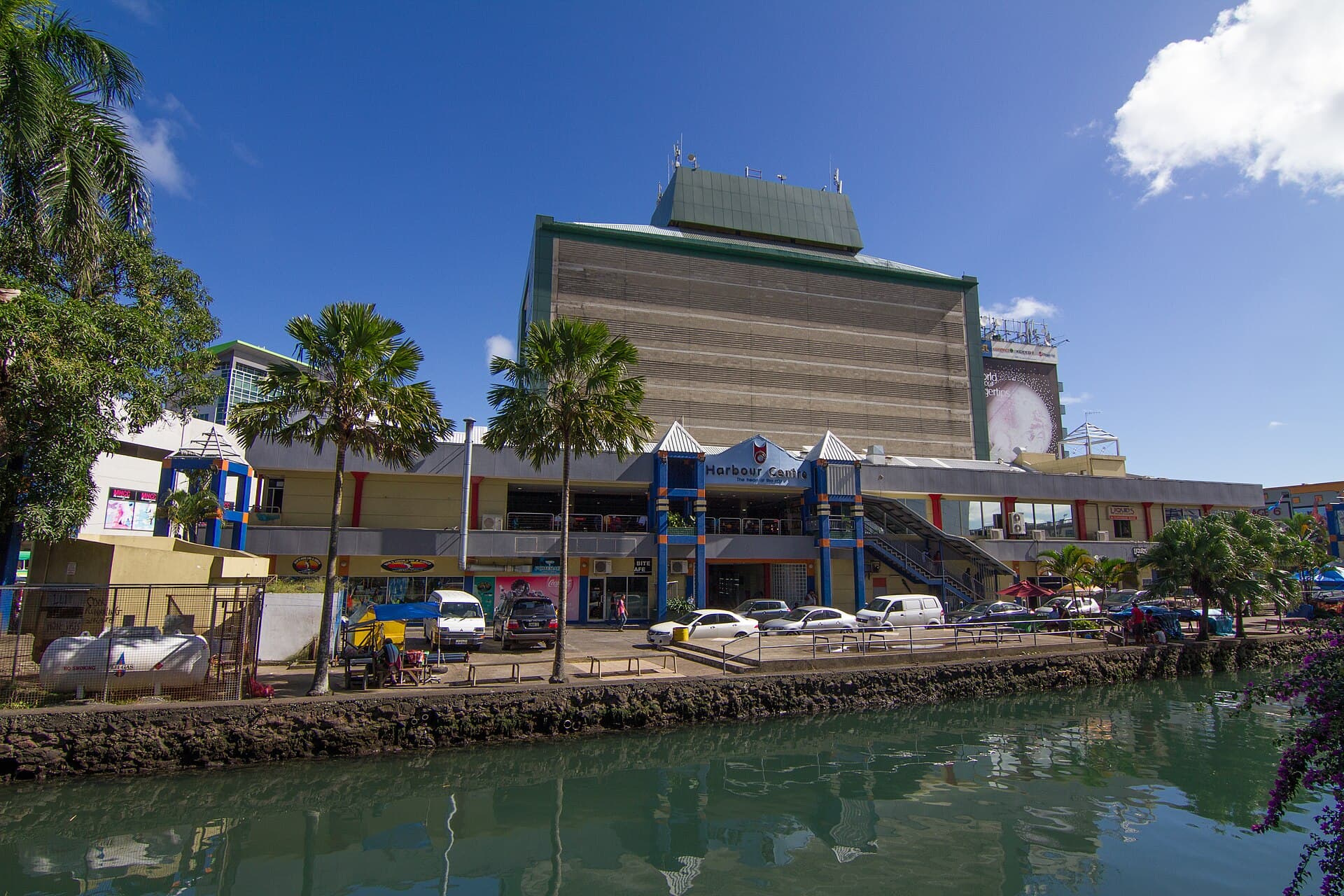 Photo of Suva, via Wikimedia Commons
Tour de audio autoguiado de Levuka — ruta GPS a pie, reproducción offline, narración en 32 idiomas.
“Donde el pasado colonial de Fiyi permanece inmóvil, invitándote a retroceder en el tiempo.”
No las postales. Las historias que ni los locales conocen — al oído, justo donde ocurrieron.
Este histórico hotel tuvo una sorprendente doble función para los capitanes de barco.
El reloj de esta iglesia histórica tiene una forma peculiar de marcar el tiempo.
Una humilde fuente en Beach Street marca el sitio del primer servicio de 'correo aéreo' de Fiyi.
Descubre todos los secretos de Levuka
Cada dirección, cada revelación al completo — a tu oído, justo donde ocurrió.
Eliges tus paradas. Caminas. La voz te revela lo que los demás ignoran.

Tu tour de audioguía por Levuka te espera — elige tus lugares, tu idioma y empieza al llegar.
ComprarLume incluye una guía de realidad aumentada. Levanta el móvil y su cámara muestra la calle que tienes delante, con una flecha luminosa sobre la imagen real que siempre apunta a tu próxima parada — sin mapas que descifrar, sin giros equivocados. Como todo en Lume, funciona completamente sin conexión.
Levuka, la capital inicial de Fiyi, es una ciudad conservada en el tiempo en la costa este de la isla de Ovalau. Reconocida como Patrimonio de la Humanidad por la UNESCO desde 2013, ofrece una visión singular de los asentamientos portuarios coloniales del siglo XIX en el Pacífico. A diferencia de los bulliciosos complejos turísticos de la isla principal de Fiyi, Viti Levu, Levuka mantiene una atmósfera tranquila y sin prisas, invitando a los visitantes a experimentar una dimensión auténtica de la nación insular.
El bien conservado paseo marítimo de la ciudad, bordeado de edificios de la época colonial, iglesias y estructuras cívicas, narra una historia convincente de la transición de Fiyi de la gobernanza indígena a una potencia colonial. El paisaje circundante de Ovalau, una isla volcánica con montañas escarpadas y densa vegetación, realza aún más el atractivo histórico de Levuka. Es un lugar donde el pasado es tangible, ofreciendo un viaje inmersivo a una era pasada de comercio y asentamiento en el Pacífico Sur.
Los orígenes de Levuka se remontan a la década de 1820, cuando comerciantes y colonos europeos la establecieron como la primera ciudad moderna de las Islas Fiyi. Este primer asentamiento en la isla de Ovalau creció rápidamente hasta convertirse en un importante puerto y puesto comercial, atrayendo a una mezcla diversa de comerciantes, misioneros, constructores navales y hombres de negocios. A mediados del siglo XIX, Levuka era un centro comercial, particularmente para el comercio de pepinos de mar. Su puerto natural y fondeadero fueron clave para su éxito inicial, atrayendo embarcaciones de varias naciones marineras.
En 1871, se fundó el primer estado-nación moderno de Fiyi, el Reino de Fiyi, y Seru Epenisa Cakobau fue coronado Rey en Levuka. Tras la anexión de Fiyi como colonia británica en 1874, Levuka fue elegida como la primera capital. Este período vio el establecimiento de muchos de los 'primeros' de Fiyi en Levuka, incluyendo el primer banco, oficina de correos, escuela pública (Levuka Public School en 1879), club privado (Ovalau Club en 1872), hospital, ayuntamiento y gobierno municipal. El Fiji Times, el primer periódico de la nación, también se fundó aquí en 1869 y todavía se imprime hoy.
A pesar de su prominencia inicial, el mandato de Levuka como capital fue de corta duración. El crecimiento económico de la ciudad se vio obstaculizado por las escarpadas montañas circundantes, que no dejaban espacio para la expansión. En consecuencia, la administración se trasladó oficialmente a Suva en 1882. Con la partida de la capital, muchos negocios y personas se fueron, y el desarrollo de Levuka se 'congeló en el tiempo', preservando su carácter del siglo XIX. En 2013, esta preservación única fue reconocida globalmente cuando Levuka fue designada Patrimonio de la Humanidad por la UNESCO, celebrada como un ejemplo sobresaliente de un asentamiento portuario del Pacífico de finales del siglo XIX.
El atractivo de Levuka reside en su arquitectura colonial conservada y sus sitios históricos, fácilmente explorables a pie. Pasea por Beach Street, la vía principal, para admirar los coloridos escaparates, iglesias y edificios cívicos de la época colonial. No te pierdas el sitio del Acta de Cesión en Nasova, donde Fiyi fue cedida formalmente al Imperio Británico en 1874. Este monumento incluye piedras de cesión y un mástil, conmemorando tanto la cesión como la independencia de Fiyi en 1970.
Para obtener vistas panorámicas de la ciudad y el Mar de Koro, asciende los 199 escalones hasta Mission Hill. Durante la subida, pasarás por algunos de los edificios más antiguos de Levuka, incluyendo misiones y casas metodistas. Visita el Ovalau Club, establecido en 1872, el club social más antiguo del Pacífico Sur, que conserva su ambiente de la época colonial. El Royal Hotel, que data de la década de 1860, es el hotel en funcionamiento más antiguo del Pacífico Sur y una pieza viva de la historia. El Centro Comunitario y Museo de Levuka, ubicado en un edificio Morris Hedstrom renovado de 1878, ofrece una sucursal del Museo de Fiyi, una biblioteca pública y artesanías locales. Considera un recorrido a pie guiado desde el Centro Comunitario para profundizar en el pasado de la ciudad.
Más allá de la ciudad, considera explorar el resto de la isla de Ovalau. Contrata un taxi o un conductor local para descubrir pueblos locales y experimentar la vida rural tradicional de Fiyi. Una caminata hasta el pueblo de Lovoni, situado dentro de una caldera volcánica, ofrece una visión del Ovalau precolonial.
El momento ideal para visitar Levuka y las Islas Lomaiviti es durante la estación seca de Fiyi, que abarca de mayo a octubre. Este período ofrece menor humedad, menos precipitaciones y temperaturas agradables (con un promedio de 22-28°C / 72-82°F), lo que lo hace perfecto para explorar a pie y realizar actividades al aire libre. Los cielos más despejados suelen encontrarse en julio. Si bien la estación húmeda (de noviembre a abril) ofrece paisajes exuberantes y menos turistas, prepárate para una mayor humedad y lluvias más frecuentes, aunque a menudo breves.
La moneda oficial en Levuka es el Dólar Fiyiano (FJD). El efectivo es esencial, ya que muchos negocios no aceptan tarjetas de crédito, aunque hay un cajero automático disponible en el Westpac Bank en Beach Street. El inglés es ampliamente hablado y entendido, junto con el fiyiano y el hindi de Fiyi. Fiyi utiliza el tipo de enchufe I (tres clavijas planas) con un voltaje estándar de 240V y una frecuencia de 50Hz.
Llegar a Levuka implica un viaje, ya que se encuentra fuera de las principales rutas turísticas. Puedes tomar un ferry desde Suva (Natovi Landing en Viti Levu) hasta el muelle principal de Levuka, un viaje que dura de 3 a 4 horas. Alternativamente, un vuelo doméstico desde Suva al aeropuerto de Bureta en la isla de Ovalau requiere un posterior traslado en barco o taxi a Levuka. Una vez en Ovalau, hay taxis disponibles, o puedes explorar gran parte de Levuka a pie. Se recomienda un mínimo de 2 a 3 días para explorar completamente la ciudad y los sitios cercanos.
Levuka en coreano, en chino o en hebreo — y 29 idiomas más, cada parada narrada por una voz nativa. La mayor variedad de idiomas de cualquier audioguía autoguiada.
Disponible en: