Cape Henlopen State Park
Legend says a notorious pirate buried his treasure in the shifting sands of Cape Henlopen.
Full story unlocks in the tour
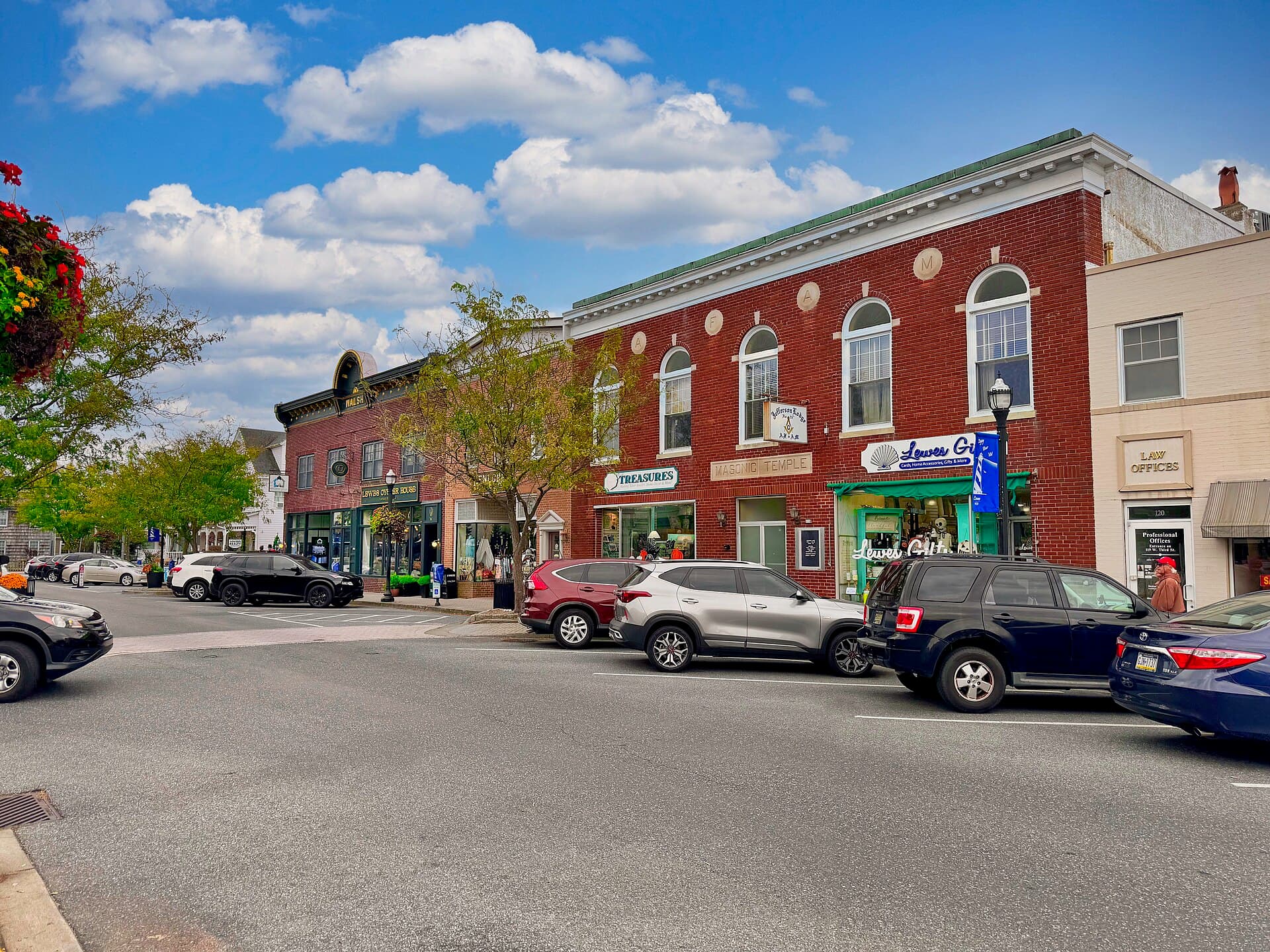 Harrison Keely / CC BY 4.0, via Wikimedia Commons
Self-guided audio walking tour of Lewes — GPS route, offline playback, story-driven narration in 32 languages.
“Where the Delaware Bay meets the Atlantic, a small town holds centuries of dramatic tales.”
Not the postcards. The stories even locals don't know — whispered in your ear, right where they happened.
Legend says a notorious pirate buried his treasure in the shifting sands of Cape Henlopen.
One house in Lewes still bears the mark of a forgotten bombardment.
A future king's brother once sought refuge in a Lewes home, with a very particular request for dinner.
Discover every secret of Lewes
Every address, every reveal in full — in your ear, right where it happened.
You pick your stops. You walk. The voice reveals what the others miss.

Your self-guided audio tour of Lewes is ready — pick your landmarks, choose your language, and start the moment you arrive.
BuyLewes (pronounced Loo-iss) holds the distinction of being 'The First Town in the First State,' a title earned from its founding as the first European settlement in Delaware in 1631. Situated at the strategic confluence of the Delaware Bay and the Atlantic Ocean at Cape Henlopen, this historic seaport town has a deeply ingrained maritime heritage that continues to shape its character. Today, Lewes is a captivating coastal destination, offering a blend of preserved history, natural beauty, and a relaxed atmosphere that draws visitors to its boutique-lined streets and waterfront.
Beyond its historical significance, Lewes serves as the southern terminus for the Cape May-Lewes Ferry, connecting Delaware with New Jersey. The town's connection to the sea is still evident in its active fishing fleet and as the base for the Delaware Bay and River Pilots Association, whose members guide cargo vessels along the waterways. Whether you're drawn to its tales of pirates and bombardments, its well-preserved architecture, or its lively coastal environment, Lewes offers a unique glimpse into centuries of American history by the sea.
## From Dutch Outpost to English Town Lewes's story begins in 1631, when 32 Dutch settlers established a whaling and trading post they named Zwaanendael, or 'Swan Valley.' This first European colony in Delaware was short-lived, however, as a dispute over a Dutch coat of arms led to the massacre of all settlers by the local Lenni Lenape tribe in 1632. The area remained largely unsettled by Europeans for decades, though further attempts were made by both the Dutch and Swedes.
In 1682, the land that would become Delaware was conveyed to William Penn. It was Penn who officially named the settlement Lewes, in honor of a town in Sussex County, England, and designated it the county seat of Sussex County. This marked a shift from its Dutch origins to English influence, although Dutch architectural elements, like those seen in the Zwaanendael Museum, continue to pay homage to its initial founders.
## A Perilous Seafaring Past Lewes's strategic location at the mouth of the Delaware Bay made it a vital, yet vulnerable, port. The late 1600s saw a 'checkered association' with pirates, who raided the town in 1690 and 1698, leading to a law requiring citizens to own muskets for defense. Tales of infamous pirates like Captain Kidd burying treasure in the Cape Henlopen dunes persist from this era.
The town also faced military conflict. In 1709, a French privateer ravaged Lewes. During the War of 1812, a British frigate bombarded the town in 1813 after residents refused to supply them. While the damage was minimal—reportedly a wounded pig and a dead hen—a cannonball from the attack remains embedded in the Cannonball House. Lewes was officially incorporated on February 2, 1818.
## Twentieth-Century Defense and Modern Connections In 1941, during World War II, Fort Miles was constructed on Cape Henlopen, just east of Lewes, to defend the Delaware Bay and River from potential German threats. While the fort saw no direct action, its observation towers and bunkers remain a tangible link to this period. A significant development in modern Lewes history was the initiation of the Cape May-Lewes Ferry service in 1964, further cementing its role as a key transportation hub.
Begin your exploration at the Zwaanendael Museum, an architectural replica of the town hall in Hoorn, Netherlands, commemorating Lewes's Dutch origins. It showcases the area's maritime, military, and social history, often with surprising exhibits.
Walk along Second Street, the heart of downtown Lewes, where you'll find a collection of independent boutiques, art galleries, and restaurants. The street itself is a journey through time, with well-preserved architecture dating back to the late 1600s.
Visit the Cannonball House Maritime Museum, a pre-1797 structure that famously bears a cannonball from the War of 1812. It offers nautical exhibits and a glimpse into the town's seafaring past. Nearby, the Ryves Holt House, dating to around 1665, is considered one of Delaware's oldest surviving structures.
Cape Henlopen State Park offers a blend of natural beauty and history. Explore miles of pristine beaches, scenic dunes, and coastal trails. You can climb historic World War II observation towers, cycle through maritime forests, or enjoy birdwatching. The park is also home to the iconic Cape Henlopen Lighthouse ruins, which fell into the sea in 1926.
For a unique experience, consider a ride on the Cape May-Lewes Ferry, offering scenic views of the Delaware Bay and connecting to Cape May, New Jersey.
Lewes offers distinct charms throughout the year, but the spring (March to May) and fall (September to November) shoulder seasons are often considered ideal. During these months, the weather is mild, perfect for exploring historic streets and outdoor trails without the summer crowds. Fall brings comfortable temperatures and subtle changes in coastal foliage, making it excellent for sightseeing, biking, and birdwatching, as migratory birds pass through Cape Henlopen State Park. Summers (June to August) are warm and humid, bustling with beach activities and festivals, while winters offer a quieter, peaceful retreat.
Lewes is a walkable town, especially its historic downtown area. Comfortable shoes are recommended for exploring the brick sidewalks and trails. Parking can be found in designated lots and on streets, though it can be more challenging during peak summer months. Many historic sites, like the Zwaanendael Museum and the Cannonball House, offer free admission, though donations are often welcomed.
The town is easily accessible by car, and for those traveling from New Jersey, the Cape May-Lewes Ferry provides a convenient and scenic route. Public transportation within Lewes is limited, so having a car or utilizing bikes is advisable for exploring beyond the immediate downtown area, particularly for visiting Cape Henlopen State Park. Layering clothing is often a good idea, as coastal weather can change throughout the day.
Lewes in Korean, in Chinese or in Hebrew — and 29 more languages, every stop narrated by a native voice. The widest language range of any self-guided audio tour.
Available in: