Ludza Castle Ruins
The imposing ruins of Ludza Castle hold more than just historical stones.
Full story unlocks in the tour
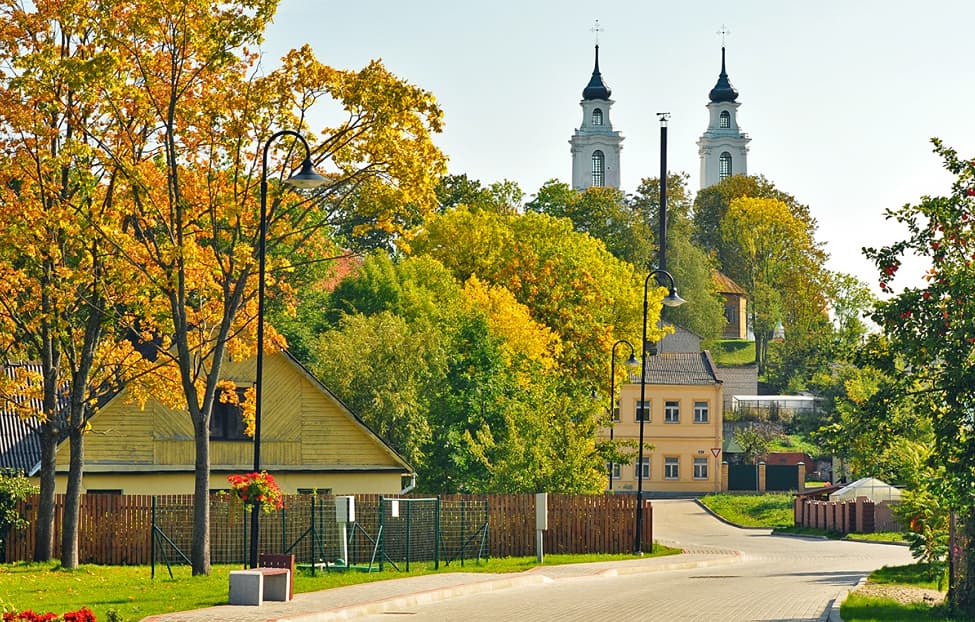 Irēna Možeika / CC BY-SA 3.0, via Wikimedia Commons
Self-guided audio walking tour of Ludza — GPS route, offline playback, story-driven narration in 32 languages.
“Where ancient echoes meet lakeside serenity.”
Not the postcards. The stories even locals don't know — whispered in your ear, right where they happened.
The imposing ruins of Ludza Castle hold more than just historical stones.
This seemingly modest synagogue holds a secret that makes it truly exceptional in the Baltic States.
Beyond its exhibits, the museum's very origin is a testament to local passion.
Discover every secret of Ludza
Every address, every reveal in full — in your ear, right where it happened.
You pick your stops. You walk. The voice reveals what the others miss.


Your self-guided audio tour of Ludza is ready — pick your landmarks, choose your language, and start the moment you arrive.
BuyLume has a built-in augmented-reality guide. Hold your phone up and its camera shows the street ahead of you, with a glowing arrow laid over the real view that always points to your next stop — no map to puzzle over, no wrong turns. Like everything in Lume, it works fully offline.
Ludza, the oldest town in Latvia, extends a quiet invitation, feeling like a step back in time. Situated in the eastern Latgale region, this peaceful lakeside town offers a distinct blend of ancient history, diverse culture, and serene natural beauty. Its enduring spirit is palpable as you wander through streets where centuries of heritage have been preserved rather than merely rebuilt.
At the heart of Ludza's allure are the evocative ruins of its medieval castle, standing prominently on a hill between two picturesque lakes. These remnants of a strategic stronghold offer not only a powerful connection to Livonian history but also provide expansive views of the surrounding landscape. Beyond the castle, Ludza invites exploration of its distinct Latgalian identity, shaped by a confluence of cultures over centuries.
For those seeking an authentic glimpse into Latvia beyond the well-trodden paths, Ludza presents a meaningful and rewarding experience. It's a place where traditional wooden architecture coexists with diverse religious sites, and where the echoes of ancient tribes and active communities resonate through its compact and walkable center.
The history of Ludza stretches back to the late Iron Age, with the earliest known mention in Russian chronicles between 1173 and 1177, referring to a wooden stronghold built by the ancient Latgalian tribe. This makes Ludza one of the oldest settlements in the region. Its strategic location, set between two lakes and near what would become the Russian border, destined it to be a significant frontier outpost.
In 1399, the Livonian Order erected a formidable stone fortress on the site of the earlier Latgalian fortification. This three-story castle, adorned with six towers, three gates, and two foreparts, was constructed from grey stones and red bricks, notably featuring decorative black glazed bricks. It served as a crucial defense against Russian principalities and a guardian of vital trade routes. Throughout the centuries, Ludza Castle endured numerous sieges and occupations by Russian forces, particularly in 1481 during the reign of Ivan III and again during the Livonian War in the mid-16th century. The castle's active military role continued until 1765, when it fell into ruin.
Following the dissolution of the Livonian Order in 1561, Ludza became part of the Polish-Lithuanian Commonwealth. It experienced periods of Polish-Swedish conflict before being absorbed into the Russian Empire in 1772 after the first partition of Poland. In 1777, Catherine II of Russia officially granted Ludza town rights. This era saw Ludza flourish as a significant trade center, becoming the second-largest town in Latgale after Daugavpils.
A notable aspect of Ludza's history is its once-thriving Jewish community. By the early 19th century, Jews constituted a majority of the population, reaching 67% in 1815, and the town was home to numerous synagogues. This active community earned Ludza the moniker "Jerusalem of Latvia" due to its substantial Jewish population and renowned rabbis. However, the 20th century brought immense hardship. A devastating fire in 1938 destroyed much of the town's wooden architecture, including many Jewish homes and businesses. During World War II, Ludza was occupied by German forces from 1941 to 1944. The Jewish population was confined to a ghetto, and the vast majority were tragically massacred during the Holocaust. After regaining independence in 1991, Ludza has continued to evolve, preserving its significant, albeit often challenging, past while embracing its role as a border town of the European Union.
Begin your exploration at the Ludza Castle Ruins, an iconic landmark offering expansive views of the surrounding lakes. Wander through the remaining walls and towers, imagining centuries of history. Nearby, the Ludza Local History Museum brings the town's story to life with archaeological finds, folk traditions, and insights into Latgalian village life, including an open-air section with historic buildings. Just a short walk away, the Ludza Crafts Centre provides an immersive cultural experience where you can observe artisans and even try your hand at traditional crafts like pottery or weaving.
Discover Ludza's extensive religious heritage by visiting the Church of the Assumption, a prominent Catholic church rebuilt in 1995, and the historic Karnicki Chapel and Bell Tower, a rare wooden survivor from an 18th-century fire. A poignant stop is the Great Synagogue of Ludza, the oldest wooden synagogue in the Baltics, now a museum detailing the local Jewish community's history. Do not miss the Lakeside Promenade along Lake Mazais Ludzas, perfect for a relaxing stroll or enjoying water activities in warmer months, including a long pontoon bridge ideal for scenic photographs.
Ludza is most inviting during the warmer months, from late spring to early autumn (May to September). The pleasant weather is ideal for exploring the outdoor attractions like the castle ruins and lakeside promenades, and for enjoying water activities on the lakes. Summer also offers opportunities to engage with local cultural events and craft workshops. While charming, winter can be cold with limited outdoor activities.
Ludza is located in the Latgale region of eastern Latvia, approximately 30 kilometers from the Russian border. The most convenient way to reach Ludza is by car, with a drive of about four hours from Riga or two hours from Daugavpils. While Ludza is a walkable town, a car provides flexibility for exploring the wider Ludza Municipality. The local tourism information center is an excellent resource for maps, excursions, and current event listings. Accommodation options include guesthouses and bed & breakfasts, with the Ludza Crafts Centre also offering lodging. For dining, you can find traditional Latgalian cuisine, known for its hearty and comforting flavors, at local eateries. Ludza operates on Eastern European Time (EET), UTC+2, with daylight saving time (EEST) in summer (UTC+3).
Ludza in Korean, in Chinese or in Hebrew — and 29 more languages, every stop narrated by a native voice. The widest language range of any self-guided audio tour.
Available in: