The Village's Name
Its original name caused quite a stir, leading to a change that honored a beloved local figure.
Full story unlocks in the tour
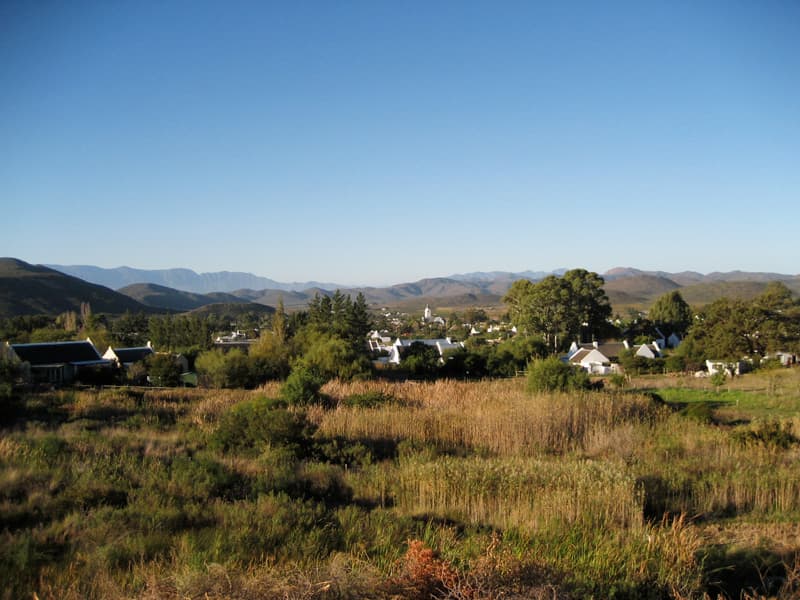 Dplanet:: from Cape Town, South Africa / CC BY 2.0, via Wikimedia Commons
Self-guided audio walking tour of McGregor — GPS route, offline playback, story-driven narration in 32 languages.
“Where time slows, and stories whisper from whitewashed walls.”
Not the postcards. The stories even locals don't know — whispered in your ear, right where they happened.
Its original name caused quite a stir, leading to a change that honored a beloved local figure.
Early promotional efforts for McGregor promised a grand connection that never quite materialized, leaving the village beautifully isolated.
Look closely at the streets, and you'll spot an ingenious 19th-century system still delivering water directly to residents' gardens.
Discover every secret of McGregor
Every address, every reveal in full — in your ear, right where it happened.
You pick your stops. You walk. The voice reveals what the others miss.


Your self-guided audio tour of McGregor is ready — pick your landmarks, choose your language, and start the moment you arrive.
BuyLume has a built-in augmented-reality guide. Hold your phone up and its camera shows the street ahead of you, with a glowing arrow laid over the real view that always points to your next stop — no map to puzzle over, no wrong turns. Like everything in Lume, it works fully offline.
At the foot of the Riviersonderend Mountains in South Africa's Western Cape, McGregor is a village that feels wonderfully out of time. Roughly 150 km east of Cape Town, this picturesque community is an escape from the rush of modern life, a place where whitewashed cottages and quiet, tree-lined streets invite you to slow down and simply be. The air hums with a gentle tranquility, punctuated by the distant sound of church bells and, perhaps, the morning call of a rooster.
McGregor is more than just a pretty face; it's a living testament to 19th-century Cape Province architecture, considered one of the best-preserved examples in the region. Surrounded by mountains and vineyards, it's a haven for artists, poets, and those seeking a soulful retreat. The village's unique character, uncorrupted by commercialism, offers a refreshing blend of old-world charm and a thriving local arts scene, making it a captivating destination for those who appreciate authenticity and a slower pace.
McGregor's story begins in 1861, when it was established and originally named Lady Grey. This initial name, however, led to confusion with another town of the same name in the Eastern Cape. To rectify this, in 1905, the village was officially renamed McGregor, honoring Reverend Andrew McGregor. He had served for approximately 40 years as the Dutch Reformed Church minister in the nearby Robertson area and played a pivotal role in the region's development.
The fertile lands around what is now McGregor attracted farmers as early as the late 1700s. Due to the strong religious convictions of these early settlers, a church was often the first structure built, with the town gradually growing around it. In the early 1800s, as people moved inland from Cape Town, they would gather in villages like McGregor to attend services by visiting preachers. Farmers even built special houses, known as 'Nagmaal houses' (communion houses), where they could stay while attending church. One such example, 'Die Trein,' a terrace of three houses, can still be seen on Voortrekker Street.
When plots in McGregor were first auctioned, advertisements optimistically claimed that a main road to Cape Town from the north would likely pass through the village. This grand road never materialized, a twist of fate that ultimately contributed to McGregor's enduring isolation and the preservation of its unique character. This physical remoteness has helped safeguard some of the Western Cape's most attractive 19th-century architecture. Today, an aesthetics committee continues to work towards preserving the historical building styles, ensuring McGregor retains its distinctive cultural landscape.
Adding to its historical charm is McGregor's ingenious irrigation system, which dates back to the 1800s. Water channels were constructed along the edges of the streets, fed by the town's dam. This system continues to operate, with each landowner allocated a specific time slot to direct water into their property for garden irrigation.
McGregor offers a delightful array of sights and activities that lean into its tranquil, artistic, and natural character. Begin with a stroll through the village itself, admiring the well-preserved whitewashed cottages and Victorian and Georgian homes that give McGregor its distinctive charm. A self-guided heritage tour booklet is available at the tourist information center.
Nature lovers will find plenty to explore. The Vrolijkheid Nature Reserve, just 5 km outside town, offers rugged landscapes, Karoo vegetation, and various hiking and mountain biking trails, including a wheelchair-friendly Heron trail and a Braille trail for visually impaired walkers. Keep an eye out for resident springboks. The Krans Nature Reserve also offers opportunities for walks amongst wildlife. For a more challenging adventure, consider hiking a portion of the Boesmanskloof Trail, which connects McGregor to Greyton.
McGregor is also part of the broader Robertson Wine Route, with several local wineries like Lord's Wines, McGregor Winery, and Tanagra Private Wine Cellar offering tastings. Do not miss the Saturday Morning Market for local produce and homemade goods. The Eseltjiesrus Donkey Sanctuary, a permanent refuge for abused and neglected donkeys, is a heartwarming visit. For a unique cultural experience, visit Wahnfried for film and live music, or explore the art galleries and studios along the McGregor Art Route. The Temenos Retreat, with its expansive gardens, is also a popular spot for quiet contemplation.
McGregor experiences a distinct dry season from September to May, with very warm summers and pleasant winters. For the most comfortable weather, consider visiting in March, April, May, September, October, November, and December. Daytime temperatures range from 18°C (64°F) in July to 30°C (86°F) in January. While January and February are the warmest months, they can also be very hot, similar to the Karoo climate. Autumn (March-May) and Spring (September-November) offer pleasant conditions for outdoor activities and exploring the Winelands. Winter (June-August) can be cool to freezing, with occasional snow on the surrounding hills, but often brings crisp mornings that transform into beautiful, clear days.
McGregor is approximately a two-hour drive from Cape Town. The closest airport is Robertson Airport (ROD), about 16 km away. South Africa drives on the left-hand side of the road. The local currency is the South African Rand (ZAR). Electricity runs on 230V / 50Hz and uses Type C, M, or N sockets. The McGregor Tourism office, located at 53 Voortrekker Street, is a valuable resource for information on accommodation, attractions, and activities. Their operational hours are generally Monday-Thursday 9h00-14h00, Friday 9h00-16h00, and Saturday 9h00-13h00, with Sundays and Public Holidays closed. It's advisable to check current hours before your visit. While there are no chain stores, you'll find quaint bespoke shops and country restaurants. Mobile connectivity can be limited in some areas, encouraging a digital detox.
McGregor in Korean, in Chinese or in Hebrew — and 29 more languages, every stop narrated by a native voice. The widest language range of any self-guided audio tour.
Available in: