Mersing's Name Origin
The name 'Mersing' sounds distinctly Malay, yet local stories point to a surprising, non-Malay origin.
Full story unlocks in the tour
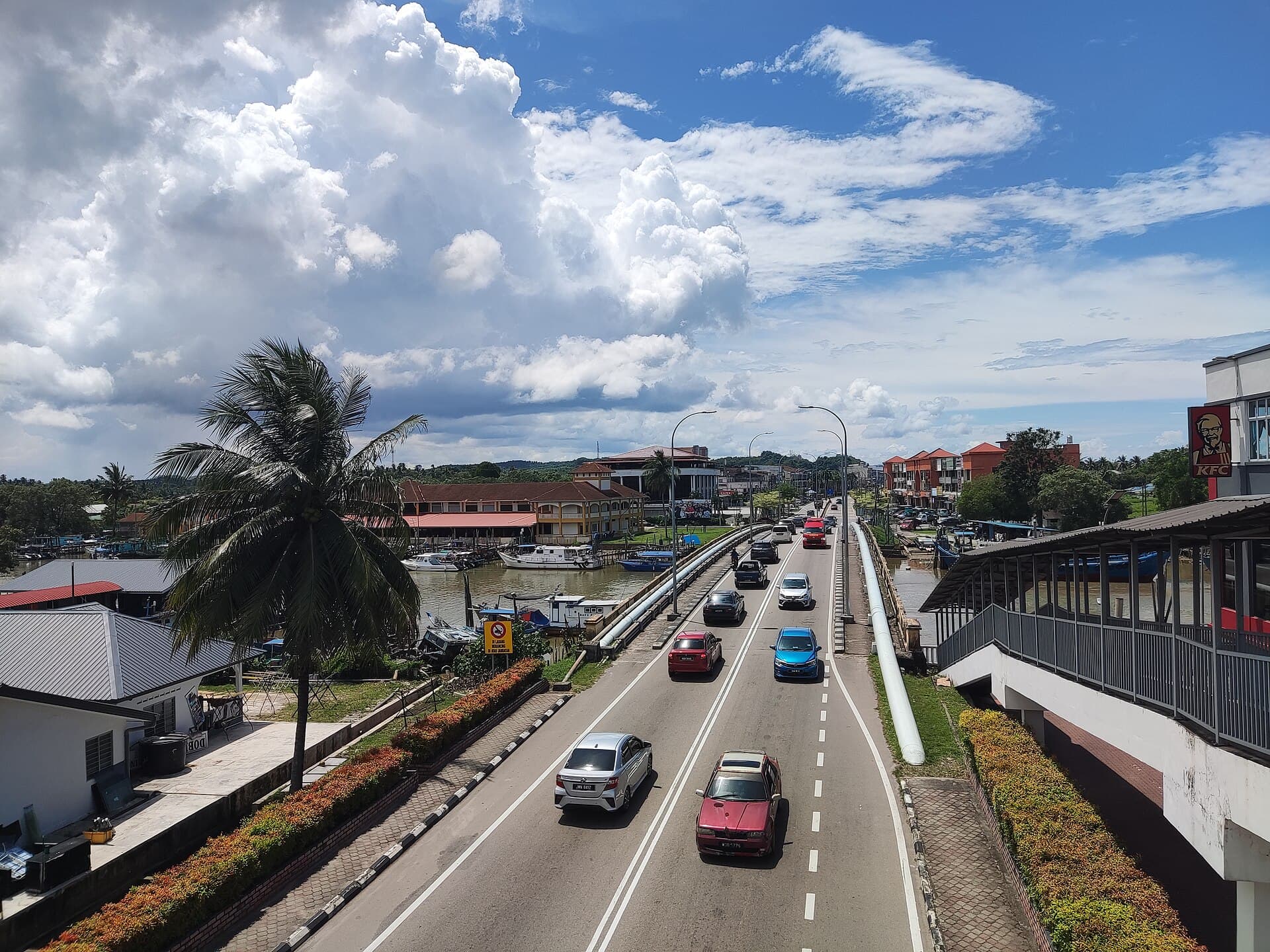 Wee Hong / CC BY-SA 4.0, via Wikimedia Commons
Self-guided audio walking tour of Mersing — GPS route, offline playback, story-driven narration in 32 languages.
“Where island dreams begin, and forgotten tales linger.”
Not the postcards. The stories even locals don't know — whispered in your ear, right where they happened.
The name 'Mersing' sounds distinctly Malay, yet local stories point to a surprising, non-Malay origin.
The Mersing Museum, a quiet repository of local history, once knew a past far more dramatic than its current peaceful appearance suggests.
Mersing, now a tranquil coastal town, once served as a strategic battleground during World War II.
Discover every secret of Mersing
Every address, every reveal in full — in your ear, right where it happened.
You pick your stops. You walk. The voice reveals what the others miss.


Your self-guided audio tour of Mersing is ready — pick your landmarks, choose your language, and start the moment you arrive.
BuyLume has a built-in augmented-reality guide. Hold your phone up and its camera shows the street ahead of you, with a glowing arrow laid over the real view that always points to your next stop — no map to puzzle over, no wrong turns. Like everything in Lume, it works fully offline.
Mersing, a coastal town on Malaysia's east coast of Johor, functions as the primary portal to the captivating islands of the Seri Buat archipelago, including the celebrated Tioman, Rawa, and Besar islands. While many travelers consider it merely a transit point, Mersing itself holds a quiet allure, reflecting a small-town culture that is swiftly fading across much of Malaysia.
Its unhurried rhythm and its position at the mouth of the Mersing River, which flows into the South China Sea, have shaped its character. Historically a fishing community, its economy relied on the fishing trade and seafood commerce, with the river serving as a main transport artery. Today, it offers a blend of local culture, scenic coastal views, and a relaxed atmosphere, making it a destination worthy of exploration beyond its jetties.
The origins of Mersing are deeply entwined with the sea and local folklore. While the exact founding date of its first settlement remains unrecorded, the town began to emerge as a significant hub in Johor during the late 19th and early 20th centuries. A popular local legend suggests the town's name stems from Amir Singh, a Sikh trader who operated a shop near the river mouth, his name gradually softening into 'Mersing' through local pronunciation.
The transformation of Mersing from a quiet coastal village into a bustling administrative center was propelled by several strategic advantages. Its location at the mouth of the Mersing River provided a natural harbor, offering protection to vessels from inclement weather, a crucial factor for seafaring development. Furthermore, Mersing historically became the primary link between the mainland and the Seri Buat archipelago, ensuring a constant flow of goods and travelers through its port.
In 1892, Mersing was officially established as an administrative center under the leadership of statesman Dato' Bentara Luar. The early 20th century saw substantial infrastructure development, including the construction of the first reliable road connecting Mersing to Johor Bahru via Jemaluang in the 1910s, which opened the region to broader trade. Following the independence of the Federation of Malaya in 1957, the town continued to develop as an important administrative center for the east coast. The Mersing District Council was officially established on May 26, 1977, to manage municipal affairs and infrastructure.
The 1980s marked a pivotal shift with the onset of a tourism boom, largely fueled by the rising popularity of islands like Tioman. This solidified Mersing's status as the 'gateway' to the archipelago. Further modernization arrived in 2012 with the opening of the Mersing Harbour Centre complex, centralizing tourism services and ferry connections. In 2016, Sultan Ibrahim Ismail of Johor officially proclaimed Mersing a 'Tourism City,' acknowledging its growing importance in the region's tourism landscape.
Mersing offers more than just a ferry terminal. Begin at the Mersing Harbour Centre, a modern complex that centralizes ticketing, food, and tourist information for island-bound travelers. From here, the Mersing Esplanade provides a pleasant walk along the river, offering views of traditional fishing boats. Delve into local history at the Mersing Museum, housed in a 1920s building that once served as a British administrative office and Japanese WWII headquarters. It chronicles the Battle of Endau and Johor's administrative past.
For a spiritual and architectural experience, visit Masjid Jamek Bandar Mersing, a majestic mosque situated on a hill, offering panoramic views of the town and sea. Nearby, the Sri Subramaniam Temple and the lively Fook Soon Temple (Hock Soon Temple) reflect the town's multicultural heritage. Explore the mural-filled alleys of the town center, where art tells stories of local culture and nature.
Beyond the town, Pantai Air Papan is a popular beach known for its golden sands and calm waters, ideal for relaxation and catching the sunrise. For a unique natural wonder, consider a trip to Pulau Mawar, accessible by sandbank during low tide, famed for its 'Heaven's Gate' rock formation. Adventurous travelers can hike Gunung Arong for expansive views or seek out the shipwreck at Pantai Tanjung Kempit for a dramatic photo opportunity.
The ideal time to visit Mersing is during the dry season, from April to October. During these months, the weather suits beach activities and island hopping, with maximum temperatures around 31°C. Precipitation is lowest from February to June. The sea is generally calm, making ferry services to the islands dependable. While Mersing experiences a tropical climate with consistent warmth and humidity year-round, the monsoon season from November to January brings heavy rainfall and rough seas, often leading to island resorts closing and ferry cancellations.
Mersing is approximately a 2.5 to 3-hour drive from Johor Bahru and 4-5 hours from Kuala Lumpur. Direct bus services are available from major cities like Kuala Lumpur, Melaka, and Singapore to the Mersing Bus Terminal. From the bus terminal, the Mersing Harbour Centre and jetty are about a 10-15 minute walk. For island trips, it's advisable to book ferry tickets in advance, especially during peak season and school holidays. Accommodations range from hotels in town to resorts on nearby islands. When packing, prioritize light, breathable clothing made from natural fabrics due to the year-round warm and humid tropical climate. Sunscreen, a hat, and sunglasses are essential. Be prepared for occasional short tropical downpours, even outside the monsoon season.
Mersing in Korean, in Chinese or in Hebrew — and 29 more languages, every stop narrated by a native voice. The widest language range of any self-guided audio tour.
Available in: