Otter Creek Falls
The dramatic waterfall at the heart of Middlebury isn't just a pretty sight; it was once the engine of Vermont's industrial prowess.
Full story unlocks in the tour
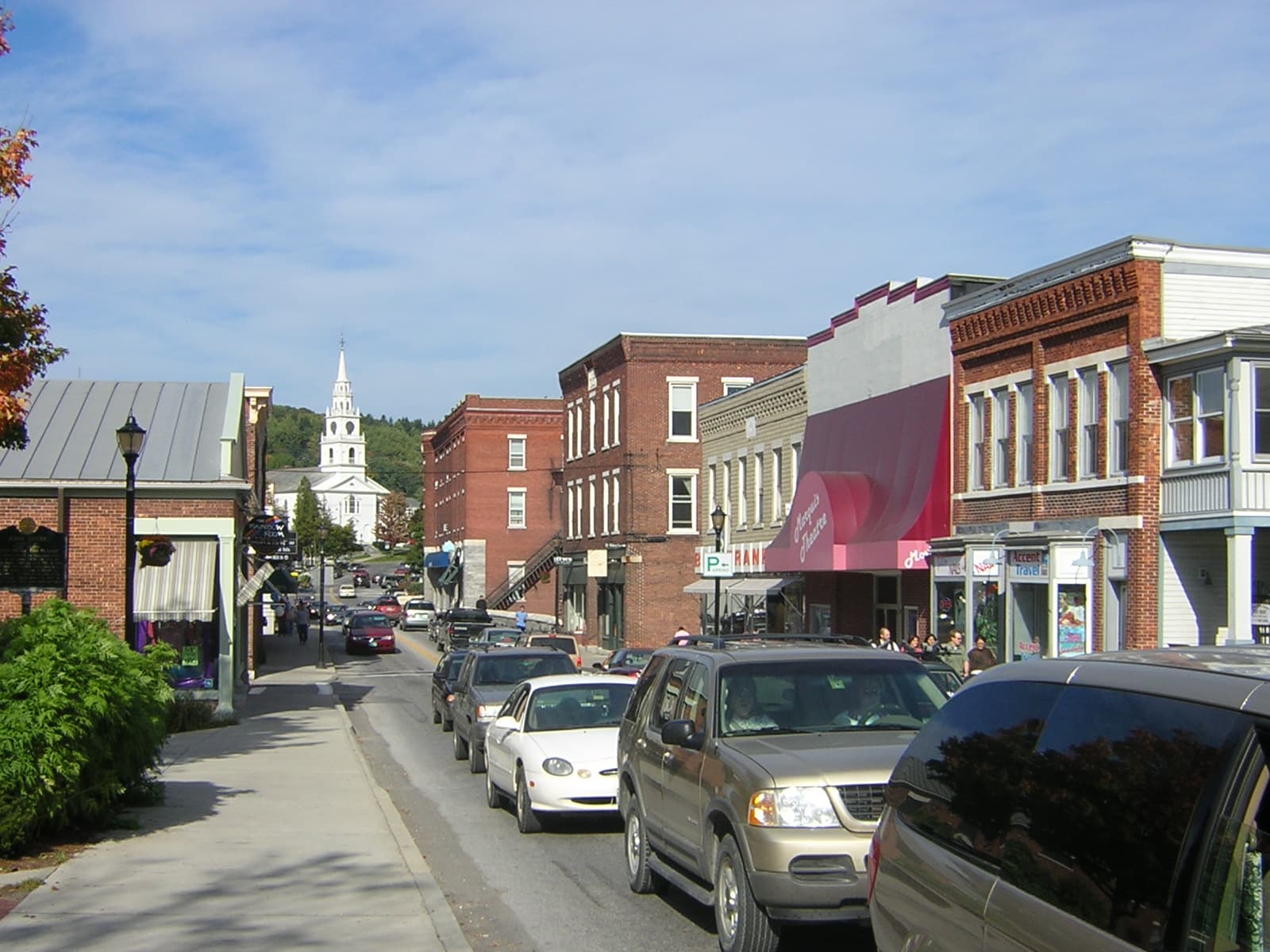 Jd4508. Original uploader was Jd4508 at en.wikipedia / CC BY-SA 3.0, via Wikimedia Commons
Self-guided audio walking tour of Middlebury — GPS route, offline playback, story-driven narration in 32 languages.
“Where Otter Creek tumbles, history flows, and innovation finds its footing.”
Not the postcards. The stories even locals don't know — whispered in your ear, right where they happened.
The dramatic waterfall at the heart of Middlebury isn't just a pretty sight; it was once the engine of Vermont's industrial prowess.
This esteemed liberal arts college holds a quiet distinction in the history of women's education.
Step inside this elegant historic building, and you're not just visiting a museum; you're entering the oldest community-based museum in the entire country.
Discover every secret of Middlebury
Every address, every reveal in full — in your ear, right where it happened.
You pick your stops. You walk. The voice reveals what the others miss.


Your self-guided audio tour of Middlebury is ready — pick your landmarks, choose your language, and start the moment you arrive.
BuyMiddlebury, Vermont, is a town where the past is visibly present, a place where the Otter Creek dramatically tumbles over a 20-foot waterfall at its heart, setting a dynamic backdrop for a community. This Addison County shire town, chartered in 1761, blends small-town allure with cultural sophistication, largely influenced by the presence of Middlebury College. Its historic downtown, a designated district on the National Register of Historic Places, invites exploration with its unique shops, art galleries, and restaurants housed in architecturally distinguished buildings.
Beyond its village green and white-steepled church, Middlebury offers a gateway to Vermont's natural beauty. The town is ideally situated between the Green Mountains to the east and the Champlain Valley to the west, providing abundant opportunities for outdoor recreation. Whether you're drawn to its deep history, its thriving arts scene, or its scenic landscapes, Middlebury captivates with an authentic New England character that has been recognized as one of the most prosperous and virtuous towns in the region since the early 19th century.
## From Frontier Settlement to Industrial Hub Middlebury's story begins with its chartering on November 2, 1761, by Colonial Governor Benning Wentworth, its name likely derived from its location midway between the towns of Salisbury and New Haven. The first settlers arrived in 1766, following the end of the French and Indian Wars. However, the nascent community faced significant hardship during the Revolutionary War when much of the town was burned during Carleton's Raid in November 1778. After the war concluded in 1783, settlers returned with determination, clearing forests and establishing farms, primarily growing grains and hay.
By the early 19th century, Middlebury was rapidly developing, earning praise from Yale President Timothy Dwight in 1810 as "one of the most prosperous and most virtuous towns in New England." Indeed, by the 1830s, it held the largest population in Vermont. The dramatic Otter Creek Falls became a powerful engine for industry, giving birth to the Vermont marble industry, which supplied markets from Quebec to Georgia. The town also housed the state's first nail and window sash factories and the second set of power looms in New England. This period also saw Middlebury become a center for the Merino sheep industry and later for the breeding of Morgan horses.
Education also flourished with the founding of Middlebury College in 1800, notably becoming one of the first colleges in the U.S. to admit women in 1883. The Henry Sheldon Museum of Vermont History, the oldest community-based museum in the country, opened in 1884, further solidifying Middlebury's cultural and historical significance. While industrial development slowed around the Civil War as other cities grew, Middlebury maintained its unique character and commitment to preservation. Today, the Middlebury Village Historic District, with its 275 buildings, stands as a testament to this enduring legacy, listed on the National Register of Historic Places.
Begin your exploration at the Middlebury Falls, a 20-foot waterfall on Otter Creek right in the center of town, offering impressive views from the Main Street bridge. Wander through Historic Downtown Middlebury, a designated historic district, where you'll find unique local shops, art galleries, and restaurants in charming brick buildings. Don't miss the iconic white-steepled Congregational Church, built between 1806 and 1809, overlooking the town green.
Just a short walk from the green is Middlebury College, an elite liberal arts institution with a picturesque campus. Explore the main quad, especially beautiful in the fall, and consider visiting the Middlebury College Museum of Art, which houses a diverse collection from antiquities to contemporary art. The Henry Sheldon Museum of Vermont History is another important stop, offering engaging exhibits on Vermont's past within the oldest community-based museum in the country.
For outdoor enthusiasts, the Trail Around Middlebury (TAM) offers a 16-mile footpath encircling the village, passing through forests, fields, and along Otter Creek. You can also visit the UVM Morgan Horse Farm in nearby Weybridge to learn about Vermont's official state animal. In the winter, the Middlebury Snow Bowl provides family-friendly skiing and snowboarding. Consider taking a drive along the Middlebury Tasting Trail to sample local craft beers, ciders, and spirits.
The best time to visit Middlebury for warm-weather activities is from late June to early September, when average daily high temperatures are above 70°F. July is the warmest month, with an average high of 80°F. For those seeking the renowned fall foliage, mid-October is generally when the reds, yellows, and oranges peak. Middlebury has even been named one of the top towns in New England for fall foliage. Winter, from December to March, brings colder temperatures, with January being the coldest month with an average low of 13°F, offering opportunities for skiing and snowshoeing.
Middlebury is located in central Addison County, midway between Burlington and Rutland. While a car offers the most flexibility for exploring the surrounding areas and scenic drives, the downtown area is quite walkable, with many attractions within a five-minute stroll of the Town Green. Public transportation within Addison and surrounding counties, as well as regional connections to airports and train stations, is available via Tri-Valley Transit (TVT). Greyhound also has a stop on the Middlebury College campus for travel to larger cities. When driving, be aware of pedestrian traffic and unique patterns around the town green. Parking is available, and Middlebury College provides specific parking information for visitors and event attendees. Many local inns and restaurants are available, and the town offers a range of dining experiences from casual to fine dining.
Middlebury in Korean, in Chinese or in Hebrew — and 29 more languages, every stop narrated by a native voice. The widest language range of any self-guided audio tour.
Available in: