Sidi Ifni's Art Deco Architecture
Beyond the kasbahs and traditional Moroccan design, a surprising European architectural movement left its mark on a nearby town.
Full story unlocks in the tour
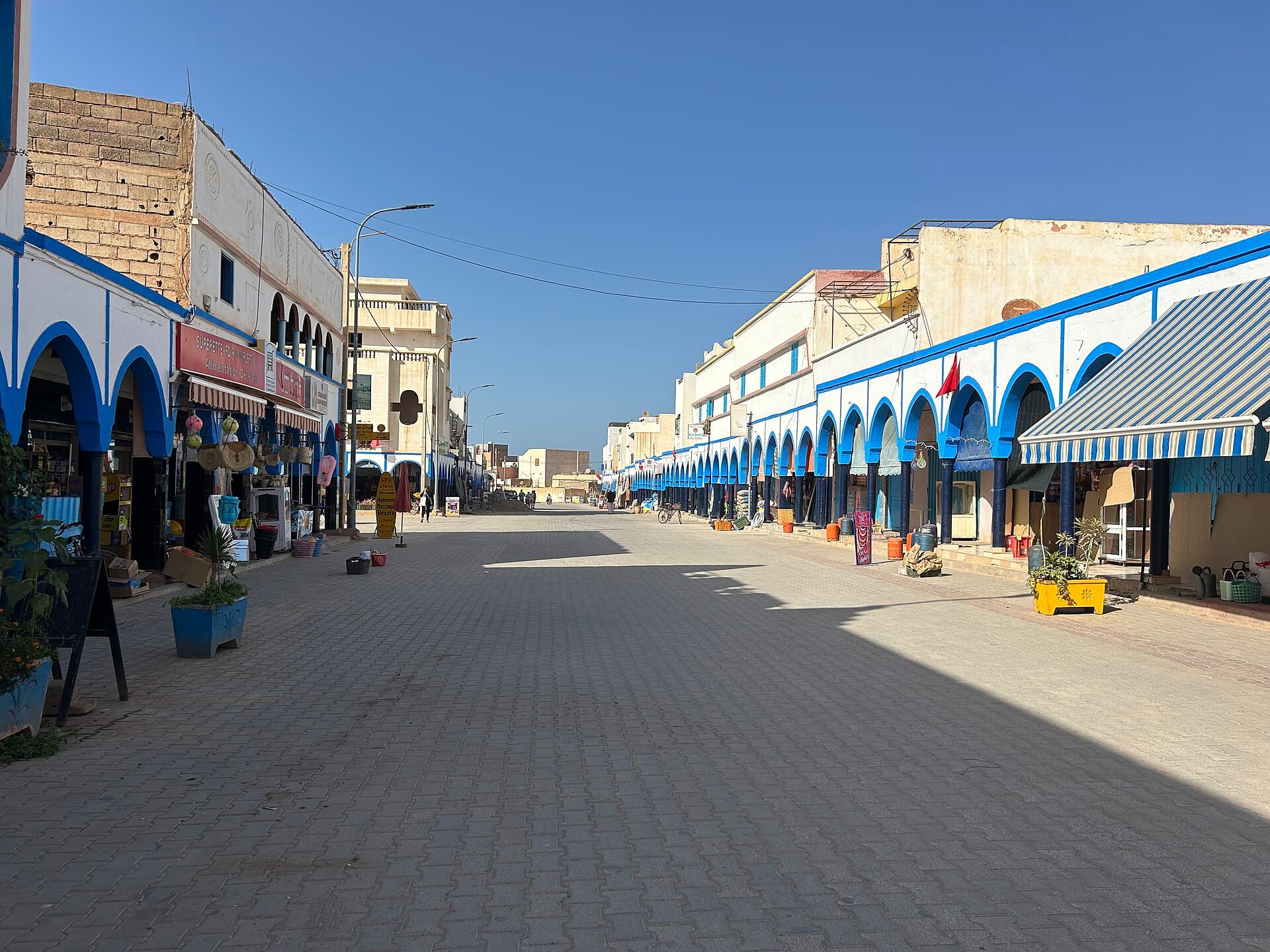 Anass Sedrati / CC BY-SA 4.0, via Wikimedia Commons
Self-guided audio walking tour of Mirleft — GPS route, offline playback, story-driven narration in 32 languages.
“Where the Sahara whispers to the Atlantic, and time slows to the rhythm of the waves.”
Not the postcards. The stories even locals don't know — whispered in your ear, right where they happened.
Beyond the kasbahs and traditional Moroccan design, a surprising European architectural movement left its mark on a nearby town.
One of Morocco's most iconic natural wonders, a magnificent sandstone arch on a local beach, dramatically disappeared overnight.
Mirleft is known for its surf, but the best waves aren't always where you'd expect, and local knowledge is key to finding them.
Discover every secret of Mirleft
Every address, every reveal in full — in your ear, right where it happened.
You pick your stops. You walk. The voice reveals what the others miss.


Your self-guided audio tour of Mirleft is ready — pick your landmarks, choose your language, and start the moment you arrive.
BuyLume has a built-in augmented-reality guide. Hold your phone up and its camera shows the street ahead of you, with a glowing arrow laid over the real view that always points to your next stop — no map to puzzle over, no wrong turns. Like everything in Lume, it works fully offline.
Mirleft, a relaxed coastal town in Morocco's Souss-Massa region, offers a captivating blend of Atlantic charm and Berber culture. Unlike the bustling imperial cities, Mirleft moves at a slower pace, inviting visitors to unwind amidst its dramatic cliffs, expansive sandy beaches, and the rhythmic crash of ocean waves. It's a place where the desert landscape gently gives way to the sea, creating a unique and rugged beauty.
The town itself is modest, with a friendly atmosphere and a strong sense of local community. Here, you'll find a genuine slice of Moroccan life, where the scent of tagine drifts from open doorways and the call to prayer echoes softly across the hills.
The history of Mirleft, while not extensively documented in ancient texts, is deeply rooted in the broader narrative of the indigenous Berber people of Southern Morocco. For centuries, this stretch of coastline would have been a series of small fishing communities and seasonal settlements, strategically positioned for both sustenance from the Atlantic and as part of ancient trade routes connecting the Anti-Atlas mountains to the coast. The rugged terrain and natural defenses would have offered protection and self-sufficiency to its inhabitants.
During the colonial era, specifically under French protectorate rule, the region saw some infrastructural development, though Mirleft largely remained a quiet outpost. Its strategic location, however, would have been noted, and the nearby town of Sidi Ifni, just to the north, became a significant Spanish colonial administrative center. This proximity meant that Mirleft, to some extent, existed in the shadow of these larger colonial endeavors, maintaining much of its traditional character.
In the post-independence period, as Morocco began to shape its own identity, Mirleft continued its existence as a fishing village. It wasn't until the late 20th and early 21st centuries that its potential as a peaceful coastal destination began to be recognized. The allure of its uncrowded beaches, consistent surf, and authentic atmosphere started to attract a trickle of independent travelers, particularly surfers and those seeking a more off-the-beaten-path experience. This gradual emergence has allowed Mirleft to develop without losing its inherent charm, balancing a growing tourism presence with its deep-seated local traditions. Today, it stands as a testament to the enduring spirit of the region, a place where history is felt more in the rhythm of daily life than in grand monuments.
Mirleft's primary attractions revolve around its coastline and relaxed atmosphere. The beaches are the main draw, each with its own character. Plage Mirleft is the most accessible, a wide sandy expanse perfect for swimming and sunbathing. For surf enthusiasts, Imin Turga and Marabout beaches offer consistent waves, drawing both beginners and experienced riders. Do not miss the dramatic cliffs and rock formations that frame many of these coastal stretches.
Take a stroll through the small town center, where you'll find local cafes serving mint tea and small shops selling everyday essentials and a few handcrafted souvenirs. The weekly souk (market), typically held on Mondays, is a lively affair where locals gather to buy and sell produce, spices, textiles, and livestock – a truly authentic experience.
For a glimpse into the region's past, explore the ruins of the old kasbah on a hill overlooking the town. While largely in disrepair, it offers panoramic views of the Atlantic and the surrounding landscape. A short drive north will take you to Sidi Ifni, a town renowned for its unique Spanish Art Deco architecture, a fascinating contrast to traditional Moroccan styles.
Mirleft enjoys a mild, arid climate, making it a pleasant destination year-round. For the most agreeable weather, with warm days and comfortable evenings, consider visiting during spring (March to May) or autumn (September to November). These shoulder seasons also offer fewer crowds. Summer (June to August) can be warm, but the coastal breeze often provides relief. Winter (December to February) is generally mild and sunny, though evenings can be cool. Surfers will find consistent waves throughout the cooler months.
Getting to Mirleft typically involves flying into Agadir Al Massira Airport (AGA), which is approximately a 2.5-hour drive north. From Agadir, you can arrange a private taxi, take a shared grand taxi, or rent a car. Shared taxis are a cost-effective option but may require transfers. Within Mirleft, the town is small enough to explore on foot. For venturing to more distant beaches or Sidi Ifni, local taxis are readily available. Accommodation ranges from guesthouses and small hotels to surf camps and private villa rentals. While some establishments accept cards, cash is preferred, especially in smaller shops and the souk. The official language is Arabic, but Berber dialects are widely spoken, and French is understood in tourist-facing businesses.
Mirleft in Korean, in Chinese or in Hebrew — and 29 more languages, every stop narrated by a native voice. The widest language range of any self-guided audio tour.
Available in: