Salle à manger du château de Moritzburg
Dans la somptueuse salle à manger du château, un trophée de chasse en particulier détient un record du monde surprenant.
L'histoire complète se débloque dans le tour
 Carsten Pietzsch / CC0, via Wikimedia Commons
Visite audio autoguidée de Moritzburg — parcours GPS à pied, lecture hors ligne, narration en 32 langues.
“Où la grandeur du passé saxon se reflète dans les eaux calmes.”
Pas les cartes postales. Les histoires que même les habitants ignorent — soufflées à l'oreille, là où elles se sont passées.
Dans la somptueuse salle à manger du château, un trophée de chasse en particulier détient un record du monde surprenant.
À la fin de la Seconde Guerre mondiale, la famille Wettin, anciens résidents du château, a tenté de protéger ses biens les plus précieux d'une manière inattendue.
Une courte promenade depuis le château principal révèle un palais rococo miniature avec une caractéristique maritime curieuse.
Découvrez tous les secrets de Moritzburg
Chaque adresse, chaque révélation en entier — dans ton oreille, là où elle s'est passée.
Tu choisis tes lieux. Tu marches. La voix te révèle ce que les autres ignorent.
Votre visite audioguidée de Moritzburg vous attend — choisissez vos lieux, votre langue, et lancez-vous dès votre arrivée.
AcheterLume intègre un guide en réalité augmentée. Levez votre téléphone : sa caméra montre la rue devant vous, avec une flèche lumineuse posée sur l'image réelle qui pointe toujours vers votre prochain arrêt — aucune carte à déchiffrer, aucun mauvais virage. Comme tout dans Lume, ça fonctionne entièrement hors-ligne.
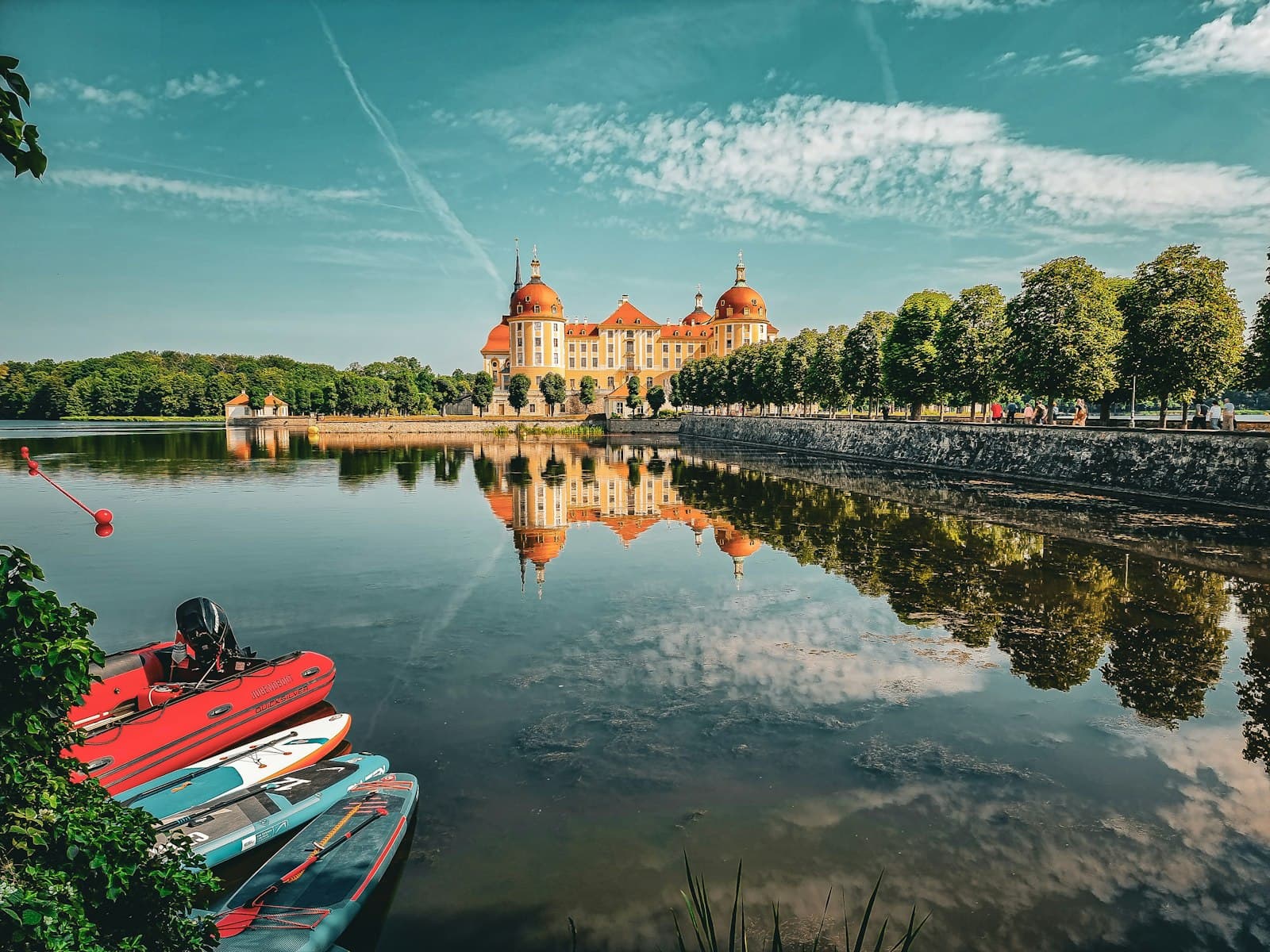
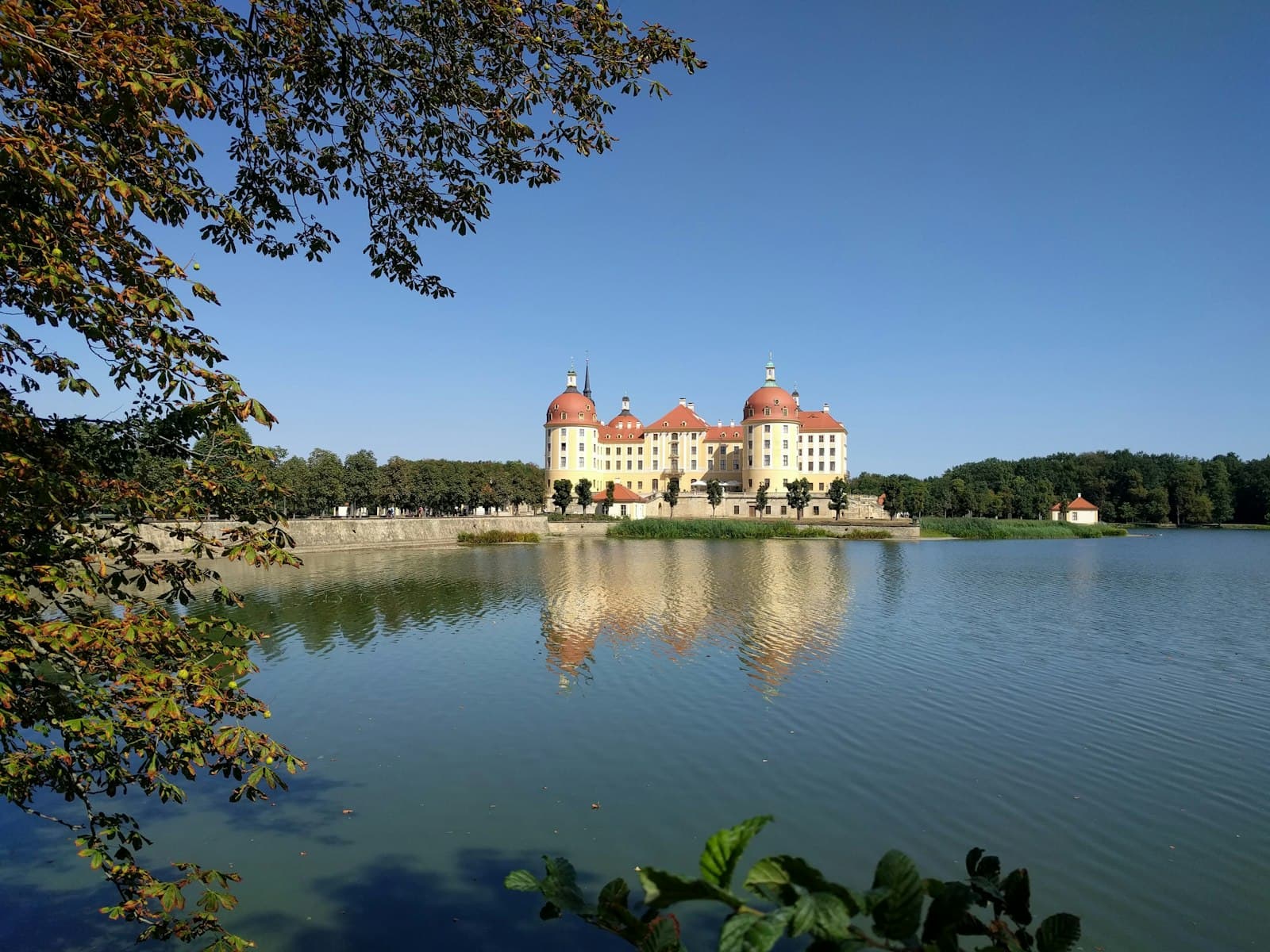
Moritzburg, une ville captivante de Saxe, en Allemagne, est largement reconnue pour son emblématique château baroque qui semble flotter sur un lac artificiel. Situé à seulement 13 kilomètres (8,1 miles) au nord-ouest de Dresde, cet endroit enchanteur attire les visiteurs par sa magnificence architecturale et son environnement naturel serein.
Le château, avec ses quatre tours rondes distinctives et sa façade jaune chaleureuse, crée une scène souvent décrite comme sortie d'un livre de contes. Au-delà du château principal, le paysage culturel de Moritzburg s'étend pour inclure une réserve de gibier historique, un charmant château miniature du faisan et un réseau d'étangs et de forêts qui servaient autrefois de terrains de chasse royaux.
Moritzburg offre un mélange d'histoire, d'art et de nature, ce qui en fait une destination captivante pour ceux qui cherchent un aperçu du passé royal de la Saxe et une évasion tranquille dans la campagne allemande.
Les origines du château de Moritzburg remontent au XVe siècle, lorsque le duc Moritz de Saxe, un chasseur passionné, commanda un pavillon de chasse de style Renaissance entre 1542 et 1546. Cette structure initiale fut conçue pour servir de base aux parties de chasse aristocratiques dans les forêts et les lacs environnants, une zone prisée des électeurs et rois saxons.
Plus d'un siècle plus tard, l'électeur Jean-Georges II de Saxe agrandit le pavillon, ajoutant une chapelle entre 1661 et 1671, un exemple précoce d'architecture baroque. Cependant, la transformation la plus significative du château eut lieu au XVIIIe siècle sous le règne d'Auguste le Fort, un roi ambitieux et amateur de luxe. Entre 1723 et 1733, il entreprit d'importants travaux de rénovation, convertissant le pavillon Renaissance en le magnifique palais baroque que l'on voit aujourd'hui.
La vision d'Auguste le Fort comprenait non seulement l'extension des salles et des galeries, mais aussi la création d'un système complexe de lacs et de canaux autour du château, conçu pour refléter son imposante façade et rehausser sa grandeur. L'intérieur fut orné d'un somptueux décor baroque, avec des fresques exquises et une remarquable collection de trophées de chasse, le tout destiné à exalter le prestige de la dynastie Wettin. Les sept salles et plus de 200 pièces du château furent méticuleusement conçues par les meilleurs artisans saxons.
D'autres développements des environs du château furent réalisés par l'électeur Frédéric-Auguste III à la fin du XVIIIe siècle, notamment la construction du Petit château du Faisan (Fasanenschlösschen) entre 1770 et 1776. Les terrains furent agrandis pour inclure un bâtiment de stockage de nids d'oiseaux, le Puits de Vénus, et un cadre maritime unique sur le Grand Lac, avec un port miniature et un phare. Le prince Ernst Heinrich de Saxe fut le dernier membre de la Maison de Wettin à résider dans le château, y vivant de 1933 à 1945. Après la Seconde Guerre mondiale, le château fut transformé en musée et acquit une reconnaissance internationale en tant que lieu de tournage pour le film féerique bien-aimé "Trois vœux pour Cendrillon" dans les années 1970.
Le château de Moritzburg lui-même est l'attraction principale, un palais baroque symétrique avec quatre tours rondes s'élevant d'un lac artificiel. À l'intérieur, explorez des salles d'apparat opulentes ornées de plafonds décorés d'or, de fresques complexes et de papiers peints en cuir uniques, reflétant le style de vie somptueux de la noblesse saxonne. Le château abrite également l'une des collections les plus importantes d'Europe de trophées de chasse, y compris le panache de cerf élaphe le plus lourd du monde.
À une courte distance du château principal, le Petit château du Faisan (Fasanenschlösschen) est un pavillon de chasse rococo avec des intérieurs ornés, y compris une célèbre 'Chambre aux Plumes' décorée de plus d'un million de plumes d'oiseaux colorées. Le parc environnant, avec ses jardins géométriques et ses sculptures, offre d'agréables promenades. Ne manquez pas le parc animalier de Moritzburg (Wildgehege Moritzburg), une réserve de 40 hectares où vous pouvez observer plus de 30 espèces animales principalement indigènes dans des enclos naturels, y compris des cerfs élaphes, des élans, des lynx et des loups.
Pour les fans de contes de fées classiques, le château accueille une exposition hivernale annuelle dédiée au film "Trois vœux pour Cendrillon", présentant des costumes et des accessoires originaux.
Moritzburg connaît des étés chauds et des hivers froids et neigeux. La période la plus agréable pour visiter est généralement de mai à septembre, lorsque les températures diurnes sont confortables, allant de 25°C (77°F) en juillet à 14°C (57°F) la nuit. Juillet est le mois le plus humide, tandis qu'avril est le plus sec. Pour une atmosphère magique et féerique, envisagez une visite en hiver, surtout lorsque le château accueille son exposition "Trois vœux pour Cendrillon" de mi-novembre à fin février.
Le château de Moritzburg est ouvert au public toute l'année, avec des horaires variables selon la saison. D'avril à octobre, il est généralement ouvert de 10h00 à 17h30, et en hiver, il ferme à 16h00. L'entrée générale est de 12 €, avec des réductions disponibles pour les étudiants et les enfants. Un audioguide est proposé en plusieurs langues pour enrichir votre visite.
Rejoindre Moritzburg depuis Dresde est simple. Vous pouvez y aller en voiture en environ 25 minutes via la route B6, ou opter pour les transports en commun en prenant le train local S1 jusqu'à Radebeul Ost, puis un bus. Le chemin de fer à voie étroite historique Lößnitzgrundbahn offre également un itinéraire pittoresque. Le château est largement accessible, avec une rampe pour les utilisateurs de fauteuils roulants au rez-de-chaussée du château baroque et un ascenseur pour tous les étages d'exposition. Des toilettes accessibles aux fauteuils roulants sont disponibles. Cependant, certaines salles d'exposition spéciales et le Petit château du Faisan ne sont pas entièrement accessibles.
Moritzburg en coréen, en chinois ou en hébreu — et dans 29 autres langues, chaque étape narrée par une voix native. La plus large gamme de langues de tous les audioguides autoguidés.
Disponible en :