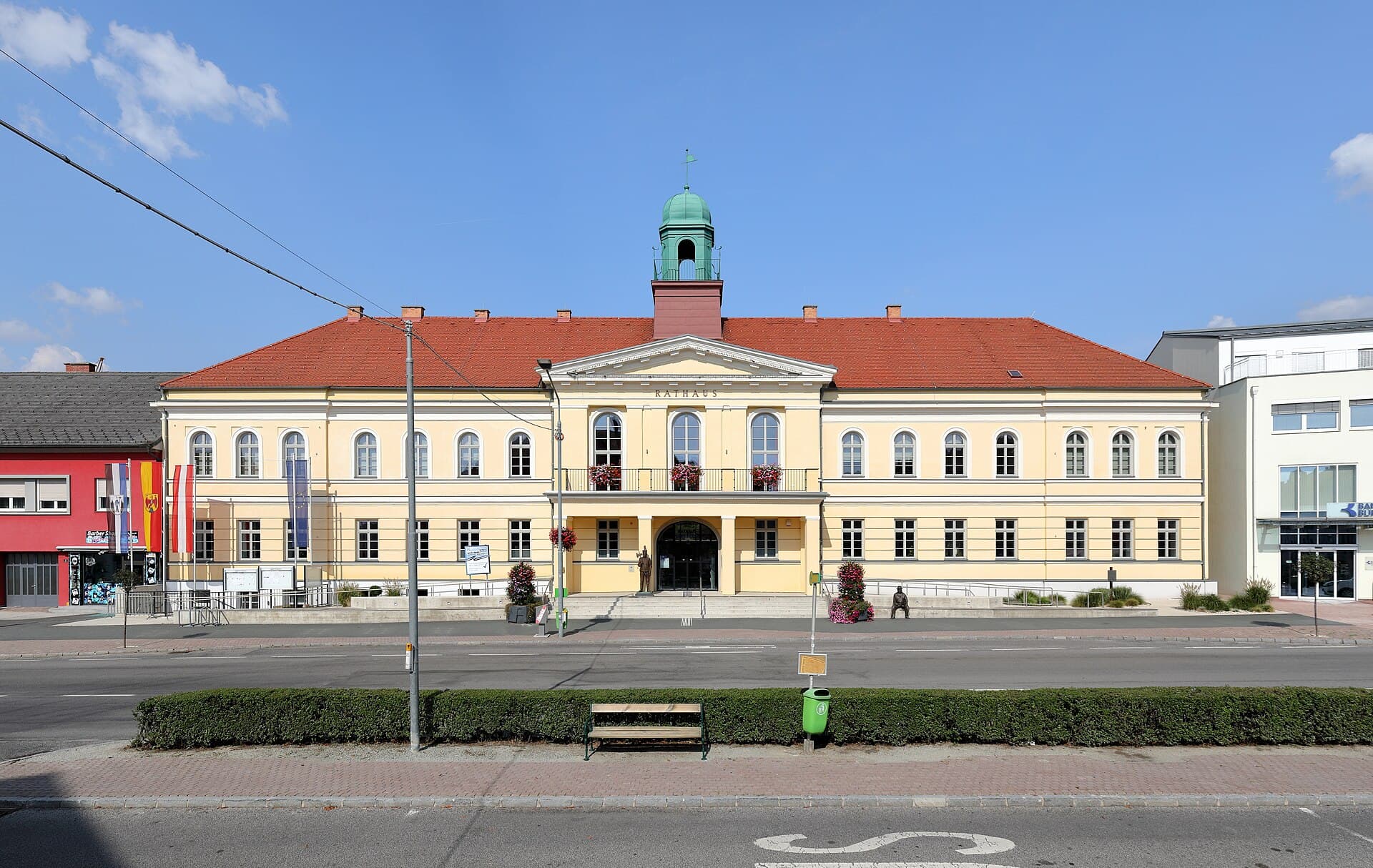
The former synagogue
A building in Oberwart once served a sacred purpose for a community that was later erased, only to be repurposed in a way that spoke to a different kind of community protection.
Full story unlocks in the tour
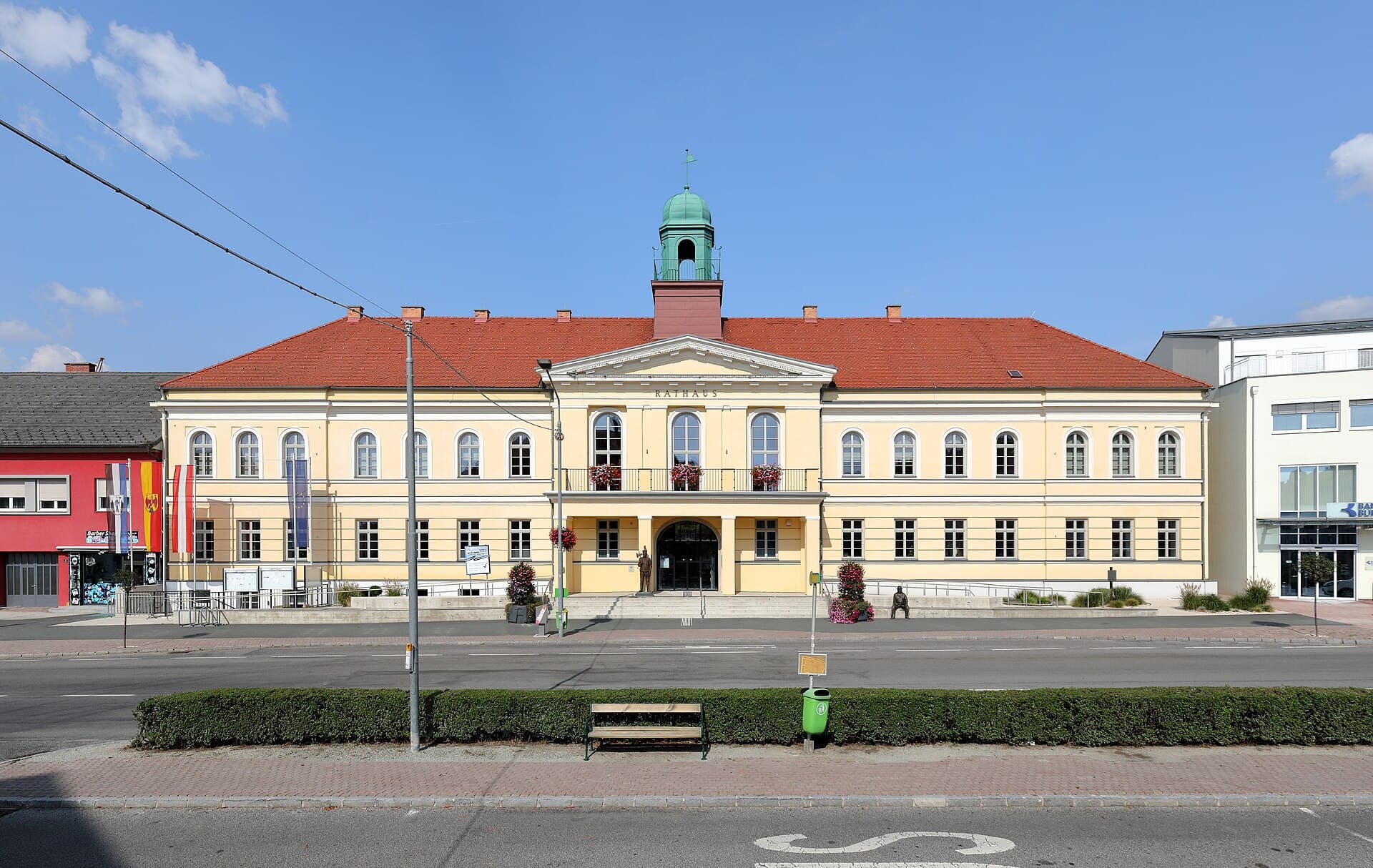 C.Stadler/Bwag / CC BY-SA 4.0, via Wikimedia Commons
Self-guided audio walking tour of Oberwart — GPS route, offline playback, story-driven narration in 32 languages.
“Where Hungarian heritage meets Austrian charm, with echoes of a resilient past.”
Not the postcards. The stories even locals don't know — whispered in your ear, right where they happened.
A building in Oberwart once served a sacred purpose for a community that was later erased, only to be repurposed in a way that spoke to a different kind of community protection.
In the mid-1990s, a tragic event involving a seemingly simple sign revealed a dark undercurrent of hatred that shocked the nation.
A local basketball team pulled off an improbable victory, defying expectations after a challenging start to their season.
Discover every secret of Oberwart
Every address, every reveal in full — in your ear, right where it happened.
You pick your stops. You walk. The voice reveals what the others miss.
Your self-guided audio tour of Oberwart is ready — pick your landmarks, choose your language, and start the moment you arrive.
BuyLume has a built-in augmented-reality guide. Hold your phone up and its camera shows the street ahead of you, with a glowing arrow laid over the real view that always points to your next stop — no map to puzzle over, no wrong turns. Like everything in Lume, it works fully offline.
Oberwart, known as Felsőőr in Hungarian and Gornja Borta in Croatian, is a town in Burgenland, southeast Austria, situated on the banks of the Pinka River. As the capital of its district, Oberwart holds significant economic and social importance in the region. With a population of almost 8,000, it is the third-largest town in Burgenland and serves as the cultural heart for the small ethnic Hungarian minority residing in the Upper Őrség or Wart microregion.
The settlement's origins trace back to the 11th century, established by Hungarian frontier guards. Over centuries, Oberwart has evolved into a dynamic hub, recognized for its role as a business location, trade fair and shopping town, and a center for education and sports. Its diverse character offers a blend of historical depth and modern amenities, making it a distinctive destination in southern Burgenland.
## From Frontier Guards to Market Town Oberwart's story begins in the 11th century, founded by Hungarian frontier guards, known as 'őrs,' along with neighboring settlements like Unterwart and Siget in der Wart. The town was first documented in 1327 under the name 'Superior Eör.' For centuries, it remained part of the old county of Vas until 1921. The community of the 'őrs' was granted noble privileges by King Charles I of Hungary in the 14th century, a status later reconfirmed by Rudolph I in 1582.
## Reformation and Resilience The 16th century brought the Reformation to Felsőőr (Oberwart's Hungarian name), with the powerful Battyhány counts supporting the Protestant movement. While many in the region were forced to revert to Roman Catholicism during the Counter-Reformation, Felsőőr, as a free noble village, steadfastly remained Calvinist. In 1673, the church and school were seized and returned to Catholics, and the pastor was expelled. However, the resilient villagers erected a new wooden church in 1681, and Felsőőr was designated an 'articular place,' the sole legal location for Protestant worship in the entire region, as per the laws of the Diet of 1681.
## Revolutions and Rebuilding Oberwart's inhabitants actively participated in Hungarian national uprisings, including those led by István Bocskay in 1605 and Count Francis II Rákóczi in 1705. In 1706, the Austrian army under General Sigbert Heister sacked Felsőőr. The village gained the right to hold a market in 1841, a significant step in its economic development. During the Hungarian Revolution of 1848, the villagers, aided by Hussars, defeated a smaller Croatian army, though they later faced a hefty tribute.
## 20th Century Challenges and Modernization In November 1921, the Austrian army occupied the village. The annexation of Austria by Nazi Germany in 1938 marked a dark period, leading to the deportation of approximately 140 Jewish inhabitants and the conversion of the synagogue into a fire department depot. Oberwart was incorporated as a town in 1939. In April 1945, the Red Army occupied the half-destroyed town after fierce fighting. The 1950s and 1960s saw Oberwart undergo significant rebuilding and modernization.
## A Town of Contrasts and Commemoration More recently, Oberwart has been the site of both celebration and tragedy. On September 2, 1984, the European number-one hit 'Live Is Life' by Opus was famously recorded live in Oberwart. However, the town also witnessed a horrific act of domestic terrorism on February 5, 1995, when a pipe bomb killed four young Romani men, an event that remains the worst politically motivated attack in Austria's Second Republic. Today, the 'Path of Commemoration and Education' in Oberwart serves as a poignant reminder of the town's lost Jewish population and other victims of the Nazi regime, ensuring that these painful histories are not forgotten.
Oberwart offers a blend of historical sites and modern attractions. The Reformed Church, a prominent Baroque structure built between 1771-73 with a tower added in 1808-09, showcases valuable 18th and 19th-century art and ecclesiastical equipment.
For those interested in the town's past, the 'Path of Commemoration and Education' provides a moving experience, with plaques honoring the memory of its Jewish population and other victims of the Nazi era.
Beyond the town center, several notable attractions are within easy reach. Schlaining Castle, one of Austria's best-preserved medieval castles, presents a mighty keep with walls up to 8 meters thick and houses the Peace Museum. Just a short drive away, Lockenhaus Castle, considered the last true knight's castle in Austria, exhibits Romanesque and Gothic architecture from the 13th century. For outdoor enthusiasts, the Treetop Path Markt Neuhodis offers a unique perspective of nature from a series of wooden bridges connecting 11 towers, accessible even for blind individuals and wheelchair users.
If relaxation is on your agenda, the AVITA Resort in Bad Tatzmannsdorf, approximately 10 minutes from Oberwart, features an extensive pool landscape and numerous saunas, including the unique Uhudler sauna and Austria's first snow sauna. Shoppers can explore the eo shopping center, which houses over 50 retail businesses and dining options.
Sports fans might be interested in catching a game of the Oberwart Gunners, the town's successful professional basketball team. The Speedarena Rechnitz, Austria's largest and most modern rental kart track, is also nearby for those seeking an adrenaline rush.
The best time to visit Oberwart for general outdoor tourist activities is from mid-June to early September, with a peak in the second week of August, when the weather is clear and perceived temperatures are comfortable. For hot-weather activities, early July to mid-August is ideal. The region experiences a mild Pannonian climate, offering around 300 sunny days a year. Spring (April-May) and fall (September-October) also offer pleasant weather with fewer crowds, making them excellent for nature walks and city excursions.
Oberwart is located in Burgenland, Austria, and uses the Euro (EUR) as its currency. While there isn't a direct train connection to Oberwart for public passenger transport, buses are available, with connections from Vienna. For accommodation, while Oberwart itself has inns with rooms, more extensive hotel options, including upscale hotels and health resorts, can be found in nearby Bad Tatzmannsdorf, approximately 10-15 minutes away. If staying outside Oberwart, consider renting a car as public transport might be less frequent.
Many events and trade fairs take place throughout the year at the Oberwart exhibition hall. For current information on local happenings, checking the Oberwart municipality website or local event listings is recommended. The town is also known for its local beer and wine, offering opportunities to sample regional specialties.
Oberwart in Korean, in Chinese or in Hebrew — and 29 more languages, every stop narrated by a native voice. The widest language range of any self-guided audio tour.
Available in: