Pardubice Castle
Beneath the castle's Renaissance splendor lies a stark reminder of a different era.
Full story unlocks in the tour
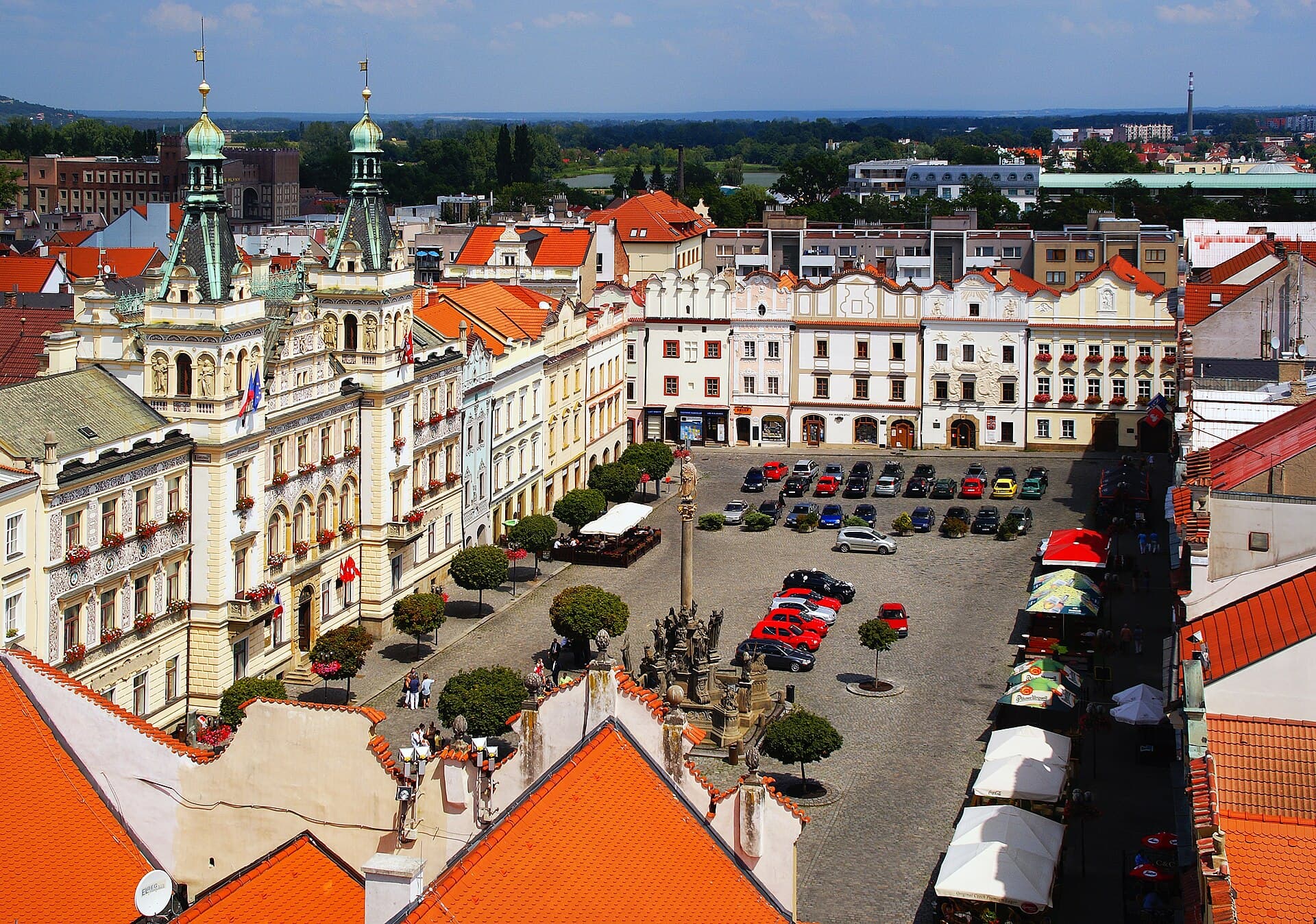 Stanislav Dusík / CC BY-SA 4.0, via Wikimedia Commons
Self-guided audio walking tour of Pardubice — GPS route, offline playback, story-driven narration in 32 languages.
“Where Renaissance grandeur converges with the sweet scent of spiced honey.”
Not the postcards. The stories even locals don't know — whispered in your ear, right where they happened.
Beneath the castle's Renaissance splendor lies a stark reminder of a different era.
One of the Czech Republic's oldest painted nudes is not within a gallery, but upon a castle wall.
The castle's walls hold more than just history; they recount stories of religious defiance.
Discover every secret of Pardubice
Every address, every reveal in full — in your ear, right where it happened.
You pick your stops. You walk. The voice reveals what the others miss.

Your self-guided audio tour of Pardubice is ready — pick your landmarks, choose your language, and start the moment you arrive.
BuyLume has a built-in augmented-reality guide. Hold your phone up and its camera shows the street ahead of you, with a glowing arrow laid over the real view that always points to your next stop — no map to puzzle over, no wrong turns. Like everything in Lume, it works fully offline.
Pardubice, a city in the Czech Republic, sits at the confluence of the Elbe and Chrudimka rivers, approximately 100 kilometers east of Prague. Known for its distinctive Renaissance architecture, particularly around Pernštýnské Square, the city has been a protected urban monument reservation since 1964. Beyond its visual appeal, Pardubice is deeply associated with the sweet aroma of gingerbread and the thrilling spectacle of horse racing.
With a population of around 93,000, Pardubice serves as the capital of the Pardubice Region and is an important transport hub. The city offers a blend of historical exploration and local life, making it an intriguing stop for those seeking to delve into Czech culture. From its imposing castle to its charming gingerbread shops, Pardubice invites visitors to uncover its unique heritage.
The city's flat landscape also makes it an ideal destination for leisurely walks and cycling, with numerous trails along the rivers and to nearby attractions. Whether you're drawn to its architectural grandeur, its culinary traditions, or its sporting events, Pardubice provides a multifaceted experience of Eastern Bohemia.
The history of Pardubice dates back to the late 13th century, with the first written record appearing in 1295. Initially a settlement with a monastery and the Church of St. Bartholomew, it gained city status in 1340 under Arnošt of Pardubice, who later became the first Archbishop of Prague. The city's strategic location at the confluence of the Elbe and Chrudimka rivers made it an important ford, protected by a small fort around 1250.
A pivotal moment in Pardubice's history arrived in 1491 when Vilém II of Pernštejn, a powerful Moravian nobleman and steward of the Czech Kingdom, acquired the town. He chose Pardubice as the center of his estate, initiating a period of significant expansion and prosperity. The Pernštejn family transformed the medieval castle into a comfortable, fortified Renaissance residence and oversaw the construction of the entire historic center, including the Renaissance square. The grandeur of their building efforts was so notable that it inspired the Czech proverb, 'it glitters like Pardubice.' This era, lasting until 1560, is often referred to as Pardubice's 'golden age' of economic and cultural life.
In 1845, the completion of the Prague-Olomouc railway line marked another significant milestone, establishing Pardubice as an important railway junction. This led to the rapid development of industries such as agriculture, engineering, and chemicals. The city also gained international recognition in 1874 with the first running of the Velká Pardubická Steeplechase, a world-renowned horse race. Aviation history was made in Pardubice in 1910 when Jan Kašpar, a native, completed the first successful flight in the Czech lands, followed by the maiden long-haul flight from Pardubice to Prague a year later.
During World War II, Pardubice faced difficult times, including the execution of 194 Czech patriots by the Nazi regime at the Zámeček execution site in 1942 as retribution for the assassination of Reinhard Heydrich. Today, Pardubice is proud of its enduring traditions in horse racing and gingerbread making, its well-preserved historic center, and its significant architectural landmarks. The city continues to evolve, with former industrial sites like the Automatic Mills being transformed into lively cultural districts.
The heart of Pardubice lies in Pernštýnské Square, a Renaissance marvel surrounded by historic townhouses. Here, you'll find the Neo-Renaissance City Hall and the House at Jonah, which houses a branch of the Gočár Gallery. Entering the square through the 15th-century Green Gate (Zelená brána), with its distinctive relief depicting the city's half-horse emblem, offers a grand introduction and panoramic views from its lookout platform.
Dominating the skyline is Pardubice Castle, originally a 13th-century water fortress transformed into a Renaissance palace by the Pernštejn family. Explore the Knight's Halls, the Chapel of the Three Kings, and discover the 'Fortuna Volubilis' painting, considered the oldest painted nude in the Czech lands. The castle also houses the East Bohemian Museum, offering insights into regional history and art.
Beyond the historic center, visit the architecturally significant Pardubice Crematorium, a striking example of Rondocubism from the early 20th century. For a taste of local tradition, the Gingerbread Cottage and Museum near Kunětická hora Castle provides a playful introduction to the city's renowned gingerbread making. The recently revitalized Automatic Mills, designed by Josef Gočár, now serves as a modern cultural and social district, hosting galleries and events. For equestrian enthusiasts, the Pardubice Racecourse is home to the famous Velká Pardubická Steeplechase.
Pardubice offers distinct seasons, making it an appealing destination year-round, though spring and autumn (March-June, September-October) generally provide the most pleasant weather for exploring on foot. During these shoulder seasons, temperatures are mild, rainfall is manageable, and crowds are lighter than in peak summer.
Summer (June-August) is warm, with average daily temperatures around 20-25°C, ideal for outdoor activities despite being the wettest period. Winter (December-February) is cold, with temperatures near freezing and shorter daylight hours, but offers a quieter experience and charming holiday markets. For those interested in the famous Velká Pardubická Steeplechase, plan your visit for October.
Pardubice is easily accessible, located approximately 100 km east of Prague. The city is a major railway hub, with direct train connections from Prague taking about 1.5-2 hours. The Pardubice Main Railway Station (Pardubice Hlavní nádraží) is just 2.3 km from the historic center. Pardubice Airport (PED) is about 5 km from the city center, offering limited flights; travelers often fly into Prague and take a train.
Once in Pardubice, the city center is compact and easily walkable. Public transport is reliable for getting around the city. The Pardubice Tourist Information Centre, located near the Green Gate, can provide maps and assistance. Pardubice is generally considered a safe city, even for solo female travelers. The local currency is the Czech Koruna (CZK).
Pardubice in Korean, in Chinese or in Hebrew — and 29 more languages, every stop narrated by a native voice. The widest language range of any self-guided audio tour.
Available in: