Bazylika św. Jakuba
Najwyższy na świecie drewniany ołtarz gotycki kryje sekret w swoich misternych rzeźbach.
Pełna historia odblokowuje się w wycieczce
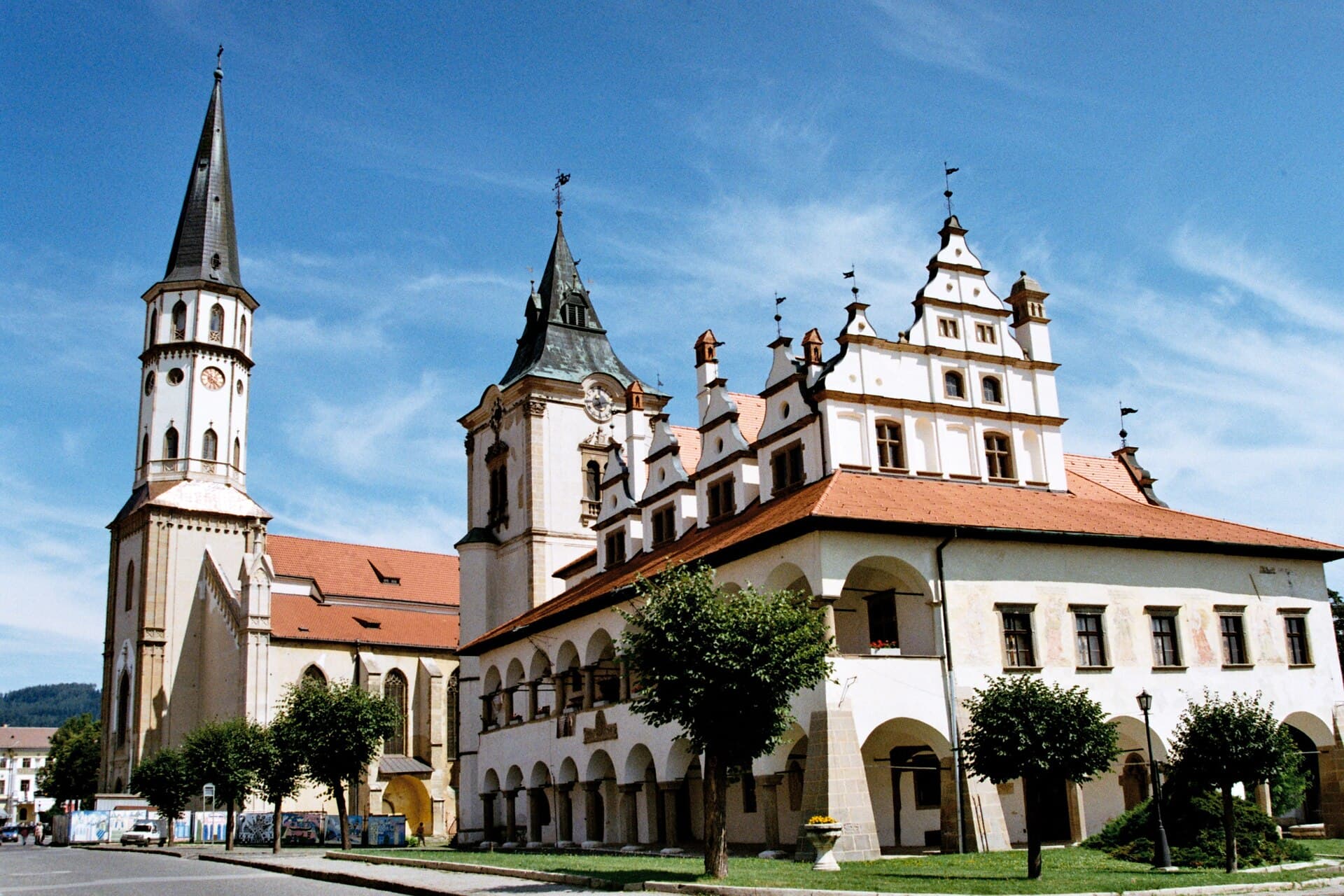 Pudelek / CC BY-SA 3.0, via Wikimedia Commons
Samodzielna audio-wycieczka po Levoča — trasa GPS pieszo, odtwarzanie offline, wciągająca narracja w 32 językach.
“Where Gothic spires meet Renaissance facades, and history breathes from every ancient stone.”
Nie pocztówki. Historie, których nawet miejscowi nie znają — szeptane do ucha, dokładnie tam, gdzie się wydarzyły.
Najwyższy na świecie drewniany ołtarz gotycki kryje sekret w swoich misternych rzeźbach.
Ta klatka z kutego żelaza na głównym placu służyła kiedyś do karania drobnych wykroczeń, ale jej projekt kryje zaskakujący szczegół.
Pełne alegorii freski na południowej fasadzie Ratusza to coś więcej niż tylko dekoracja.
Odkryj każdy sekret Levoča
Każdy adres, każde pełne odkrycie — w Twoim uchu, dokładnie tam, gdzie się wydarzyło.
Ty wybierasz przystanki. Ty spacerujesz. Głos ujawnia to, co inni przegapiają.
Twój samodzielny audioprzewodnik po Levoča jest gotowy — wybierz swoje punkty orientacyjne, wybierz język i rozpocznij w momencie przybycia.
KupLume ma wbudowanego przewodnika w rozszerzonej rzeczywistości. Unieś telefon: kamera pokazuje ulicę przed tobą, a na rzeczywistym obrazie świeci strzałka, która zawsze wskazuje twój następny przystanek — bez rozszyfrowywania mapy, bez błędnych skrętów. Jak wszystko w Lume, działa całkowicie offline.
Levoča, a UNESCO World Heritage site in eastern Slovakia, is a town where the past feels remarkably present. Its historic center, almost entirely encircled by medieval walls, offers a journey through centuries of European history. The town's central square, named after the renowned Master Pavol, is one of Central Europe's largest medieval squares, lined with over 50 well-preserved Gothic and Renaissance merchant houses.
Walking through Levoča feels like stepping into a living museum, where every corner reveals architectural treasures and stories of its prosperous past as a significant trading and cultural hub. From the soaring spires of its churches to the intricate details of its burgher houses, Levoča invites a closer look, revealing layers of history that have shaped this Slovakian city.
Levoča's origins trace back to the Stone Age, with the region of Spiš becoming part of the Kingdom of Hungary in the 11th century. After the Mongol invasions of 1241-1242, German settlers, known as Zipser Germans, were brought in to repopulate and stimulate the economy. The first written mention of Levoča, then known as Leucha, dates to 1249. By 1317, it had achieved the status of a royal town, and in 1321, it was granted extensive concessions that attracted merchants, craftsmen, and mine developers.
The 15th century marked a period of significant prosperity for Levoča. Situated at the intersection of vital trade routes between Poland and Hungary, the town flourished as a center of commerce, exporting goods like iron, copper, furs, leather, corn, and wine. This economic boom fostered a deep cultural environment, making Levoča an important center of Renaissance and humanism in Northern Hungary. English humanist Leonard Cox taught in a Levoča school around 1520, and a prolific printing plant operated in the town for 150 years starting in 1624. It was also during this time that Master Pavol of Levoča, one of the most renowned medieval woodcarvers, settled here, leaving an indelible mark on the town's artistic heritage.
Despite two devastating fires in 1550 and 1599, which destroyed much of its Gothic architecture, Levoča retained its cultural and economic standing until the late 16th century. The town began to decline during the anti-Habsburg uprisings of the 17th century. In the 1840s, Levoča became a center of the Slovak National Movement, and the current Slovak national anthem was heard here for the first time. In 2009, Levoča was added to the UNESCO World Heritage List, recognized for its remarkably preserved Old Town.
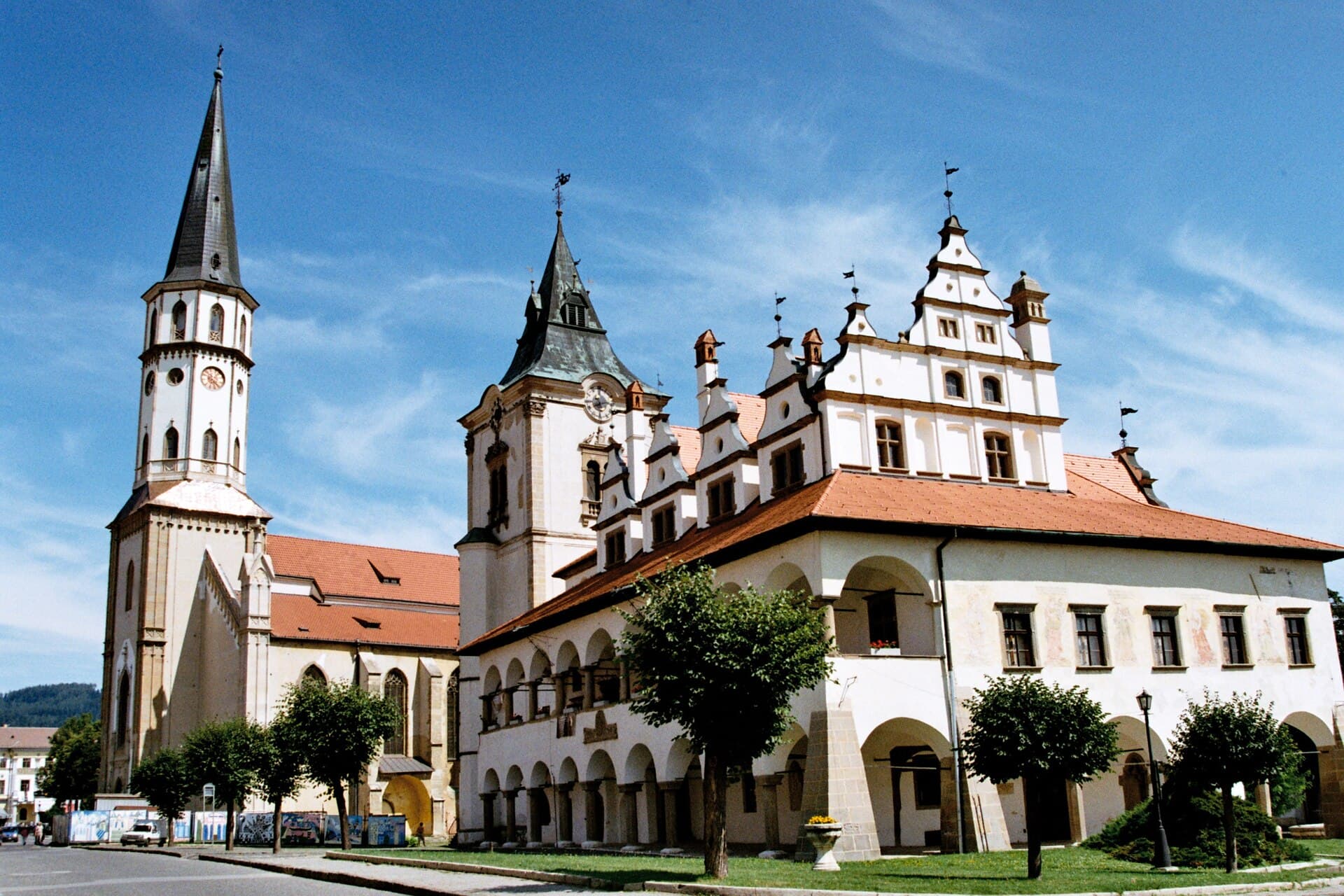
Levoča's main square, Námestie Majstra Pavla, is the town's beating heart. Here, you'll find the imposing St. James's Basilica, a Gothic church that houses the world's tallest wooden Gothic altar, a masterpiece by Master Pavol of Levoča, standing at 18.62 meters (61.1 ft). The church itself is the second largest in Slovakia and contains a unique collection of medieval sacral art, including 13 other altars. Adjacent to the basilica is the Renaissance Town Hall, a beautiful arcaded building that now houses a branch of the Spiš Museum, showcasing the town's past. In front of the Town Hall stands the 16th-century wrought-iron Cage of Shame, a historical curiosity.
The square is also encircled by over 50 historic burgher houses, many retaining their original Gothic and Renaissance features. Among them, the Thurzo House, a 15th-century Renaissance palace, is particularly noteworthy for its sgraffito decoration and historical significance, having been owned by a prominent Hungarian magnate family. Just a short distance from the town center, Mariánska Hora (Marian Hill) is a significant pilgrimage site, offering expansive views of Levoča and the surrounding countryside.
Levoča can be visited year-round, but late spring, summer, and early autumn offer the most pleasant weather for exploring. From May to September, temperatures are comfortable, ranging from 18°C to 23°C (64°F to 73°F), and the countryside is at its greenest. For a lively experience, consider visiting during the Tajomná Levoča (Mysterious Levoča) festival, typically held in early summer, when the main square comes alive with music, performances, and markets. For a quieter visit, the shoulder seasons of spring and autumn offer fewer crowds and an atmospheric charm.
Levoča is easily accessible and walkable, making it ideal for self-guided exploration. The town center is compact, with most major sights within a short distance of each other. If arriving by public transport, Levoča is about a 40-minute bus ride from Poprad or a 20-minute ride from Spišská Nová Ves, which is on Slovakia's main east-west train route. While guided tours are available, the town is straightforward to navigate independently. The Tourist Information Office, located on Námestie Majstra Pavla, can provide maps and information. Accommodation options include converted burgher houses within the old town and pensions on Športová Street. For those interested in a unique experience, consider visiting Spiš Castle in the morning and then continuing to Levoča for an afternoon of exploration.
Levoča in koreański, in chiński or in hebrajski — and 29 more languages, every stop narrated by a native voice. The widest language range of any self-guided audio tour.
Available in: