Parque Kaylaka
El Parque Kaylaka, una querida extensión verde, guarda un secreto geológico grabado en sus paredes rocosas.
La historia completa se desbloquea en el tour
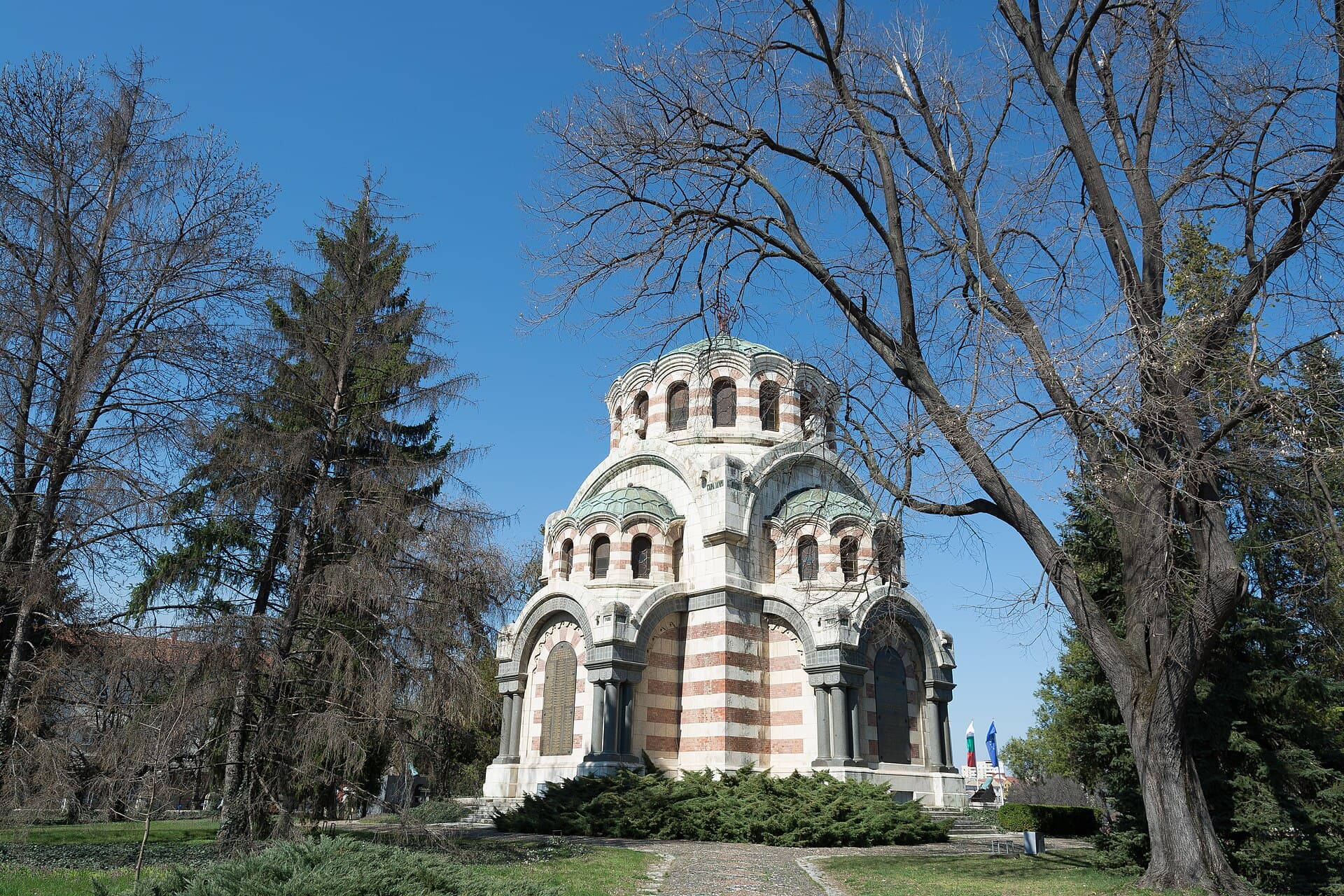 Nikolai Karaneschev / CC BY 3.0, via Wikimedia Commons
Tour de audio autoguiado de Pleven — ruta GPS a pie, reproducción offline, narración en 32 idiomas.
“Donde los ecos de la historia se encuentran con el susurro de la vid.”
No las postales. Las historias que ni los locales conocen — al oído, justo donde ocurrieron.
El Parque Kaylaka, una querida extensión verde, guarda un secreto geológico grabado en sus paredes rocosas.
Pleven se erige como una importante región vinícola, y su singular Museo del Vino alberga una colección que se extiende mucho más allá de las añadas típicas.
Pleven stands as a significant winemaking region, and its singular Wine Museum holds a collection that extends far beyond typical vintages.
Descubre todos los secretos de Pleven
Cada dirección, cada revelación al completo — a tu oído, justo donde ocurrió.
Eliges tus paradas. Caminas. La voz te revela lo que los demás ignoran.

Tu tour de audioguía por Pleven te espera — elige tus lugares, tu idioma y empieza al llegar.
ComprarLume incluye una guía de realidad aumentada. Levanta el móvil y su cámara muestra la calle que tienes delante, con una flecha luminosa sobre la imagen real que siempre apunta a tu próxima parada — sin mapas que descifrar, sin giros equivocados. Como todo en Lume, funciona completamente sin conexión.
Pleven, la séptima ciudad más poblada de Bulgaria, es un lugar donde la historia resuena profundamente, particularmente por el decisivo Asedio de Pleven en 1877. Esta ciudad del norte de Bulgaria, un centro administrativo y económico, ofrece una mezcla de reflexión histórica y vida contemporánea. Encontrará amplios bulevares, impresionantes monumentos y grandes espacios verdes, todo lo cual contribuye a una atmósfera relajada y acogedora.
Más allá de su importancia histórica, Pleven funciona como un centro agrícola, abrazado por bajas colinas de piedra caliza dentro de la llanura danubiana. La ciudad también sirve como un punto focal cultural, con teatros, galerías y una animada cultura de cafés. Ya sea que se sienta atraído por su pasado, su belleza natural o su encanto local, Pleven ofrece una experiencia gratificante para aquellos que eligen explorar más allá de los caminos turísticos trillados.
Los orígenes de Pleven se remontan al V milenio a.C., con los primeros vestigios de asentamientos humanos del Neolítico. A lo largo de los siglos, la tierra fue ocupada por los imperios tracio, romano y bizantino antes de caer bajo el dominio otomano durante aproximadamente cinco siglos. Durante la Edad Media, Pleven fue una fortaleza bien desarrollada tanto del Primer como del Segundo Imperio Búlgaro. Incluso bajo el dominio otomano, la ciudad, entonces conocida como Plevne, mantuvo su carácter y cultura búlgaros.
El siglo XIX trajo importantes desarrollos durante el Renacimiento Nacional Búlgaro, con la construcción de iglesias, escuelas y puentes. En 1825, Pleven vio la apertura de su primera escuela laica, seguida por la primera escuela de niñas en Bulgaria en 1840, y una escuela de niños un año después. Un momento crucial en la historia búlgara se desarrolló aquí en 1869 cuando el héroe nacional Vasil Levski estableció el primer comité revolucionario en Pleven, sentando las bases para el movimiento de independencia.
El período más definitorio en la historia de Pleven es sin duda la Guerra Ruso-Turca de 1877-78. La ciudad se hizo internacionalmente conocida por el asedio de Plevna de cinco meses, un enfrentamiento brutal y prolongado que resultó crucial para la liberación de Bulgaria del dominio otomano. Las fuerzas rusas y rumanas se enfrentaron a formidables defensas erigidas por el general Osman Nuri Pasha, con tres asaltos rusos repelidos con grandes pérdidas. La eventual caída de la ciudad el 10 de diciembre de 1877, despejó el camino para la independencia búlgara. Hoy, más de 200 monumentos de guerra en todo Pleven sirven como un recordatorio constante de este conflicto fundamental.
Pleven ofrece una variedad de lugares de interés, muchos de ellos relacionados con su importante historia militar. El Panorama de Pleven es una experiencia profunda, un museo monumental que representa el tercer y más sangriento asalto del Asedio de Plevna en una pintura de 360 grados, ubicado dentro del Parque Skobelev. También dentro del Parque Skobelev hay numerosos monumentos y un osario, que marcan los campos de batalla reales.
Para una inmersión más profunda en el pasado de la región, el Museo Histórico Regional de Pleven es uno de los más grandes de Bulgaria, albergando artefactos de los períodos tracio, romano y medieval, incluidos hallazgos de la ciudad romana de Ulpia Oescus y la fortaleza de Storgozia. El Mausoleo de la Capilla de San Jorge el Conquistador se encuentra en el centro de la ciudad, honrando a los soldados rusos y rumanos que murieron durante el asedio.
Más allá de la historia militar, el Parque Kaylaka ofrece un escape natural con su valle kárstico, acantilados escarpados y las ruinas de la fortaleza romana de Storgosia. El parque cuenta con estanques, áreas recreativas y el distintivo Museo del Vino, ubicado dentro de una cueva natural.
Pleven experimenta un clima continental con inviernos fríos y veranos calurosos. Las épocas más agradables para visitar son durante la primavera (mediados de mayo a mediados de junio) y el otoño (mediados de septiembre a mediados de octubre) para temperaturas más cómodas y un calor menos intenso. Mayo, junio y septiembre generalmente ofrecen las condiciones climáticas más óptimas. Los veranos, particularmente julio y agosto, pueden ser cálidos, con temperaturas que a veces superan los 38°C (100°F). Los inviernos son fríos con nieve, y las temperaturas pueden descender por debajo de los -20°C (-4°F).
El idioma oficial en Pleven es el búlgaro, aunque también se habla ruso e inglés, con algo de alemán y francés ocasionalmente. La moneda local es el Lev búlgaro (BGN). Pleven está bien conectado por carretera y ferrocarril, con rutas que pasan por Sofía, Varna, Ruse, Plovdiv, Veliko Tarnovo y Lovech. También sirve como nudo ferroviario para líneas internacionales. Moverse por la ciudad suele ser más fácil a pie, especialmente alrededor del centro de la ciudad y el área del Panorama, donde muchas atracciones, restaurantes y cafeterías están a poca distancia. Para cenar, Pleven ofrece una variedad de cocinas, incluyendo platos tradicionales búlgaros, así como opciones internacionales como italiana, china, griega y sushi.
Pleven en coreano, en chino o en hebreo — y 29 idiomas más, cada parada narrada por una voz nativa. La mayor variedad de idiomas de cualquier audioguía autoguiada.
Disponible en: