Planetario de Smolyan
No es solo un observatorio; es un lugar donde las estrellas despliegan narrativas, incluso para los exploradores más jóvenes.
La historia completa se desbloquea en el tour
 Rumen Evtimov / CC BY 3.0, via Wikimedia Commons
Tour de audio autoguiado de Smolyan — ruta GPS a pie, reproducción offline, narración en 32 idiomas.
“Donde los ecos ancestrales se encuentran con el cielo de Ródope.”
No las postales. Las historias que ni los locales conocen — al oído, justo donde ocurrieron.
No es solo un observatorio; es un lugar donde las estrellas despliegan narrativas, incluso para los exploradores más jóvenes.
Antaño, muchos más 'ojos esmeralda' reflejaban el cielo de Ródope, pero el paso del tiempo ha alterado su número.
Una notable formación rocosa cerca de Smolyan lleva una designación romántica, aunque algo enigmática.
Descubre todos los secretos de Smolyan
Cada dirección, cada revelación al completo — a tu oído, justo donde ocurrió.
Eliges tus paradas. Caminas. La voz te revela lo que los demás ignoran.


Tu tour de audioguía por Smolyan te espera — elige tus lugares, tu idioma y empieza al llegar.
ComprarLume incluye una guía de realidad aumentada. Levanta el móvil y su cámara muestra la calle que tienes delante, con una flecha luminosa sobre la imagen real que siempre apunta a tu próxima parada — sin mapas que descifrar, sin giros equivocados. Como todo en Lume, funciona completamente sin conexión.
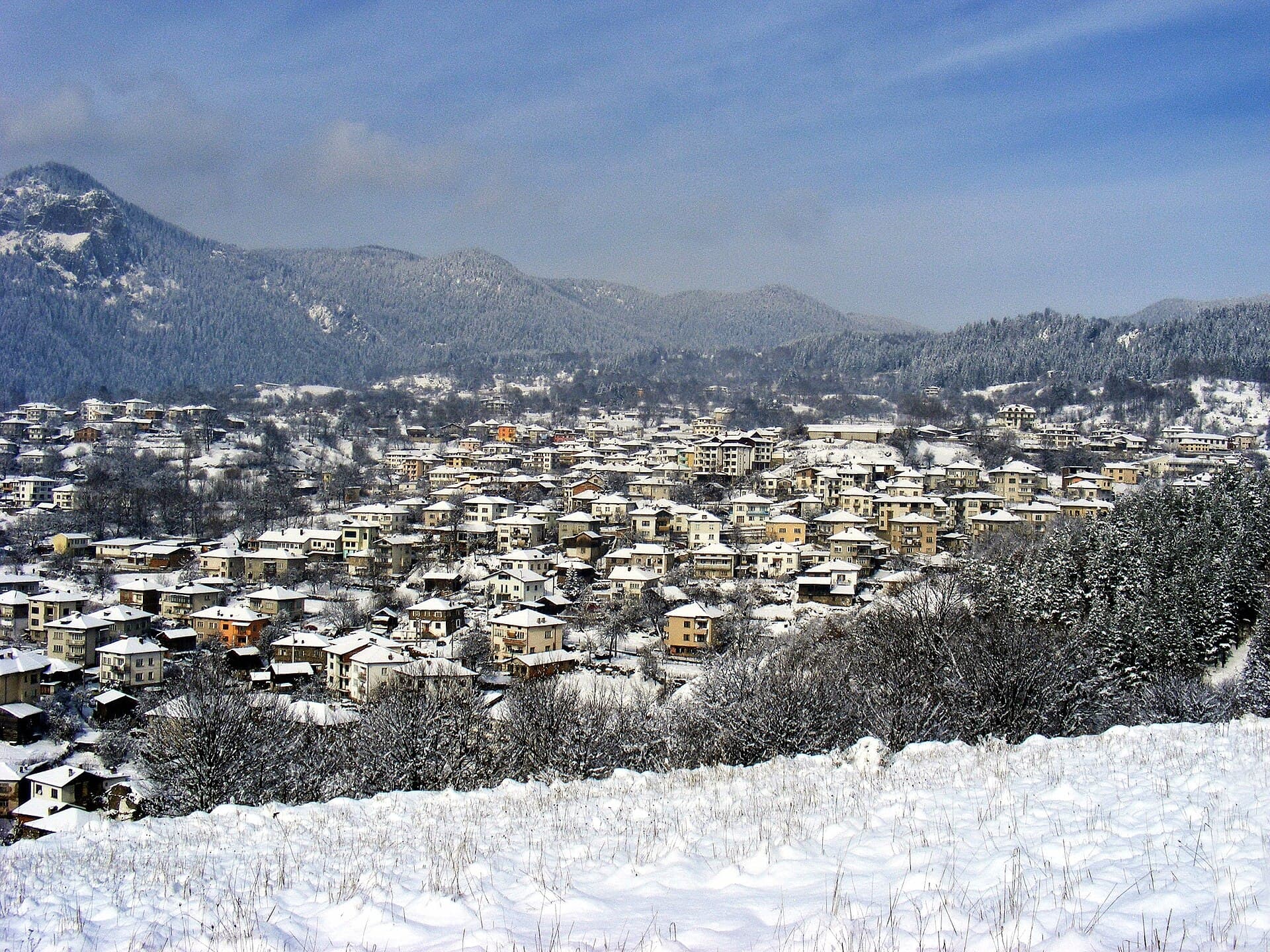
Smolyan, situada en el corazón de las montañas Ródope en el sur de Bulgaria, es una ciudad donde la grandeza de la naturaleza y un rico tejido cultural se entrelazan. Extendiéndose a lo largo del estrecho valle del río Cherna, la ciudad sirve como entrada a un paisaje de impresionantes gargantas, formaciones rocosas distintivas y numerosas cascadas. Con una elevación de aproximadamente 1.000 metros, Smolyan ofrece un clima de montaña particular, proporcionando un santuario fresco en verano y una extensión nevada en invierno.
Más allá de un interludio escénico, Smolyan funciona como el núcleo administrativo e industrial de la provincia de Smolyan. La ciudad misma se formó en 1960 mediante la amalgama de tres asentamientos distintos: Smolyan, Raykovo y Ustovo, cada uno contribuyendo al carácter arquitectónico e histórico de la ciudad. Su cercanía a las populares estaciones de esquí de Pamporovo y Chepelare la establece aún más como un destino durante todo el año tanto para el reposo como para la aventura.
La historia de la región de Smolyan se remonta milenios, con los hallazgos arqueológicos más tempranos datando de finales de la Edad del Bronce, alrededor del siglo XIII a.C. Las montañas Ródope, donde se encuentra Smolyan, están impregnadas de la antigua tradición tracia, creyéndose que son el lugar de nacimiento del mítico músico Orfeo. Santuarios en el pico Kom y necrópolis cerca de los pueblos de Gela y Stoykite ofrecen conexiones tangibles con esta era antigua, con evidencia del siglo XI a.C.
Para los siglos IV y V d.C., los tracios de la región habían abrazado el cristianismo, como lo indican numerosas basílicas paleocristianas de los siglos VII al IX. La ciudad misma deriva su nombre de la tribu eslava de los Smolyani, que se asentaron en la región durante el siglo VII. Durante la Edad Media, el área estuvo bajo el dominio de los imperios bizantino y búlgaro. Durante un período en el siglo XIV, fue gobernada por el señor feudal búlgaro Momchil antes de ceder finalmente al dominio otomano.
Después de la conquista otomana, la región de los Ródope Centrales fue otorgada al médico de la corte Aha Chelebi por decreto de un sultán en 1519, lo que llevó a que el área fuera reconocida como Ahachelebi. La ciudad fue renombrada "Paşmaklı" durante el período otomano y siguió siendo una ciudad de mayoría musulmana con una notable minoría cristiana hasta 1912. La región fue liberada durante la Primera Guerra de los Balcanes en 1912 por el 21º Regimiento de Sredna Gora. El nombre "Smolyan" fue adoptado oficialmente en 1934, reemplazando su designación de la era otomana.
La ciudad contemporánea de Smolyan se estableció formalmente en 1960 mediante la unificación de tres pueblos previamente separados: Smolyan, Raykovo y Ustovo. Esta fusión reunió estilos arquitectónicos distintos, con el Complejo Arquitectónico de Casas Antiguas en el Barrio de Cheshitska, Raykovo, mostrando impresionantes casas del Renacimiento Nacional Búlgaro del siglo XIX. Hoy en día, Smolyan continúa su crecimiento, equilibrando su herencia histórica y cultural preservada con su papel como un moderno centro administrativo y turístico.
Smolyan presenta una fusión de maravillas naturales y destinos culturales. Los Lagos de Smolyan, frecuentemente llamados los 'ojos esmeralda de los Ródope', forman una cadena de siete lagos glaciares supervivientes, ideales para paseos tranquilos, camping y pesca. Cerca, el Sendero Ecológico Nevyastata asciende a la icónica Roca Nevyastata, ofreciendo vistas expansivas de las montañas circundantes.
Para un viaje a través del cosmos, el Planetario de Smolyan es el más grande de Bulgaria, ofreciendo atractivas sesiones en la sala estelar y oportunidades para observaciones con telescopio. Adéntrese en el pasado de la región en el Museo de Historia Regional Stoyu Shishkov, que alberga aproximadamente 150.000 artículos que detallan la extensa historia y cultura de la zona. La Catedral de San Vissarion de Smolyan, consagrada en 2006, se erige como el templo ortodoxo más grande del sur de Bulgaria.
Fuera de la ciudad, explore el Sendero Ecológico del Cañón de las Cascadas, una ruta pintoresca con numerosas cascadas y puentes de madera. Los Agushevi Konatsi en el pueblo de Mogilitsa, un monumento arquitectónico y artístico, es el conjunto feudal más grande conservado en los Balcanes, con 221 ventanas, 86 puertas y 24 chimeneas. Para una exploración más atrevida, considere una aventura en buggy en el cercano Pamporovo o paseos a caballo por el Cañón de las Cascadas.
El momento óptimo para visitar Smolyan depende de sus actividades preferidas. Para actividades de clima cálido como senderismo, ciclismo de montaña y exploración de los lagos, los meses de verano de junio a septiembre ofrecen temperaturas agradables, con un promedio de entre 18°C y 25°C. Julio y agosto son los más cálidos, con temperaturas diurnas promedio que alcanzan los 25°C. Si su objetivo es esquiar y hacer snowboard, el invierno ofrece condiciones frías y nevadas, típicamente de diciembre a marzo. La primavera (abril-mayo) y el otoño (septiembre-octubre) ofrecen un clima más templado, menos multitudes y paisajes naturales vívidos, perfectos para tours culturales y visitas turísticas.
El Lev búlgaro (BGN) es la moneda local. Aunque se aceptan tarjetas de crédito en muchos lugares, es aconsejable llevar algo de efectivo, especialmente para establecimientos más pequeños o en zonas más rurales. El idioma oficial es el búlgaro; sin embargo, el inglés se habla con frecuencia en las zonas turísticas. El dialecto local de Smolyan es bastante distinto, incluso de otros dialectos búlgaros, debido al aislamiento histórico de la región.
Se puede llegar a Smolyan en autobús desde las principales ciudades búlgaras como Sofía y Plovdiv. El aeropuerto de Plovdiv (PDV) es el aeropuerto importante más cercano, a aproximadamente 90 km de distancia, con servicios de autobús y alquiler de coches disponibles para el viaje a Smolyan. Dentro de Smolyan, las opciones de transporte público incluyen autobuses locales. También hay traslados privados disponibles desde ciudades como Plovdiv y Sofía.
El alojamiento abarca desde pequeños hoteles en la ciudad hasta opciones en pueblos vecinos y la estación de Pamporovo. Los restaurantes locales sirven platos tradicionales de los Ródope.
Smolyan en coreano, en chino o en hebreo — y 29 idiomas más, cada parada narrada por una voz nativa. La mayor variedad de idiomas de cualquier audioguía autoguiada.
Disponible en: