El Museo de la Sal
El 'oro blanco' de Pomorie tuvo un valor tan inmenso que otorgó a la ciudad privilegios extraordinarios.
La historia completa se desbloquea en el tour
 Boby Dimitrov from Sofia, Bulgaria / CC BY-SA 2.0, via Wikimedia Commons
Tour de audio autoguiado de Pomorie — ruta GPS a pie, reproducción offline, narración en 32 idiomas.
“Donde la herencia ancestral converge con las aguas restauradoras a lo largo del Mar Negro.”
No las postales. Las historias que ni los locales conocen — al oído, justo donde ocurrieron.
El 'oro blanco' de Pomorie tuvo un valor tan inmenso que otorgó a la ciudad privilegios extraordinarios.
Un bey turco, lidiando con una enfermedad incurable, descubrió un remedio inesperado y una fe profunda en Pomorie.
Esta antigua tumba guarda una profunda comprensión de la vida y el renacimiento de la civilización tracia.
Descubre todos los secretos de Pomorie
Cada dirección, cada revelación al completo — a tu oído, justo donde ocurrió.
Eliges tus paradas. Caminas. La voz te revela lo que los demás ignoran.


Tu tour de audioguía por Pomorie te espera — elige tus lugares, tu idioma y empieza al llegar.
ComprarLume incluye una guía de realidad aumentada. Levanta el móvil y su cámara muestra la calle que tienes delante, con una flecha luminosa sobre la imagen real que siempre apunta a tu próxima parada — sin mapas que descifrar, sin giros equivocados. Como todo en Lume, funciona completamente sin conexión.
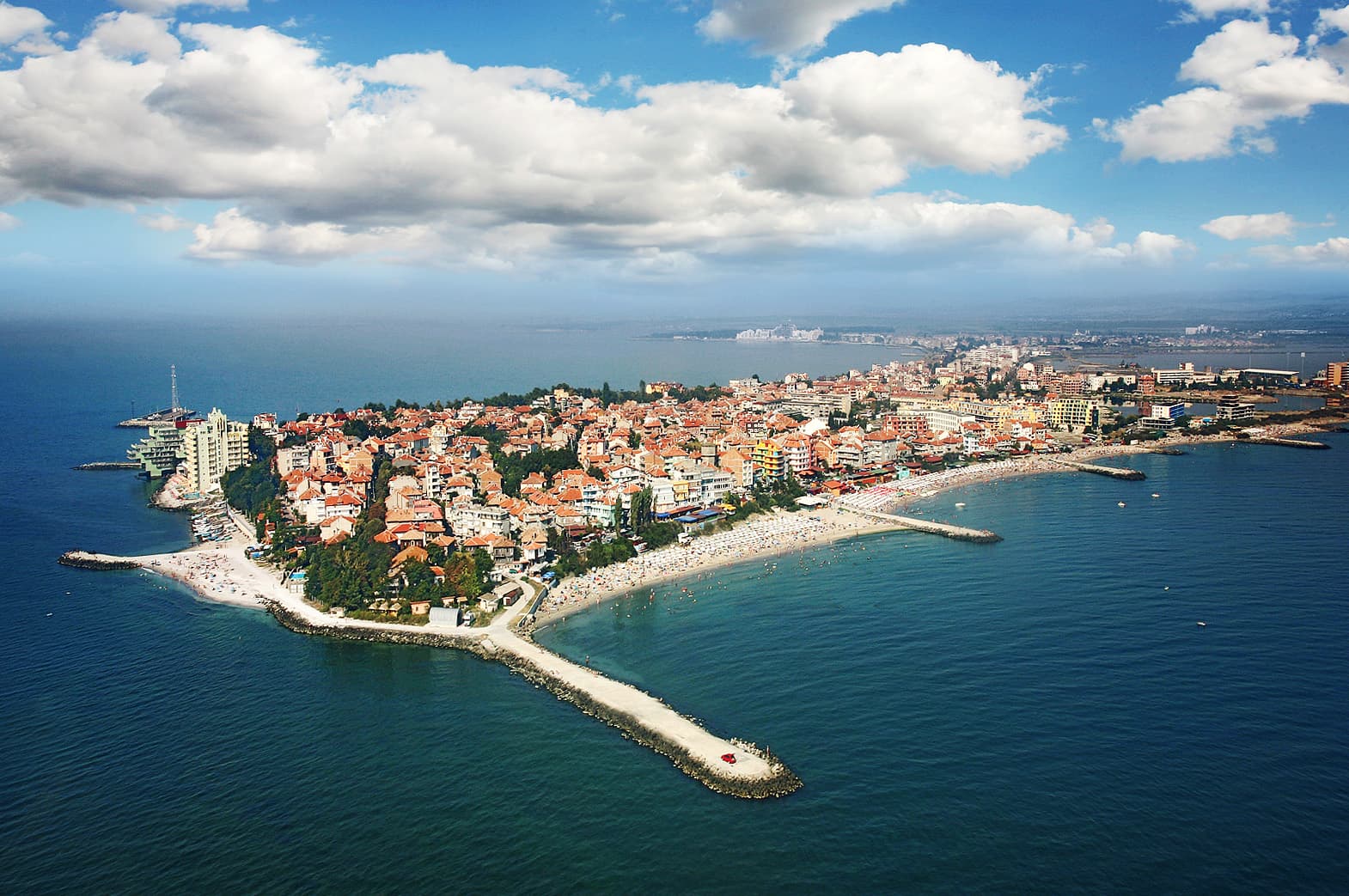
Pomorie, históricamente conocida como Anchialos, es una ciudad búlgara del Mar Negro situada en una esbelta y rocosa península dentro de la Bahía de Burgas. Con una crónica que abarca más de veinticinco siglos, entrelaza con gracia sus orígenes antiguos con su identidad contemporánea como un apreciado balneario y centro de SPA. La ciudad es célebre por su lodo y lejía terapéuticos, extraídos del hipersalino Lago Pomorie, sustancias empleadas para la curación desde la era de los tracios.
Más allá de sus aguas restauradoras, Pomorie ofrece una experiencia costera distintiva con sus características playas de arena oscura y rica en hierro, que se extienden de cinco a siete kilómetros. El lecho marino poco profundo y suavemente inclinado la convierte en un destino seguro para familias y aquellos que se inician en la natación. El clima agradable de la ciudad, que presume de más de 2.360 horas de sol anualmente y cálidas temperaturas del mar, realza su atractivo como un refugio durante todo el año para la relajación y la revitalización.
Las primeras indicaciones de presencia humana en Pomorie se remontan al Neolítico en el 6º milenio a.C. La ciudad fue establecida como la colonia griega de Anchialos en el siglo V a.C., probablemente por colonos de Apolonia (actual Sozopol). El nombre Anchialos en sí mismo refleja su cercanía al mar y la sal, derivado de términos griegos antiguos que significan 'cerca' y 'mar' o 'sal'.
Bajo el dominio romano, Anchialos prosperó, evolucionando hasta convertirse en un importante puerto y un refugio para la aristocracia romana, incluso acuñando su propia moneda. La ciudad se expandió considerablemente en el siglo II d.C. El cristianismo llegó a la antigua Anchialos ya a finales del siglo I, con tradiciones que sugieren que el Apóstol Andrés visitó la ciudad. Para los siglos III y IV, había establecido obispos, y en los siglos V-VI, la Iglesia de Anchialos fue declarada arzobispado.
A lo largo de los imperios bizantino y búlgaro, Anchialos desempeñó un papel fundamental en numerosos conflictos, cambiando de manos repetidamente. Fue conquistada por Khan Krum en 812 y más tarde pasó a formar parte de una nueva organización eclesiástica búlgara en 894. Todavía se pueden encontrar restos de antiguas basílicas bizantinas y murallas de fortaleza de este período. Durante la era otomana, la ciudad, entonces identificada como Ahyolu, siguió siendo un importante centro cristiano. Sin embargo, sufrió destrucción e incendios a lo largo de los siglos, incluida una gran conflagración en 1906 durante disturbios antigriegos, que provocó la emigración de miles de griegos locales.
Pomorie fue liberada del dominio otomano el 7 de febrero de 1878. En 1934, Anchialos fue oficialmente renombrada Pomorie, que significa 'junto al mar' en búlgaro. El siglo XX vio a Pomorie establecerse como un prominente balneario, con la apertura de la primera instalación de fangoterapia del país en 1902. Hoy en día, la ciudad continúa sus tradiciones en viticultura, producción de vino, pesca y, notablemente, producción de sal, que ha sido indispensable para la región durante milenios.
Comience su exploración en el Museo de la Sal, el único museo especializado al aire libre de sal en el sudeste de Europa. Aquí, puede observar el antiguo método de Anchialos de producción de sal marina mediante evaporación solar, una práctica que se remonta al siglo V a.C. El museo presenta una colección de fotografías, herramientas auténticas y ofrece recorridos por las salinas operativas.
Descubra la Tumba Colmena Tracia, situada a solo dos kilómetros al oeste de Pomorie. Esta distintiva tumba de la época romana del siglo III fusiona estilos arquitectónicos tracios y romanos, presentando un largo pasaje que conduce a una cámara circular con una columna hueca. Su propósito sigue siendo objeto de teorías fascinantes, que van desde un mausoleo para una próspera familia de Anchialos hasta un santuario para ceremonias paganas.
Visite el Monasterio de San Jorge, uno de los pocos monasterios masculinos continuamente activos a lo largo de la costa del Mar Negro. Aunque el actual monasterio data de 1856, sus orígenes se remontan a un templo cristiano del siglo VII. El monasterio es célebre por su milagroso manantial curativo y alberga valiosos iconos de los siglos XVIII y XIX.
Pasee por la Reserva Arquitectónica 'Casas Antiguas de Pomorie' para experimentar la atractiva arquitectura histórica de la ciudad. Disfrute de las ventajas terapéuticas del Lago Pomorie, una laguna hipersalina reconocida por su lodo y lejía curativos, que puede experimentar en sanatorios oficiales o en áreas públicas designadas. El lago es también un hábitat crucial para más de 270 especies de aves, lo que lo convierte en un excelente lugar para la observación de aves a lo largo de la ruta migratoria Via Pontica.
Pomorie experimenta un clima subtropical húmedo con veranos largos y cálidos e inviernos suaves. El momento más oportuno para actividades de clima cálido y disfrutar de las playas es desde principios de julio hasta finales de agosto, cuando las temperaturas máximas diarias promedio rondan los 28-29°C (82-84°F) y las temperaturas del mar alcanzan los 23-25°C (73-76°F). La temporada de verano generalmente se extiende desde mediados de mayo hasta finales de septiembre. Para aquellos interesados en la terapia de sol y mar, el clima permite visitas desde principios de primavera hasta finales de otoño.
Pomorie es una ciudad fácilmente transitable a pie, particularmente su centro compacto, lo que permite un acceso conveniente a muchas atracciones. Para viajes regionales, una red de autobuses confiable conecta Pomorie con ciudades cercanas como Burgas, Varna y Nesebar. Hay dos estaciones de autobuses en Pomorie: una en la parte antigua de la ciudad y otra más pequeña, a menudo más concurrida, en la sección más nueva, que puede ofrecer boletos ligeramente más económicos para ciertas rutas. Si bien el ciclismo es práctico alrededor de Pomorie debido a su terreno llano, los carriles bici dedicados dentro de la ciudad son limitados. La moneda local es el Lev búlgaro (BGN). El idioma oficial es el búlgaro.
Pomorie en coreano, en chino o en hebreo — y 29 idiomas más, cada parada narrada por una voz nativa. La mayor variedad de idiomas de cualquier audioguía autoguiada.
Disponible en: