Faro Negro de Queenscliff
Este faro no es solo negro; es una de las tres únicas estructuras de este tipo en el mundo, y su historia de construcción está velada por dos relatos contrapuestos.
La historia completa se desbloquea en el tour
 Airviewonline.com / CC BY-SA 3.0 au, via Wikimedia Commons
Tour de audio autoguiado de Queenscliff — ruta GPS a pie, reproducción offline, narración en 32 idiomas.
“La elegancia victoriana se encuentra con el indómito drama costero en la entrada de la bahía de Port Phillip.”
No las postales. Las historias que ni los locales conocen — al oído, justo donde ocurrieron.
Este faro no es solo negro; es una de las tres únicas estructuras de este tipo en el mundo, y su historia de construcción está velada por dos relatos contrapuestos.
Bajo la tranquila superficie de Swan Bay, se dice que descansa la fortuna de un legendario pirata, custodiada por una dramática historia de pólvora y una muerte súbita.
El gran Hotel Ozone lleva el nombre de una embarcación que tuvo un final inusual, y ahora cumple un propósito inesperado justo frente a la costa.
Descubre todos los secretos de Queenscliff
Cada dirección, cada revelación al completo — a tu oído, justo donde ocurrió.
Eliges tus paradas. Caminas. La voz te revela lo que los demás ignoran.


Tu tour de audioguía por Queenscliff te espera — elige tus lugares, tu idioma y empieza al llegar.
ComprarLume incluye una guía de realidad aumentada. Levanta el móvil y su cámara muestra la calle que tienes delante, con una flecha luminosa sobre la imagen real que siempre apunta a tu próxima parada — sin mapas que descifrar, sin giros equivocados. Como todo en Lume, funciona completamente sin conexión.
Queenscliff, un pueblo marítimo con pasado, se asienta en la península de Bellarine, marcando la entrada a la bahía de Port Phillip en Victoria. Establecido en la década de 1850, se transformó rápidamente de un asentamiento pesquero en un puesto de defensa estratégico y un importante puerto de carga. Hoy en día, se presenta como un refugio costero, reconocido por su arquitectura de la época victoriana, sus vistas a la costa y un ambiente tranquilo. Queenscliff ofrece una mezcla de patrimonio duradero y esplendor natural, creando un destino distintivo para aquellos que buscan un respiro costero.
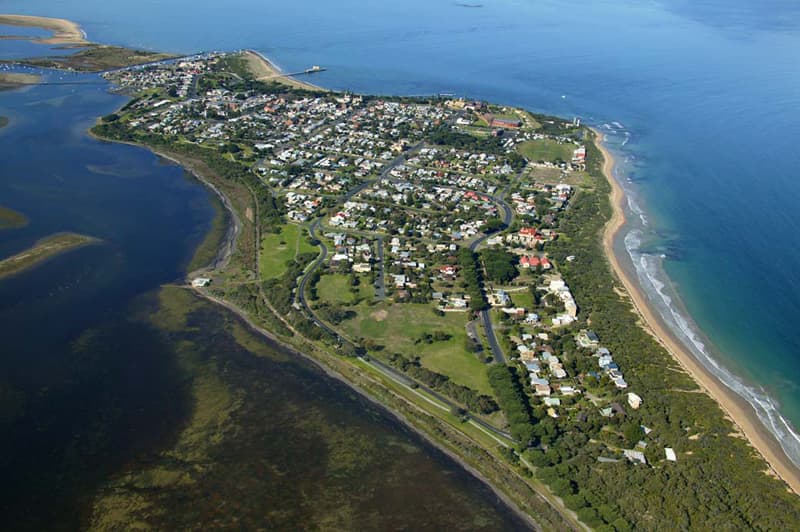
Rodeado de agua por tres lados, Queenscliff presenta una costa variada con extensiones de arena, formaciones rocosas e imponentes acantilados. El centro comercial del pueblo, Hesse Street, se define por sus escaparates y edificios históricos, incluido el elaborado Vue Grand Hotel, construido en 1881. Más allá de su atractivo arquitectónico, Queenscliff sirve como puerta de entrada a diversos ecosistemas marinos y ofrece una variedad de experiencias, desde explorar su pasado militar hasta saborear productos locales.
Antes de la llegada europea, el pueblo Wathawurung, una tribu de la Nación Kulin, habitaba la zona de Queenscliff, dependiendo de su vida marina durante milenios. El primer europeo en residir aquí fue William Buckley, un convicto fugitivo que se hizo amigo de los aborígenes locales, viviendo entre ellos durante 32 años, de 1803 a 1835. Exploradores europeos, incluidos el teniente John Murray y el capitán Matthew Flinders, llegaron en 1802. El asentamiento europeo permanente comenzó en 1836 con la llegada de colonos a lo que entonces se conocía como Whale Head, ahora Shortland's Bluff.
La venta de tierras comenzó en 1853, y el pueblo recibió su nombre oficial, Queenscliff, en 1854 del teniente Charles La Trobe, en honor a la Reina Victoria. Inicialmente un pueblo pesquero, Queenscliff se convirtió rápidamente en un puerto de carga esencial, sirviendo a los vapores que comerciaban dentro de Port Phillip. Un servicio de pilotaje marítimo se estableció en 1841 para guiar a los buques a través de la peligrosa entrada a la bahía, conocida como 'The Rip'. El notable Faro de Queenscliff (también llamado High Light o Faro Negro) fue erigido en 1862, reemplazando una estructura anterior de arenisca, y junto con el Low Light, formó una crucial 'línea de guía' para una navegación segura.
La ubicación estratégica de Queenscliff también le otorgó un importante papel militar. Entre 1879 y 1889, se construyó Fort Queenscliff, convirtiéndose en el centro de mando de una red de fuertes que protegían la bahía de Port Phillip. Alrededor de 1880, se consideraba el fuerte más fuertemente armado del hemisferio sur. El fuerte, una instalación militar activa, ofrece una visión convincente del pasado militar de Australia a través de visitas guiadas.
Finales del siglo XIX fueron testigos del ascenso de Queenscliff como un destino turístico favorito. Los visitantes llegaban de Melbourne en vapores de paletas como el Ozone, y la apertura de una línea ferroviaria a Geelong en 1879 estimuló aún más el turismo. Esta época vio la construcción de numerosos grandes hoteles, incluidos el Vue Grand Hotel (1883) y el Queenscliff Hotel (1887), que continúan contribuyendo al carácter victoriano del pueblo. Sin embargo, la llegada del automóvil en el siglo XX provocó una disminución en la prominencia de Queenscliff como centro de transporte, y el ferrocarril dejó de prestar servicios de pasajeros en 1950. El ferrocarril fue revitalizado más tarde en 1979 como un servicio de tren patrimonial, el Bellarine Railway, que sigue siendo una importante atracción turística.
Comience su exploración en Fort Queenscliff, una base militar activa que data de 1860. Las visitas guiadas ofrecen una visión de la historia militar de Australia, revelando edificios bien conservados y artefactos históricos. Dentro de los terrenos del fuerte, encontrará el Faro Negro de Queenscliff, una distintiva estructura de piedra azul y uno de los tres únicos faros negros a nivel mundial, el único en el hemisferio sur. Aunque el acceso interno al faro está restringido, su presencia única puede admirarse desde la distancia.
Pasee por Hesse Street, el centro comercial de Queenscliff, caracterizado por sus escaparates del siglo XIX y edificios históricos. Aquí descubrirá boutiques independientes, galerías de arte y acogedores cafés. El magnífico Vue Grand Hotel, construido en 1881, capta la atención a lo largo del paisaje urbano. Para una comprensión más profunda de la historia local, visite el Queenscliffe Historical Museum en Hesse Street y el Queenscliff Maritime Museum en Wharf Street.
Continúe hasta Queenscliff Harbour para observar flotas pesqueras, disfrutar de restaurantes frente al mar y contemplar las perspectivas de la bahía. El puerto cuenta con una torre de navegación de 30 metros de altura con una plataforma de observación que ofrece amplias vistas de Queenscliff y la bahía de Port Phillip. Desde el extremo este del puerto, los Searoad Ferries ofrecen una travesía panorámica a Sorrento en la península de Mornington. Para un viaje en el tiempo, suba a los trenes de vapor históricos de Bellarine Railway entre Queenscliff y Drysdale. La costa de Queenscliff también ofrece playas escénicas, formaciones rocosas y muelles, perfectos para pasear y apreciar el entorno natural.
Queenscliff experimenta un clima templado y suave con veranos cálidos e inviernos frescos y ventosos, lo que lo convierte en un destino atractivo durante todo el año. La época ideal para actividades de clima cálido se extiende desde principios de enero hasta mediados de marzo, cuando las temperaturas máximas diarias promedio superan los 21 °C (70 °F). La primavera (septiembre a noviembre) y el otoño (marzo a mayo) ofrecen períodos más tranquilos con condiciones agradables para caminar. El Festival de Música de Queenscliff a finales de noviembre es un evento importante, y el alojamiento se reserva con meses de antelación. Para el avistamiento de ballenas, el invierno australiano (junio, julio, agosto) ofrece oportunidades favorables para observar ballenas jorobadas y francas australes durante su migración.
Queenscliff está aproximadamente a 90 minutos en coche de Melbourne y a 30 minutos de Geelong por la autopista Bellarine. Alternativamente, puede tomar los Searoad Ferries desde Sorrento en la península de Mornington, que también admiten vehículos. Una vez en Queenscliff, el pueblo es compacto y se puede explorar fácilmente a pie. Hay aparcamiento en la calle y en los alrededores de Hesse Street, con aparcamientos más grandes en Queenscliff Harbour y la terminal de ferry. La mayoría de las opciones de alojamiento también incluyen aparcamiento.
El Centro de Información Turística de Queenscliffe, situado en 55 Hesse Street, abre todos los días de 9:00 a. m. a 5:00 p. m. (cerrado el día de Navidad) y ofrece consejos expertos, referencias de alojamiento e información sobre visitas patrimoniales. Muchos establecimientos en Queenscliff son accesibles, algunos ofrecen instalaciones para huéspedes con necesidades de visión, audición o movilidad reducida, así como acceso para sillas de ruedas. Tenga en cuenta que las mareas en Queenscliff están influenciadas por los ciclos lunares y solares, y es aconsejable consultar los horarios de las mareas antes de visitar las playas, ya que las mareas crecientes pueden crear corrientes fuertes.
Queenscliff en coreano, en chino o en hebreo — y 29 idiomas más, cada parada narrada por una voz nativa. La mayor variedad de idiomas de cualquier audioguía autoguiada.
Disponible en: