Rakvere Castle
Beyond the medieval reenactments and the impressive views, a specific room in Rakvere Castle offers a glimpse into a less-talked-about aspect of historical life.
Full story unlocks in the tour
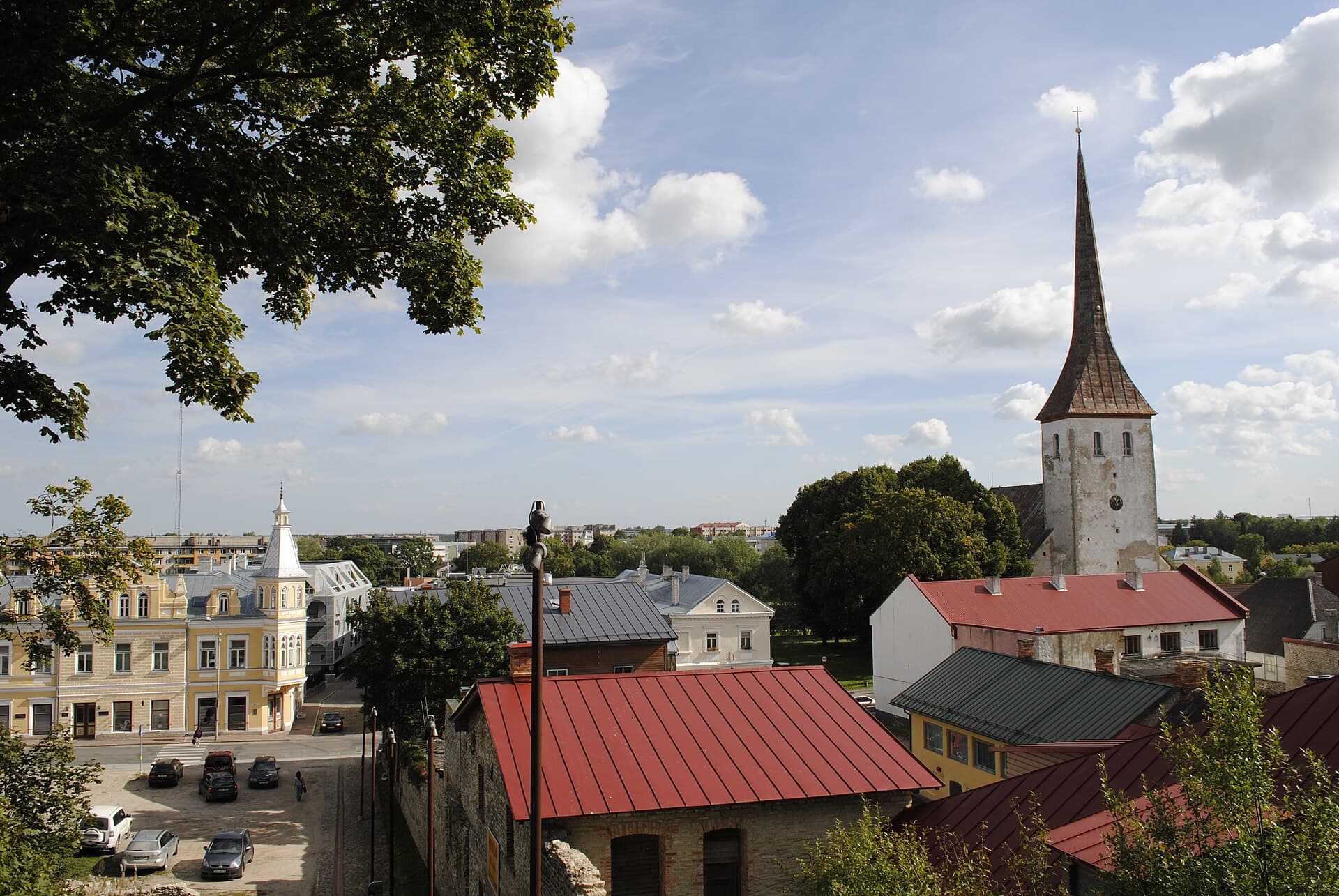 Daviidos / CC BY-SA 4.0, via Wikimedia Commons
Self-guided audio walking tour of Rakvere — GPS route, offline playback, story-driven narration in 32 languages.
“Where ancient stone meets contemporary spirit.”
Not the postcards. The stories even locals don't know — whispered in your ear, right where they happened.
Beyond the medieval reenactments and the impressive views, a specific room in Rakvere Castle offers a glimpse into a less-talked-about aspect of historical life.
The modern central square features unusual yellow canopies and a sculpture dedicated to a renowned Estonian composer, but there's a daily sonic tribute that might surprise you.
Rakvere is often considered the smallest city in Europe with a professional repertoire theatre, but the building itself holds a surprising architectural contrast.
Discover every secret of Rakvere
Every address, every reveal in full — in your ear, right where it happened.
You pick your stops. You walk. The voice reveals what the others miss.


Your self-guided audio tour of Rakvere is ready — pick your landmarks, choose your language, and start the moment you arrive.
BuyLume has a built-in augmented-reality guide. Hold your phone up and its camera shows the street ahead of you, with a glowing arrow laid over the real view that always points to your next stop — no map to puzzle over, no wrong turns. Like everything in Lume, it works fully offline.
Rakvere, the administrative center of Lääne-Viru County in northern Estonia, presents a compelling blend of deep history and modern character. Located approximately 100 km southeast of Tallinn, this city, once known as Wesenberg, is defined by its commanding 13th-century castle ruins and a forward-thinking cultural scene. Despite its relatively modest dimensions—it ranks as Estonia's fifth-largest city by some measures and the third most densely populated urban area—Rakvere maintains a distinctive personality, evident in its contemporary town square, numerous parks, and a reputation for hosting quirky punk music events and festivals.
The city's motto, "Väge täis" (Full of strength/might), reflects its enduring spirit and dynamic character. Rakvere has also gained recognition for its commitment to sustainability, receiving a Green Destinations Gold Award in 2023 and being the first city in Estonia to use only green energy for its street lighting. This blend of historical intrigue and modern initiatives makes Rakvere a unique destination for those seeking urban comforts within a rural Estonian setting.
From its ancient origins as a wooden stronghold to its current status as a smart city with a diverse cultural landscape, Rakvere invites exploration. Visitors can wander through renovated old town streets, discover unique architectural features like the "Rakvere door," and experience a town that embraces both its past and its future.
The earliest evidence of human settlement in the Rakvere area dates back to the 3rd to 5th centuries AD, with a wooden stronghold, known as Tarvanpää, established on the present-day theatre hill. This initial settlement was likely protected by a wooden fort on Vallimägi Hill. The name "Rakvere" itself is thought to mean "Rahu's Castle" or "Peaceful Castle" in Estonian, hinting at a settlement not heavily involved in conflicts.
The arrival of Danish rule in northern Estonia in the early 13th century marked a significant shift, leading to the construction of stone buildings. The first recorded mention of the settlement as Wesenbergh appeared in 1252. A pivotal moment in the region's history was the Battle of Wesenberg in 1268, fought near Rakvere between Danish and Teutonic knights alongside local militia, against forces from Novgorod and Pskov. On June 12, 1302, Danish King Erik VI Menved granted Rakvere Lübeck rights, formally establishing it as a town.
Control of Rakvere changed hands multiple times throughout the centuries. After the Danish king sold Estonian territories to the Teutonic Order in 1346, Rakvere Castle came under the Livonian Order's command from May 16, 1343. During this period, the castle underwent extensive rebuilding, transforming into a formidable convent house with a large front yard. The bailiffs of Rakvere Castle during the Order's rule were often capable young knights who used the position as a stepping stone to higher ranks within the Order.
The Livonian War (1558–1583) brought further upheaval, with Russian troops capturing Rakvere in 1558. The Swedes later captured the castle in 1581, only for it to pass to the Polish-Lithuanian Commonwealth in 1602. Polish troops partially destroyed the castle in 1605, and it suffered further damage by the Swedes, eventually falling into ruins. In 1703, during the Great Northern War, Rakvere was burned down. It then became part of the Russian Empire until Estonia's independence in 1918.
During Estonia's first period of independence (1918-1940), Rakvere experienced significant development, with the construction of prominent buildings like the market and the Rakvere Secondary School. The idea of a professional theatre also took shape, with the Rakvere Theatre opening in 1940. The city faced further challenges during World War II, including Soviet occupation and bombing. Rakvere regained its status as a self-governing municipality on January 24, 1991.
In recent decades, Rakvere has focused on modernizing while preserving its heritage. The central square was renovated in 2004, and the impressive Vallimägi Open Air Centre was completed in 2020. The city continues to be a hub for cultural events, including punk music festivals and the biannual international theatre festival, Baltoscandal.
Rakvere offers a diverse range of attractions, blending its medieval past with a contemporary cultural scene. The most prominent landmark is Rakvere Castle, a 13th-century fortress that now functions as an interactive museum. Visitors can dress as knights, witness weapon demonstrations, participate in craft workshops, and explore themed rooms like a torture chamber or an alchemist's workshop. The castle's hilltop location provides expansive views of the town and surrounding landscape.
Just outside the castle, on Vallimägi Hill, stands the colossal Tarvas sculpture, a bronze aurochs created by Tauno Kangro. This seven-ton statue, considered the largest animal sculpture in the Baltics, symbolizes Rakvere's historical name, Tarvanpää, and the town's strength. The surrounding Vallimägi area also features a large open-air center for concerts and events.
Walk along Pikk Street, the oldest thoroughfare in Rakvere, to admire charming old buildings and a renovated promenade. This street also houses the Rakvere Town Citizen's House Museum, which showcases everyday life in Rakvere a century ago. The Lutheran Church of the Holy Trinity, a 15th-century stone church with a distinctive spire, is another historical highlight.
The modern Rakvere Central Square is a hub of activity, featuring unique yellow canopies and a sculpture dedicated to composer Arvo Pärt. For cultural experiences, the Rakvere Theatre is renowned as one of Estonia's oldest and most esteemed theaters. Additionally, the Rakvere Oak Grove (Tammik) is a unique landscape protection area within the city, featuring oak trees between 150-220 years old and walking trails.
The most pleasant time to visit Rakvere for outdoor activities and comfortable exploration is during the summer months, from June to August. Temperatures during this period typically range from 15-22°C, with long daylight hours providing ample time for sightseeing. While generally warm, be prepared for occasional rain showers. For fewer crowds, consider the shoulder seasons of May, early June, or September. Autumn offers lively foliage in September and early October. Winter, from October to April, sees significantly fewer visitors and offers a quieter, snow-dusted atmosphere, though temperatures can drop below freezing.
Rakvere is a compact city, making it easily navigable on foot. For longer distances, local buses are available, with a single ticket costing approximately €1. Taxis are also an option, though pricier. The city is well-connected by bus and train from Tallinn, which is about an hour away. Train tickets cost around €6 and bus tickets are typically €5-6.
Most attractions, such as Rakvere Castle, have modest entry fees, generally ranging from €5 to €7. Museums and smaller sites usually cost between €2 and €5. For those on a budget, several landmarks and viewpoints, including Vallimägi Hill and the Tarvas statue, can be enjoyed for free. The exterior of the Holy Trinity Church and a stroll along Pikk Street to admire its architecture are also free activities. Rakvere is considered a safer and more affordable destination compared to larger Estonian cities like Tallinn or Tartu.
Rakvere in Korean, in Chinese or in Hebrew — and 29 more languages, every stop narrated by a native voice. The widest language range of any self-guided audio tour.
Available in: