Science Museum of Virginia
You might expect to see impressive exhibits on space or biology, but what about a tiny court where rodents compete?
Full story unlocks in the tour
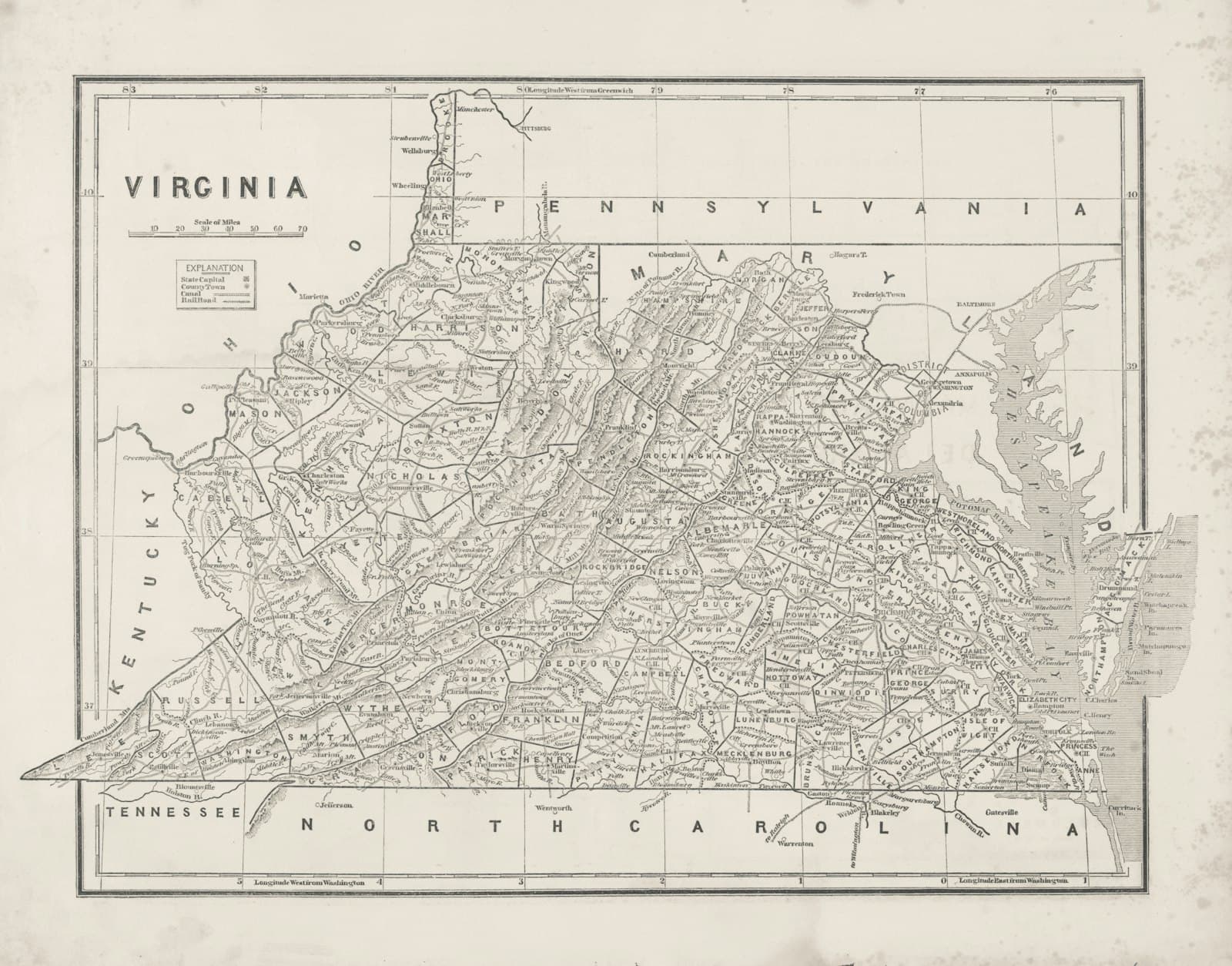 Photo: The New York Public Library / Unsplash
Self-guided audio walking tour of Richmond — GPS route, offline playback, story-driven narration in 32 languages.
“Beyond the monuments, Richmond's whispers tell tales of revolutionaries, river rapids, and a city constantly reinventing itself.”
Not the postcards. The stories even locals don't know — whispered in your ear, right where they happened.
You might expect to see impressive exhibits on space or biology, but what about a tiny court where rodents compete?
Most cities offer river walks, but few let you experience wild rapids right in the urban core.
Beneath its historic facades, Richmond holds a surprisingly modern secret splashed across its buildings.
Discover every secret of Richmond
Every address, every reveal in full — in your ear, right where it happened.
You pick your stops. You walk. The voice reveals what the others miss.


Your self-guided audio tour of Richmond is ready — pick your landmarks, choose your language, and start the moment you arrive.
BuyRichmond, Virginia, is a city that defies easy categorization. It's a place where revolutionary fervor still echoes through historic churches, and Civil War narratives are etched into its very landscape. Yet, it's also a modern hub, celebrated for its burgeoning food scene, world-class street art, and a surprising embrace of outdoor adventure, particularly along the powerful James River. This duality is Richmond's enduring charm—a dialogue between a pivotal past and a dynamic present.
From the ancient streets of Shockoe Bottom, where centuries of commerce and complex history converge, to the leafy avenues of the Fan District, alive with architectural grandeur, Richmond invites exploration. It's a city of distinct neighborhoods, each with its own character and stories to tell. Whether you're drawn to the solemnity of battlefields, the creative energy of contemporary art, or the simple pleasure of a riverside stroll, Richmond offers a multifaceted experience that is both deeply American and uniquely its own.
## From Indigenous Lands to Colonial Capital Long before European settlement, the area now known as Richmond was home to the Powhatan people, with a significant village, Shocquohocan, near what is now the 17th and Main Streets Farmers Market. The city's strategic location at the fall line of the James River, where navigation becomes difficult due to rapids, made it a natural point for trade and settlement. English colonists established Henricus in 1611, the second successful English settlement in the New World, and a place where Pocahontas and John Rolfe lived.
## Revolutionary Spirit and a New Capital Richmond was officially founded in 1737 and quickly grew in importance. During the American Revolution, its significance escalated when the capital of Virginia moved from Williamsburg to Richmond in 1780. The city became a focal point for revolutionary ideals, most famously when Patrick Henry delivered his 'Give me liberty or give me death' speech at St. John's Episcopal Church in 1775. Despite being briefly occupied and burned by British forces led by Benedict Arnold in 1781, Richmond emerged from the war as a key city in the new nation.
## The Confederacy's Heart and Civil War Scars Richmond's role in American history took a dramatic turn with the outbreak of the Civil War. In 1861, it was chosen as the capital of the Confederate States of America, largely due to its industrial capacity and extensive railroad network. The city became a primary target for Union forces, leading to numerous battles in the surrounding areas. During this period, Richmond was a a heavily industrialized center, producing arms and munitions for the Confederate war effort, and also housed numerous prisons. The war left an indelible mark on the city, evident in its many monuments, battlefields, and museums dedicated to this tumultuous era.
## Reconstruction, Resilience, and Renewal Following the Civil War, Richmond faced the immense challenge of Reconstruction. The city slowly rebuilt, and in the late 19th and early 20th centuries, it saw the rise of significant African American communities and institutions, particularly in Jackson Ward, known as the 'Black Wall Street of America.' This period also saw the development of iconic neighborhoods like the Fan District, characterized by its distinctive architecture. Throughout the 20th century and into the 21st, Richmond has continued to evolve, grappling with its complex past while embracing a future as a diverse and dynamic Southern city, recognized for its arts, culinary scene, and outdoor recreation.
Begin your exploration at the Virginia State Capitol, an architectural marvel designed by Thomas Jefferson. Nearby, delve into the city's revolutionary past at St. John's Episcopal Church, where Patrick Henry's famous words still resonate. For a deeper dive into the Civil War, explore the American Civil War Museum and the various battlefields surrounding the city. To understand a crucial aspect of Richmond's history, walk a portion of the Slave Trail, a self-guided experience offering poignant insights into the city's role in the trans-Atlantic slave trade.
Beyond the solemn history, Richmond offers cultural experiences. Wander through the Fan District to admire its Victorian and Edwardian architecture. Discover the street art scene, particularly in areas like the Arts District and Jackson Ward, where colorful murals adorn buildings. For literary enthusiasts, the Edgar Allan Poe Museum offers a fascinating glimpse into the life of the enigmatic writer.
Nature lovers can find respite and adventure along the James River Park System, which includes hiking and biking trails, and even whitewater rafting opportunities within the city limits. Do not miss Maymont, a 100-acre Gilded Age estate with expansive Japanese and Italian gardens, wildlife exhibits, and a historic mansion. For a unique botanical experience, the Lewis Ginter Botanical Garden offers 50 acres of themed gardens, including a domed conservatory.
The best times to visit Richmond are during the spring (April to June) and early fall (September to October). These shoulder seasons offer warm, bright weather without the oppressive heat and humidity of summer. Average temperatures range from the low 70s to low 80s Fahrenheit (22-27°C), perfect for outdoor activities and exploring the city on foot. While summer brings festivals and river activities, it can be quite hot and muggy. Winter is quieter and colder, with occasional snow, but offers lower hotel rates and fewer crowds, making it ideal for indoor cultural explorations.
Richmond is best explored by car, as public transportation can be limited for sightseeing. Parking is generally available at most historical sites. Richmond International Airport (RIC) is conveniently located about 15 minutes from downtown. While taxis are less common, ride-sharing services like Uber and Lyft are readily available. The city is known for its diverse culinary scene, with options ranging from Southern comfort food to international cuisine. Do not forget to try a local 'Sailor Sandwich.' Accommodations vary from historic hotels like The Jefferson to boutique options and budget-friendly stays. Booking in advance, especially during peak seasons (May-August), is advisable.
Richmond in Korean, in Chinese or in Hebrew — and 29 more languages, every stop narrated by a native voice. The widest language range of any self-guided audio tour.
Available in: