The Baron's Gardens
These meticulously designed gardens share a curious connection to a renowned French landmark.
Full story unlocks in the tour
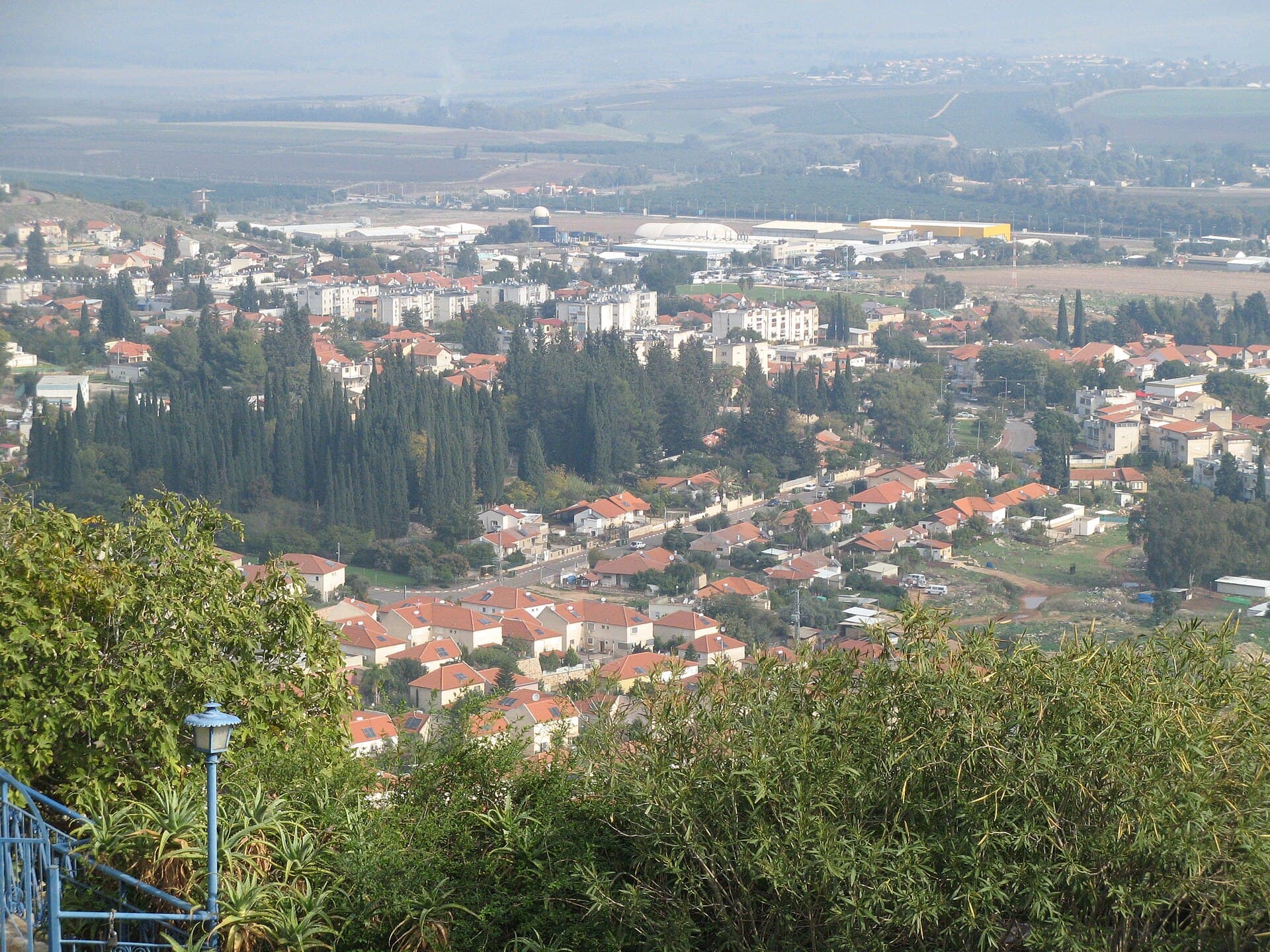 הארי גוסנס / Public domain, via Wikimedia Commons
Self-guided audio walking tour of Rosh Pinna — GPS route, offline playback, story-driven narration in 32 languages.
“Where ancient stones recount the dreams of pioneers in the Galilee.”
Not the postcards. The stories even locals don't know — whispered in your ear, right where they happened.
These meticulously designed gardens share a curious connection to a renowned French landmark.
The town's name, 'Rosh Pinna,' is more than a geographical label; it carries a profound biblical message.
Rosh Pinna was once envisioned as a center for a luxurious industry, a dream that never quite materialized.
Discover every secret of Rosh Pinna
Every address, every reveal in full — in your ear, right where it happened.
You pick your stops. You walk. The voice reveals what the others miss.


Your self-guided audio tour of Rosh Pinna is ready — pick your landmarks, choose your language, and start the moment you arrive.
BuyLume has a built-in augmented-reality guide. Hold your phone up and its camera shows the street ahead of you, with a glowing arrow laid over the real view that always points to your next stop — no map to puzzle over, no wrong turns. Like everything in Lume, it works fully offline.
Situated on the eastern slopes of Mount Canaan, Rosh Pinna offers expansive views of the Hula Valley and the grand Mount Hermon. This appealing town, whose name translates to 'Cornerstone,' occupies a significant position in the narrative of modern Israel as one of the nation's earliest Zionist settlements. With a population of approximately 3,000, Rosh Pinna combines rural calm with a distinct European architectural style, creating a singular and engaging atmosphere.
A walk through Rosh Pinna's textured streets is a journey through time, particularly within its historical quarter, known as the Restoration Site. Here, old stone houses have been carefully transformed into inviting restaurants, intimate hotels, and art galleries displaying local artistry. Beyond its historical appeal, Rosh Pinna serves as an excellent base for exploring the Upper Galilee, providing a serene escape from urban centers and an opportunity to immerse oneself in the region's natural splendor and profound heritage.
Rosh Pinna is a destination for those seeking a slower rhythm, where the past is tangible in every stone and the present invites quiet reflection amidst impressive landscapes. It is a place to savor crisp mountain air, delightful local cuisine, and the particular character of the Galilean province.
Rosh Pinna's narrative commences in 1878 with eighteen religious Jewish families from Safed. Seeking to cultivate the land rather than rely on charity, they endeavored to establish an agricultural settlement. They acquired land near the Arab village of Ja'una and named their settlement Gei Oni, meaning 'Valley of my Strength.' However, their limited farming experience and a subsequent year of drought led to the settlement's near abandonment within two years.
The pivotal moment arrived in 1882 when thirty Jewish families, primarily immigrants from Romania and Russia, reestablished the settlement. They renamed it Rosh Pinna, or 'Cornerstone,' a symbolic name drawn from Psalm 118:22, signifying their resolve to build an enduring foundation. These early years were challenging, marked by malaria from the nearby Hula swamps and agricultural difficulties. Assistance came in 1883 with the intervention of Baron Edmond James de Rothschild, who became the settlement's benefactor.
Baron Rothschild's support was extensive, covering the settlers' debts and providing monthly stipends. He brought in French agricultural experts and financed infrastructure, including housing and public buildings. His vision extended to ambitious undertakings, such as establishing a silk production industry with mulberry plantations and a factory, though this endeavor ultimately proved unsuccessful. The Baron's influence is still apparent in the thoughtfully designed Baron's Gardens, planted in 1886 by a French landscape architect.
Despite initial challenges and some supervisory oversight from Rothschild's administrators, Rosh Pinna thrived. By 1900, the settlement counted over 500 residents, an administration building, a synagogue, and a school – notably, the first globally to teach all subjects in Hebrew. In the 1970s, Rosh Pinna also became home to a commune, adding another layer to its diverse past. Since the 1980s, the older part of Rosh Pinna has undergone extensive restoration, transforming it into a lively artist village and a favored destination for visitors, often described as an open-air museum of its own story.
Rosh Pinna's historic quarter, known as the Restoration Site, is the focal point of any visit. Wander along its textured streets to discover beautifully maintained stone houses that now house art galleries, intimate hotels, and appealing restaurants. Be sure to explore the Baron's Gardens, a serene park designed by a French landscape architect in 1886, offering shaded pathways and expansive views.
Key historical sites include the Old Synagogue, constructed in 1887 with Rothschild's patronage, featuring a distinctive ceiling adorned with painted clouds and symbolic motifs. Visit Professor Mer's Residence, a testament to Dr. Gideon Mer's pioneering research in combating malaria in the Hula Valley. The House of Dignitaries (Beit Hapekidut), an 1882 structure, served as an administrative and financial center for the Galilee settlements and now provides an audio-visual presentation on Rosh Pinna's past.
For sweeping views, ascend to Nimrod Lookout, which offers panoramic vistas of the Hula Valley, the Golan Heights, and Mount Hermon. The Khan Rosh Pinna Shopping Center, situated in a historic 19th-century inn, blends retail with architectural interest. Those who appreciate nature can also enjoy a walk along the Rosh Pinna Stream in the Rosh Pinna Nature Reserve.
Rosh Pinna experiences a Mediterranean climate with warm, dry summers and mild, wet winters. The most comfortable times to visit are late spring (April-May) and early autumn (October-November), when temperatures are pleasantly warm without extreme heat or heavy rainfall. Daytime temperatures during these shoulder seasons are ideal for exploring, ranging from 20-28°C (68-82°F). Summers (June-September) are quite warm, often surpassing 30°C (86°F), with minimal precipitation. Winters (December-March) are cooler and wetter, with average daytime temperatures around 11-17°C (52-63°F) and more frequent rain. Consider avoiding major Jewish holidays and summer school breaks if you prefer fewer crowds and potentially lower prices.
Rosh Pinna is readily accessible, making it a suitable base for exploring the Upper Galilee. While a rental car provides the greatest flexibility for scenic drives and excursions to nearby attractions like Safed or the Sea of Galilee, public transportation is also available. Intercity buses connect Rosh Pinna to major cities like Jerusalem, Tel Aviv, and Haifa via Highway 90. Within the town, walking is the ideal way to explore the compact historic quarter. Taxis and ride-sharing applications like Gett are options for evening transport, as public buses may not operate at night.
Accommodation in Rosh Pinna ranges from intimate hotels in restored stone houses to inviting bed and breakfasts. Prices for dining and beverages can be above average, typical for a popular destination in northern Israel. Rosh Pinna is considered one of the most secure towns in Israel, allowing for comfortable evening strolls. The local currency is the Israeli New Shekel (ILS).
Rosh Pinna in Korean, in Chinese or in Hebrew — and 29 more languages, every stop narrated by a native voice. The widest language range of any self-guided audio tour.
Available in: