Tham Le Stegodon (Grotte marine de Stegodon)
Au cœur d'une chaîne de montagnes calcaires, une grotte de quatre kilomètres de long recèle un secret de l'époque du Pléistocène.
L'histoire complète se débloque dans le tour
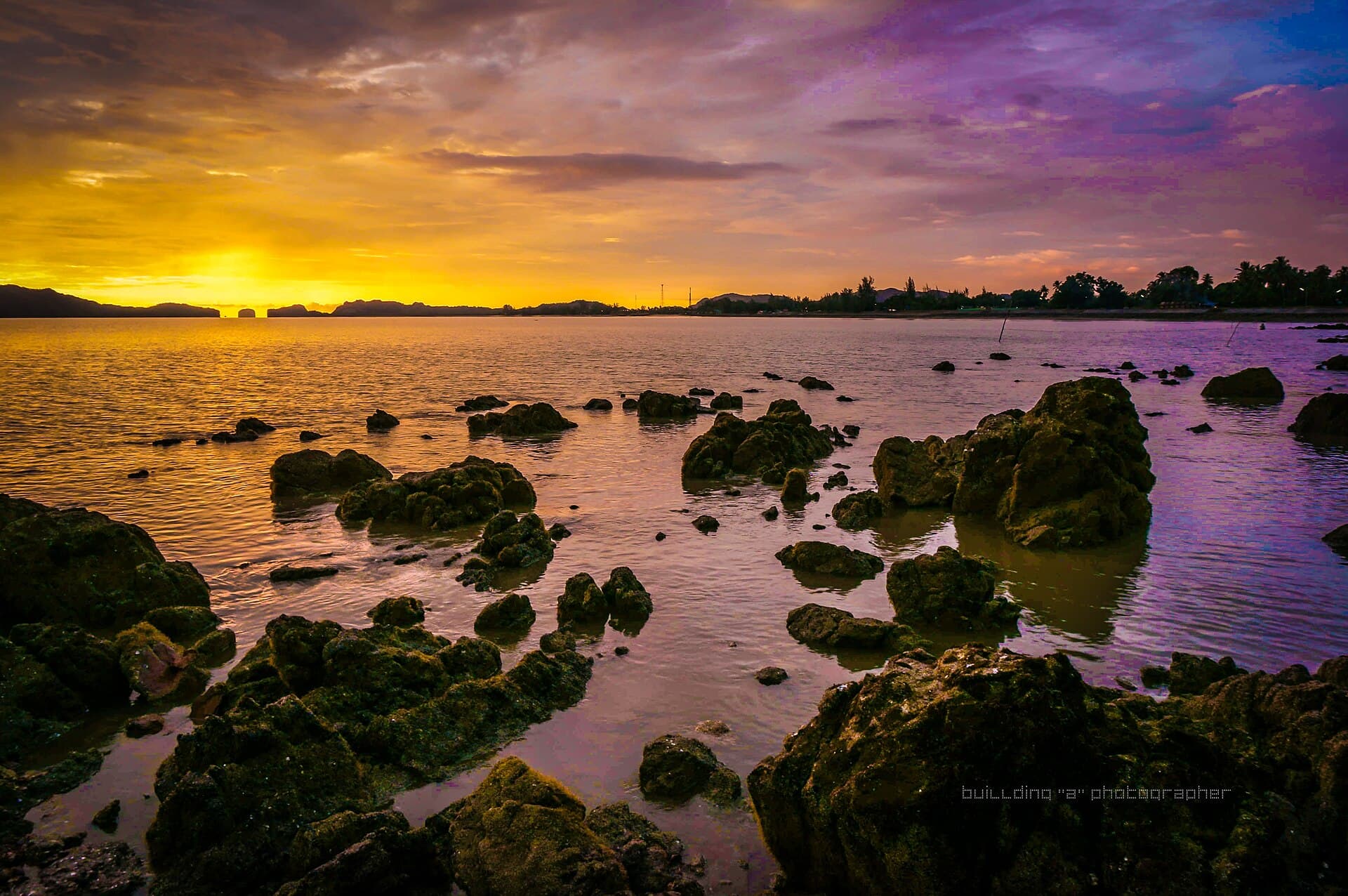 Nopphasin Suksawat / CC BY-SA 3.0, via Wikimedia Commons
Visite audio autoguidée de Satun — parcours GPS à pied, lecture hors ligne, narration en 32 langues.
“Là où les mers anciennes rencontrent les jungles luxuriantes, et le temps se mesure en trilobites.”
Pas les cartes postales. Les histoires que même les habitants ignorent — soufflées à l'oreille, là où elles se sont passées.
Au cœur d'une chaîne de montagnes calcaires, une grotte de quatre kilomètres de long recèle un secret de l'époque du Pléistocène.
Marchez le long d'un pont côtier et traversez littéralement des millions d'années d'histoire de la Terre.
Une merveille naturelle ressemblant à un château de conte de fées, accessible uniquement par un mode de transport particulier.
Découvrez tous les secrets de Satun
Chaque adresse, chaque révélation en entier — dans ton oreille, là où elle s'est passée.
Tu choisis tes lieux. Tu marches. La voix te révèle ce que les autres ignorent.


Votre visite audioguidée de Satun vous attend — choisissez vos lieux, votre langue, et lancez-vous dès votre arrivée.
AcheterLume intègre un guide en réalité augmentée. Levez votre téléphone : sa caméra montre la rue devant vous, avec une flèche lumineuse posée sur l'image réelle qui pointe toujours vers votre prochain arrêt — aucune carte à déchiffrer, aucun mauvais virage. Comme tout dans Lume, ça fonctionne entièrement hors-ligne.
Satun, une province tranquille sur la côte sud-ouest d'Andaman en Thaïlande, offre un rythme de découverte différent de celui de ses voisins plus animés. Bordant la Malaisie, cette région est un mélange captivant de forêts montagneuses luxuriantes, d'îles immaculées et d'une tapisserie culturelle unique tissée d'influences thaïlandaises et malaises. Souvent négligée par ceux qui se précipitent vers des destinations plus célèbres, Satun offre une expérience intime avec la nature et un aperçu authentique de la vie locale.
Désignée premier Géoparc mondial UNESCO de Thaïlande en 2018, Satun est un dépositaire de merveilles géologiques, avec une diversité inégalée de fossiles datant de plus de 500 millions d'années. Au-delà de ses paysages anciens, la province est une porte d'entrée vers des parcs nationaux marins, y compris le parc marin national de Tarutao, avec ses 51 îles, et le parc marin national de Mu Ko Petra. De l'exploration d'anciennes grottes marines à la marche à travers des lignes de faille géologiques en passant par la détente sur des plages calmes et pittoresques, Satun invite le voyageur curieux à découvrir ses nombreux secrets.
## Du Sultanat malais à la province thaïlandaise L'histoire de Satun est profondément liée à sa position géographique, sur la péninsule malaise près de la frontière malaisienne. Pendant des siècles, elle a fait partie de l'État malais connu sous le nom de Royaume de Setul Mambang Segara, étroitement associé au Sultanat de Kedah. Cette connexion historique a profondément façonné l'identité culturelle de Satun, entraînant une population majoritairement musulmane et un mélange unique de traditions malaises et thaïlandaises.
En 1909, le traité anglo-siamois a redessiné les frontières, divisant le Sultanat de Kedah entre l'Empire britannique et le Siam (aujourd'hui la Thaïlande). Satun a été attribuée au Siam en raison de sa population thaïlandaise relativement importante, tandis que la majeure partie de Kedah est allée à la Grande-Bretagne. Ce moment pivot a marqué l'incorporation formelle de Satun à la Thaïlande, devenant initialement une partie de Monthon Phuket avant la fin du système monthon en 1933, établissant Satun comme une subdivision de premier niveau de la Thaïlande.
## Une terre de terre ancienne et de conservation moderne Le récit géologique de Satun remonte à plus de 500 millions d'années, une histoire racontée de manière vivante dans ses paysages riches en fossiles. La région est réputée comme la 'Terre des fossiles paléozoïques', avec des découvertes incluant des trilobites, des brachiopodes et des nautiloïdes. Notamment, les trilobites cambriens trouvés sur l'île de Tarutao sont les plus anciens enregistrés dans la péninsule thaïlandaise-malaise, fournissant des informations cruciales sur l'histoire évolutive primitive de la Terre. Cette signification géologique extraordinaire a conduit à la désignation de Satun comme premier Géoparc mondial UNESCO de Thaïlande en 2018.
Le géoparc englobe deux parcs nationaux et une réserve de faune, soulignant une approche holistique de la préservation de son patrimoine géologique, biologique et culturel. Cette désignation protège non seulement ses merveilles naturelles, mais promeut également le tourisme durable, l'éducation et la préservation des traditions locales, garantissant que le caractère unique de Satun perdure.
Satun offre un large éventail d'attractions, des anciens sites géologiques aux îles sereines. Commencez votre exploration au Musée national de Satun, abrité dans l'historique Manoir Kuden, pour plonger dans le passé et le patrimoine culturel de la province. Pour une expérience vraiment unique, embarquez pour une excursion en canoë à travers Tham Le Stegodon, une grotte marine de quatre kilomètres de long où des fossiles d'anciens éléphants et rhinocéros ont été découverts.
Le Géoparc mondial UNESCO de Satun est un point fort, avec des sites comme la Faille de Khao To Ngai, où vous pouvez littéralement marcher entre des roches de différentes périodes géologiques. Ne manquez pas Prasat Hin Pun Yord, un 'Château de pierre aux mille flèches' accessible en kayak, révélant des tours de calcaire spectaculaires et un lagon isolé. Une autre merveille géologique est la Grotte de Phu Pha Phet, la plus grande grotte de Thaïlande, ornée d'impressionnantes stalactites et stalagmites.
Pour des aventures insulaires, le Parc marin national de Tarutao comprend 51 îles, Ko Lipe étant la plus populaire pour ses sables blancs et ses eaux turquoise. À proximité, Ko Hin Ngam captive avec sa plage de pierres noires lisses, et Ko Khai présente une arche rocheuse naturelle pleine de légendes locales. À l'intérieur des terres, le Parc national de Thale Ban offre un lac d'eau douce, une faune diversifiée et des sentiers de randonnée au milieu de falaises calcaires et de forêts de mangroves. Le parc abrite une grande variété d'animaux sauvages, notamment des tapirs malais, des serows de Sumatra et huit espèces de calaos.
La meilleure période pour visiter Satun, en particulier ses îles et ses parcs nationaux, est pendant la saison sèche, qui s s'étend de novembre à avril. Pendant ces mois, le temps est chaud et ensoleillé, avec des mers calmes idéales pour la plongée avec tuba, la plongée sous-marine et les excursions d'île en île. Le parc marin national de Tarutao, une attraction majeure, est fermé de mi-mai à mi-octobre en raison de la saison de la mousson. Pour ceux qui préfèrent un temps plus frais et le moins de risques de pluie, visez de novembre à février. Février accueille également le Concours de cerfs-volants de Satun, un événement culturel animé.
Pour se rendre à Satun, il faut généralement prendre un vol pour l'aéroport international de Hat Yai, à environ 100 km, suivi d'un transfert en minibus ou en bus. Depuis la ville de Satun, les songthaews partagés et les taxis-motos sont courants pour les déplacements locaux, et la location de motos offre une flexibilité pour explorer. Pour les excursions d'île en île, le quai de Pak Bara est le principal point de départ des ferries et des vedettes rapides vers des destinations comme Ko Lipe et Ko Tarutao.
Bien que Satun soit généralement considérée comme sûre, il est judicieux de connaître les coutumes locales ; une tenue modeste est appréciée lors de la visite de temples ou de maisons locales. La cuisine locale est d'inspiration malaise-musulmane, avec de délicieux plats comme le khao mok et diverses options de fruits de mer. L'argent liquide est préféré dans de nombreux petits établissements et sur les îles, assurez-vous donc d'avoir suffisamment de bahts thaïlandais, d'autant plus que les distributeurs automatiques fiables sont rares en dehors de la ville de Satun et de Ko Lipe.
Satun en coréen, en chinois ou en hébreu — et dans 29 autres langues, chaque étape narrée par une voix native. La plus large gamme de langues de tous les audioguides autoguidés.
Disponible en :