Puerto de Splügen
El Puerto de Splügen una vez capturó la atención de una célebre autora gótica, quien tejió sus dramáticos contornos en sus escritos de viaje.
La historia completa se desbloquea en el tour
 No machine-readable author provided. Paebi assumed (based on copyright claims). / CC BY-SA 3.0, via Wikimedia Commons
Tour de audio autoguiado de Splügen — ruta GPS a pie, reproducción offline, narración en 32 idiomas.
“Donde los puertos antiguos se encuentran con el encanto alpino.”
No las postales. Las historias que ni los locales conocen — al oído, justo donde ocurrieron.
El Puerto de Splügen una vez capturó la atención de una célebre autora gótica, quien tejió sus dramáticos contornos en sus escritos de viaje.
Este tranquilo edificio fue un punto crucial, regulando el flujo de bienes e ingresos entre Suiza e Italia.
Bajo la serena superficie de esta región alpina, una proeza de ingeniería contemporánea genera energía silenciosamente de una fuente sorprendente.
Descubre todos los secretos de Splügen
Cada dirección, cada revelación al completo — a tu oído, justo donde ocurrió.
Eliges tus paradas. Caminas. La voz te revela lo que los demás ignoran.


Tu tour de audioguía por Splügen te espera — elige tus lugares, tu idioma y empieza al llegar.
ComprarLume incluye una guía de realidad aumentada. Levanta el móvil y su cámara muestra la calle que tienes delante, con una flecha luminosa sobre la imagen real que siempre apunta a tu próxima parada — sin mapas que descifrar, sin giros equivocados. Como todo en Lume, funciona completamente sin conexión.
Splügen, un pueblo en la región suiza de los Grisones, se asienta a 1,457 metros sobre el nivel del mar. Está situado entre dos pasos de montaña históricamente significativos: el Puerto de Splügen y el Puerto de San Bernardino. Durante siglos, esta ubicación sirvió como un nexo vital para el comercio y el tránsito a través de los Alpes, uniendo los Grisones con Italia. El pueblo es reconocido por su arquitectura cuidadosamente mantenida, exhibiendo impresionantes palacios y casas Walser de madera oscurecida por el sol. En 1995, Splügen obtuvo el Premio Wakker de la Sociedad Suiza de Patrimonio por su dedicación a preservar sus estructuras históricas y su carácter único.
La identidad distintiva de Splügen como 'haufendorf' —un pueblo que creció orgánicamente con edificios agrupados alrededor de un área central— le confiere un atractivo particular. Como parte del municipio de Rheinwald desde 2019, Splügen ofrece una mezcla de profundidad histórica y esplendor natural. Su inclusión en el Parque Natural de Beverin en 2020 subraya su compromiso con el turismo sostenible y la preservación de la biodiversidad local y el legado cultural. El pueblo ofrece un punto de acceso a una naturaleza virgen, con lagos, glaciares y amplias vistas a la montaña.
## Un Cruce de Caminos del Comercio Alpino La historia de Splügen está profundamente entrelazada con su ubicación estratégica en antiguas rutas comerciales. El Puerto de Splügen, en particular, fue utilizado ya en la época romana, con referencias que aparecen en el Itinerarium Antonini, un mapa de carreteras romano de alrededor del año 300 d.C. Este paso fomentó estrechas conexiones entre las diócesis de Chur y Como, y para 1396, ya se registraban importantes ingresos aduaneros.
Durante siglos, Splügen fue un punto central para los arrieros que transportaban mercancías a través de los Alpes. La desafiante ruta a través de la Garganta de Viamala, con sus acantilados de 300 metros de altura, formaba una parte notable de este viaje. A principios del siglo XIX, entre 1818 y 1823, la carretera del puerto fue mejorada para acomodar carros de carga y diligencias, lo que llevó a un aumento significativo del comercio internacional y del movimiento de pasajeros, alcanzando su punto máximo a mediados de la década de 1850. El mariscal de campo austriaco von Bellegarde observó en 1798 que era 'la ruta comercial más grande entre Milán y Alemania, utilizando principalmente caballos y mulas'.
## Asentamiento Walser y Patrimonio Arquitectónico Los primeros colonos Walser de habla alemana llegaron al Rheinwald, talando bosques y estableciendo comunidades, probablemente encontrando ingresos adicionales como arrieros. Splügen fue mencionado por primera vez en los registros alrededor del año 840 como 'cella in Speluca'. El estilo arquitectónico del pueblo, con sus casas Walser tradicionales y sus imponentes palacios, refleja su próspero pasado como puesto comercial. Un incendio en el pueblo en 1716 hizo necesaria una considerable reconstrucción, contribuyendo al distintivo paisaje urbano visible hoy. Los restos del Castillo de Splügen, construido alrededor de 1275 por los barones de Vaz, se encuentran al este del pueblo, un testimonio de las anteriores necesidades defensivas de la región contra los avances del clan Misox. Sin embargo, el castillo perdió rápidamente su importancia estratégica y estaba en ruinas a principios del siglo XIV.
## Transformaciones Modernas La apertura del Ferrocarril del Gotardo en 1882 redujo significativamente el tráfico de tránsito por el Puerto de Splügen, lo que provocó una ola de emigración de la zona. Los esfuerzos por construir un ferrocarril sobre Splügen finalmente no tuvieron éxito. Sin embargo, la construcción del túnel de la carretera de San Bernardino en 1967 trajo nuevas oportunidades, transformando Splügen en un destino para visitantes, particularmente para los deportes de invierno. El 1 de enero de 2019, Splügen, junto con Hinterrhein y Nufenen, se fusionaron para formar el nuevo municipio de Rheinwald. Hoy en día, Splügen continúa evolucionando, equilibrando su profunda historia con un compromiso con el turismo sostenible dentro del Parque Natural de Beverin.
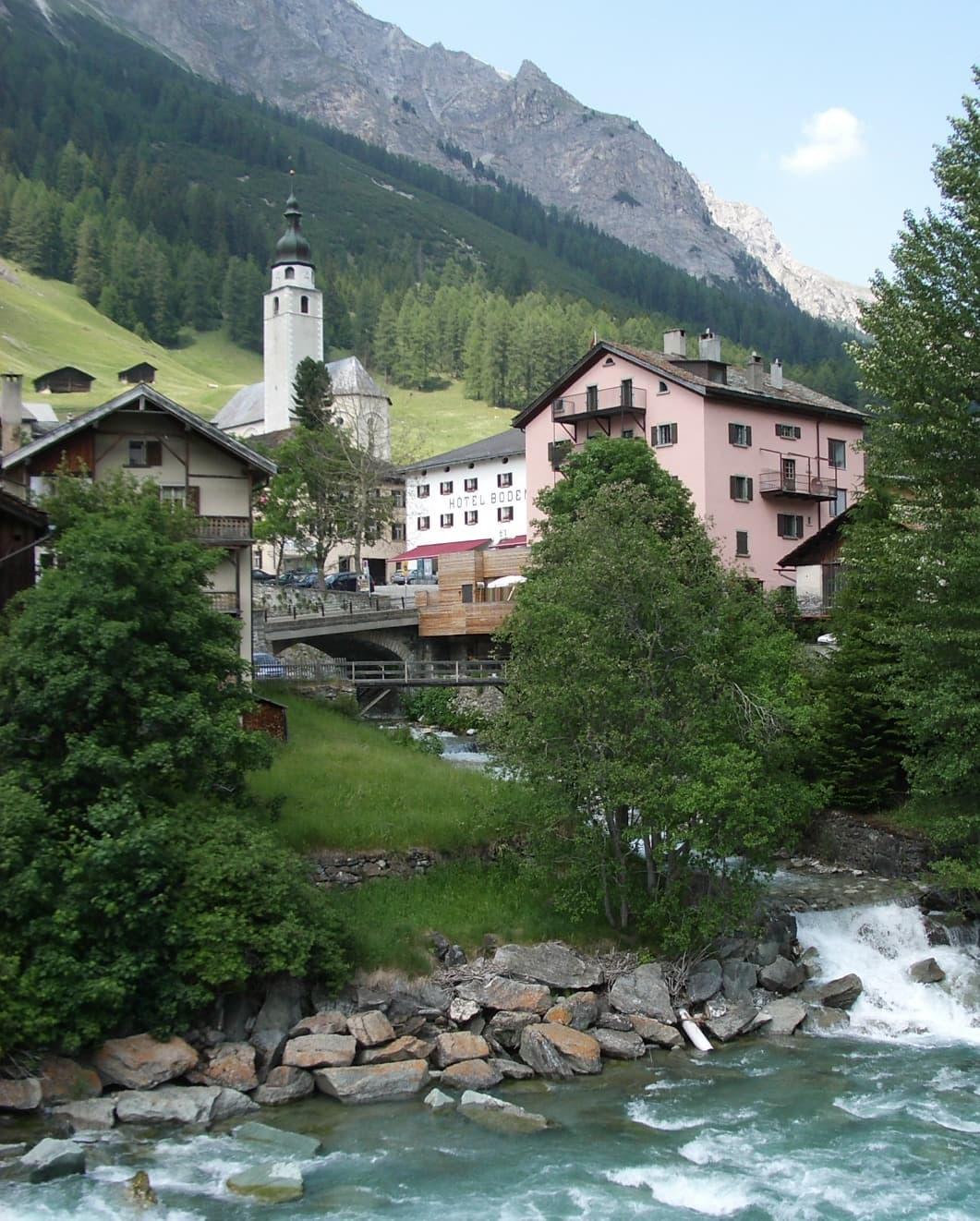
El compacto centro de Splügen invita a una exploración tranquila a pie. Pasee por sus silenciosas calles para admirar las casas Walser tradicionales, definidas por su robusta construcción diseñada para soportar inviernos duros, y los palacios más grandiosos que hablan de su pasado como un floreciente centro comercial. La histórica Iglesia Reformada, construida en 1689, se erige como un notable punto de referencia.
Justo más allá del pueblo, los restos del Castillo de Splügen ofrecen una visión de la historia medieval de la región. Para una comprensión más profunda del patrimonio local, el Heimatmuseum Rheinwald ofrece información sobre la vida en evolución del valle.
El paisaje natural circundante atrae a muchos. La Garganta de Viamala, con sus escarpados acantilados y su impresionante puente construido en 1739, presenta un espectacular espectáculo natural, accesible a través de 321 escalones. Más allá, la Garganta de Roffla ofrece otra sorprendente muestra de cómo el agua se abre paso a través de la roca. Caminar es una actividad principal, con más de 100 km de senderos, incluyendo secciones del histórico sendero de larga distancia Via Spluga, que traza antiguas rutas comerciales desde Thusis hasta Chiavenna. Para excursiones más exigentes, el Tamboalp Tour ofrece vistas panorámicas. En invierno, la estación de esquí Splügen-Tambo ofrece oportunidades para esquiar, hacer snowboard, esquí de fondo y raquetas de nieve.
Splügen ofrece experiencias distintas a lo largo de las estaciones. El verano (junio a agosto) es ideal para actividades al aire libre como senderismo y ciclismo de montaña, con temperaturas diurnas que alcanzan alrededor de 17°C (63°F). El Puerto de Splügen suele estar abierto durante estos meses. El otoño (septiembre a noviembre) trae temperaturas más frescas y un follaje otoñal vibrante, ofreciendo una experiencia más tranquila con menos multitudes. El invierno (diciembre a febrero) transforma Splügen en un paisaje cubierto de nieve, perfecto para esquiar, hacer snowboard y otros deportes de invierno en la estación de esquí Splügen-Tambo, aunque el Puerto de Splügen está cerrado debido a las fuertes nevadas. La primavera (marzo a mayo) ve el deshielo y el florecimiento de las flores silvestres, lo que la hace adecuada para caminar en elevaciones más bajas. Junio, julio y agosto suelen ofrecer las condiciones climáticas más agradables.
Splügen es accesible en coche a través de la autopista A13. Las opciones de transporte público incluyen conexiones de PostBus desde las estaciones de tren de Chur, Thusis o Bellinzona. Durante el verano, también hay un servicio de autobús regional desde Chiavenna, Italia, directamente sobre el Puerto de Splügen. Para aquellos que llegan en avión, Zúrich (ZRH) y Milán Malpensa (MXP) son los aeropuertos internacionales más cercanos, ambos a aproximadamente dos horas en una combinación de tren y autobús.
Dentro del pueblo, los servicios incluyen un supermercado, panadería y varios restaurantes. Las opciones de alojamiento van desde hoteles hasta alquileres vacacionales. Para los entusiastas del aire libre, hay disponibles visitas guiadas, tours en quad y tours por cervecerías con degustación de cerveza. Al planificar una visita, especialmente para caminar, consulte la información turística local sobre las condiciones de los senderos y los cierres de los puertos, ya que el Puerto de Splügen está cerrado en invierno.
Splügen en coreano, en chino o en hebreo — y 29 idiomas más, cada parada narrada por una voz nativa. La mayor variedad de idiomas de cualquier audioguía autoguiada.
Disponible en: